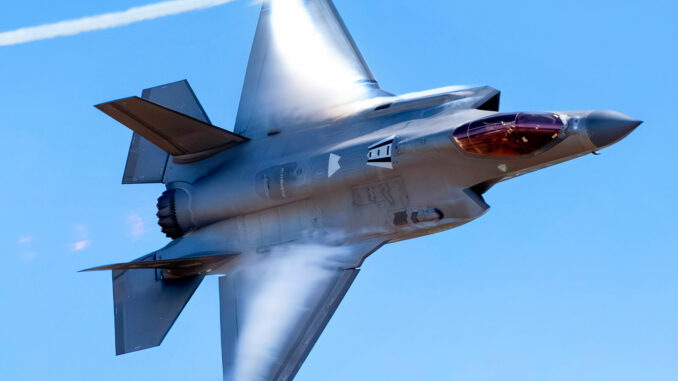
With an hourly cost exceeding $38,000, the F-35A is causing concern among European armed forces, who fear that the financial burden could throw their budgets off balance.
In summary
The F-35A was supposed to embody a modern and affordable standard for European air forces. But the operational reality paints a more mixed picture. Operating costs now exceed $38,000 per hour, and sometimes approach $50,000, depending on operating conditions and parts availability. This drift is turning the aircraft into a budgetary time bomb, feared by military leaders. The contrast with competing aircraft is striking: maintenance costs for the F-16 remain below $10,000, while those for the Rafale or Typhoon range from €12,000 to €20,000 depending on the European fleet. The risk is clear: a disproportionate share of the annual budget could be absorbed by maintenance alone, to the detriment of training hours, base modernization, and broader defense capabilities. Several European countries are now openly questioning the sustainability of the program.
The true cost of the F-35A and the break with initial promises
The F-35A was sold as an affordable multi-role platform capable of replacing several types of aircraft simultaneously. This promise was supposed to ensure a lower overall cost than that of a heterogeneous fleet. But operational data shows the opposite trend.
The flight hour now exceeds $38,000, and several national audits report peaks of $50,000 when parts availability drops or when certain repairs require a return to the United States. This situation contrasts sharply with initial estimates, which predicted a reduced cost of $25,000 thanks to mass production.
This development comes as a surprise to European armed forces, which were counting on a modern, but above all sustainable, aircraft. The F-35A requires specific infrastructure, centralized logistical support, and a highly skilled workforce. This requirement automatically translates into operating costs that are much higher than those of the aircraft it replaces.
The situation becomes more worrying when fleets exceed 40 aircraft, as the scale effect, instead of reducing costs, amplifies maintenance requirements.
The financial impact on European armed forces
European defense budgets have certainly increased since 2022, but margins remain limited. A fleet of 40 F-35As represents an annual operating budget that can exceed €200 million for maintenance alone. This sum swallows up a significant portion of air force spending.
By comparison, F-16 fleets cost around $8,000 to $10,000 per hour, which allows for an increase in the total volume of training. Several European air forces point out that the ratio of flight hours per pilot is already decreasing. Some pilots no longer exceed 110 hours per year, compared to 150 hours with older aircraft.
The risk is simple: buying a high-performance aircraft that is difficult to fly. This situation is reminiscent of the difficulties encountered by some operators of the F-15 or Tornado, where costs had limited operational availability. Today, technological dependence on the United States exacerbates the problem. A critical part sometimes has to travel several thousand kilometers before it can be replaced, extending downtime.
The financial burden represents a structural constraint. Several military headquarters now use the term budget bomb to describe the impact of the program on their national finances.
The gap with competitors: Rafale, Typhoon, and F-16
A comparison with other fighter jets used in Europe clearly shows the imbalance.
The Rafale is estimated to cost between €12,000 and €16,000 per flight hour, depending on the air force, with variations related to the level of modernization. The Eurofighter Typhoon, often considered expensive, costs between €17,000 and €20,000. Even the latter remains well below the F-35A.
The difference is even more striking with the F-16, which has been the backbone of European air forces for forty years. Its average cost remains below $10,000, with maintenance largely under control and operational availability often exceeding 75%.
This gap raises a direct question: how many aircraft can a European country actually fly in the medium term? Mixed fleets are already showing a trend. F-35As fly less, cost more, and concentrate technical skills on a limited number of specialized technicians. This specialization increases dependencies and vulnerability in the event of a prolonged crisis.
The burden of heavy maintenance and stealth systems
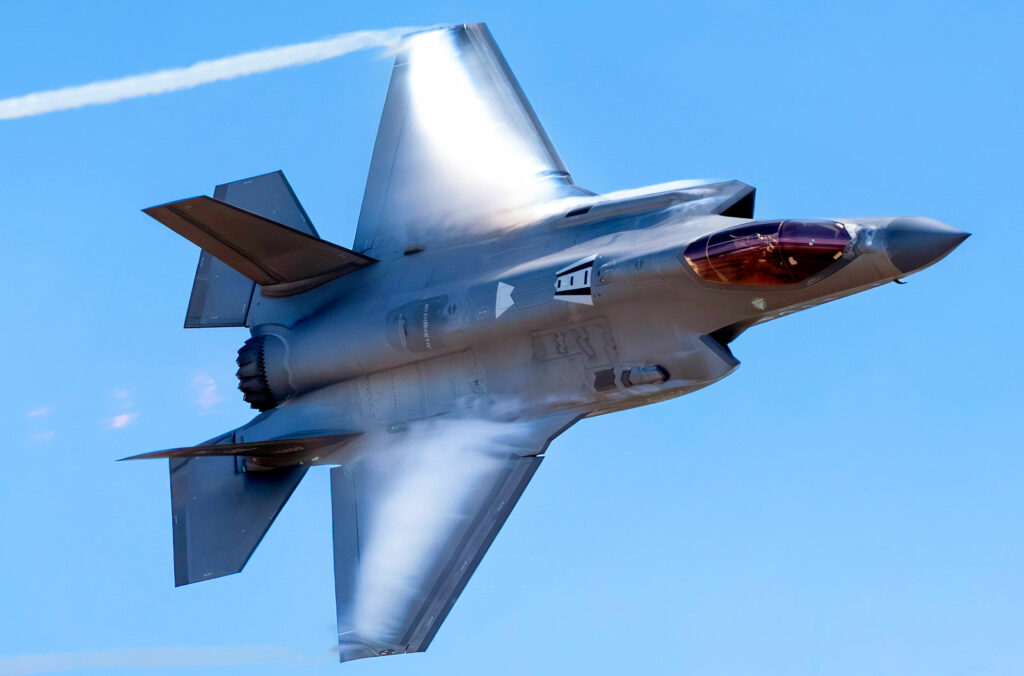
The F-35A’s stealth capabilities rely on composite materials and absorbent coatings that require precise maintenance. Each intervention requires specialized tools, and some repairs must be carried out in certified centers located outside Europe. This logistics model is incompatible with European requirements for responsiveness and volume.
The onboard systems, particularly the data fusion suite and electro-optical sensors, require frequent updates. These operations immobilize the aircraft for several dozen hours. The powerful but complex F135 engine also requires heavy maintenance. Downtime regularly exceeds 25% of the annual operating cycle.
This level of complexity is not surprising, but it does raise questions about budgetary viability. The more technologically sensitive an aircraft is, the more difficult it becomes to control its cost. The armed forces are well aware that stealth comes at a price, and that price can become an operational obstacle if budgets do not increase proportionally.
Long-term concerns
The real European fear is clear: the F-35A could absorb resources that should be used to finance operational readiness, base modernization, and the acquisition of new-generation ammunition.
A fleet of 50 aircraft could require more than €10 billion over 20 years in operating costs alone. Several countries, including Belgium and the Netherlands, have already revised their financial projections upwards. Others, such as Norway, are seeing a decline in availability due to maintenance of the F135 engine.
This constraint also weighs on pilot training. The high cost per flight hour encourages increased use of simulators. These are excellent, but they can never fully replace the experience of actual flight.
European military leaders fear that the gradual reduction in flight hours will lead to a decline in overall operational capability. The paradox is striking: one of the most advanced aircraft in the world could be less operational than its predecessors.
A consideration that European decision-makers must address
The F-35A remains a highly effective aircraft, capable of dominating a contested environment and ensuring information superiority. Its technological advantage is real. But this advantage comes at a high price.
The question facing European governments is simple: does the superiority offered by the F-35A justify such a large share of the national budget? The answer will depend on each country’s level of strategic ambition and its ability to absorb a chronic financial burden.
This debate reflects a broader trend. Fifth-generation technologies are forcing a break with the way armies are financed. If the current trend continues, some countries may reevaluate the size of their fleets or diversify their platforms to limit the risk of financial dependence.
Armed forces that anticipate these constraints will be able to maintain a balance between performance and sustainability. Those that ignore the reality of the cost risk finding themselves in an operational deadlock.
Sources
– National audits on the operating costs of the F-35A
– European parliamentary reports on defense budgets
– Public data from manufacturers and open-source analyses
War Wings Daily is an independant magazine.