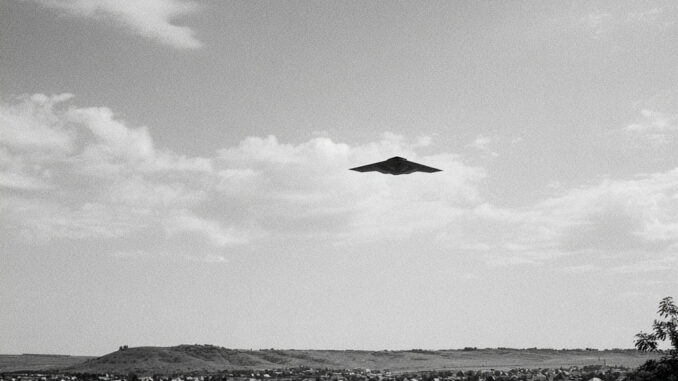
The Pentagon is launching a billion-dollar program to acquire kamikaze drones on a massive scale. This is an urgent strategy in the face of modern conflicts.
In summary
The US Department of Defense has confirmed the launch of a billion-dollar program to acquire hundreds of thousands of kamikaze drones, a decision that marks a break with the traditional concept of military superiority. The objective is clear: to rapidly adapt US industry to the demands of modern warfare, where disposable drones now dominate saturation tactics, advanced reconnaissance, and precision strikes. Kamikaze drones, also known as loitering munitions, combine surveillance and attack capabilities in a single vehicle. The massive demand reflects an operational urgency linked to lessons learned from the war in Ukraine, where this type of weapon has become central. Several American companies, including some specializing in micro-drones, will participate in production. This program aims both to equip U.S. forces and to support allies facing immediate threats.
Announcement of an industrial program of exceptional scale
The Pentagon has officially launched an accelerated acquisition program to order between 200,000 and 300,000 kamikaze drones, for a total of $1 billion. Such an order is unprecedented in the recent history of the US military industry. It illustrates the priority given to consumable autonomous systems, which have become a central element of land and air combat.
The program is based on a simple logic: the armed forces must be able to deploy loitering munitions on a large scale, at low cost, and in a very short time. The Department of Defense wants to create an industrial capacity capable of producing tens of thousands of units per month. This pace requires a profound transformation of the supply chain and a simplification of drone architectures to reduce lead times.
The United States wants to avoid the situation seen in Ukraine, where local production was unable to keep up with the intensity of the conflict. This strategy therefore aims to secure stocks that can be mobilized immediately.
How a kamikaze drone works and its tactical capabilities
A kamikaze drone, also known as loitering munition, combines the functions of a reconnaissance drone and a missile. It patrols a given area, searches for a target, and then dives on it with an integrated explosive charge.
The principle is based on a lightweight structure, often made of composite materials, with a wingspan varying between 0.5 and 2 meters depending on the model. The autonomy can reach 30 to 60 minutes, with a range of several tens of kilometers.
This type of drone carries an electro-optical camera, sometimes infrared, allowing precise identification of the target. A secure data link connects the drone to its operator, but some recent models use decision support algorithms to reduce human dependence, especially when jamming becomes intense.
The unit cost generally ranges from $1,000 to $30,000, which means that large numbers can be used in combat without compromising an army’s finances. This low cost, compared to traditional missiles, explains the Pentagon’s massive interest in this category of weapons.
The strategic reason behind the American rush
The urgency of the program can be explained by several factors.
The first is the impact of kamikaze drones in recent conflicts. Ukraine and Nagorno-Karabakh have demonstrated that swarms of inexpensive drones can neutralize armored vehicles, saturate defense systems, or disrupt logistical positions. A modern offensive can consume thousands of drones per day.
The second factor is the evolution of threats. The US anticipates high-intensity environments where its forces will have to advance under the threat of missiles, mobile radars, and sophisticated jamming capabilities. The role of kamikaze drones is to disrupt the enemy before troops arrive.
The third factor is strategic competition with China. Beijing already produces massive volumes of military and dual-use drones. The Pentagon wants to close this gap and establish an industrial base capable of competing at the same pace.
Finally, this rush responds to the urgent needs of certain allies. Several countries supported by the United States could be equipped with these drones to strengthen their defenses without deploying American forces.
The manufacturers selected to produce these drones
The program involves a group of companies already active in the field of tactical drones. Several names are circulating, including AeroVironment, known for the Switchblade, as well as newer companies specializing in micro-drones and low-cost autonomous systems.
AeroVironment could supply models derived from the Switchblade 300, a 2.5 kg drone with a 15-minute flight time and capable of hitting a target more than 10 km away. Other companies are working on even simpler designs, based on civilian components adapted for military use.
The Pentagon’s goal is to create a diversity of suppliers in order to avoid bottlenecks. Several versions of drones are expected to coexist: short-range, medium-range, reinforced explosive payload, and anti-radar versions.
Manufacturers will also have to provide control systems, launch stations, and communication modules that are resistant to jamming. The program is therefore not limited to drones: it includes the entire ecosystem that enables their intensive use.
Military applications of kamikaze drones in modern conflicts
Kamikaze drones meet several tactical needs.
The first use is the elimination of specific targets: light armored vehicles, fortified positions, artillery pieces, or mobile radars. The drone hovers over the area until an opportunity arises.
The second use is the saturation of enemy defenses. By sending dozens of drones simultaneously, a force can force an anti-aircraft system to use up its ammunition or reveal its position.
The third use is supporting ground troops. Drones can strike a machine gun nest or an anti-tank team that is difficult to reach by traditional means.
The fourth use is strategic: disrupting enemy logistics, destroying command centers, or monitoring troop movements before an offensive.
Finally, these drones make it possible to avoid using more expensive missiles. In some cases, a kamikaze drone costing a few thousand dollars can neutralize a target that would have required a missile costing more than $100,000.
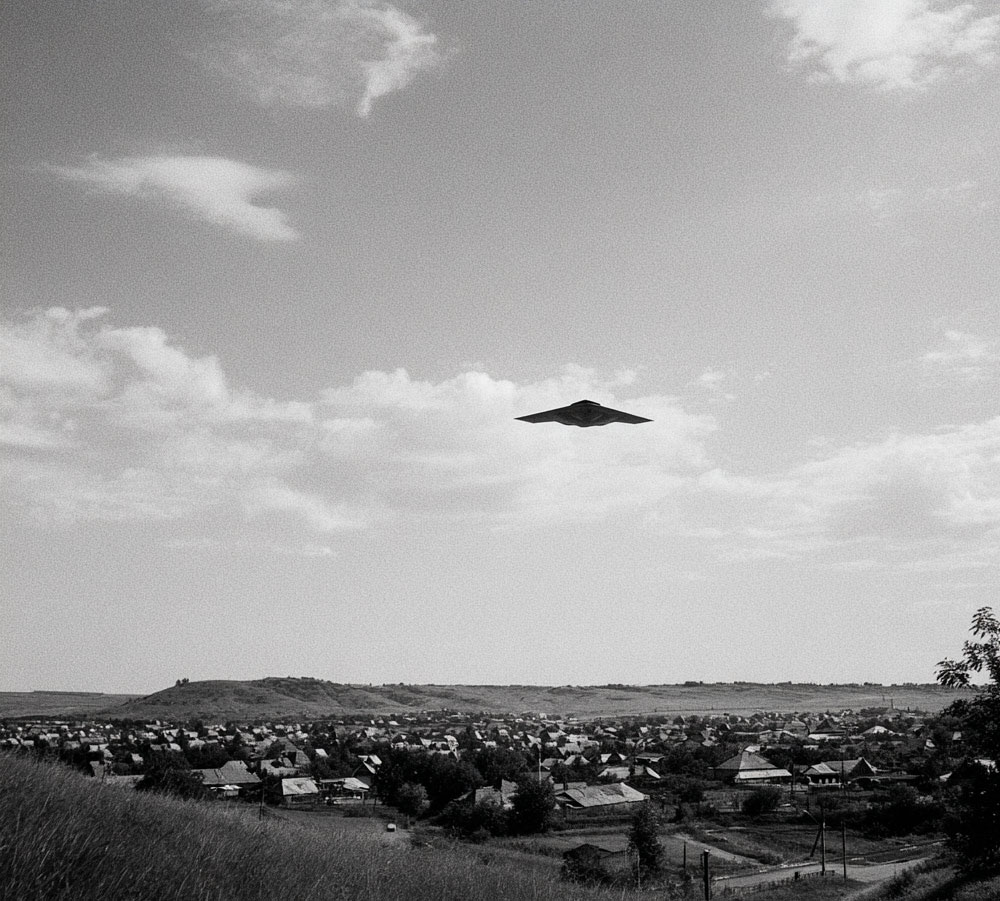
The place of kamikaze drones in US doctrine
The United States is now integrating kamikaze drones into a comprehensive vision of multi-domain combat. It is no longer just a matter of providing units with an additional tool, but of rethinking how to conduct an offensive.
Special forces, mechanized infantry, and artillery units will receive dedicated batches of kamikaze drones. Each section could have several ready-to-use drones, integrated into a simplified targeting chain.
The U.S. Army also plans to integrate these drones into semi-autonomous swarms, capable of coordinating without direct human intervention. This approach would make it possible to overwhelm an adversary by multiplying the axes of attack.
In the Air Force, the kamikaze drone is becoming a complementary tool for preparing the entry of a piloted aircraft into a contested area. A swarm of drones could identify radars, saturate their screens, or even neutralize them.
The Marine Corps, which is highly committed to mobility and tactical autonomy, will be one of the first beneficiaries of the program. It wants to have thousands of drones at its forward operating bases in the Pacific.
A brutal but deliberate transformation of US strategy
The launch of this massive kamikaze drone program marks a strategic turning point. The Pentagon implicitly recognizes that future conflicts will consume considerable volumes of drones, far exceeding what the current industry can produce. It also admits that superiority no longer depends solely on complex technologies, but on the ability to produce quickly, in large quantities, and at low cost.
The US military must now reconcile two approaches: maintaining highly advanced platforms, such as the F-35 or the future NGAD, and supplementing them with swarms of expendable drones that take on the most risky tasks. This hybrid model could become the norm in the coming decade.
This program also reveals a concern: that of losing industrial initiative to adversaries capable of producing drones in large quantities. Responding to this threat requires accelerating the pace, reducing costs, and innovating in simplicity.
The United States is therefore making a bold bet: transforming its industry to respond to a pace of war that the world has not seen in several decades.
Sources
– Official press releases from the US Department of Defense
– Open-source data on loitering munitions
– Industry analyses on drone production and military requirements
War Wings Daily is an independant magazine.