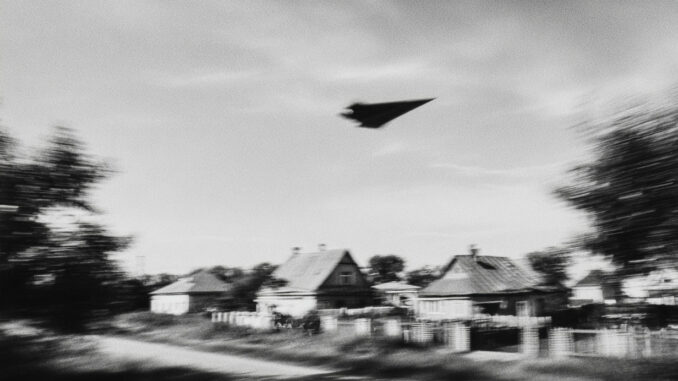
Moscow is preparing a winter of kamikaze drones to saturate the Ukrainian sky, exhaust its air defense, and reshape its low-cost warfare doctrine.
Summary
Since the fall of 2024, Russia has made suicide drones the central tool of its attrition campaign against Ukraine. According to Western and Ukrainian estimates, Moscow exceeded the threshold of 5,000 Russian kamikaze drones per month in the summer of 2025, with a record of around 6,200 aircraft launched in July, mainly Shahed-136s rebranded as Geran-2 and cheap FPV drones. This strategy aims to saturate Ukrainian air defenses, force Kyiv to fire expensive missiles at low-cost munitions, and strike Ukrainian energy infrastructure as winter approaches. Behind this deluge lies a massive industrial effort: factories in Alabuga, production of 1.5 million military drones in one year, initial aid from Iran, and a flow of Chinese components. Drones are no longer a mere supplement to missiles: they are now shaping Russian warfare doctrine, reducing the exposure of manned aircraft, and transforming artillery into sensor-guided precision firing systems. The coming winter will be a test of endurance, both for Ukrainian cities and for the Western defense economy.
The choice of kamikaze drones as a weapon of strategic attrition
Russia has gradually shifted the war in Ukraine into the era of drone saturation. Starting in September 2024, the number of Shahed/Geran-2 drones used each week rose from around 200 to more than 500, then even higher, reaching a monthly rate of more than 5,000 aircraft in 2025. In July 2025, British intelligence services estimated that nearly 6,200 “kamikaze drones” had been sent against Ukraine, a record since the start of the invasion.
The principle is simple: these low-cost drones, often pre-programmed with GPS and sometimes equipped with electro-optical terminal guidance, are sent in successive waves. They target power plants, substations, fuel depots, railway hubs, but also rear cities such as Lviv and Dnipro. During peak attacks, Russia has already launched more than 700 drones in a single night, and some Western officials believe it is credible that it could send 2,000 in 24 hours by the end of 2025.
The logic is twofold. On the one hand, to saturate Ukrainian radars and missile batteries. On the other, to impose an asymmetrical economic calculation: a Shahed-136/Geran-2** drone can cost between $20,000 and $80,000, while the surface-to-air missile used to shoot it down—Patriot, NASAMS, IRIS-3—can cost between $1 million and $2 million. Geran-2** drone can cost between $20,000 and $80,000, while the surface-to-air missile used to shoot it down—Patriot, NASAMS, IRIS-T, or even AIM-9 fired from an aircraft—can cost several hundred thousand dollars, or even more than $600,000 for a single shot.
This model of attrition by drones is part of a “long war economy” that Moscow now openly embraces: multiplying low-cost strikes to deplete Western stocks, damage the Ukrainian economy, and undermine the resilience of the population during the winter.
Russia’s industrial rise in drones
The transformation of Iranian Shaheds into Russian Gerans
At the start of the war, Russia was largely dependent on Iranian deliveries of Shahed-136s, piston-powered delta drones capable of traveling more than 1,000 km with an explosive payload of around 40 to 50 kg. Gradually, Moscow integrated this technology into its own military-industrial complex. An agreement with Tehran led to the creation of an assembly line in the Alabuga Special Economic Zone in Tatarstan.
Expert reports indicate that in the spring of 2025, the Alabuga plant was producing an average of about 170 Geran-2s per day, or more than 5,000 drones per month. In total, more than 26,000 Geran-2 drones have reportedly already been manufactured, with an annual target of 40,000 units, supplemented by 24,000 simpler “Gerbera” drones, used as decoys.
Ukrainian authorities and several specialized think tanks estimate that by September 2025, the theoretical production capacity for Shahed-type drones will reach around 2,700 units per month for this family of munitions alone. This ramp-up relies on electronic components that are largely imported—microcontrollers, sensors, GPS—mostly from China, despite sanctions.
At the same time, the drones have evolved technologically. Some recovered Geran-2 drones now incorporate infrared cameras, Nvidia Jetson modules for image processing, and data links that enable smarter navigation, autonomous target search, and electromagnetic intelligence gathering during flight. This sophistication remains compatible with mass production, as the airframe remains simple and the volumes allow for lower unit costs.
The rise of Lancet drones and FPV drones
Beyond the Shaheds, Moscow has invested heavily in tactical attack drones. The Lancet drone system, a loitering munition designed to destroy artillery, air defense systems, and armored vehicles, has become one of the symbols of this transformation. According to several analyses, more than 2,800 Lancets have been used against Ukrainian forces, with a claimed success rate of nearly 78% on artillery targets.
Across the spectrum, Vladimir Putin admitted in 2025 that Russian industry had produced more than 1.5 million military drones in a year, while acknowledging that demand from the front lines remained higher than supply. These are not only large loitering munitions, but also a mass of inexpensive FPV drones, often built from civilian chassis and equipped with a hollow charge. These devices, piloted from a first-person perspective using a video headset, have become the “low-cost” extension of artillery, capable of striking an armored vehicle or command post with a few kilograms of explosives.
This galaxy of programs is supported by a network of new or repurposed factories: Udmurtia for the Lancet, “patriotic” private companies for FPV drones, and large public groups for the production of airframes, combustion engines, and structural components. In three years, Russia has thus reconfigured a significant part of its industry to fuel a large-scale drone war.
The saturation strategy to break Ukraine’s air defense
The logic of economic and psychological exhaustion
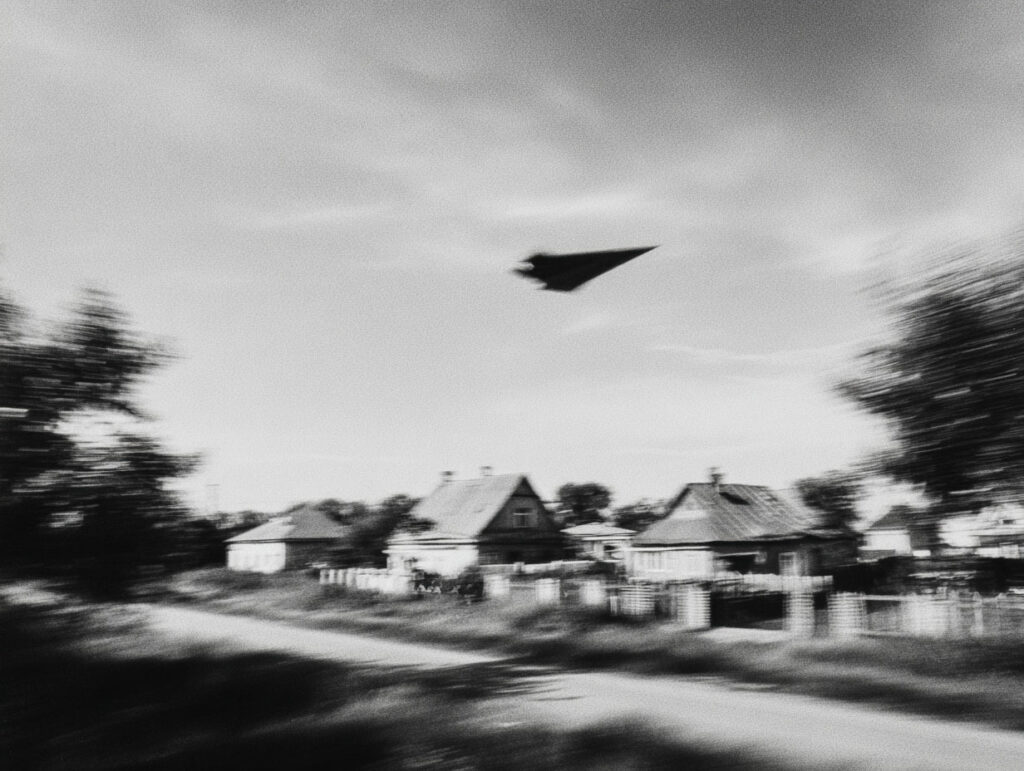
Russia’s “winter of drones” strategy explicitly targets Ukraine’s air defense. By multiplying massive attacks, Moscow is seeking to open several fronts simultaneously: drones on the power grid, ballistic missiles on cities, gliding bombs on the front line. The strikes often combine decoy drones, programmed to fly high and slow, with more dangerous munitions flying at very low altitudes or following complex trajectories.
Each wave presents Ukrainians with a dilemma: use a modern surface-to-air missile to protect a thermal power plant or accept that a $30,000 drone will strike a strategic transformer. Over the months, this calculation has eroded Western stocks. Some reports mention periods when more than 60% of Russian strikes were carried out by drones, with the rest by cruise or ballistic missiles.
The psychological impact is just as sought after. Drones often arrive at night, striking several cities at once. Their characteristic piston engine noise, compared to a “flying lawnmower,” has become a sound marker of modern warfare. Repeated alerts, power outages, and damage to heating networks in the middle of winter are all part of a strategy of attrition targeting civilians as much as the military.
A tool for striking the rear while preserving manned aviation
Traditional Russian aviation remains present, particularly in the form of fighter jets dropping glide bombs from safe distances or bombers firing cruise missiles from Russian territory. But the massive use of drones limits pilots’ exposure to Ukrainian surface-to-air systems.
Whereas Soviet doctrine relied on air superiority based on the mass of aircraft and anti-aircraft artillery, the current doctrine relies on a combination of drones, missiles, electronic warfare, and piloted aircraft operating out of range. Kamikaze drones can fly hundreds of kilometers over Ukrainian territory without endangering a crew. Their loss is accepted: they are consumables.
This approach increases Russia’s strike depth. Targets located 700 or 900 km from the border—fuel depots, logistics hubs, export infrastructure—can be targeted regularly, which was more complex before the widespread use of these long-range drones. It also makes the task more difficult for Ukrainian planners, who must simultaneously protect the front line, rail junctions, cities, and energy facilities.
Russian warfare doctrine reshaped by drones
From massive artillery fire to drone-guided precision strikes
Before 2022, Russian doctrine already emphasized mass artillery and depth of fire. What is new is the systematic integration of drones into the firing loop. Light quadcopters locate Ukrainian positions a few kilometers away, transmit the coordinates in real time, and Lancet drones or guided shells finish the job.
This shortened sensor-shooter loop has concrete effects. On the one hand, Ukrainian artillery must move much faster to avoid being detected and engaged within minutes of firing. On the other hand, the Russians can save ammunition: rather than saturating an area with dozens of shells, a single properly guided kamikaze drone is sometimes enough to neutralize a self-propelled gun or radar.
FPV drones play a “scalpel” role here. They target the weaknesses of the enemy line: a poorly camouflaged tank, an ammunition truck, a trench, a radio antenna. Their limited range (a few kilometers), offset by their accuracy, complements the long-range capabilities of the Geran-2. Together, they form a multi-level fire architecture that combines saturation, precision, and depth.
Towards a possible dedicated “drone army”
The Russian authorities are now talking about creating a specific branch of the armed forces, focused on drones, with its own schools, doctrine centers, and logistics chains. Dedicated training centers are already multiplying, where operators learn to fly FPV drones, coordinate swarms, work under heavy electronic warfare, and integrate data flows into command systems.
This doctrinal evolution goes beyond the Ukrainian field. In Ukraine, Russia is testing a model of aerial warfare in which sensors and unmanned vehicles play a central role, potentially foreshadowing what Moscow could eventually deploy against NATO. Collecting data on the response of Western systems and on the weaknesses of radars, communications, and electrical networks is an integral part of this large-scale experiment.
The integration of embedded algorithms—image recognition, automatic target detection, trajectory optimization—is also paving the way for increasingly autonomous munitions. While humans remain “in the loop” for firing decisions, the processing speed and volume of data handled by these systems tend to reduce defense reaction times.
The limits and weaknesses of a drone deluge
Despite this rise in power, the “deluge” of Russian kamikaze drones is not without its limits. First, Russia remains constrained by access to advanced electronic components. Sanctions force it to use indirect commercial channels, front companies, and parallel imports, which increase costs and introduce vulnerabilities into the supply chain.
Second, Ukraine is adapting. In addition to surface-to-air missiles, Kyiv is deploying mobile teams equipped with machine guns, light anti-aircraft guns, portable jammers, and interceptor drones. Simpler and less expensive systems, such as automatic cannons or short-range missiles, are preferred against low-value drones. Cities are reinforcing their shelters, protecting their transformers, and increasing rapid repairs. This “trench resilience” reduces the strategic effectiveness of each individual strike.
Finally, the proliferation of drones does not guarantee a decisive breakthrough. By saturating the skies, Moscow has undeniably strengthened its attrition capacity, but at the cost of increasing dependence on a tool that is vulnerable to adverse technological advances: better electronic warfare, close-range defense lasers, and dedicated anti-drone munitions. The Ukrainian drone ecosystem, which is highly innovative and supported by Western funding, is responding with asymmetric solutions, transforming the conflict into a global laboratory for countermeasures.
As winter sets in again on the front lines, Russia is betting on quantity and time. Ukraine, for its part, is counting on technological creativity and Western aid to withstand this new campaign of drone saturation. The outcome of this industrial and doctrinal duel will say a lot about the ability of democracies to stay in the race against an adversary ready to transform its entire productive apparatus into a machine for manufacturing UAVs.
Sources (selection):
– CSIS, “Drone Saturation: Russia’s Shahed Campaign,” May 13, 2025.
– The Kyiv Independent, figures on Russian drones launched in July 2025.
– Adapt Institute / HUR Ukraine, analyses of Shahed / Geran-2 production in Alabuga, September 2024–2025.
– Wikipedia / HESA Shahed-136, technical data and production estimates for Geran-2 2024–2025.
– Army Recognition, reports on the use of Lancet and Gerbera drones.
– Reuters, Vladimir Putin’s statement on 1.5 million drones produced in one year, April 2025.
– Economic Times, cost analysis of Geran-2 drones and Western interceptor missiles, September 2025.
– AP / Business Insider, articles on the rise of massive Russian drone strikes and the potential capacity to launch 2,000 in one night, summer 2025.
War Wings Daily is an independant magazine.