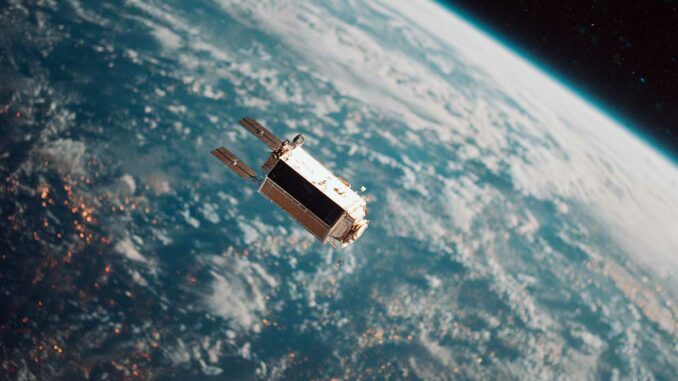
China and Russia are testing more discreet satellites. Orbital stealth, military challenges, and disruption of the strategic balance in space.
Summary
China and Russia are accelerating the development of so-called “stealth” military satellites, designed to reduce their detectability and make them more difficult to track from the ground. This development marks a new stage in the militarization of space. The objective is not only to protect critical assets, but also to preserve the ability to observe, communicate, and guide conventional weapons in the event of a major conflict. Orbital stealth relies on reduced signatures, increased maneuverability, and behaviors designed to deceive adversarial surveillance. These programs raise major questions: how effective are they against Western sensor networks, what are the risks of escalation, and how dependent are modern militaries on space infrastructure? As space becomes a contested battlefield, the value of conventional land, naval, and air weapons increasingly depends on satellites that can survive without being seen.
A now acknowledged rise in space power
For the past decade, China and Russia have been investing heavily in their military space capabilities. Long dominated by the United States, space has become a contested domain. Beijing has increased its launches, with more than 60 orbital launches per year in some years, while Moscow maintains its historical expertise inherited from the Soviet era.
This rise in power is no longer limited to the number of satellites. It now focuses on their discretion, resilience, and ability to operate in a hostile environment. Public demonstrations, such as maneuverable satellite tests and close-range inspections in orbit, signal a change in posture. Space is no longer a sanctuary. It is considered a military theater in its own right.
The concept of stealth applied to satellites
Talking about stealth for a satellite may seem surprising. Unlike an aircraft, an orbital object is subject to the laws of celestial mechanics and observed by multiple sensors. However, stealth does exist, in an adapted form.
It is based primarily on reducing observable signatures. This includes radar signatures, optical signatures, and infrared signatures. Absorbent materials, shapes that limit reflections, and surface treatments reduce visibility from space surveillance radars.
Orbital stealth also incorporates behavior. A satellite can limit its maneuvers, choose less crowded orbits, or exploit time windows when enemy sensor coverage is weaker. The goal is not to become invisible, but to complicate detection, identification, and accurate tracking.
Chinese programs between discretion and maneuverability
China has shown a keen interest in satellites capable of maneuvering and changing orbit. Several spacecraft launched under the guise of civilian missions have performed unusual movements, interpreted by analysts as rendezvous and proximity tests.
Some Chinese satellites are reportedly designed to reduce their optical signature by limiting the reflection of sunlight. Others are experimenting with intermittent operating modes, with sensors activated in sequences, in order to reduce their electromagnetic footprint.
Beijing is also seeking to diversify its orbits. Beyond low Earth orbit, platforms operating in higher or highly inclined orbits complicate continuous surveillance. This approach aims to protect sensitive missions, particularly intelligence and missile guidance.
Russia and the legacy of space warfare
Russia has a long tradition of military space activities. Its recent programs show a desire to regain certain capabilities lost after the end of the USSR. Moscow is testing inspection satellites capable of approaching other objects in orbit, officially for maintenance or observation missions.
These satellites have discreet flight profiles and reduced signatures, suggesting efforts in orbital stealth. Russia is also focusing on maneuverability, with satellites capable of changing their trajectory over short periods of time, making them more difficult to predict.
This capability is strategic. A satellite that is difficult to track is more complicated to target, whether by a kinetic anti-satellite weapon or by directed jamming.
Real effectiveness against surveillance networks
The central question remains: are these stealth satellites really effective? The United States and its allies have sophisticated space surveillance networks, combining radars, optical telescopes, and infrared sensors. Systems such as Space Fence can detect small objects in low orbit.
In this context, stealth does not mean total invisibility. Rather, it aims to delay detection, complicate identification, and introduce uncertainty. Gaining a few hours or days can be enough in a crisis scenario, particularly to reposition satellites or carry out a critical mission.
Orbital stealth is therefore relative. It is a multiplier of effectiveness, not an absolute guarantee of survival.
Major geostrategic implications
The emergence of stealth satellites is changing the strategic balance. It is intensifying competition between major powers and increasing mistrust. A satellite that is difficult to detect is perceived as potentially offensive, even if it is performing a defensive mission.
This ambiguity fuels the risk of escalation. In a crisis, the loss of visibility on adversary capabilities can lead to faster and more aggressive decisions. Space is thus becoming an area of decreasing transparency, unlike in previous periods when orbits and missions were more predictable.
For China and Russia, these satellites are also a means of compensating for a perceived asymmetry with US capabilities. They seek to guarantee their freedom of action in space while implicitly threatening that of their rivals.

The growing dependence of conventional weapons
One of the most critical issues concerns the dependence of conventional weapons on space. Precision missiles, long-range drones, modern aircraft, and even ground forces rely on satellites for navigation, targeting, and communications.
If these satellites are neutralized or blinded, the effectiveness of conventional forces drops sharply. This is why the survival of constellations is becoming as important as that of combat platforms themselves.
Stealth satellites capable of operating longer in contested environments enhance overall military credibility. They extend the ability to strike with precision and coordinate complex operations.
The consequences for military doctrine
This evolution is pushing armies to rethink their doctrines. Satellite protection is becoming a priority mission, on a par with air and missile defense. The concepts of redundancy, distributed constellations, and space resilience are gaining in importance.
China and Russia are combining stealth with proliferation. Rather than relying on a few highly sophisticated satellites, they are exploring more dispersed architectures, where the loss of one element does not cause the system to collapse.
This approach complicates the task of the adversary, who must detect, identify, and neutralize a growing number of potential targets.
The limitations and risks of the model
Despite their promise, stealth satellites have limitations. Materials and designs aimed at reducing signatures can increase costs and reduce lifespan. Maneuverability consumes fuel, limiting the time spent in useful orbit.
There is also a risk of uncontrolled proliferation. Satellites that are difficult to track increase the likelihood of collisions, particularly in already saturated low Earth orbit. An incident could generate debris, affecting all players, including those seeking to protect themselves.
Finally, the race for stealth can lead to costly technological escalation, without guaranteeing a decisive long-term advantage.
Towards a less transparent and more unstable space
China and Russia’s experimentation with stealth satellites confirms a major trend: space is becoming less transparent and more conflictual. The implicit rules that governed orbital activity are eroding, replaced by a logic of permanent competition.
For strategists, the question is no longer whether space will be militarized, but how to limit the risks while preserving vital capabilities. Orbital stealth is one tool among many, effective in certain conditions, but potentially destabilizing.
As satellites become more discreet, the line between deterrence and provocation is blurring. Conventional weapons, meanwhile, remain dependent on this invisible ecosystem. Their future relevance will therefore be played out as much in space as on terrestrial battlefields.
Sources
- Center for Strategic and International Studies — analyses on the militarization of space
- US Space Command — public reports on orbital surveillance
- Secure World Foundation — studies on maneuverable satellites and space security
- International Institute for Strategic Studies — The Military Balance (space chapters)
- Open source analyses on Chinese and Russian space programs
War Wings Daily is an independant magazine.