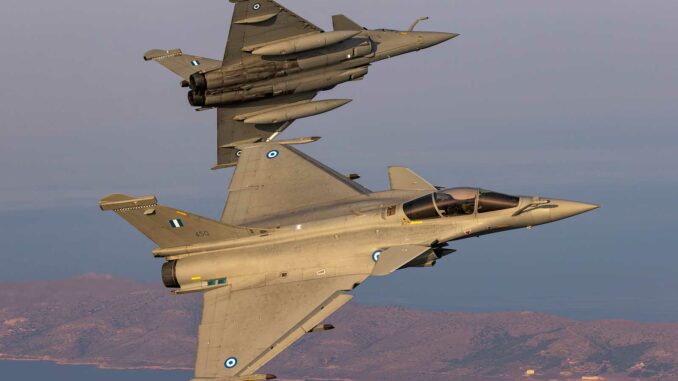
To sell the Rafale abroad, France has sold aircraft from its own squadrons. A commercial success with significant operational implications.
Summary
The export success of the Rafale has become one of the pillars of French industrial and strategic policy. In order to quickly conclude certain contracts, notably with Greece and Croatia, Paris agreed to deliver aircraft taken directly from its own operational fleet. This decision made it possible to speed up deliveries and secure politically and economically important contracts. But it also created temporary gaps in France’s air defense system. The direct consequences of this are fewer aircraft available, increased pressure on the remaining airframes, and accelerated aging of the fleet. This strategy raises a fundamental question: how far can France support Rafale exports without permanently weakening its own fighter aircraft fleet?
The conscious choice to deliver quickly in order to win contracts
In an extremely competitive fighter jet market, speed of delivery has become a decisive factor. For some countries, waiting five or six years for new aircraft to roll off the production line is unacceptable. France understands this well.
Faced with competing American and European offers, Paris has put forward a differentiating argument: the immediate delivery of available aircraft. This choice has been decisive in several negotiations. However, it requires a temporary sacrifice, namely taking aircraft from French squadrons already in service.
This strategy is not improvised. It is the result of a political trade-off between industrial priority, diplomatic credibility, and acceptance of a controlled operational risk.
The Greek case, symbol of rapid but costly success
The contract signed with Greece perfectly illustrates this logic. Athens was seeking to rapidly strengthen its air power in the face of regional tensions. France offered a turnkey solution.
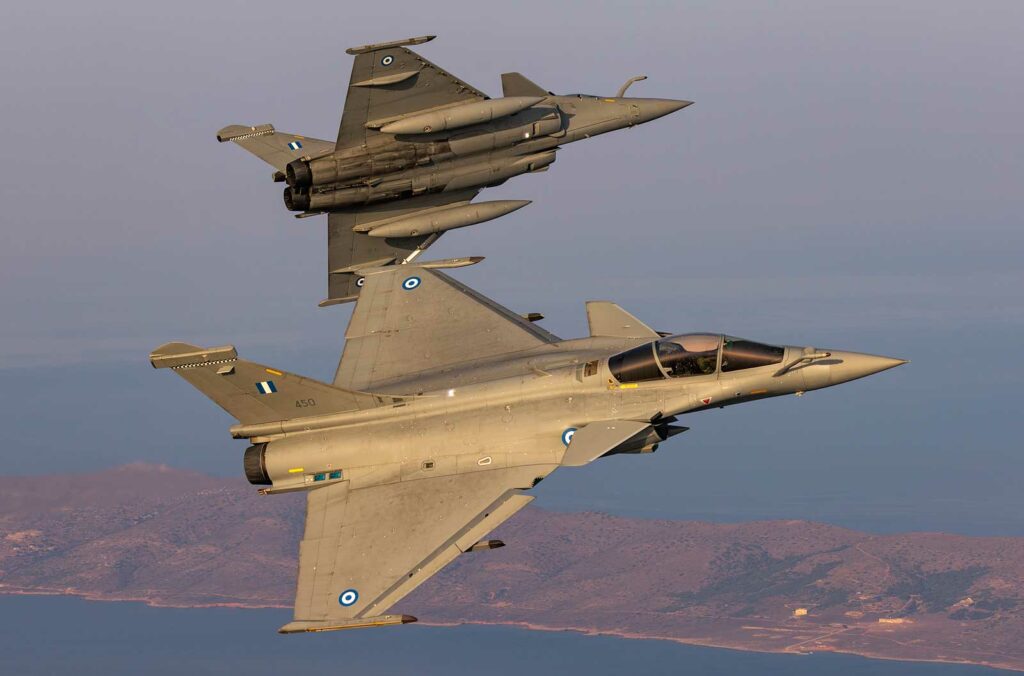
The initial agreement covered 18 Rafale aircraft, including 12 second-hand planes from the French Air and Space Force, supplemented by new aircraft. These planes were taken from operational squadrons, modernized, and then delivered in record time.
Politically and industrially, the operation was a success. It strengthened the strategic relationship between France and Greece and consolidated the Rafale’s position in the European market. From a French military perspective, it created a temporary gap, which was partially offset by planning adjustments and a delayed ramp-up in industrial production.
Croatia and the repetition of the same pattern
A few months later, Croatia also chose the Rafale. Here again, the speed of delivery was decisive. The contract covers 12 used Rafales, all from the French fleet.
These aircraft, formerly in service, have been refurbished and upgraded to a standard compatible with Croatian requirements. For Paris, the challenge was twofold: to prevail over competing bids and to consolidate its strategic presence in the Balkans.
But the cost is clear. Between Greece and Croatia, more than 20 aircraft have been temporarily removed from the French operational fleet, at a time when parliamentary reports already consider the fleet to be too small.
The real state of the French Rafale fleet
On paper, France has just over 200 Rafales, divided between the Air and Space Force and the Navy. In practice, the number of aircraft actually available for combat missions is much lower.
Part of the fleet is grounded for heavy maintenance or modernization. Other aircraft are assigned to training, testing, or nuclear deterrence. Average availability fluctuates around 55 to 60%, depending on the period.
When aircraft are withdrawn for export, even temporarily, the effect is immediate. The remaining squadrons must carry out the same missions with fewer aircraft, which automatically increases the number of flight hours per aircraft.
Operational gaps created by these transfers
The authorities refer to these as temporary gaps. In reality, these capacity gaps have several concrete consequences.
The first concerns permanent air security posture. Fewer aircraft available means less margin to cope with peaks in activity or simultaneous crises.
The second concerns operational readiness. The aircraft remaining in service fly more. This accelerates airframe wear and reduces the margin for advanced training.
Finally, these sales complicate medium-term planning. Until the new aircraft intended to replace those sold are delivered, the format remains under strain.
The impact on the aging of the remaining airframes
Every flight hour counts. The Rafales selected for export were often among the oldest airframes, but their departure shifts the burden to the remaining aircraft, some of which are also already well worn.
This situation creates a snowball effect. The more an aircraft flies, the more maintenance it requires. The more maintenance increases, the more overall availability decreases. This cycle is well known and documented in defense reports.
In the long term, this pressure can lead to difficult trade-offs: extending certain airframes beyond their initial potential or accepting a temporary decline in capacity.
The central role of industry and production rates
The key to this equation remains industrial capacity. Aircraft sold for export must be replaced by new Rafales rolling off the production line. However, current production rates do not allow for immediate compensation.
Increasing production requires investment, skilled personnel, and a robust supply chain. Engines, radars, and critical equipment cannot be produced overnight.
Until production ramps up, each aircraft sold for export represents a temporary shortfall for the French armed forces. This gap is accepted politically, but it is not neutral militarily.
A commercial success that raises questions about strategic consistency
It would be simplistic to present these sales as a mistake. Rafale exports strengthen the national industry, support employment, and consolidate strategic alliances. These benefits are real and measurable.
But this success also highlights a structural imbalance. France has a highly effective fighter aircraft fleet, but one that is limited in number. Each sale of existing aircraft accentuates this fragility in the short term.
Parliamentary reports emphasize that this strategy is only viable if it is accompanied by a sustained budgetary effort to rebuild the fleet and improve availability.
How far can this model go?
The question is not theoretical. Other export opportunities exist. If they are again based on used French aircraft, the strain on the fleet could become critical.
In the medium term, France will have to choose. Either it significantly increases its fighter fleet and industrial capacity, or it accepts that each export success will result in a temporary weakening of its own air defense.
The Rafale has become a major strategic asset. But an asset that is overused may ultimately expose its own limitations. Commercial success does not automatically guarantee military resilience.
Sources
- Reports from the National Assembly’s Defense Committee
- Parliamentary hearings on arms exports
- Public data on Rafale contracts with Greece and Croatia
- French military planning documents
- Institutional analyses on the availability of the French fighter fleet
War Wings Daily is an independant magazine.