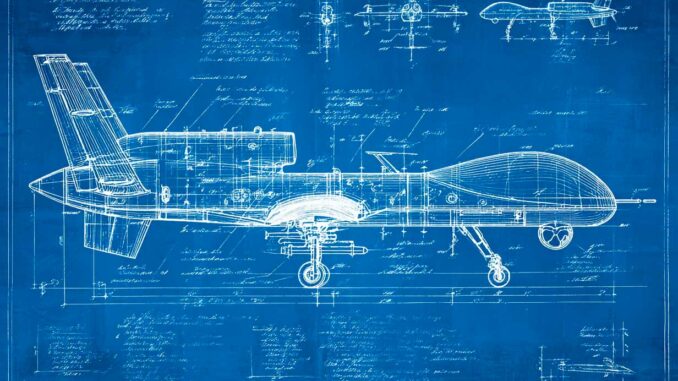
The United States bans foreign drones and UAS components for security reasons. The US drone sector is entering a period of major disruption.
Summary
The US drone sector (UAS) is facing unprecedented upheaval after the Trump administration imposed a ban on foreign drones and their critical components on the US market, via an update to the Federal Communications Commission (FCC) Covered List, which deems these products to pose “unacceptable” risks to national security. This particularly affects dominant Chinese manufacturers such as DJI and Autel Robotics, as well as a whole range of components (flight controllers, radio systems, navigation, motors, batteries). This policy aims to reduce US dependence on foreign supply chains and encourage a relocation of production, but raises questions about the US industrial capacity to quickly replace these technologies, the cost of transition, and the impact on sectors that make extensive use of these drones for agriculture, public safety, and industry. The measure does not affect drones that are already certified or in service, but blocks the certification of new foreign models and components.
The US decision that changes the rules of the game
At the end of December 2025, the U.S. Federal Communications Commission (FCC) announced the addition of uncrewed aircraft systems (UAS) and their critical components produced abroad to its Covered List, a list of technologies deemed to pose “unacceptable risks” to U.S. national security. This update stems from a National Security Determination that considers foreign technologies, particularly Chinese ones, to pose risks of espionage, data exfiltration, or unauthorized operations in US airspace.
In practical terms, this decision means that no new foreign drones and no essential components produced outside the United States will be able to obtain the necessary authorization to be imported, marketed, or used in the U.S. market. Among the companies targeted are Chinese giants such as DJI, which holds an estimated 70-80% market share of commercial drones in the United States, and Autel Robotics, although exemptions may be granted on a case-by-case basis by the Pentagon or the Department of Homeland Security.
It is important to note that this ban does not apply to drones and components that are already certified and in circulation in the United States: current users can continue to use them and retailers can still sell units that have already been authorized. It is the certification of new foreign products that is now blocked.
A foreign supply chain at the heart of the problem
The global drone and UAS industry relies heavily on international production chains, with vital components often manufactured in Asia, particularly in China, Taiwan, and South Korea. These components cover a wide range of functions: data transmission systems, radio communication modules, flight controllers, ground control stations, navigation systems, optical or infrared sensors, batteries, and motors. It is this industrial reality that makes implementing an “all American components” policy extremely complex.
The most striking example is that of motors and batteries, often considered “simple” but essential components: without reliable motors and high-performance batteries, a drone cannot fly. Programs such as the Department of Defense’s Blue UAS seek to validate commercial drones without components from countries considered adversaries, but it turns out that even these approved platforms still incorporate engines or batteries manufactured in China. This illustrates the depth of the sector’s dependence.
The strategic motivations behind US policy
The measure is part of a broader strategy to “restore US airspace sovereignty” and promote the dominance of US drones, as outlined in executive orders signed by Donald Trump in 2025.
These texts aimed to secure telecommunications networks, encourage domestic production, and limit access to foreign technologies deemed sensitive.
The US authorities justify this policy by the need to protect internal security, particularly in the run-up to major global events such as the 2026 FIFA World Cup and the 2028 Olympic Games in Los Angeles, where the risk of foreign drones being used for malicious acts is considered high.
Immediate industrial impact on the US market
This ban on foreign technologies is disrupting a market that, until recently, was largely dominated by players such as DJI. For the US public and private sectors that use these drones for surveillance, precision agriculture, mapping, public safety, and infrastructure inspection missions, the measure requires a rapid reconfiguration of purchasing and operations. DJI criticized the decision as an act of protectionism, arguing that its products were among the safest on the market and contesting the lack of tangible evidence of risk.
The authorities emphasize the need to reduce dependence on foreign technologies that could, in extreme scenarios, be exploited to compromise infrastructure or collect sensitive data.
The challenge of relocating the UAS supply chain
One of the major challenges for the US industry is to rebuild an entirely domestic supply chain, which involves technical, economic, and time-related challenges. Achieving this transition means developing or strengthening local production capabilities for thousands of highly specialized components, embedded systems, and software. This requires massive investments in R&D, factories, recruitment, and industrial certification.
The economic cost of the transition
Producing components within the United States is generally more expensive than in Asia, due to labor, regulatory, and infrastructure costs. U.S. manufacturers will have to absorb these costs or pass them on to the final price, which could increase the price of domestic UAS drones. At a time when the drone market is already highly competitive, this cost pressure could reduce the competitiveness of U.S. products for export.
The time factor
A complete reconfiguration of the supply chain to a 100% American model will not happen overnight. Even with accelerated investment and tax incentives, it will take several years, or even a decade, to achieve true industrial independence in all segments (sensors, communications, motors, embedded software, high-performance batteries). During this time, regulatory constraints could slow innovation and limit user choice.
Consequences for foreign manufacturers and international relations
The US ban weighs heavily on foreign manufacturers, particularly Chinese ones that exported significant volumes to the US market. This could cause diplomatic and trade tensions between the US and producing countries, particularly China, which has denounced discriminatory policies. In addition, this measure risks fragmenting the global drone market, already marked by technological rivalries, and could encourage other nations to adopt their own protectionist regulations.
The future of the drone industry in the United States
This US policy goes beyond a simple trade issue: it reflects a strategic paradigm shift in how technology deemed critical is integrated into national infrastructure. It highlights the challenges of technological dependence and the difficult choices between national security and global economic integration.
For the US UAS sector, the challenge will be to transform this political imperative into a robust and competitive industrial capacity capable of meeting domestic demand without sacrificing innovation or access to cutting-edge technologies. The next few years will be decisive in determining whether the US succeeds in closing this gap or whether this policy will lead to rising costs and market disruptions.
Sources
- Aviation Week Network, U.S. Drone Sector Faces Headwinds After Trump Ban On Foreign Systems (January 8, 2026)
- Agriculture.com, FCC Foreign Drone Ban Could Impact U.S. Farmers (December 29, 2025)
- Helicomicro, Future drones and certain components produced outside the … (December 24, 2025)
- Phototrend, DJI officially banned in the United States (December 23, 2025)
- Euronews, United States bans recent Chinese drones … (December 23, 2025)
War Wings Daily is an independant magazine.