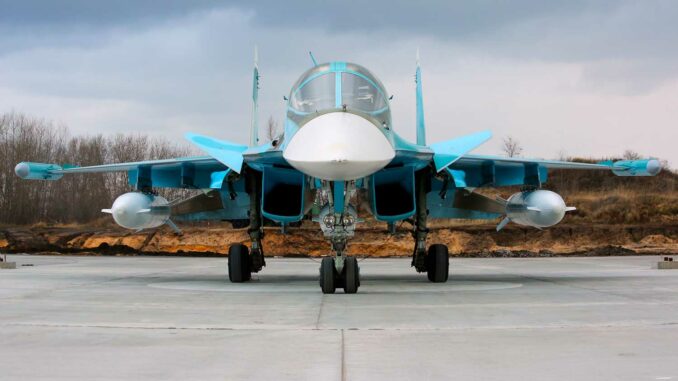
Russia claims $70 billion in arms export orders. Customers, systems sold, budgets committed, and real limits.
Summary
In early 2026, the Russian authorities claimed that the country’s arms export portfolio had now reached $70 billion. This announcement comes in a paradoxical context. On the one hand, the Russian defense industry is under pressure, facing Western sanctions, industrial constraints, and a priority given to the national war effort. On the other hand, Moscow continues to claim a central position in the global arms market, particularly in non-aligned countries. The figure put forward corresponds to contracts signed or in advanced negotiations, spread over several years, covering a wide range of systems: combat aircraft, air defense, armored vehicles, artillery, missiles, and naval equipment. This value does not reflect an annual flow, but rather a stock of orders. It sheds light on Russia’s commercial priorities, the nature of its customers, and the gradual restructuring of the global arms market.
The real meaning of the $70 billion figure
A portfolio, not annual revenue
The figure of $70 billion corresponds to a cumulative order book, not immediate deliveries. In the defense industry, these portfolios generally span five to ten years. This means that the actual annual delivery amount is much lower, probably between $8 billion and $12 billion per year, depending on the pace of production and delivery.
This distinction is essential. It allows Moscow to highlight its commercial resilience, without guaranteeing a smooth industrial capacity to fulfill all contracts on time.
Strategic communication
The announcement is aimed at both customers and competitors. It serves to reassure long-standing partners, attract new buyers, and demonstrate that Russia remains a key player despite its diplomatic isolation from the West. It is as much a political signal as it is an economic one.
Key players in Russian exports
The central role of Rosoboronexport
Almost all Russian arms exports pass through Rosoboronexport, the state agency responsible for negotiating, signing, and supervising contracts. This centralization allows for close political control, but it also limits commercial flexibility in the face of more decentralized competitors.
Rosoboronexport currently manages contracts with more than 30 countries, with a marked concentration in Asia, the Middle East, and Africa.
An industry focused primarily on the domestic market
Since 2022, a growing share of production has been directed toward the Russian armed forces. This creates structural tension between domestic orders and exports. Export contracts are maintained, but often rescheduled. This constraint explains why the portfolio is growing faster than actual deliveries.
The main categories of weapons concerned
You’re right: at this stage, talking about “4++ fighters” or “armored vehicles” without naming the systems and without giving orders of magnitude by country is too vague.
Key point before going into detail: the $70 billion portfolio announced by Denis Manturov corresponds to signed contracts (order book), not annual deliveries. And Russia does not publish the official breakdown by customer, by system, and by amount. However, we can reconstruct a credible breakdown based on large public contracts, programs still in delivery, and documented trends among importers.
Aircraft and air systems: what Moscow really sells
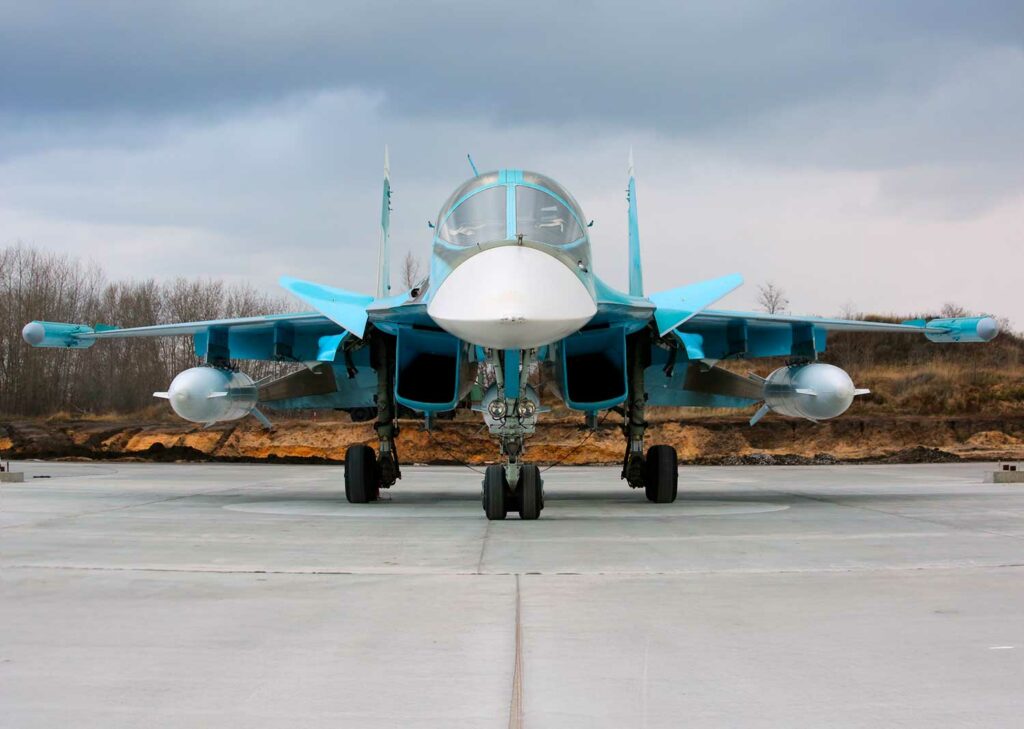
Fighters and training aircraft
In Russian exports, the aviation sector that “drives” value is primarily composed of:
- Su-30 (Su-30MK / Su-30MKI / Su-30MKA family depending on customer): the export “workhorse.” It is often sold in batches + MCO + armament + training.
- Su-35: high-end 4++, expensive in terms of support and armament.
- Su-57E: showcase, low volumes but high entry ticket.
- Yak-130: advanced training and light support.
Typical amounts (order of magnitude)
- “Flyaway” heavy fighter: often $50 to $90 million per unit depending on version and context.
- “Package” contract (aircraft + parts + simulators + weapons + training + initial support): $100 to $150 million per aircraft is not uncommon.
- A batch of 12 to 24 aircraft with a package can therefore range from $1.2 to $3.6 billion, and climb even higher if the armament is extensive and multi-year support is included.
Examples of identifiable “big tickets”
- Algeria / Su-57E: several open sources mention a contract worth around $2 billion (this amount should be considered a press estimate, not official data).
- India / aviation segments: India remains structurally Russia’s largest customer (it weighs heavily in the flows observed for 2020–2024).
Here, most of the value on the “air” side often lies less in new complete fighters than in:
- support,
- modernization,
- ammunition and spare parts stocks,
- and sometimes fleet additions.
Helicopters
The export segment continues to be driven by:
- Mi-17/Mi-171 (transport),
- modernized Mi-35 / Mi-24 (attack),
- Ka-52 (attack).
Contracts are often smaller in terms of unit price than fighter jets, but they are frequent and associated with support.
Air defense: the most expensive “loss leader”
Russia sells complete layers:
- Long range: S-400 (and sometimes S-300PMU-2 depending on the customer).
- Medium range: Buk (Buk-M2/M3 families depending on export).
- Short range/point defense: Tor and Pantsir-S1.
The most solid example in terms of figures: India/S-400
- India: S-400 contract worth $5.43 billion for five “regimental sets” (often described as five regiments).
Order of magnitude: ~$1.1 billion per set, including missiles, radars, C2, and initial support.
At this level, air defense quickly “drains” the wallet: a single customer can represent several billion dollars.
Armored vehicles and other vehicles: high volumes, more diffuse value
Tanks and combat vehicles
Exports mainly include:
- T-90S / T-90MS (tank),
- BMP-3 (infantry fighting vehicle),
- BTR (troop transport),
- modernization of existing fleets (T-72, BMP-2, etc.).
Notable example: Egypt / T-90MS
- Several sources mention a contract for 400–500 T-90MS (with local assembly planned).
The official amount is not public. In practice, a deal of this size, depending on the level of industrial transfer, ammunition, and support, often amounts to several billion dollars (indicative range, impossible to “lock in” without a contractual document).
Artillery and rockets
- Rocket launchers (Grad/Smerch type families and derivatives)
- Self-propelled/towed guns
- Ammunition (often underestimated, even though it represents the long-term value)
Here, the value comes more from ammunition stocks and support than from the platform itself.
Missiles and guided weapons: the “invisible” part of contracts
This item is often included as part of a “package” with aircraft, ships, or ground-to-air defense:
- air-to-air, air-to-ground, and anti-ship missiles,
- guided munitions,
- stock replenishment.
It is also an item that Russia can sell even when the platforms are already in service with the customer, making it a good “portfolio feeder.”
Naval equipment: fewer customers, but long contracts
Typical export products:
- frigates/corvettes,
- submarines (strong history in certain markets),
- naval systems (missiles, radars, C2).
Order of magnitude:
- corvette/light frigate: often $400 to $800 million depending on armament and support,
- submarine: often > $500 million to > $1 billion depending on configuration and logistics package.
Breakdown by region: what we can say without inventing
Once again: no official breakdown of the $70 billion order book. However, observed import trends provide some guidance.
A solid foundation: the major recipients of Russian exports observed
For 2020–2024, SIPRI indicates that two-thirds of Russian exports went to three countries: India (38%), China (17%), and Kazakhstan (11%).
This does not “prove” the exact distribution of the $70 billion order book, but it strongly suggests that:
- Asia + the post-Soviet space carry a lot of weight,
- and that Russia still depends on a few key customers.
Plausible breakdown of the order book (indicative, to be treated as an estimate)
- Asia: ~45–60% (with India as the anchor: air defense, support, modernization, ammunition).
- Post-Soviet space: ~10–20% (CIS/allies, often air defense, spare parts, modernization) .
- MENA: ~15–25% (longstanding customers, but increased competition and political constraints).
- Africa: ~5–15% (smaller unit tickets, but volume and influence).
- Latin America: < 5% (marginal market for Moscow).
This structure is consistent with both the reality of major known programs and the fact that Russia claims an increase in “signed contracts,” even if deliveries are constrained.
Geographic breakdown of contracts
Asia as the leading market
Asia remains the leading market for Russian arms. Countries that have historically been customers continue to renew their fleets, often in stages, in order to smooth costs and limit dependencies.
These contracts cover aircraft, helicopters, surface-to-air systems, and land-based weapons. The cumulative amounts for the Asian region represent more than 40% of the announced portfolio.
The Middle East: a targeted but complex market
In the Middle East, Russia maintains its position but faces increased competition. Contracts there are often politically sensitive and dependent on regional balances. Air defense systems and ground equipment dominate discussions.
Budgets are high, but volumes remain limited due to the diversification of suppliers by states in the region.
Africa: gradual and strategic growth
Africa represents a more modest share in terms of value, but is strategic in terms of influence. Contracts often involve ground equipment, artillery, and short-range air defense systems.
Unit budgets are lower, but agreements frequently include training, support, and military cooperation, which strengthens Russia’s long-term foothold.
Latin America and other regions
Latin America remains marginal in the overall portfolio, with a few targeted contracts. Russia maintains a symbolic presence there, but faces financial constraints among its customers.
Structural limitations of the Russian portfolio
Industrial capacity under strain
A high order book does not guarantee smooth execution. Sanctions limit access to certain components, particularly electronic ones. This requires substitutions, sometimes at the expense of deadlines or performance.
This constraint could lead to delivery delays or even contract renegotiations in some cases.
Increased competition in emerging markets
Russia is no longer alone in its traditional segments. Emerging players are offering competitive solutions, sometimes with less political exposure. This competition is weighing on margins and the ability to sign new long-term contracts.
What the figure of 70 billion really reveals
The figure put forward by Moscow reflects a capacity for maintenance rather than rapid growth. It shows that Russia retains a base of loyal customers, often for historical, financial, or political reasons. It also reveals an increased dependence on non-Western markets, with associated risks in terms of solvency and stability.
This portfolio is an important strategic indicator, but it also reveals the deep-seated constraints of the Russian defense industry. The key issue is not so much the volume of contracts as the ability to turn them into regular, credible, and sustainable deliveries in an increasingly fragmented international environment.
Sources
- Defense Blog, official Russian statement on the arms export portfolio
- Rosoboronexport press releases on current contracts
- Public data on Russian arms exports
- Analyses by think tanks specializing in the international arms trade
- Reports on the Russian defense industry and its production capabilities
War Wings Daily is an independant magazine.