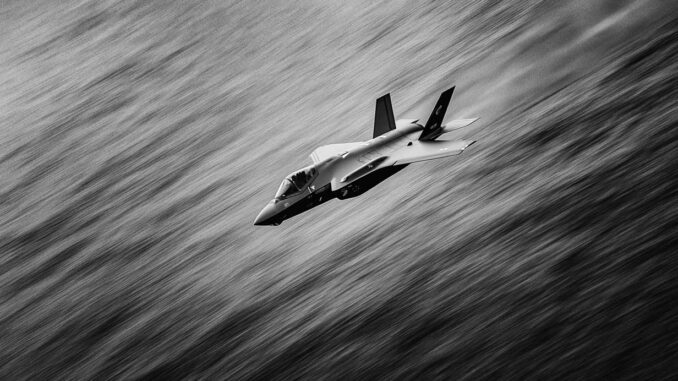
In 2025, Belgium admits that its airspace is too small to train its F-35s. A revealing admission of operational and budgetary limitations.
Summary
The Belgian Ministry of Defense’s admission in 2025 provoked ridicule and questions: Belgian airspace is too small to properly train the newly acquired F-35s. This observation is not anecdotal. It highlights a profound disconnect between the actual capabilities of a fifth-generation fighter jet and the operational geography of a small, densely populated European country. With its supersonic speed, extended range, and complex air-to-air and air-to-ground training requirements, the F-35 demands maneuvering space that Belgium cannot provide on its own. The result: increased dependence on neighboring countries, rising indirect costs, and questions about the strategic relevance of this purchase. Behind the caricatured phrase “too small a sky” lies a serious debate about military effectiveness, operational sovereignty, and the balance between doctrine, budget, and territory.
Official acknowledgment of inadequate airspace
In 2025, the Belgian Ministry of Defense publicly acknowledged a structural constraint: the national territory does not allow for complete training flights for the F-35. The country covers an area of approximately 30,700 km², with a maximum width of around 280 km. At high subsonic speed, a modern fighter jet can cross this area in a matter of minutes. At supersonic speed, the crossing takes seconds.
This reality is not new to the Belgian Air Force. It already existed with the F-16s. But it becomes critical with an aircraft whose doctrine of use is based on sensor fusion, long-range maneuvers, and simultaneous management of multiple threats. The problem is not only speed, but the three-dimensional volume required to simulate credible engagements.
The characteristics of the F-35 and their spatial requirements
The F-35A, the version chosen by Belgium, is a fighter aircraft capable of reaching Mach 1.6 (approximately 1,975 km/h at altitude). Its range exceeds 1,000 km in air-to-air missions without refueling, and its operational ceiling is around 15,000 m (49,000 ft).
Realistic training involves:
- transit phases,
- patrol areas,
- simulated combat volumes,
- safety corridors for stealth and sensors.
However, in Belgium, the density of civilian traffic, the immediate proximity of borders, and the shallow strategic depth drastically limit these scenarios. Even when setting up reserved zones, the useful training time remains short and fragmented.
Comparison with other aircraft in the air component
The F-16s previously operated by Belgium already had similar constraints, but their doctrine of use was more tolerant. Less stealthy and less dependent on integrated sensors, they allowed for shorter and more segmented training sessions.
With the F-35, the situation is changing. The aircraft is not designed for circular flights in a restricted space, but for integrated missions over vast theaters. Compared to European aircraft such as the Rafale or the Eurofighter Typhoon, the F-35 is distinguished by its increased dependence on scenario consistency and the duration of tactical phases. This increases the pressure on the available space.
Dependence on neighboring countries
Faced with this geographical impasse, Belgium must negotiate permanent agreements with its neighbors, notably France and the Netherlands. These cooperation agreements provide access to larger airspaces, maritime zones, and firing ranges.
This solution is pragmatic, but it poses several problems. First, it reduces training autonomy. Second, it introduces diplomatic and scheduling constraints. Finally, it generates indirect costs: travel, fuel, coordination, and scenario adaptation.
From a military standpoint, this means that pilots’ skill development depends on foreign agendas, which is far from neutral in the event of regional tensions or crises.
The consequences on the level of actual training
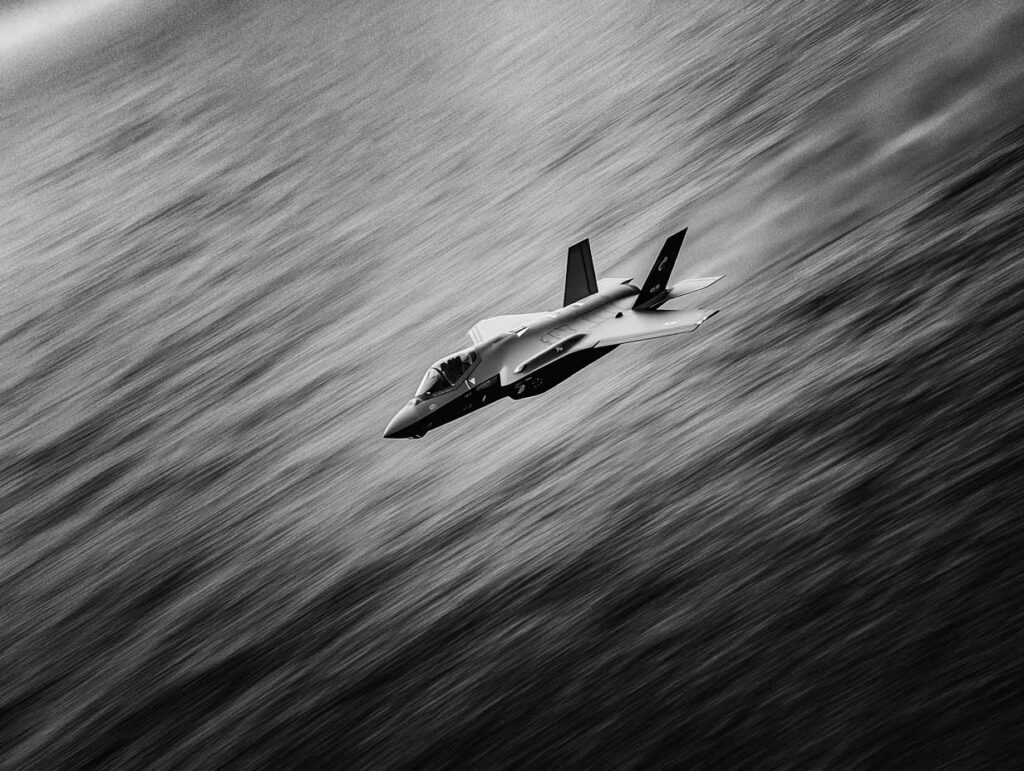
An F-35 pilot must accumulate a significant number of hours in conditions close to combat. When training is fragmented, shortened, or moved abroad, educational continuity suffers. Flights become more expensive and less frequent.
Simulation partially compensates for these limitations. The F-35 has advanced onboard simulation capabilities. But no simulator can completely replace training in real conditions, particularly for managing stress, weather, and traffic.
Ultimately, the risk is clear: a technologically advanced aircraft, but underutilized due to a lack of a suitable environment.
The budgetary weight of a controversial choice
The acquisition of the F-35s represents an investment of several billion euros over the lifetime of the program. Added to this are the costs of maintenance, software updates, and infrastructure. When training has to be outsourced, the bill gets even higher.
The question then becomes political: are taxpayers financing a tool that cannot be used to its full potential on national territory? The argument of interoperability with NATO is often put forward. It is a valid point. But it does not entirely address the issue of day-to-day efficiency.
The relevance of other capability choices
With hindsight, some experts believe that aircraft with lower airspace requirements would have been more consistent with Belgium’s geography. Modernized, previous-generation multi-role aircraft offer credible capabilities for air policing and collective defense at a lower operational cost.
This does not mean that the F-35 is ineffective in itself. But its suitability for a small airspace is debatable. The issue is not technological, it is strategic and territorial.
A symbol of European limitations
The Belgian case goes beyond the simple national framework. It illustrates a recurring tension in Europe: the adoption of systems designed for powers with vast spaces, without sufficient adaptation to local realities. In this context, cooperation becomes essential, but it does not replace in-depth doctrinal reflection.
Admitting that the sky is too small is not an admission of technical failure. It reveals a discrepancy between ambition, resources, and geography. In the long term, this lucidity could lead to more realistic choices, provided that it does not remain a mere subject of media derision.
Sources
Press releases from the Belgian Ministry of Defense
Public data on the performance of the F-35A
Belgian parliamentary reports on the F-35 program
NATO doctrinal analyses on air training in Europe
War Wings Daily is an independant magazine.