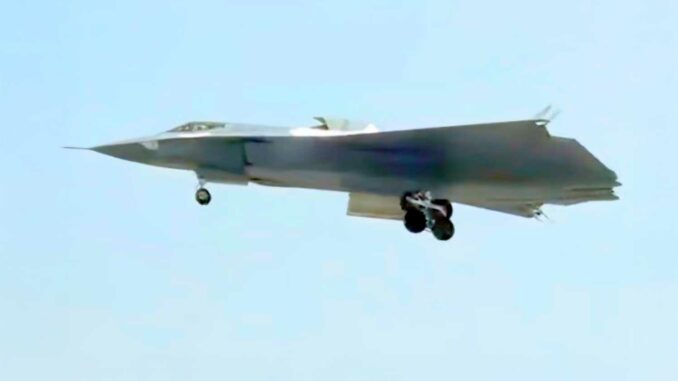
China is developing two major stealth aircraft. The J-20 and J-36 fulfill distinct roles in a strategy of global air superiority.
In summary
The coexistence of the J-20 and J-36 is neither a duplication nor an industrial hesitation. It reflects Beijing’s clear strategic vision: to build a combat air force capable of covering the entire spectrum of high-intensity conflicts. The J-20 is a stealth precision interceptor, optimized for regional air superiority, hunting high-value aircraft, and defending China’s expanded airspace. The J-36, not yet officially designated but widely documented by open and industrial sources, follows a different logic: deep penetration, endurance, long-range strike, and advanced air command. Together, these two platforms form a coherent architecture designed to challenge Western air dominance in the Indo-Pacific on a lasting basis. This choice reflects China’s military rise, but also a broader political ambition: to establish itself as a leading air power, capable of deterring, striking, and enduring.
The J-20 as the pillar of Chinese air superiority
The Chengdu J-20 is now the core of China’s fifth-generation fighter fleet. Entering operational service in the late 2010s, it was designed primarily to respond to a specific threat: Western aircraft with high strategic value.
The J-20 is distinguished by its large stealth airframe, optimized to reduce its frontal radar signature. It is over 20 meters long, with a wingspan of nearly 13 meters, making it one of the largest stealth fighters in the world. This size is no coincidence. It allows the aircraft to carry long-range air-to-air missiles internally, while maintaining a high range.
Its primary role is precision interception. The J-20 is designed to detect, track, and neutralize targets such as airborne early warning aircraft, refueling tankers, and bombers at long ranges. In this role, stealth is used less to penetrate saturated airspace than to approach undetected.
In terms of performance, recent versions are said to be capable of sustained supersonic flight without afterburners, with an estimated maximum speed of around Mach 2 (approximately 1,520 mph). Its range is said to exceed 750 miles without refueling, a figure consistent with its extended defense role.
The J-20 as a sensor and air combat node
Beyond its kinematic qualities, the J-20 is designed as an information node. It incorporates advanced sensors, AESA radar, electro-optical systems, and secure data links.
This architecture allows it to play the role of advanced patrol leader, capable of detecting threats and guiding other aircraft or long-range missiles. The J-20 is therefore not just a lone fighter. It is part of a collaborative combat strategy, where information takes precedence over maneuvering.
This positioning explains why China has invested heavily in this program. Open estimates suggest that more than 200 aircraft have already been produced or are in production, a significant figure that reflects a desire for mass production rather than a simple technology demonstrator.
The J-36 as a conceptual and strategic breakthrough
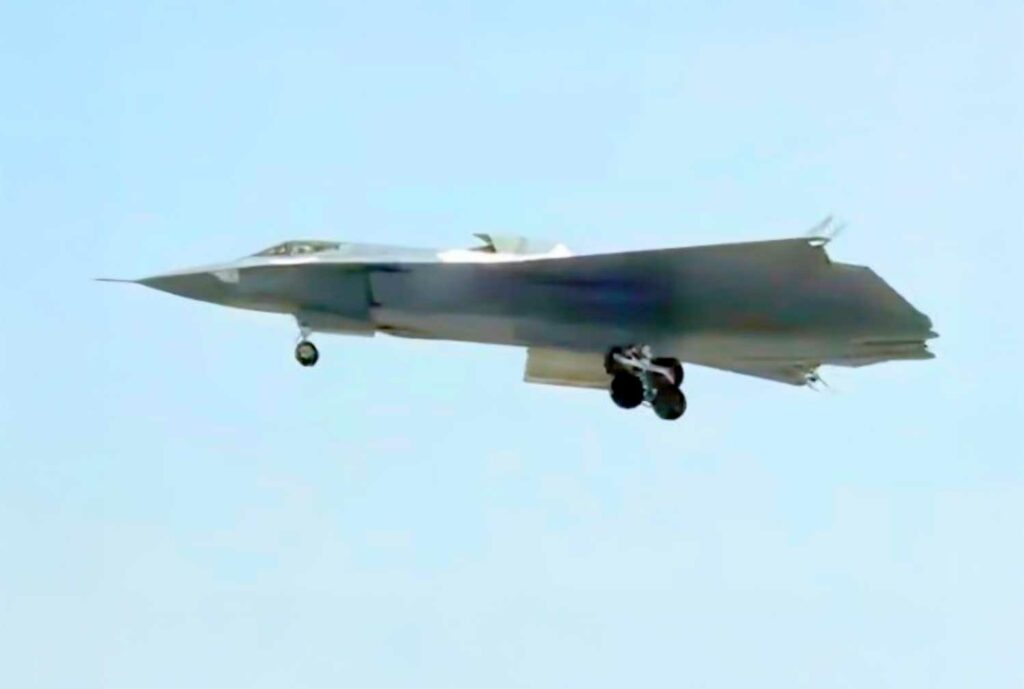
Although not officially presented by Beijing, the J-36 is increasingly clearly emerging as a separate program. Satellite images, industrial models, and analyses all point to a platform much larger than the J-20, sometimes described as a heavy fighter or tactical stealth bomber.
The J-36 would be part of a global superiority platform strategy. Its supposed size, with a wingspan that could exceed 20 meters, suggests a significant internal payload capacity, both in terms of weapons and fuel.
Unlike the J-20, the J-36 would not be optimized for close air combat.
Its main mission would be deep penetration into contested airspace at long range, with a high degree of autonomy. Some estimates suggest a range of over 3,000 kilometers, placing it in an intermediate category between fighter and bomber.
Operational complementarity between the J-20 and J-36
The Chinese logic is based on assumed complementarity. The J-20 secures regional airspace and neutralizes critical threats. The J-36 acts further, longer, and more heavily.
In an Indo-Pacific scenario, the J-20 could lead the way, eliminate enemy sensors, and create windows of opportunity. The J-36 would then exploit these gaps to strike strategic targets, disrupt logistics lines, or impose a lasting presence.
This division of roles limits compromises. The J-20 remains agile, optimized for interception. The J-36 prioritizes endurance, payload, and long-term survivability.
This approach differs from that of the United States, which seeks to assign multiple roles to a single platform. China, on the contrary, is deliberately diversifying its tools.
A message of military and political power
The simultaneous development of two stealth giants sends a clear signal. China is no longer content to simply catch up technologically. It is building a combat aviation force designed to last for decades.
Politically, this choice reinforces Beijing’s credibility as a global military power. It supports a strategic discourse based on regional deterrence, particularly around Taiwan, but also on the ability to project power beyond the first island chain.
The proliferation of stealth platforms complicates adversarial planning. It forces the United States and its allies to consider scenarios where air superiority is no longer a given, even at a distance.
The impact on the global strategic balance
The appearance of the J-36, in addition to the J-20, increases the pressure on Western air forces. It challenges the idea that China would be content with regional air defense.
With these two aircraft, Beijing has acquired a credible global challenge capability, combining interception, strike, and advanced air command. This development weighs on the budgetary and doctrinal choices of other powers.
It is also accelerating the race for sixth-generation systems, combat drones, and collaborative architectures. China is no longer playing catch-up. It is setting the pace.
Aviation designed for endurance and attrition
One often underestimated factor is industrial capacity. Producing a stealth aircraft is one thing. Producing several hundred, maintaining their availability, and ensuring their software evolution is quite another.
The J-20/J-36 combination suggests that China is anticipating long and demanding conflicts, where the ability to replace, repair, and modernize fleets will be crucial. This vision contrasts with more limited approaches focused on short conflicts.
It reflects a clear-eyed view of modern warfare, marked by attrition, saturation, and resilience.
A coherent and confident air strategy
China is not developing two stealth giants for the sake of publicity. It is doing so because these two platforms meet distinct but complementary needs.
The J-20 embodies precision, speed, and regional air superiority. The J-36 symbolizes depth, endurance, and strategic projection. Together, they form a structuring duo capable of reshaping the air balance in the Indo-Pacific.
This choice reveals a clear ambition: no longer to play by the rules of the air game, but to redefine them. The question is therefore no longer whether China will catch up with the historical air powers, but how far it intends to go.
Sources
Official PLAAF publications
Open analyses from Asian and Western defense institutes
Reports from strategic studies centers on Chinese aviation
Industrial data and public satellite observations
War Wings Daily is an independant magazine.