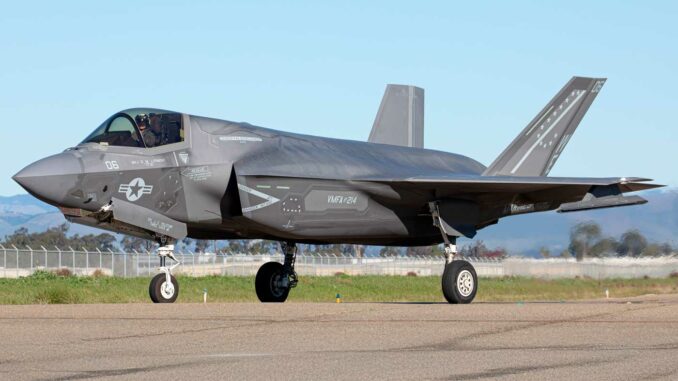
Between operational urgency, nuclear sharing, and industrial rivalries, Berlin secures the F-35 and weakens the European SCAF.
In summary
Germany has chosen to buy American aircraft for one simple reason: it wants credible capability quickly, without endless debate on industrial sharing. The F-35A meets an immediate need, especially for replacing the Tornado in nuclear sharing within the Alliance. At the same time, the SCAF/FCAS remains a long-term program that is politically fragile and industrially contentious. Berlin is subject to strong influences: NATO constraints, time pressure, dependence on the United States for armaments, but also the desire to be the European budgetary leader. This choice weighs heavily on German finances (purchases, infrastructure, support), while sending an ambiguous signal to European industry. The risk is clear: the more Europe buys American, the more it becomes accustomed to no longer designing its critical systems on its own, and the more industrial learning moves off the continent.
The context of a choice that is not an “either/or”
It would be a mistake to believe that Berlin is hesitating between two comparable aircraft. Germany is not pitting the F-35 against the SCAF in a classic competition. Rather, it is stacking responses to different horizons.
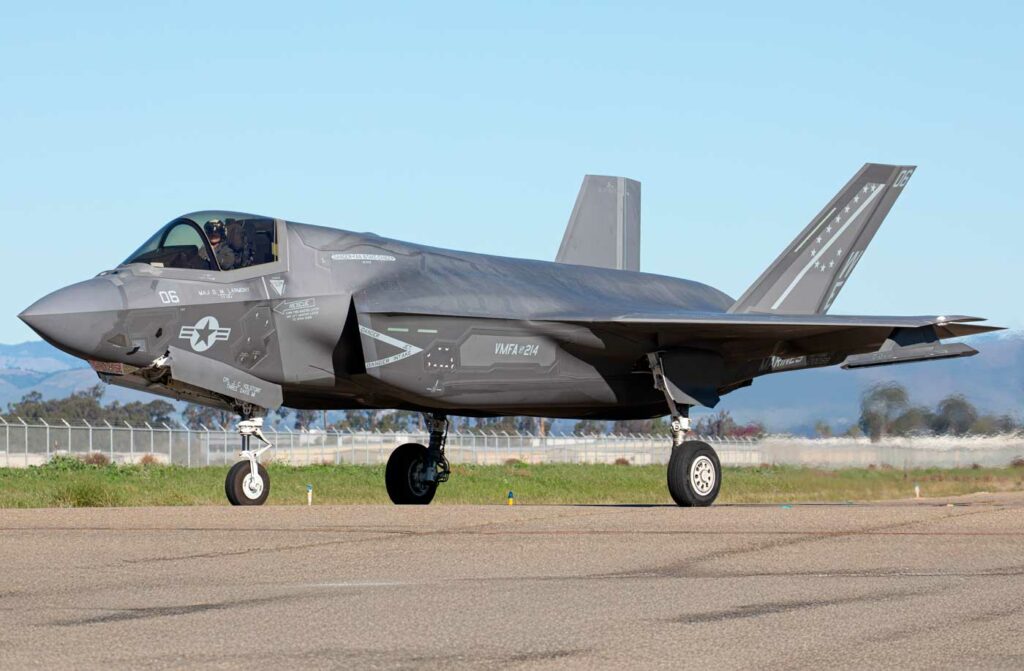
The F-35 serves a short- and medium-term logic: replacing aging fleets, obtaining already available stealth capabilities, securing integration with the American ecosystem, and above all, guaranteeing NATO’s nuclear mission without taking risks.
The SCAF, on the other hand, aims for a complete air combat architecture centered around a new aircraft, accompanying drones, and a data network. It is a project of sovereignty and industry. But it is designed for the 2040 horizon and suffers from recurring political blockages.
In short: the F-35 is a “ready-to-deliver” solution. The SCAF is a technological promise, still fragile in terms of governance.
The operational urgency that is pushing Berlin towards an “off-the-shelf” solution
Germany has ordered 35 F-35As to replace its Tornadoes dedicated to nuclear missions, and then considered adding 15 more aircraft in October 2025, bringing the total target to 50 aircraft. The signal is clear: Berlin wants critical mass, not a symbolic purchase.
This acceleration can be explained by a very concrete factor: availability. The Tornados are aging, their maintenance is becoming costly, and their withdrawal cannot be postponed indefinitely. The timetable has become political since 2022. At this stage, delaying the replacement would mean accepting a break in capability.
The second factor is NATO integration. The F-35 is already integrated into the Alliance’s planning, intelligence, and strike capabilities. For Germany, this is an operational shortcut: it is also purchasing a military “common language.”
Finally, there is the reality of modern combat: sensors, data fusion, real-time links, and multi-domain cooperation. The F-35 offers this foundation without waiting for a decade of European developments, which can be derailed by any industrial crisis.
The constraint of nuclear sharing, the blind spot in many debates
The nuclear issue is rarely addressed head-on, even though it is central. Germany hosts American weapons on its soil and must maintain an air capability compatible with this NATO posture. However, certifying a European aircraft for a nuclear mission, with an American weapon, is politically and technically difficult.
The result is brutal: the F-35 is the simplest option for remaining within the NATO framework without renegotiating the rules of the game. Berlin thus avoids a toxic internal debate and a standoff with Washington.
It is also a way of showing that it is “paying its strategic dues.” In the current context, Germany wants to be seen as a credible pillar of the Alliance. And this type of credibility can be bought more quickly with an aircraft that is already standardized.
External influences: Washington, NATO… and the psychology of dependence
To say that Germany “suffers” under the United States is too simplistic. The truth is more uncomfortable: Berlin chooses a dependence that it considers manageable because it provides immediate security.
But this dependence exists. It plays out on levels invisible to the general public: software, maintenance, updates, threat libraries, access to supply chains, and the ability to upgrade the aircraft over time. This is what we might call technological dependence.
This type of dependency is structural. Even a rich country becomes captive to the American industrial rhythm. And the more Germany shifts towards this ecosystem, the more it reduces its room for maneuver to subsequently impose real European autonomy.
It’s a vicious circle: we buy American to be ready quickly, then we stay American because the entire combat system has become accustomed to it.
The real cost: the aircraft is only part of the bill
The budget debate is often misguided. People compare purchase prices, when the issue is the total cost over several decades.
The initial German contract was worth around $8 billion for 35 aircraft, but ancillary costs quickly add up. Germany also had to finance specific infrastructure. In July 2025, estimates put the additional cost at around €2 billion, just to adapt the bases and technical environment.
And that’s not insignificant. An F-35 is not an aircraft that you can just “park in a parking lot.” It requires hangars, security systems, maintenance facilities, networks, tools, training, and complete interoperability.
In addition to this, Germany is significantly increasing its defense efforts: the 2026 budget trajectory could reach 2.83% of GDP according to budget documents mentioned in January 2026, with an even higher trajectory thereafter.
What is changing is Germany’s ability to pay. The choice of the F-35 is becoming possible because Germany is finally accepting a sustained effort, even at the cost of a cultural break with the debt brake.
The fragility of the SCAF: industrial rivalries and damaged political trust
The SCAF is not just “behind schedule.” . It is politically volatile.
The program brings together France, Germany, and Spain. The initial phases were financed on a shared basis, such as phase 1B, announced at €3.6 billion for 2021-2024, or €1.2 billion per country. But money is not enough if governance is not stable.
The sticking points are well known: industrial leadership, work sharing, intellectual property, and control of the architecture. In July 2025, Reuters reported tensions related to a French demand for an 80% share of the aircraft’s work, which immediately triggered German resistance.
Behind this lies a cultural conflict: France wants a clear prime contractor. Germany wants a more egalitarian distribution and an Airbus-style “consortium” approach.
The problem is simple: a program of this size cannot survive if every milestone becomes a diplomatic battle. And in the end, Berlin secured its escape route: the F-35.
The industrial consequences: what Germany loses by learning less
This is the heart of the dilemma, and this is where we need to be frank.
Buying the F-35 is not just about importing an aircraft. It also means giving up on designing, testing, and integrating some of the critical know-how in Europe.
A modern fighter jet is a concentration of learning: sensor fusion, software architecture, electronic warfare systems, weapons integration, connectivity. If these building blocks are purchased “turnkey,” German industry makes less progress on the strategic layers.
German manufacturers can reap benefits, but often on the periphery: maintenance, subcontracting, non-critical equipment. This is not the same learning curve as carrying the architecture of a complete system.
At the European level, it is even clearer: the fewer sovereign programs we produce, the less we consolidate an autonomous industrial base. And the more we depend on American political timetables.
The European equation: interoperability versus strategic autonomy
The F-35 is a magnet. The more a European country buys it, the more it standardizes its procedures, ammunition, training chains, and even its way of waging war. This creates strong interoperability, but it makes Europe less technologically diverse.
Conversely, the SCAF aims for design autonomy and network superiority, based on a European combat cloud and accompanying drones. The idea behind remote carriers is to multiply effectors and sensors in order to saturate and deceive modern defenses.
This concept is coherent. But it is time-consuming. And it is politically fragile.
As a result, Europe finds itself in a paradoxical situation. It wants European strategic autonomy, while at the same time making massive purchases of a platform that reinforces American centrality.
Germany is not solely responsible. But its budgetary and industrial weight transforms its choice into a continental tipping point.
Strategic risks: depending on an ally, even when they are reliable
The reassuring narrative goes: “The United States is an ally, so dependence is not a problem.”
This is naive. Even between allies, interests diverge. And so do industrial policies. The real risk is not betrayal. The real risk is priority.
In a major crisis, the producing country will prioritize its own forces, its own stocks, and its own emergencies. The customer comes second. It’s automatic.
Another risk is export restrictions and technology controls. Even without conflict, certain capabilities may be slowed down, limited, or conditioned.
Finally, there is a doctrinal risk. When your aviation is structurally dependent on an external supplier, your freedom to evolve is reduced. You become less agile in your own choices, even if you pay a high price.
The political reality: Berlin wants to be the European military leader without delay
Germany wants to ramp up its capabilities quickly. This requires not only R&D, but also tangible operational capabilities.
This explains the apparent contradiction: investing in the European future while purchasing an immediate American solution.
Except that by multiplying “urgent” purchases, the European future is being pushed back. And when it is pushed back, it becomes more fragile. And when it is fragile, we buy even more off the shelf.
The SCAF is therefore not just an industrial program. It is a political test. And for now, Berlin is sending a clear message: its immediate security takes precedence over industrial patience.
The problem is that this message also applies to other European countries. And it can contaminate the entire ecosystem.
Sources
La Tribune, “Defense: how Germany is rearming on a massive scale,” January 13, 2026
Le Parisien, “Germany buys 15 additional F-35s for €2.5 billion,” October 20, 2025
Opex360, “Germany plans to order fifteen more F-35As for €2.5 billion,” October 20, 2025
Opex360, “The cost of infrastructure dedicated to future German F-35As has jumped again,” July 4, 2025
Reuters, “Paris demands 80% workshare in Franco-German fighter jet,” July 7, 2025
Euractiv, “SCAF: decision on future fighter jet postponed indefinitely,” December 31, 2025
Le Monde, “Arms: Dassault and Airbus confirm their agreement on the SCAF,” December 2, 2022
La Tribune, “Berlin, Madrid, and Paris finance phase 1B of the SCAF,” August 30, 2021
War Wings Daily is an independant magazine.