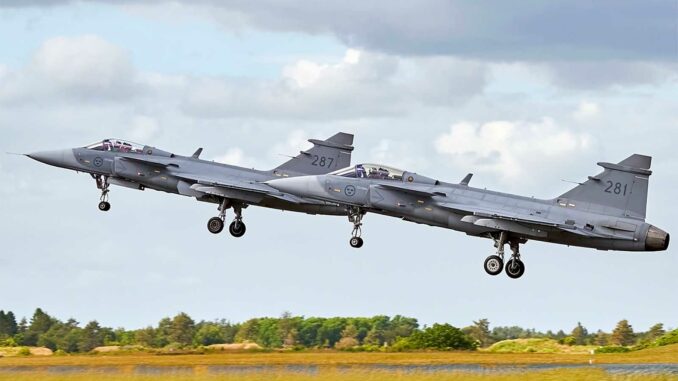
Colombia chooses Saab Gripen over Rafale to replace its Kfir aircraft: offsets, operating costs, and politics weighed more heavily than pure performance.
Summary
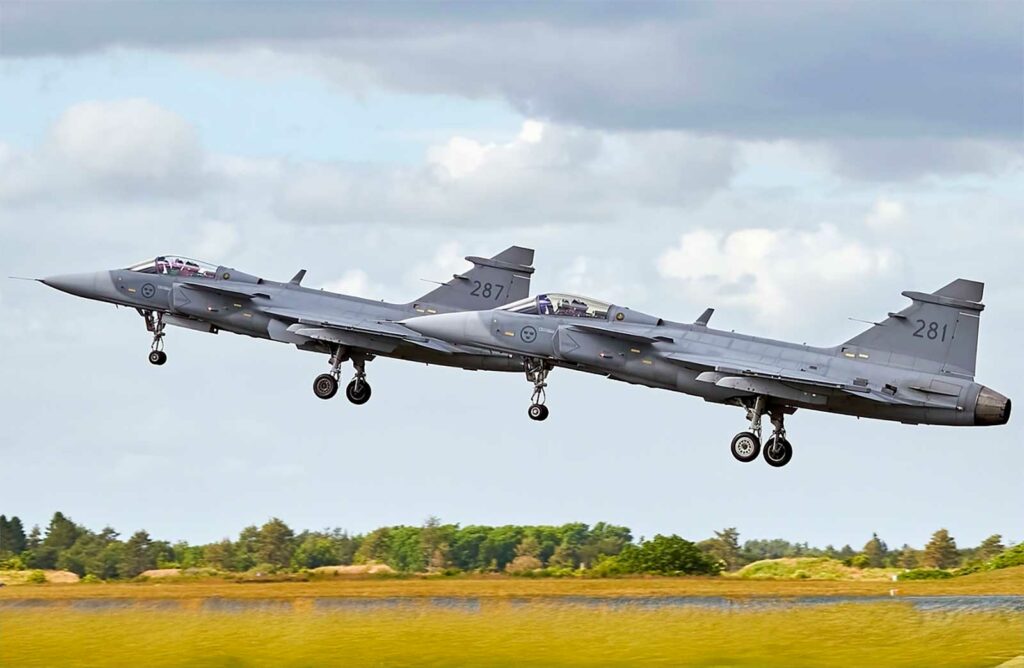
Colombia has made its decision: to replace its Kfir aircraft, Bogotá has chosen the Swedish Gripen over the French Rafale. The contract is worth around €3.1 billion according to public data, with a complete package including aircraft, support, training, and weapons. The decision came as a surprise, as the Rafale was often perceived as superior in terms of performance, sensors, and versatility. But a fighter jet competition is almost never decided on technical specifications alone. Colombia prioritized a modern, interoperable aircraft that is less costly to operate and, above all, comes with a highly structured industrial and socio-economic package. The Gripen also makes sense from a regional perspective: it is already established in Brazil, which lends credibility to the logistics ecosystem in South America. For Dassault, this is a political and commercial setback. For Colombia, it is a pragmatic choice, focused primarily on actual availability, budget, and the ability to maintain sovereignty on a daily basis.
Colombia’s decision defies predictions
The saga has been going on for more than a decade. The Fuerza Aeroespacial Colombiana needed to replace aging Israeli Kfir aircraft, which entered service in the late 1980s and had become costly to maintain. This fleet, modernized over time, eventually reached a critical point: declining availability, increasingly rare parts, and the risk of a capacity breakdown.
In this context, the Rafale had a serious advantage. The French aircraft is combat-proven, multi-role, and often appreciated for the consistency of its weapons system. Over the years, several signs suggested that the French offer was close to success.
And yet, Colombia has officially chosen the Swedish option, opting for the Gripen E/F. The sequence was perceived as a “last-minute setback” because it came after lengthy discussions and because the amounts circulating in the public debate suggested that the French proposal could be competitive, or even slightly lower in terms of face value.
But a fighter jet order is not judged on the initial price. It is judged on the actual cost over 30 years.
The content of the deal: more than just an aircraft, a complete package
The most important point is often the one that readers see the least: the contract does not just purchase airframes. It purchases a system.
On the Swedish side, public information describes a package comprising:
- aircraft (with a fleet of 17 aircraft announced in the most widely reported data),
- weapons,
- pilot and mechanic training,
- initial support,
- and, above all, industrial offsets and cooperation projects in the broadest sense.
This last element is extremely important in Latin America. Governments expect visible benefits: jobs, skills transfers, industrial partnerships, and civilian spin-offs. In some cases, this is almost as much a political criterion as a military one.
On the other hand, France can offer industrial cooperation. But the Swedish “package” was perceived as more transparent, more extensive, and better aligned with the internal political narrative: “we are buying, but we are getting something back for the country.”
The Rafale remains superior, but Colombia is not buying a showcase
Let’s be frank: in absolute terms, the Rafale is generally considered to be superior to the Gripen in several key areas.
Power and payload
The Rafale is twin-engine. It offers a safety margin, endurance, and carrying capacity that are often superior. It can carry more fuel and more payloads, which affects the distances it can cover, the number of weapons it can carry, and its ability to sustain long missions.
“High-intensity” versatility
The Rafale was designed to handle complex missions: air superiority, deep strike, anti-ship, penetration, support, and reconnaissance. Its architecture makes it very comfortable in dense scenarios, with a high level of data fusion and robust sensors.
The robustness of a proven weapons system
The French aircraft has accumulated a wealth of operational experience. It has a broad track record, which often reassures armies in terms of availability, weapon maturity, and doctrine.
On paper, it is difficult to dispute this advantage. However, Colombia is not buying an aircraft to compete with the major powers. It is buying a credible air policing and regional deterrence capability.
The Gripen as “good enough”: sufficient for Colombia’s needs
The choice of the Gripen is primarily explained by its suitability for the actual needs.
Colombia must monitor a vast territory, between the Caribbean Sea, the Andes, and the Amazon. It must intercept, show the flag, secure its airspace, and maintain a rapid response capability. It is not engaged in a logic of heavy long-range strikes in the style of a permanent “war between industrialized states.”
In this context, the Gripen offers very concrete qualities:
- a modern aircraft,
- maintenance designed to be streamlined,
- strong network compatibility,
- lower fuel consumption,
- and a format adapted to sustainable budgets.
This is where the difference lies: the Rafale may be “better,” but Colombia may consider that this performance margin is not decisive on a day-to-day basis, given budgetary and political constraints.
The key factor that everyone underestimates: the cost of ownership
The most significant variable is the cost of ownership.
A fighter jet is not a one-time purchase. It is a daily expense: fuel, parts, engine availability, maintenance hours, tools, simulators, support contracts, upgrades, ammunition, training.
The Gripen was positioned from the outset as an “efficient and operable” fighter jet. It aims for lighter maintenance, optimized repair cycles, and a reasonable logistical footprint.
The Rafale, on the other hand, remains a heavier, more powerful, more versatile aircraft, but also a more demanding one. Even if France can work on the costs, the buyer knows that a twin-engine multi-role aircraft of this level requires more consistent budgets.
Ultimately, if Bogotá wants a fleet that is available, with a regular sortie rate and controlled costs, the Gripen becomes a rational choice, even if it means giving up some of the Rafale’s “power reserve.”
The political dimension: the Swedish offset as an argument for sovereignty
The battle is not only being fought between aircraft manufacturers. It is also being fought between governments.
The Swedish choice has been linked to a package of cooperation that goes beyond defense alone. It is an internal political tool: it becomes easier to justify military spending if it translates into visible projects, local investment, skills transfer, and even civilian benefits.
In a country where defense spending is closely scrutinized and social priorities remain strong, this mechanism carries considerable weight.
France can offer compensation. But if the Swedish offer is deemed more “politically profitable,” it scores points beyond the cockpit.
Hidden technical constraints: engines, exports, and timing
There are also more subtle constraints.
The Gripen E uses the F414 engine. This may seem paradoxical: buying Swedish, but depending on an American engine. In other cases, this dependence has sometimes slowed down or complicated certain exports, as authorizations are required.
But in the Colombian case, the deal seems to have been secured in the negotiations, and Sweden has been able to provide reassurances about the schedule and the structure of the contract.
The schedule is a major argument. Between a technically superb offer that takes a long time to deliver and a “fairly good” offer with a more certain delivery schedule, the buyer may choose the latter. A country that fears a capacity gap often favors the most concrete plan.
The influence of neighboring Brazil: the “Gripen club” effect in Latin America
This is a strategic point: the Gripen is not coming to Colombia alone.
Brazil is already a major operator of the Gripen. It has developed an industrial and operational relationship with Saab. This changes the regional perception.
For Colombia, this means:
- feedback from experience in South America,
- opportunities for cooperation,
- geographical proximity for training and certain logistical flows,
- and a knock-on effect on standards.
In a region where budgets remain tight, the idea of a “regional ecosystem” is attractive. It reduces the feeling of isolation when faced with a sophisticated aircraft.
The signal sent to other countries in the region
The question is logical: could this encourage other countries to do the same?
Yes, but with some nuance.
The implicit message is that a country can modernize its fighter fleet without buying the top of the line. A modern, well-equipped “4.5th generation” fighter, with a good AESA radar, a credible electronic warfare suite, and effective missile integration, is more than enough for most regional scenarios.
This may influence countries looking for:
- a “sufficient” rather than exceptional solution,
- more controlled life-cycle costs,
- and a package of political and industrial cooperation.
But this does not mean the end of the Rafale in Latin America. Each country has a different doctrine. A state that wants heavier strike capability, superior endurance, or a more deterrent tool may continue to look at higher-end platforms.
The real risk for France lies elsewhere: losing narrative momentum in a region where export image counts almost as much as performance.
The French setback: a commercial defeat, but also a warning
For Dassault, this Colombian deal is a clear setback. Not only because it is a major contract, but also because it would have opened a door to the region.
It serves as a stark reminder of a harsh truth: in modern competitions, the best platform does not always win. The winner is often the one that offers:
- the best sustainability,
- more transparent financing,
- more “politically sellable” offsets,
- and a more reliable schedule.
France still has one major asset: the Rafale has proven its worth, and its export portfolio is solid. But the Colombian case shows that in Latin America, a “sufficient, modern, well-packaged” aircraft can beat an “excellent” aircraft.
And this logic can be extended to other regions of the world.
What this decision says about the fighter jet war in 2026
This case is symptomatic. It shows that the market is shifting towards a more cold-hearted equation:
- availability,
- total cost,
- industrial cooperation,
- and political credibility.
Pure performance remains important. But it is no longer the final variable.
In many countries, combat aircraft are becoming a sovereign expense under budgetary constraints. The winner is the one who transforms a military bill into a national narrative: jobs, technology, autonomy, visible benefits.
Colombia did not choose a “weak” aircraft. It chose an aircraft on its scale, with a package deemed more coherent. And it sent a clear message to the market: prestige is not enough, a complete solution is needed.
Sources
Saab – Press release “Saab signs contract for Gripen E/F with Colombia,” November 15, 2025
Reuters – “Saab signs 3.1 billion euro Gripen fighter deal with Colombia,” November 14, 2025
AeroTime – “Colombia signs €3.1 billion deal with Sweden’s Saab for 17 Gripen E/F jets,” November 15, 2025
Breaking Defense – “Colombia signs $3.6B deal for Gripen fighters”, November 14, 2025
European Security & Defense – “Colombia orders 17 Gripen E/Fs”, November 17, 2025
Al Jazeera – “Colombia’s Petro inks $4.3bn deal for 17 fighter jets…”, November 15, 2025
El País (América Colombia) – announcement of Gripen selection and offset details, April 3, 2025
Janes – “Colombia selects Saab Gripen to replace IAI Kfirs,” April 4, 2025
War Wings Daily is an independant magazine.