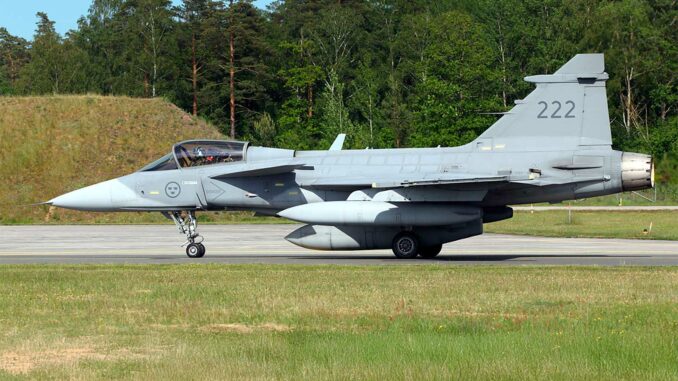
Announced by Volodymyr Zelenskyy, Ukraine expects to receive the Gripen C/D in 2026. Capabilities, integration, budget, and challenges of a “closed sky” air defense system.
Summary
On January 25, 2026, President Volodymyr Zelenskyy announced that Ukraine expects to receive its first batch of Gripen C/D aircraft in 2026. This delivery, from Sweden’s existing stocks, has a clear operational priority: to ensure continuous and credible air defense against current threats, pending a possible transition to the Gripen E in the longer term. The C/D option meets realistic constraints: rapid availability, controlled costs, reduced maintenance, and accelerated integration with Western systems already in service. Designed to operate from dispersed bases, the Gripen C/D offers a combination of effective sensors, modern data links, and a proven air-to-air arsenal. The challenge goes beyond the platform: it is about building a “closed sky” defense system, linked to ground-to-air defense and intelligence, within a sustainable budgetary framework compatible with Ukraine’s war effort.
The strategic context of an expected announcement
The air war over Ukraine has demonstrated a lasting reality: superiority cannot be decreed, it must be organized. Between cruise missiles, attack drones, and ballistic strikes, the pressure on cities and infrastructure requires permanent air cover. The presidential announcement is in line with this logic. The decision to deliver Gripen C/D aircraft in 2026 from Swedish stocks responds to the operational urgency, whereas the more recent Gripen E would require longer industrial and training lead times.
Sweden, now fully aligned with Western standards, has C/D airframes available. This option reduces scheduling risks and speeds up commissioning, a decisive factor in a high-intensity conflict. The goal is not to field a “showcase” fighter, but to secure airspace on a daily basis, in synergy with ground-to-air assets and allied sensors.
The Gripen C/D as a pragmatic and available solution
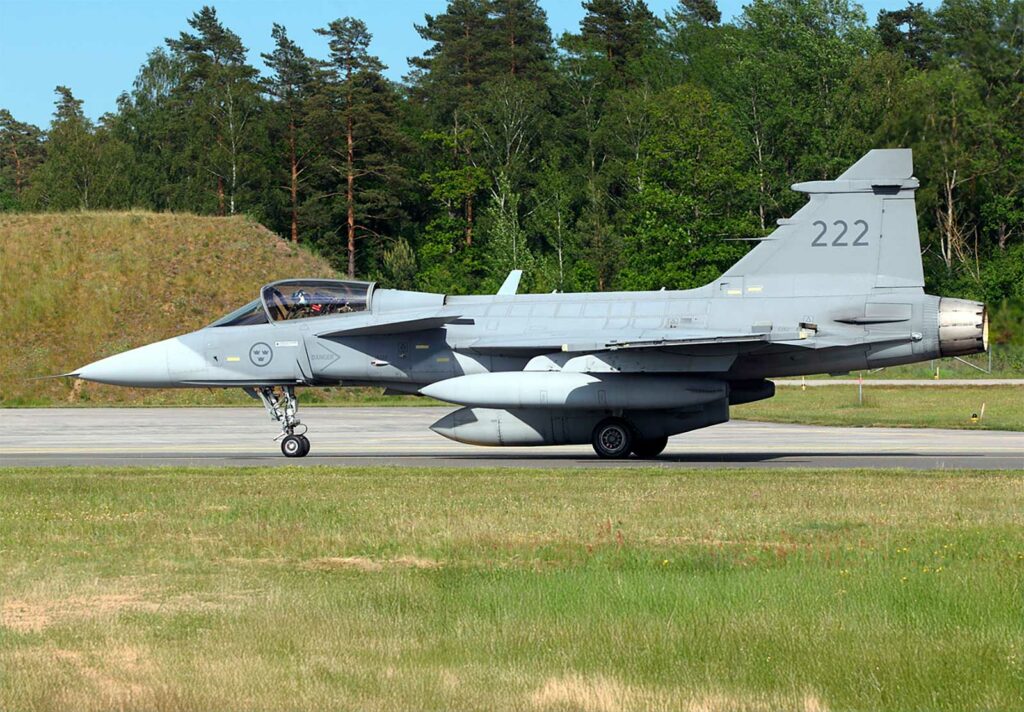
Developed by Saab, the Gripen C/D is a light multi-role fighter, optimized for sustained operations with a reduced logistical footprint. Its design prioritizes availability: limited maintenance teams, short turnaround times, and the ability to operate from rudimentary runways or dispersed bases—a major asset for Ukraine.
Technically, the Gripen C/D is equipped with a PS-05/A mechanical antenna radar, modernized to current standards, offering reliable detection and multi-target tracking suitable for air-to-air missions. The airframe is designed for balanced payloads, with avionics designed for data fusion and tactical liaison with other platforms.
The Swedish philosophy favors overall efficiency: an aircraft that can be rapidly deployed, easily supported, and interoperable, rather than one that is extremely sophisticated and costly in terms of time and resources.
The operational performance of the Gripen C/D
In air-to-air configuration, the Gripen C/D reaches a maximum speed of approximately Mach 2 and has an operational range of around 800 km in combat missions, depending on payload and profile. Its service ceiling exceeds 15,000 m, enabling it to engage high-altitude targets effectively.
Armament is a key feature. The Gripen C/D is compatible with Western short- and medium-range missiles, including the IRIS-T and AIM-120 AMRAAM, offering credible BVR capability and effective close-range combat. This array of weapons, already familiar to Western forces, simplifies logistics and procurement.
The aircraft is designed to maximize pilot situational awareness, with clear multifunction displays and proven ergonomics. In a context of overwhelming threats, this clarity reduces cognitive load and improves real-time decision-making.
The expected role in “closed sky” defense
The term “closed sky” does not mean absolute invulnerability. It refers to a capacity for continuous deterrence and interception, making any penetration costly and risky for the adversary. The Gripen C/D fits into this system as a reactive interceptor, capable of taking off quickly, identifying a threat, and engaging it before it reaches its target.
The added value lies in coordination. Combined with ground radars, surface-to-air systems, and allied data, Gripen acts as a mobile node of air defense. Its ability to share information enhances the overall effectiveness of the network, rather than operating in silos.
For Ukraine, this means better protection of urban centers, energy infrastructure, and logistics routes, while freeing up ground-to-air resources for other sectors.
Integration into the existing Ukrainian fleet
Ukraine has already embarked on a profound transformation of its combat aviation with the gradual introduction of Western aircraft. The arrival of the Gripen C/D adds a complementary building block, distinct but consistent. Where some Western fighters require heavy infrastructure, the Gripen offers appreciable flexibility of use.
Integration involves several simultaneous projects: pilot training, adaptation of maintenance chains, and upgrading of command and control systems. The experience of other air forces shows that the Gripen C/D can achieve initial operational capability within a few months, provided that structured support is in place.
This coexistence of platforms requires a clear doctrine. The Gripen is not intended to do everything, but to reinforce interception and operational readiness, while other resources focus on specific missions.
The budgetary issue and operating costs
The budget is a key factor. A Gripen C/D is generally valued at between €40 and €60 million per aircraft, depending on the configuration and support included. This acquisition cost, which is lower than that of many heavy fighters, is accompanied by low operating costs.
Current estimates put the hourly flight cost of the Gripen C/D at around €6,000 to €8,000, significantly lower than more complex platforms. For a country at war, this data is decisive: it determines the number of flight hours possible and therefore the credibility of the air posture.
Added to this are the costs of training, light infrastructure, and ammunition. The C/D option allows for smoother financial planning, while maintaining a level of performance compatible with current requirements.
The Gripen E as a goal, not a prerequisite
Ukraine makes no secret of its interest in the Gripen E, a thoroughly modernized version with AESA radar, enhanced electronic warfare, and increased range. However, this ambition is a long-term one. The Gripen E requires dedicated industrial chains, more complex training, and greater investment.
The decision to start with the C/D is part of a step-by-step strategy. It allows Ukraine to build a Gripen culture, accumulate operational experience, and prepare for a future transition without a break in capability. In a conflict where every month counts, this gradual approach seems rational.
European political and industrial implications
Sweden’s decision to transfer Gripen C/D aircraft to Ukraine has a strong political dimension. It reinforces Sweden’s role as a key player in European security, while promoting a continental industrial solution. For Saab, it is also an operational showcase for its fighter in a real combat environment.
Beyond the aircraft itself, this cooperation involves an ecosystem: training, support, spare parts, and software updates. It strengthens ties between European partners around a more integrated collective defense.
A clear-headed operational equation
The arrival of the Gripen C/D in Ukraine will not instantly transform the strategic balance. However, it does provide a credible, sustainable, and rapidly deployable capability that is adapted to the constraints of the terrain. In a war of attrition, resilience is as important as raw performance.
While the promise of a “closed sky” remains an ideal to be achieved, the Gripen C/D offers Ukraine a realistic tool to reduce the enemy’s freedom of action, protect its population, and gain strategic time. This time is precisely what is needed to prepare the next steps and consolidate a combat aviation force that is firmly rooted in Western standards.
Sources
Official communications from the Ukrainian presidency
Saab Gripen C/D technical data
Specialized publications on European air defense
Comparative budget analyses of Western fighter aircraft
War Wings Daily is an independant magazine.