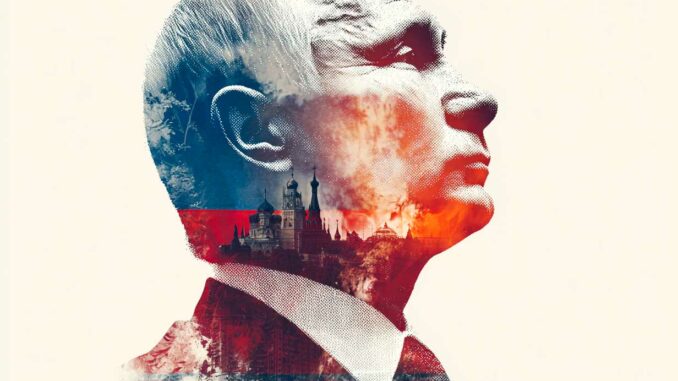
Putin can remain in power until 2036. But the system is preparing a closed succession: technocrats, siloviki, heirs. What scenarios, what risks for Europe?
In summary
The succession of Vladimir Putin is not a matter of timing. It is a matter of the system. At 73, Putin shows no clear signs of fragility in public and has a legal framework that allows him to remain in the Kremlin until 2036. The assumption of a quick departure is therefore, more often than not, a Western projection. The real question is rather: how can such a personalized power be transferred without fracturing the state? In Russia, succession is not primarily decided at the ballot box. It is played out between the presidential administration, the security services, the economic apparatus under sanctions, and regional networks. The most frequently cited profiles—Mishustin, Kiriyenko, Vaino, Shoigu, Medvedev, Patrushev, Dyumin, Manturov, Sobyanin—do not have the same role or the same ability to hold the clans together. Each option would have different consequences for the war, the nuclear posture, relations with Europe, and internal stability. The coldest conclusion is simple: the post-Putin era could be one of harsh continuity, technocratic continuity, or brutal instability. And Europe will have to deal with all three.
Reasons why Putin is likely to remain in power in the medium term
A legal architecture built to last
Since the 2020 constitutional reform, presidential terms have been “reset.” As a result, Putin can run again and remain in office until 2036. This point is essential. It provides a horizon of stability for the regime at the top, even if society and the economy are in flux.
Controlled electoral legitimacy
The March 2024 presidential election produced very high official figures: 88.48% for Putin and 77.49% turnout. In a system where the opposition is locked out and the state controls resources and the media, these figures do not prove “free” popularity. Above all, they prove the administrative capacity to manufacture legitimacy and deter dissent.
A question of biology… but don’t panic
Putin was born on October 7, 1952. His age inevitably fuels speculation. But there is no reliable public data on his health. On the other hand, we can state a statistical reality: total life expectancy in Russia is around 73 years, and male life expectancy is around 68 years (recent data). This says nothing about his individual case. But it does remind us of one fact: succession can be triggered in an unplanned manner, by accident or incapacity, rather than by political choice.
The official rules of succession and their real limitations
A simple constitutional mechanism on paper
The Russian Constitution does not provide for a vice president. In the event of a vacancy (resignation, incapacity), the prime minister acts as interim president and an election must be held within a short period of time (usually three months). On paper, this naturally designates the head of government as the linchpin of a transition.
A fragile mechanism in practice
The text does not address the most explosive issue: who decides that a president is “incapacitated”? In a regime where institutions are subordinate to the Kremlin, the vacancy of power would be less a legal process than a power struggle. This is where the Security Council becomes central. It is not an executive body. But it is the place where the heads of the key ministries and services meet. It is the political cockpit of the regime.
Reality: succession is a negotiation between clans
Russia functions through balances of power. The “clans” are not parties. They are networks. They include security agencies, industrial groups, regional barons, and financial operators. Succession will therefore be a negotiation on three concrete points:
- who controls the instruments of coercion (police, National Guard, FSB, army);
- who controls the flow of money (energy, defense industry, budget);
- who controls the political narrative (media, justice system, electoral apparatus).
The constraints weighing on any successor
War and the war economy as the main obstacle
The war in Ukraine has transformed the state. Military spending has skyrocketed. According to robust estimates, Russia is planning very high defense spending in 2025: “strict” defense around 13.5 trillion rubles, and total military spending estimated at 15.5 trillion rubles, or about 7.2% of GDP. For 2024, an international estimate puts Russian military spending at around $149 billion, or about 7.1% of GDP.
Political translation: a successor inherits a country where security and the arms industry dominate the agenda, and where civilian room for maneuver is shrinking.
Sanctions and dependence on Asia
Western sanctions have forced a shift in trade, finance, technology, and supply chains. A successor who promises a “return to normal” would have to obtain concessions in return. However, the West is making any détente conditional on major changes in Ukraine and European security. This limits the options available to a successor, even a pragmatic one.
Demographics as a time bomb
Russia has a population of around 146 million (recent estimate), with a fertility rate of around 1.4 children per woman. The country is aging. Military losses, the flight of skilled labor, and mobilization are exacerbating tensions in the labor market. A successor will have to decide between increased military spending or increased social spending. Both together are becoming costly.
The most credible profiles in a controlled succession
The following is not a “casting call.” It is an analysis of capability. In Russia, a successor must first “hold” the system.
The profile of Mikhail Mishustin, the option of administrative continuity
Mishustin has been Prime Minister since 2020. In the event of a vacancy, he is the immediate institutional option. His profile is technocratic. He knows how to run the state and manage taxation. He managed the government during the period of sanctions and economic reorientation.
Likely consequences:
- budgetary continuity and an obsession with stability;
- a quest for efficiency in the war economy;
- little internal political change, as he has no independent base.
For Europe, this would be a “manageable” option in form, but not necessarily in substance. A technocrat can escalate the war if he believes it is necessary for the regime’s survival.
Profile of Sergey Kiriyenko, the architect of domestic policy
Kiriyenko is First Deputy Chief of Staff of the Presidential Administration. He is often described as the man in charge of domestic policy, electoral management, and the occupied territories. His power is discreet but real. He resembles a system manager.
Likely consequences:
- strengthening of internal control tools;
- sophistication of propaganda and political engineering;
- strategic continuity, with an ability to “modernize” authoritarianism.
For Europe, this would mean a Russia that is less improvised, more organized, and therefore potentially more difficult to influence.
The profile of Anton Vaino, the “Kremlin office” option
Vaino heads the presidential administration. He embodies the machine. His interest is order. His problem is projection: he is central to the functioning of the system but less obvious as a national political figure.
Likely consequences:
- maximum continuity;
- permanent compromise with security networks;
- little openness, as openness would endanger the system that brought him to power.
For Europe, this would mean a cold, highly procedural relationship with little hope of a breakthrough.
The profile of Sergei Shoigu, the repositioned survivor
Shoigu left Defense in 2024 and became secretary of the Security Council. This is a functional promotion: he remains at the heart of the system. His image has been damaged by the war and corruption scandals in the ministry.
Likely consequences:
- priority given to the cohesion of the security bloc;
- risk of symbolic decisions to show strength;
- dependence on the apparatus, as his personal legitimacy is questionable.
For Europe, this would be a potentially unstable option: a lot of posturing, less control.
The profile of Dmitry Medvedev, the verbal hawk option
Medvedev has been deputy chairman of the Security Council since 2020. He has repositioned himself as an ideological hardliner. He also serves as an outlet: he says what the Kremlin wants to test in public opinion.
Likely consequences:
- hardening of the political and diplomatic line;
- increased risk of rhetorical escalation;
- more emotional governance, and therefore less predictable.
For Europe, this would increase tension and the cost of deterrence. The nuclear issue would become more anxiety-provoking, even if the military apparatus remained collective.
The profile of Nikolai Patrushev and his network, security continuity
Patrushev is no longer secretary of the Security Council, but he has been repositioned as presidential advisor and head of a body linked to maritime policy. Above all, his network remains influential. His son, Dmitry Patrushev, became deputy prime minister in 2024. This looks like a consolidation of family and clan power.
Probable consequences:
- strengthening of the “services” and headquarters logic;
- reduction in the margin of technocrats;
- hard line on Ukraine and the West.
For Europe, this would be a scenario of lasting confrontation, with Russia assuming structural rupture.
The profile of Aleksey Dyumin, the trusted man and the path of the State Council
Dyumin has been appointed secretary of the State Council. His career path is that of a security loyalist. He is also presented as a possible manager of the defense sector, and therefore in direct contact with the war economy.
Probable consequences:
- strengthening of the military-industrial complex;
- further increase in verticality;
- ability to embody a younger “war president.”
For Europe, this could mean a more agile Russia, more modern in its methods, and permanently hostile.
The profile of Denis Manturov, the temptation of the “industrial president”
Manturov has been First Deputy Prime Minister since 2024, with a portfolio linked to industry, including defense. His profile fits with the current logic: produce, arm, maintain supply chains, circumvent sanctions.
Probable consequences:
- prioritization of the arms industry;
- closer ties with Asia for dual-use technologies;
- foreign policy focused on deals.
For Europe, this would mean a transactional Russia: less ideological in its rhetoric, but very tough on interests.
The profile of Sergei Sobyanin or Vyacheslav Volodin, the “civilian” political options
Sobyanin, mayor of Moscow, and Volodin, speaker of the Duma, represent civilian, more political profiles. Their weakness: in a security system, they must obtain the approval of the siloviki to hold on to power. Their strength: they know how to speak to the country, organize a base, and manage institutions.
Probable consequences:
- Attempt at internal normalization to stabilize society;
- but it will be impossible to “liberalize” without risking collapse;
- therefore, authoritarian normalization, not openness.
For Europe, this would be the most dangerous illusion: a change in style could be interpreted as a fundamental change, when in fact the strategy would remain the same.
Succession scenarios and their effects on Europe and the world
The scenario of a designated heir and harsh continuity
This is the scenario most compatible with the regime’s logic. Putin chooses an heir, raises his profile, secures loyalties, then partially withdraws. This scenario assumes that Putin remains the arbiter in the background, at least for a while.
Probable effects:
- Continuity on Ukraine, as backing down would be seen as a sign of weakness.
- Maintenance of the nuclear posture and pressure on NATO.
- Continued militarization of the economy.
For Europe: high defense spending over time and strengthening of energy, cyber, and industrial resilience measures.
The technocrat-security services compromise scenario
Here, a figure such as Mishustin, Kiriyenko, or Manturov governs, but under the supervision of the security services. The aim is to keep the war “manageable” and the economy stable.
Probable effects:
- Possible freeze on certain fronts if it serves the regime;
- more pragmatic diplomacy with certain European countries, on a case-by-case basis;
- but no major concessions without strategic gains.
For Europe: a more skilled Russia, which will seek to divide European positions, exploit differences, and play on fatigue.
The scenario of internal rupture and a phase of instability
This is the riskiest and most underestimated scenario. A crisis could arise from a military clash, a budget crisis, a clan struggle, or an unforeseen event. In this case, the question is no longer “who succeeds,” but “who controls the force.”
Probable effects:
- competition between security networks;
- risk of nationalist one-upmanship to take control of the state;
- increased uncertainty surrounding the chain of command.
For Europe: increased hybrid risks, possible migratory pressure via peripheral areas, and concern about nuclear weapons in terms of doctrine, communication, and posture, even if procedures remain structured.
What Europe must look at, beyond names
Signs of designation
Russia will not publish “the plan.” But certain indicators matter:
- increased presence of a profile in security meetings;
- expansion of portfolio (industry, defense, territories);
- ability to arbitrate between sovereign ministries;
- media visibility without excessive exposure.
Signs of internal hardening
Succession is often prepared for with more control, not less. Security laws, strengthening of FSB tools, political trials, budget centralization: these are signs that matter more than a portrait.
Budgetary signals
A regime preparing for a transition wants to avoid a social crisis. But a war economy is expensive. When defense takes up a massive share of the budget, competition for resources intensifies. This creates losers. And losers become dangerous.
The open ending: a post-Putin Russia is not necessarily “better”
Let’s be frank. Many imagine that after Putin, Russia will “normalize.” There is no guarantee of this. A successor may be more pragmatic. He may also be tougher. In a system built on the fear of collapse, the temptation is often to take a harder line in order to survive.
The most likely change is a change in method, not a change in objective. Europe must therefore prepare for a Russia that is capable of adapting, enduring, and negotiating only when forced to do so. In other words, the post-Putin era will not automatically bring relief. It will be a new balance to be built, with narrow margins for maneuver and long-term vigilance.
Sources
SIPRI, “Preparing for the fourth year of war: Military spending in Russia’s budget for 2025”
SIPRI, “Trends in World Military Expenditure, 2024” (fact sheet)
Reuters, Russian budget for 2025 and share of defense spending
Kremlin (en.kremlin.ru), biography and functions: Vladimir Putin
Kremlin (en.kremlin.ru), members of the Security Council
Kremlin (en.kremlin.ru), Sergey Kiriyenko biography
Kremlin (en.kremlin.ru), Aleksey Dyumin appointed secretary of the State Council
Reuters, Patrushev appointed to naval body
Encyclopaedia Britannica, Vladimir Putin (date of birth)
Wikipedia, 2024 Russian presidential election (official data)
Wikipedia, profiles and roles: Mishustin, Medvedev, Kiriyenko, Manturov, Bortnikov, Zolotov, Volodin
Le Monde, 2024 reshuffle: Belousov to Defense, Shoigu to Security Council
War Wings Daily is an independant magazine.