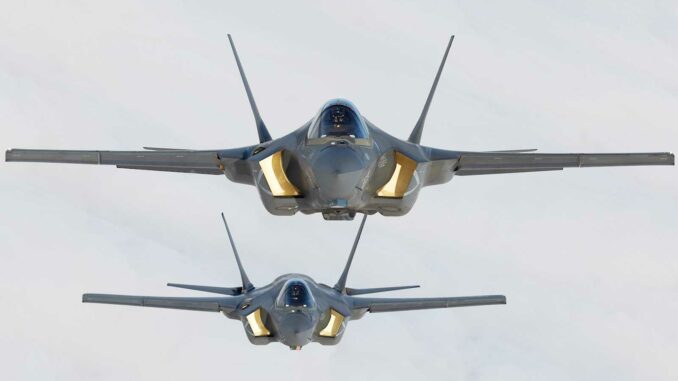
An F-35C from the USS Abraham Lincoln shoots down an Iranian Shahed-139 drone in the Arabian Sea to protect the aircraft carrier. A major military incident amid diplomatic pressure and regional tensions.
Summary
On February 3, 2026, an F-35C stealth fighter jet aboard the US nuclear-powered aircraft carrier USS Abraham Lincoln shot down an Iranian Shahed-139 drone in the Gulf of Oman/Arabian Sea. According to U.S. Central Command, the unmanned aircraft approached the imposing warship, which was stationed about 800 km off the Iranian coast at the time of the incident, in an “aggressive” manner and with an intention deemed “unclear.” The intervention, in the absence of American casualties or damage, illustrates the military escalation between the United States and Iran as nuclear talks are planned. On the same day, Iranian forces harassed a merchant ship flying the American flag in the Strait of Hormuz, requiring the assistance of a U.S. Navy destroyer. The announcement of these events had an immediate impact on oil markets, driving up crude prices.
The immediate operational and strategic context
In early February 2026, the US military command placed naval and air units in an advanced posture in the Gulf and the Arabian Sea amid growing tensions between Washington and Tehran linked to several factors: Iran’s nuclear program, Iran’s regional activities, and an increased US military presence in the region.
The aircraft carrier USS Abraham Lincoln (CVN-72), with its air wing including F-35C Lightning IIs, has been operating in these waters as part of its planned deployment since late January 2026. It was located approximately 500–800 nautical miles (≈ 800–1,300 km) off the southern Iranian coast at the time of the incident.
The defensive use of air power illustrates a recognized principle of international law: a state may use proportionate force to protect its military forces and property in the event of an imminent threat. This action is part of a defensive framework asserted by US officials, even if it occurs in a climate of tension.
The characteristics of the Shahed-139 drone and its tactical role
The drone involved, a Shahed-139, is an unmanned aerial platform developed by the Iranian industry. Although it is often described as a “munition” or “loitering munition” type drone, its configuration is similar to that of tactical surveillance drones, and it has sufficient autonomy for advanced reconnaissance missions. This endurance capability makes it a dual-purpose tool: intelligence gathering or indirect support for a combat unit.
In this specific case, the drone’s exact mission has not been formally established. Iran has indicated via friendly media outlets that it was a legitimate surveillance operation in international waters, with data transmission prior to loss of contact. Washington, for its part, considers that the aircraft persisted in an “aggressive” trajectory despite de-escalation measures.
The US decision to shoot it down is explained by the rules of engagement applied in sensitive international areas, where the protection of an aircraft carrier group and its crew takes priority over any tactical uncertainty.
The role of the F-35C in protecting aircraft carrier groups
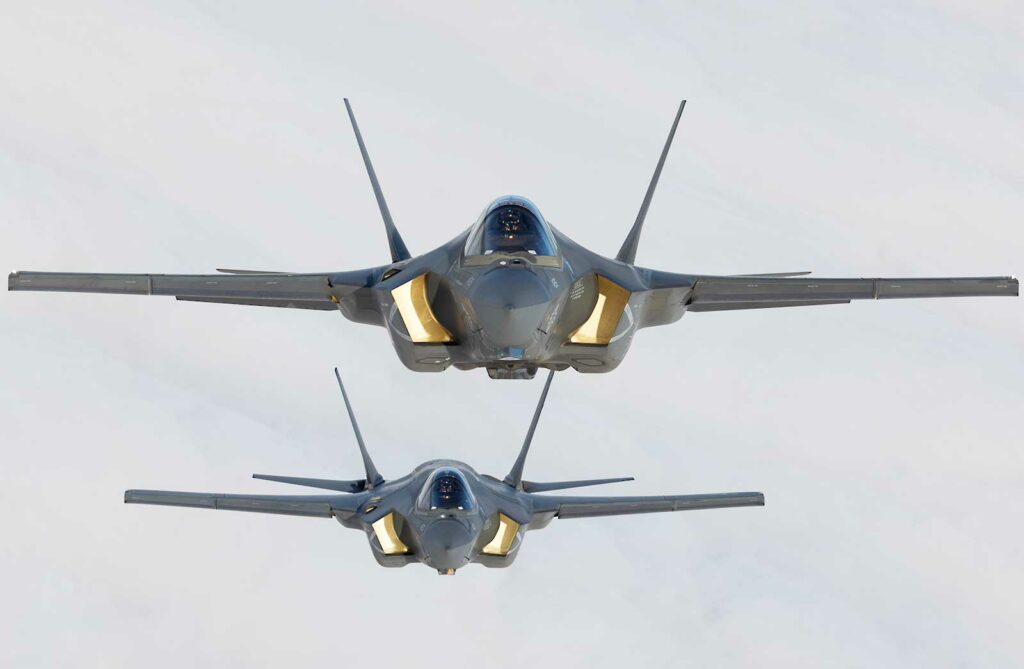
The F-35C Lightning II is the fifth-generation naval variant of the American stealth multirole fighter designed to operate from aircraft carrier decks. It combines stealth, advanced detection, and data link capabilities to monitor the airspace around a carrier strike group.
The use of an F-35C to intercept the drone reflects the priority given to the safety of the aircraft carrier and its personnel (several thousand sailors and airmen). Interception by an aircraft of this order of battle minimizes the risk of escalation while maintaining technological and tactical superiority over a perceived potential threat.
Related incidents in the Strait of Hormuz
On the same day as the drone incident, the United States reported another confrontation in the Strait of Hormuz, a strategic maritime artery through which approximately 30% of the world’s oil passes each day.
Units of Iran’s Islamic Revolutionary Guard Corps (IRGC) reportedly approached a US-flagged oil tanker, the M/V Stena Imperative, at high speed with speedboats and a Mohajer-type drone. Iranian forces allegedly attempted to intercept and force the tanker to stop, a practice described as harassment by Washington.
A U.S. Navy destroyer, the USS McFaul, responded by escorting the merchant ship out of the threatened area, with the support of U.S. Air Force fighter jets. This latest episode highlights the multiplicity of naval interactions in a theater that combines commercial security and military issues.
Impact on oil markets
The announcement of these confrontations had an immediate impact on energy prices. Crude oil markets reacted to the increased perception of geopolitical risks in the Gulf. According to data available after the incident, prices rose by around $1 per barrel in international trading, a significant change in a market that is generally sensitive to regional tensions.
This movement reflects investors’ apprehension about any potential disruption to energy flows through the Strait of Hormuz, a vital shipping route for the global economy.
Diplomatic attempts and prospects
As military tensions rise, diplomatic efforts to resume negotiations on Iran’s nuclear program continue. Talks were scheduled between representatives of the United States and Iran, with proposals for meetings in Turkey or Oman. Some sources suggest that Iran is demanding changes in the location and scope of the discussions, focusing strictly on the nuclear issue.
There is a striking contrast between the perceived military escalation and the stated diplomatic ambitions. While some Iranian representatives appear open to “fair and reasonable” discussions, the dynamic remains fragile in the face of actions that increase the risk of misunderstandings or unintended incidents.
Analysis of long-term regional implications
The incident of February 3, 2026 is symptomatic of a period in which maritime security, regional rivalries, and global strategic interests converge. A confrontation of this kind in an area crucial to global trade cannot be analyzed in isolation. It is part of a broader sequence of military deployments, economic pressures, and political rivalries that are shaping the future of US-Iranian relations and stability in the Middle East.
The US response is likely to be interpreted as a message of deterrence, but it could also intensify the strategic calculations of Tehran and its partners. Regional actors such as the Gulf countries, Turkey, and the International Atomic Energy Agency are watching these interactions closely, aware of their direct impact on energy and political security.
Developments in the coming days will be decisive in determining whether diplomatic channels can regain the upper hand over military dynamics, or whether this incident marks a new phase of open confrontation.
Sources
Reuters
Associated Press
South Florida Reporter
Air & Space Forces Association
Wikipedia – USS Abraham Lincoln
Wikipedia – 2026 United States military buildup in the Middle East
Times of Israel
War Wings Daily is an independant magazine.