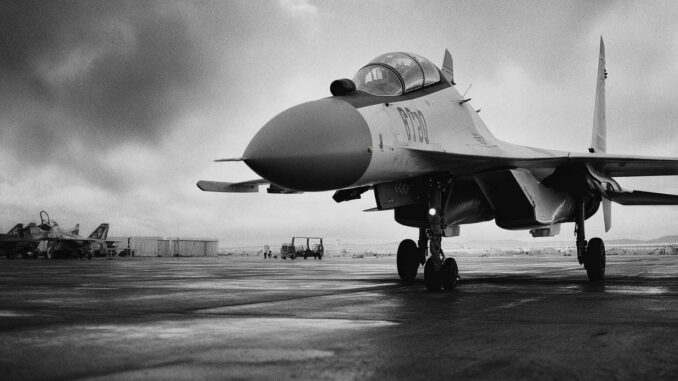
Algeria’s record military budget, regional rivalries, and social costs: why Algiers is investing nearly $25 billion in defense.
Summary
Algeria has taken a spectacular turn in terms of defense. After exceeding $22 billion in 2024, its military budget is now approaching $25 billion for the period 2025-2026. This trajectory places Algiers among the top military spenders on the African continent and in the southern Mediterranean basin. Officially, this effort aims to modernize an army facing an unstable regional environment and growing strategic rivalry with Morocco. But this rise in power raises serious questions. Compared to actual operational capabilities, is this budget proportionate or excessive? Why is there such a lack of transparency surrounding arms purchases? And above all, how can this effort be justified in a country facing persistent social tensions? Between security imperatives, internal political calculations, and suspicions of poor governance, the “race for 25 billion” crystallizes a debate that goes far beyond the military issue alone.
An unprecedented budgetary trajectory in Algerian history
The increase in Algeria’s defense budget is not a marginal adjustment. It is part of a dynamic of change. In less than five years, military spending has nearly doubled, driven by rising energy revenues and a clear political will.
In 2024, the official budget will exceed $22 billion. For 2025, budget documents and public statements mention a budget of close to $25 billion, a level never before reached since independence. In relation to gross domestic product, Algeria’s military spending is around 6 to 7% of GDP, a ratio much higher than that of many European countries.
This figure places Algeria far ahead of its immediate neighbors in North Africa and brings it closer, in absolute terms, to some medium-sized European budgets.
The security justification put forward by Algiers
The Algerian authorities cite a deteriorating regional environment. To the east, Libya remains unstable. To the south, the Sahel is plagued by chronic security crises. To the west, relations with Morocco have been frozen since the diplomatic break in 2021.
In this context, Algiers presents this effort as a strategic necessity. The National People’s Army must monitor a vast territory with thousands of kilometers of land borders. It must also maintain a credible deterrent capability in the face of neighbors perceived as increasingly aggressive diplomatically and militarily.
This official discourse emphasizes the defense of sovereignty and the prevention of any strategic surprises. But it does not exhaust the debate.
Rivalry with Morocco as the central driving force
Comparisons with Morocco are omnipresent in regional analyses. Rabat has been modernizing its armed forces for several years, particularly its combat aviation. The acquisition of F-16 Vipers and recurring discussions about a possible interest in the F-35 fuel perceptions in Algiers.
However, in absolute terms, Morocco’s budget remains much lower. It fluctuates around $12 to $13 billion, or about half of Algeria’s effort. This asymmetry raises a simple question: why does Algeria spend twice as much as its main regional rival?
For some observers, this is a case of strategic one-upmanship, intended to maintain quantitative superiority and compensate for perceived qualitative weaknesses, particularly in interoperability and network-centric warfare.
Comparison with Europe: a relative budgetary giant
When viewed in a broader context, Algeria’s position is even more surprising. With nearly $25 billion, Algeria is on a par with European countries such as Belgium and the Netherlands, and far exceeds the spending of nations that are members of NATO.
However, a crude comparison has its limitations. European armies benefit from integrated industrial ecosystems, structural alliances, and pooled capabilities. Algeria, on the other hand, finances its entire military apparatus on its own.
This raises a key question: does this budget really translate into equivalent operational capabilities? The answers are far from unanimous.
Is Algeria a “defense dwarf” despite its billions?
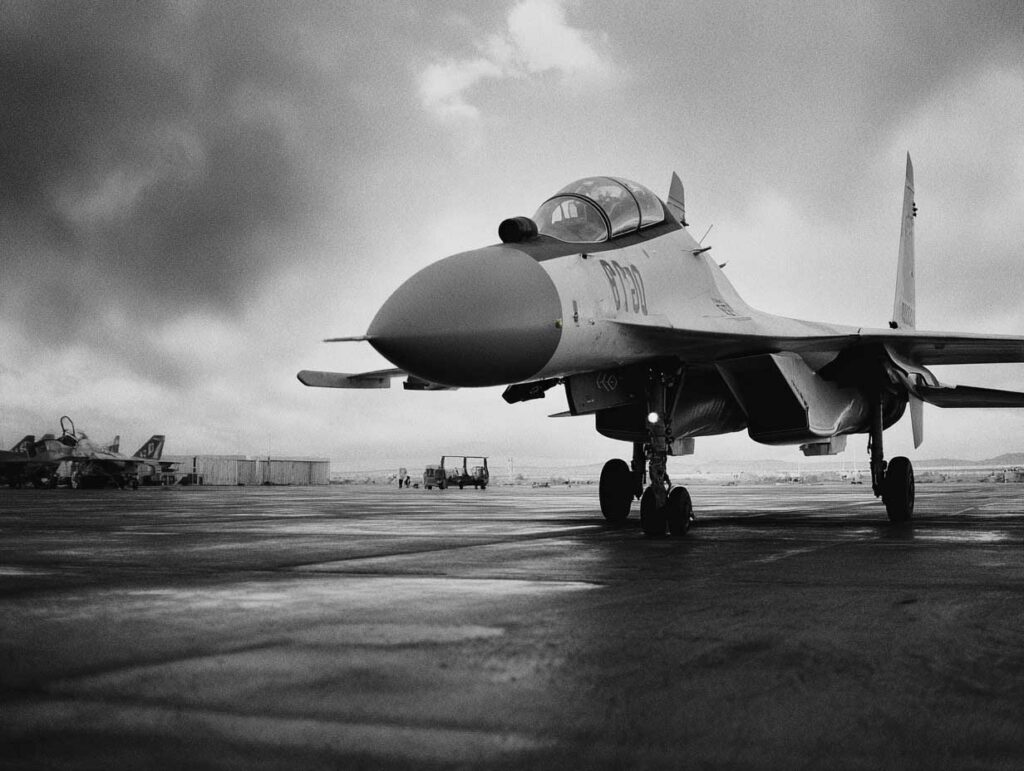
The term is shocking, but it is used in certain analytical circles. Despite its high budget, Algeria suffers from structural limitations. Its army still relies heavily on Russian or Soviet equipment, which has sometimes been modernized but is rarely integrated into a modern, interconnected combat architecture.
Massive investments do not always translate into an equivalent qualitative leap. The issues of training, doctrine, maintenance, and operational readiness remain central. Spending a lot does not automatically guarantee proportional effectiveness.
This is where the concept of military budget efficiency becomes key. Several analysts believe that Algeria is paying dearly for capabilities that could be obtained elsewhere at a lower cost through industrial cooperation or alliances.
Arms purchases: between opacity and speculation
One of the most controversial aspects of the Algerian budget is its lack of transparency. Finance laws often aggregate expenditures without providing public details on specific programs. This opacity fuels all kinds of rumors: new-generation fighter jets, advanced air defense systems, enhanced naval capabilities.
Some contracts are known, particularly those with Russian or Asian suppliers. Others remain shrouded in secrecy. This situation is not unique in the world, but it contrasts with the increasingly transparent practices observed in Europe.
For Algerian public opinion, this lack of clarity fuels suspicion. Social media regularly takes up the subject, contrasting the cost of weapons with that of hospitals, housing, or employment.
Recurring suspicions of corruption and poor governance
The issue of corruption hangs over any debate on defense in Algeria. The country’s recent history, marked by several political and financial scandals, reinforces this mistrust.
Arms markets are, by their very nature, sensitive. They combine secrecy, large sums of money, and multiple intermediaries. Without clearly identified independent control mechanisms, it is difficult to convince people that every dollar spent is strictly in the national interest.
The authorities strongly reject these accusations, but the lack of detailed public data prevents any credible independent assessment.
The social cost and the internal Algerian debate
It is perhaps in the social arena that the controversy is most heated. Algeria continues to face high unemployment, particularly among young people, and structural difficulties in public services.
In this context, a military budget of close to $25 billion becomes a symbol. For some citizens, it represents insurance against regional instability. For others, it embodies a profound imbalance between security priorities and social needs.
The debates on Algerian social media are revealing. The defense budget is sometimes perceived as a tool for political legitimization, rather than a strictly rational response to identified threats.
A strategy of power or a headlong rush?
Algeria’s military build-up can be seen as a strategy for regional power. It aims to assert status, deter external pressure, and influence the balance of power in the Mediterranean and Africa.
But it can also be interpreted as a headlong rush in terms of the budget. The more spending increases, the more politically difficult it becomes to question it. The defense budget then acquires its own inertia, independent of the actual assessment of needs.
This is where the central challenge of the coming years lies: transforming a colossal financial effort into credible capabilities without exacerbating internal divisions.
An equation that remains unstable for Algiers
The “race for 25 billion” is not just a figure. It reveals a deep tension between strategic ambition, economic constraints, and social expectations. Algeria is neither a marginal player nor a major military power in the traditional sense. It occupies a gray area, where money alone is not enough to guarantee influence.
If this effort results in coherent modernization, greater transparency, and a clear doctrine, it could strengthen regional stability. If it remains opaque and poorly explained, it risks fueling lasting mistrust, both inside and outside the country.
The Algerian debate on defense is only just beginning. It extends far beyond military circles and now touches on the heart of the social contract.
Sources
– Algerian finance laws for 2024 and 2025
– Public data on defense budgets in North Africa
– Comparative analyses of regional military spending
– Economic publications on the social impact of public spending in Algeria
– Strategic studies on the rivalry between Algeria and Morocco
War Wings Daily is an independant magazine.