Lisbon confirms the F-35 to replace its F-16s. Modernization, budget, strategic choice, and NATO integration: the reasons behind a major shift.
Summary
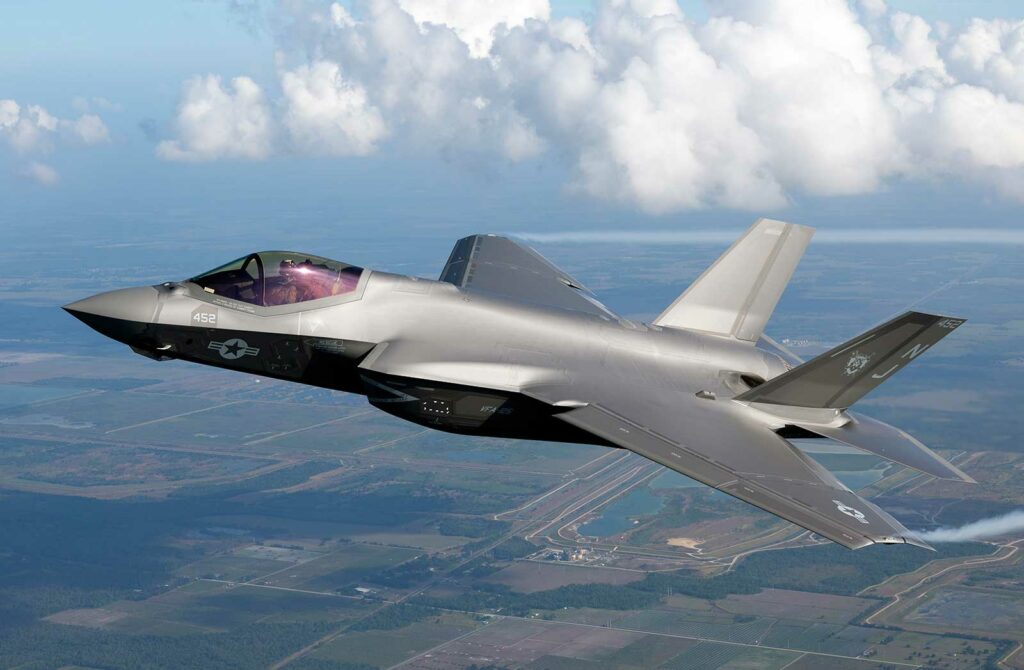
On December 19, 2025, Portugal confirmed its intention to prioritize the acquisition of the Lockheed Martin F-35 to replace its aging fleet of F-16AM/BM aircraft. With an estimated need for between 14 and 28 aircraft, this decision marks the most significant modernization of Portuguese combat aviation in more than thirty years. It responds to a twofold constraint: the structural wear and tear of the F-16s and the rapid evolution of NATO’s strategic framework, dominated by fifth-generation capabilities. The choice of the F-35 is not neutral. It strengthens Portugal’s integration into the Atlantic military architecture and consolidates its ties with the United States, at the cost of an assumed technological dependence. Other options existed, including the Rafale, but Lisbon favors operational and political consistency. One key challenge remains: absorbing the high acquisition and support costs without weakening its armed forces as a whole.
The critical aging of Portugal’s F-16 fleet
Portugal has been operating F-16AM/BMs since the mid-1990s. These aircraft, sourced from several American and European batches, have been modernized as part of the MLU program, but their potential is now reaching a critical threshold. Most have more than 7,000 flight hours, a level close to the structural limits specified in their design.
Beyond physical wear and tear, it is operational obsolescence that weighs heavily. Faced with air environments saturated with sensors, modern surface-to-air missiles, and electronic warfare capabilities, the F-16, even modernized, is showing its limitations. It remains effective for air policing and certain NATO missions, but it can no longer operate on the front line without relying heavily on better-equipped allies.
For Lisbon, continuing to extend this fleet would mean investing in a costly transitional solution that is increasingly less credible from a military standpoint.
The need for strategic modernization for Lisbon
Portugal is not exposed to any immediate direct threat. However, its defense posture is based on two pillars: North Atlantic security and its credibility within NATO. The Alliance is rapidly evolving towards so-called “high-end” capabilities based on stealth, data fusion, and collaborative combat.
Remaining on the sidelines of this dynamic would have political and military costs. Without modern fighter aircraft, the Força Aérea Portuguesa risked becoming a secondary contributor, confined to low-intensity missions. The Chief of Staff of the Air Force has acknowledged that replacing the F-16s is no longer an option, but a necessity.
This choice commits the country for more than 30 years. It will determine pilot training, base organization, industrial partnerships, and Portugal’s place in allied operations.
The F-35 as the Air Force’s preferred choice
The operational advantages of the F-35
The F-35A offers a major leap in capability. Its stealth, data fusion capabilities, and native integration into NATO networks provide a medium-sized country with a credible tool in high-intensity conflict. For Portugal, this means participating fully in advanced missions, rather than merely supporting more powerful partners.
The F-35 also acts as a force multiplier. Even in limited numbers, it improves air and maritime situational awareness, a key issue for a country whose area of interest covers the Atlantic and remote archipelagos such as the Azores.
Full interoperability with NATO
One of the central arguments is interoperability. The majority of European air forces involved in NATO have already chosen the F-35 or have ordered it. By joining this club, Portugal is moving towards operational standardization: same tactics, same information systems, same procedures.
This choice reduces friction during multinational deployments and guarantees continuous access to software upgrades defined by the Alliance. For a country with limited resources, this pooling of resources is a decisive lever.
The budget and scale of the investment
Lisbon is talking about a target of between 14 and 28 aircraft, a number that can be adjusted depending on budget constraints. The unit cost of an F-35A is currently estimated at around $75 to $85 million excluding support, or approximately €70 to €80 million at the current exchange rate.
But the real issue lies elsewhere. The life-cycle cost, including maintenance, software updates, training, and infrastructure, is significantly higher. Over thirty to forty years, the bill could exceed €5 to €6 billion for a complete fleet.
For a country whose annual defense budget fluctuates around 2% of GDP, this is a considerable effort. It requires clear trade-offs: modernizing combat aviation means giving up or deferring certain investments in other components of the armed forces.
Possible alternatives and the case of the Rafale
Why the Rafale was not selected
The French Rafale was a credible option from a technical standpoint. Versatile, battle-tested, and independent of the American ecosystem, it offered a sovereign alternative. However, it was never seriously favored by Lisbon.
The reason is primarily doctrinal. Portugal is seeking maximum integration into NATO, not strategic autonomy. The Rafale would have involved a separate logistics chain, specific procedures, and more limited interoperability with forces already equipped with F-35s.
A political as well as a military issue
The choice of the F-35 is also a clear political signal to Washington. Portugal is confirming its strategic alignment and reliability as a transatlantic ally. In a context of increased tensions on Europe’s eastern flank and in the Atlantic, this message is as important as the aircraft’s performance.
Despite its qualities, the Rafale did not offer this direct political dimension.
Portugal’s integration into the NATO architecture
With the F-35, Lisbon is becoming part of an integrated combat architecture dominated by the United States. Data, software updates, and part of the support go through channels controlled by Washington. This dependence is accepted.
In return, Portugal gains access to an unprecedented level of intelligence and coordination. In complex air operations, this capability is crucial. It strengthens the country’s credibility within the Alliance and secures its role in collective defense.
This choice also permanently anchors the military relationship with the United States, which is already strong due to the strategic importance of the Azores for Atlantic operations.
A structuring gamble for several decades
Portugal’s decision is neither opportunistic nor improvised. It reflects a realistic assessment of its constraints and strategic environment. The F-35 is not the cheapest aircraft, nor the easiest to operate. But it is the one that guarantees Portugal’s place in the inner circle of NATO air forces.
The real challenge will begin after the contract is signed. Crews will need to be trained, technical availability maintained, and high recurring costs absorbed without upsetting the balance of the forces as a whole. In the long term, the F-35 will shape not only Portuguese combat aviation, but also its political and military position within the Alliance.
Portugal is thus making a clear choice: to prioritize strategic coherence and allied integration, even if it means accepting increased dependence. This is a rational but demanding gamble that commits the country to much more than simply replacing its F-16s.
Sources
– Statements by the Chief of Staff of the Força Aérea Portuguesa, December 2025
– NATO documents on the integration of fifth-generation capabilities
– Budget data from the Ministério da Defesa Nacional
– Public reports on the costs and life cycle of the F-35
– Comparative analyses of the Rafale and F-35 programs in Europe
War Wings Daily is an independant magazine.