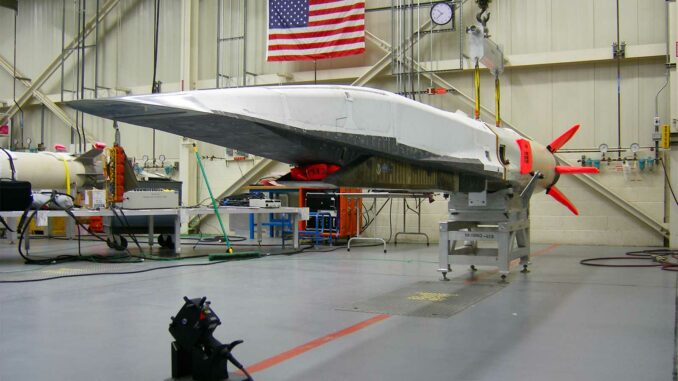
Beyond Mach 5, the scramjet promises air-breathing hypersonic flight. But modeling and controlling this aircraft-engine combination remains a minefield.
In summary
Reaching hypersonic speeds is not simply a matter of “pushing harder.” From Mach 5 onwards, aerodynamics, propulsion, thermodynamics, and structure merge to form a single system. The scramjet, a supersonic combustion engine, embodies this promise: flying fast without carrying oxidizer, and therefore with greater range and efficiency than a rocket on certain trajectories. But it imposes a rare requirement: fine, real-time control of a compressible, reactive, and unstable flow, accurate to within a few milliseconds. The X-43A, X-51A, and HIFiRE demonstrations proved feasibility, but not operational maturity. The current challenge is shifting towards modeling that is “useful for control,” the management of constraints (air intake, combustion, thermal loads), and robust control laws capable of surviving uncertainties. The scramjet is credible. Its control is much less so, for the moment.
The landscape of hypersonic flight technologies
The term “hypersonic” covers a range of very different architectures. There are rocket-powered vehicles, boost-glide vehicles, and air-breathing aircraft. All can exceed Mach 5, but they are not controlled in the same way.
Rocket systems are the most straightforward. The thrust is strong, and control can be achieved using control surfaces and reaction jets, but the oxidizer payload is heavy. Boost-glide vehicles use a rocket to achieve initial energy, then glide at high altitude. The dominant physics becomes aerothermodynamics, with maneuverability possible but energy-intensive.
The air-breathing approach aims for something else: using oxygen from the air. At these speeds, the “air intake – compression – combustion – nozzle” chain becomes the main focus of modeling, and flight control merges with engine control. This is where the scramjet stands out.
The scramjet as an industrial and physical compromise
A scramjet is a ramjet in which combustion takes place while the air remains supersonic in the chamber. Compression does not come from a compressor, but from geometry and shocks. In practice, the engine is a streamlined duct, often integrated into the fuselage. It is sometimes referred to as an engine “without moving parts,” but this shortcut hides extreme complexity.
Simplified operation, without betraying reality
At high speed, the air intake creates a shock wave and shock trains that compress the flow. An insulator stabilizes what follows. Fuel is injected, ignites, releases energy, and then the nozzle accelerates the gases.
The critical factor is time. At Mach 6 or Mach 8, air passes through the engine in a few milliseconds. Combustion must be rapid, the mixture must be homogeneous, and everything must remain stable despite variations in pressure, angle of attack, and density.
The difference between ramjet and scramjet
The ramjet requires the air to decelerate to subsonic speed before combustion. This simplifies ignition, but makes the architecture less viable when temperature and pressure losses explode at very high speeds. The scramjet maintains supersonic flow, which reduces certain losses but makes combustion and flow stability much more difficult. In practice, many designs are “dual-mode,” capable of switching between ramjet and scramjet behavior depending on Mach number and altitude.
The thermal wall, the true operational definition of hypersonic
Mach 5 is not just a speed. It is a change in energy regime. A telling indicator is the total (or stagnation) temperature:
T0 = T × [1 + (γ−1)/2 × M²].
At an altitude of about 20 km, the air can be close to 220 K. At Mach 5, the factor is about 6, so T0 approaches 1320 K (about 1047 °C). At Mach 8, it exceeds 3000 K (about 2727 °C) in the ideal gas approximation.
In reality, dissociation and ionization further complicate the modeling.
The direct consequence is that the control system cannot ignore the thermal effects. A control law that “works” in pure dynamics can destroy the vehicle through thermal overload. The constraint is not a detail. It becomes a state of the system, just like speed or altitude.
Demonstrators that validated propulsion, but not control
Flight programs have proven that supersonic combustion works in real conditions, but they have also shown the fragility of the operating range.
The X-43A demonstrator reached Mach 6.8 and then Mach 9.6 during two successful flights in 2004.
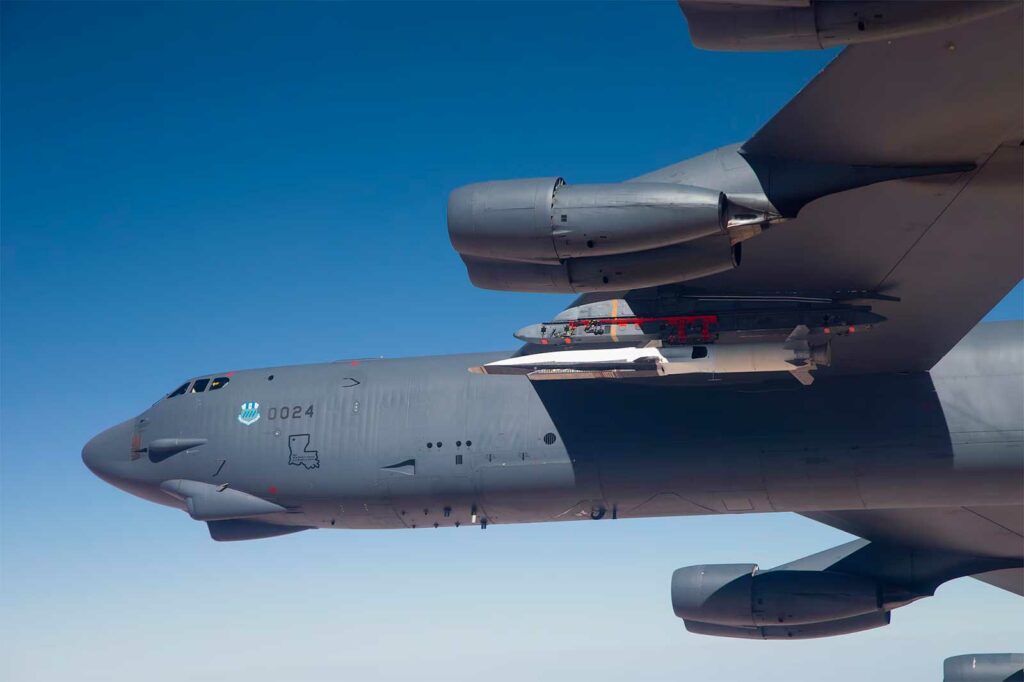
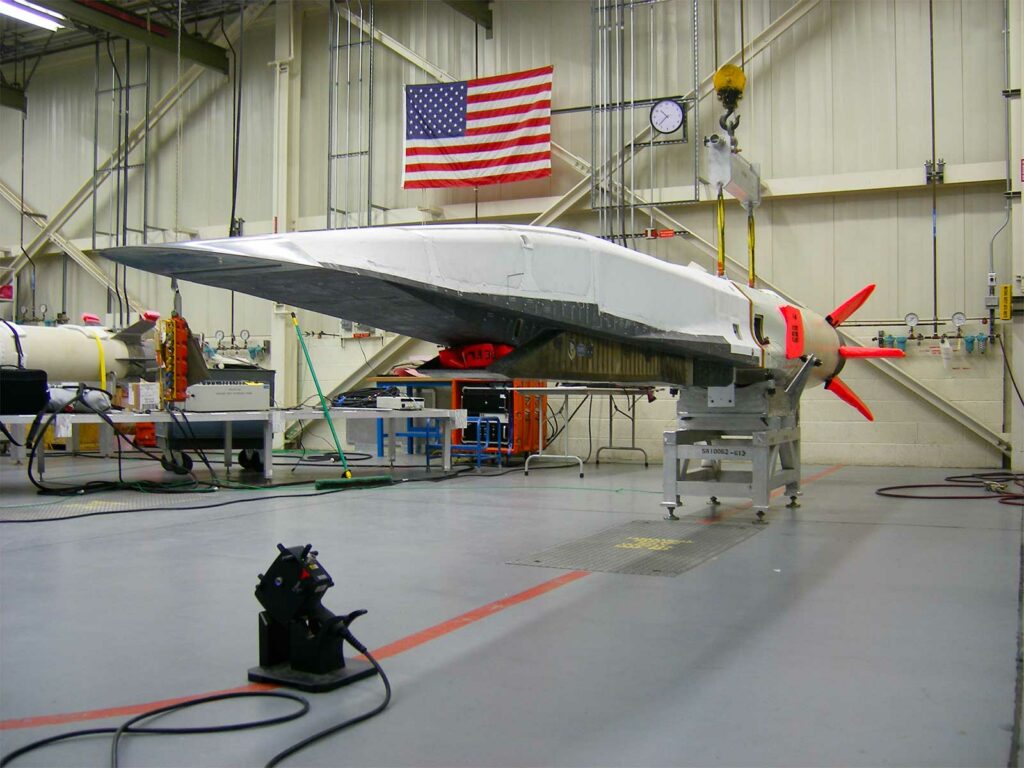
In 2013, the X-51A achieved a powered flight of approximately 210 seconds at Mach 5.1, with a peak altitude of nearly 18,300 m (60,000 ft).
The HIFiRE program, for its part, has documented shorter but highly instrumented scramjet sequences, with typical acceleration from Mach 6 to Mach 8 over a dozen seconds and an altitude of nearly 30,500 m (100,000 ft).
These figures are important, but the lesson lies elsewhere: the stability windows are narrow, and the slightest variation in conditions can cause the intake, combustion, or longitudinal stability to stall.
Coupled dynamics, the heart of the modeling problem
A scramjet vehicle is not an airplane with an engine. It is a system in which the engine influences aerodynamic forces and aerodynamics conditions the engine. Synthesis work on the subject describes unstable, non-minimum-phase dynamics with strong coupling and limited thrust margins, particularly via parameters such as the fuel equivalence ratio (FER).
The central role of the air inlet and the isolator
The most feared constraint is inlet unstart. In plain language: the air intake “stalls.” The shock system shifts, the recovery pressure drops, drag increases, and thrust collapses. This phenomenon can be triggered by an increase in back pressure in the engine, a maneuver, or a change in Mach number/density. Recent work on isolators shows that a small variation in conditions can cause a switch from “started” to ‘unstarted’ with a marked nonlinear effect.
For control, this means one simple thing: certain constraints are not “soft.” They are boundaries. Crossing them does not slightly degrade performance; it changes the physical regime.
Supersonic combustion as an unstable and fast system
Combustion in supersonic flow is difficult to control using turbojet intuition. Times are shorter, fuel distribution is critical, and recirculation zones intended to stabilize the flame create losses and thermal gradients. Control engineers are faced with a reactive system where sensors and actuators have delays and where model-real uncertainties are structural.
Modeling approaches useful for control
High fidelity (3D reactive CFD) better describes the physics, but it is too costly to operate in real time. Control therefore requires a hierarchy of models.
Simplified physical models: fast but incomplete
Conventional architectures combine an aerodynamic model (often based on piston theory or approximations), a quasi-1D propulsion model (Rayleigh flow, shocks, losses), and 3-DOF or 6-DOF flight dynamics.
“Control-compatible” models even include flexibility (bending modes) because loads and thrust excite the structure.
The trade-off is stark: the lighter the model, the more errors it must absorb through the robustness of the control system.
Reduced models and identification
Recent trends are moving towards reduced models: projection onto a modal basis, order reduction, or DMD-type techniques to extract dominant dynamics, particularly on unstart and air intake instabilities.
At the same time, learning methods are being explored to recognize flame modes and reconstruct unmeasurable states, but they remain dependent on data sets and their representativeness.
Emerging control architectures and their trade-offs
Piloting a scramjet requires simultaneously managing trajectory, stability, engine constraints, structural loads, and thermal conditions. This is a natural field for modern approaches, but none of them are magic.
Robust and adaptive laws
Robust control aims to ensure stability despite uncertainties (aerodynamics, propulsion, delays, flexibility). It is often coupled with adaptive strategies to track changes in Mach number and altitude. In the hypersonic envelope, the gain scheduling approach is almost mandatory, but it can fail if the linearizations do not capture major nonlinearities. Recent work proposes more structured LPV constructions to improve the fidelity of scheduling models.
Predictive control under constraints
Model predictive control (MPC) is attractive because it naturally manages constraints: isolator pressure, thermal limits, actuator saturations, unstart margins. But it requires a model that is sufficiently good and sufficiently fast. In hypersonic scramjets, this often requires reduced models and robust state estimation, otherwise MPC becomes an elegant optimizer on a poorly understood reality.
Integrated aircraft-engine control: the only way forward
Scramjets require an integrated approach: fuel action modifies thrust, but also moments via the pressure under the fuselage and the position of the shocks. Conversely, control action modifies the angle of attack, and therefore the compression at the air inlet. This aerodynamic-propulsive coupling is the reason why “separate control” strategies often fail outside of a very local operating point.
The trade-offs that will determine the transition to operational use
The operating window versus pure performance
The higher the Mach number and range, the narrower the stable window. The industry will have to choose: optimize a spectacular operating point or broaden the envelope to obtain a usable, repeatable, maintainable system.
The complexity of variable geometry versus robustness
The idea of variable geometry (air intake or diffuser section) is appealing for maintaining the unstart margin and optimizing thrust. But each degree of freedom adds potential failures, sensors, and control laws. The gain may be real, but integration becomes more risky.
Hydrocarbon fuel versus hydrogen
Hydrogen ignites better and reacts quickly, which aids supersonic combustion. But it is difficult to store, especially for compact platforms. Hydrocarbons are logistical, but more difficult to burn cleanly at these characteristic times. This choice directly influences models and control, as chemistry becomes part of the system.
The end of the “one engine, one aircraft, one control” illusion
The hypersonic scramjet is a control problem in the strict sense of the term: a nonlinear, uncertain, constrained, multi-physical system, where failure does not result in a drop in performance but in a violent change in regime. Demonstrators have shown that the propulsion works. The next step is less spectacular but more demanding: proving repeatability, tolerance to uncertainties, and control of boundaries such as unstart, flexibility, and thermal conditions.
Progress is being made in this field, but it will not tolerate slogans. The breakthrough will not come from another Mach record. It will come when a scramjet vehicle can accommodate realistic variations in mission, high-altitude weather, and material aging, while remaining stable and controllable. Only then will air-breathing hypersonic flight cease to be a demonstration and become a capability.
Sources
- A. Rodriguez et al., Modeling and Control of Scramjet-Powered Hypersonic Vehicles: Challenges, Trends, and Tradeoffs, AIAA GNC, 2008.
- A. A. Rodriguez, Control-Relevant Modeling, Analysis, and Design for Scramjet-Powered Hypersonic Vehicles, NASA (PDF), 2009.
- NASA, X-43A Hyper-X reference page (records Mach 6.8 and Mach 9.6, 2004).
- U.S. Air Force, Edwards AFB, article on X-51A telemetry and Mach 5.1 flight, 2013.
- U.S. Air Force (WPAFB), HIFiRE scramjet research flight summary (Mach 6 to 8, ~12 s, ~100,000 ft), 2012.
- R. Acharya et al., Identification and Assessment of Scramjet Isolator Unstart, Aerospace (MDPI), 2025.
- A. N. Bustard et al., Dynamics of a 3-D inlet/isolator…, Experiments in Fluids, 2024.
- T. M. Stokes et al., Identification of Scramjet Inlet Unstart Characteristics by DMD, AIAA, 2023.
- A. C. Ispir et al., Design space investigations of scramjet engines using reduced-order analysis, Acta Astronautica, 2024.
- H. Ding et al., Robust/MPC methods for hypersonic vehicle trajectory tracking, Drones (MDPI), 2025.
War Wings Daily is an independant magazine.