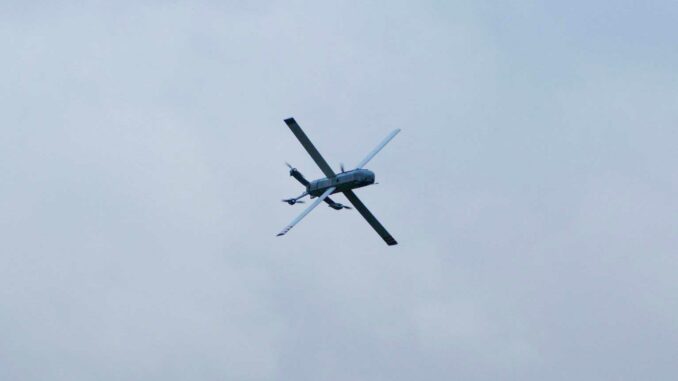
Controversy surrounding German “Helsing” kamikaze drones. Major technical problems in Ukraine, debate on European defense AI and its limitations.
Summary
A major controversy is rocking the European defense industry in early 2026. Ukraine has suspended orders for HX-2 kamikaze drones from German start-up Helsing, financed by Berlin, after significant technical failures in real-world conditions. Internal reports cite launch problems, the absence of promised artificial intelligence components, and extreme vulnerability to Russian electronic jamming, which interrupted communications with operators. Helsing, valued at over €12 billion, denies some of the allegations and claims that several Ukrainian units still wish to acquire its systems. This case is fueling a debate about the rush to develop European military technology initiatives, the maturity of embedded AI capabilities, and the rigor of testing before delivery to the front lines.
The context: a German start-up propelled into the heart of the war
Helsing SE, founded in Munich in 2021, quickly made a name for itself in European defense technology by combining artificial intelligence and autonomous weapons systems. Originally focused on AI software for combat data optimization, it has diversified into the manufacture of strike drones and complex autonomous systems.
Helsing is developing the HF-1 and HX-2 drones, known as loitering munitions, which are capable of autonomously or piloted navigation toward ground targets.
The HX-2: the promise of a new generation of drones
The HX-2 drone is presented by its manufacturer as an AI-enabled attack system capable of operating at distances of up to 100 km, resisting electronic warfare, and integrating autonomous navigation capabilities to identify and engage targets without GPS.
According to Helsing, this system is integrated with Altra software, a tool designed to coordinate multiple autonomous vehicles and provide enhanced tactical vision to the human operator.
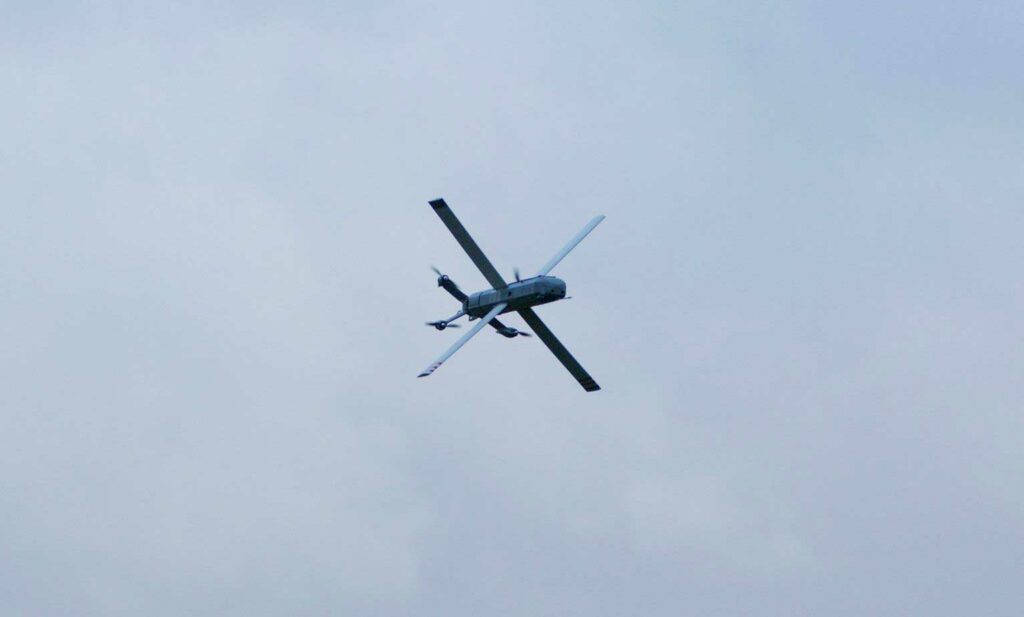
The HX-2’s design is based on a so-called X-wing architecture, combining fixed wings for lift with quadcopter-type rotors for vertical takeoff and precise maneuvering.
The situation on the ground: technical failures in real-world conditions
According to several reports, including an internal presentation dated November 20, 2025 to the German Ministry of Defense, real-world testing conducted by the Ukrainian specialized unmanned systems unit revealed significant problems.
Launch problems
In these tests, only 25% of the HX-2s managed to take off correctly. Mechanical problems related to the catapult system and rotor mechanics are believed to have affected these launches.
Lack of promised AI components
The drones supplied did not have all the artificial intelligence modules that had been announced, particularly those related to terminal guidance, mid-mission navigation, and visual target identification.
Vulnerability to electronic jamming
Even more seriously, near the front lines, the drones were reportedly extremely vulnerable to Russian electronic jamming. This caused repeated interruptions in communication with human operators, rendering the systems unusable in certain intensive combat scenarios.
Helsing’s reactions and disputes over the facts
In response to these allegations, Helsing issued a public statement rejecting several conclusions of the German internal reports. The company claims that documented tests show a high success rate in early missions, close to 100% in some trials conducted in Germany, the UK, and Kenya, and that several Ukrainian units have formalized requests for more than 1,000 additional HX-2 drones.
Helsing also denies having any knowledge of the internal report cited by Bloomberg and states that its drones are already approved for frontline use by the Ukrainian military.
This divergence in accounts—between official sources and the company’s communication—is fueling media and political confusion about the actual performance of these systems.
Impact on Germany-Ukraine relations and contracts
Following these revelations, it is reported that Ukraine has suspended all additional orders for HX-2 drones, with no plans for new orders until Kyiv expresses formal interest again.
The equipment is financed by Germany as part of its military support for Ukraine, which puts Berlin in a difficult position: defending its industrial and military strategy while meeting its partner’s expectations in terms of operational reliability.
Technological challenges: military AI faces the realities of the front line
This case highlights the technical challenges associated with integrating artificial intelligence into autonomous weapons systems. Manufacturers often promise advanced capabilities in terms of autonomy, navigation, and resistance to electronic countermeasures, but experience on the front lines reveals that these promises are not always fulfilled in environments where electronic warfare is intense and operational conditions are unpredictable.
The gap between controlled testing and actual combat raises questions about the maturity of embedded AI technologies and the rigor of pre-deployment qualification processes. Systems that perform well in the lab or in test environments may fail in the face of sophisticated electronic attacks and difficult climatic or logistical conditions.
The political debate on the European race for military innovation
Beyond the technical aspects, this controversy reignites the debate on Germany’s (and more broadly Europe’s) strategy of investing heavily in AI-based warfare technologies. Several critics believe that Berlin may have rushed its decisions, prioritizing technological visibility and the race for leadership over proven system reliability.
Europe wants to strengthen its strategic sovereignty in the field of defense, particularly in light of its perceived dependence on American technologies. Investing in start-ups such as Helsing was part of this strategy. But the Ukrainian experience suggests that the pressure to rapidly produce advanced systems can compromise quality and effectiveness.
Alternatives and the role of competing manufacturers
Other European manufacturers, such as STARK, are also involved in the production of drones and autonomous systems to meet increased demand in the war market in Ukraine. These companies are also facing technical challenges, but some have chosen to focus on more modular or better-tested systems before going into production.
What lessons for the future of defense AI in Europe?
The Helsing case sends a strong signal to policymakers, industry, and the military community. It shows that the promise of sophisticated autonomous weapons must be tempered by a rigorous assessment of their technical maturity, their resistance to adversarial countermeasures, and their integration into proven combat doctrines.
For Europe, the challenge remains to reconcile rapid innovation with operational robustness, to impose stringent testing standards prior to deployment, and to ensure transparent cooperation between industry, states, and military partners.
Perspectives opened up by this controversy
The case could encourage increased relocation of production capacities to Ukraine, more rigorous testing in real conditions prior to delivery, and a reassessment of strategies for integrating AI into weapons systems. More broadly, it raises questions about the current limits of artificial intelligence in the context of war and how the armies of the future must balance system autonomy and human control.
Sources
Bloomberg (via Espreso.tv, Ukrainska Pravda), Helsing press releases, Defense-Blog, The Defense Post.
War Wings Daily is an independant magazine.