A $1.5 billion arms deal between Sudan and Pakistan aims to strengthen the Sudanese army, involving drones, aircraft, and major geostrategic issues.
Summary
The Sudanese army and Pakistan are about to finalize a $1.5 billion arms deal, promising to provide Khartoum with significant resources to reverse the momentum of its civil conflict. The agreement includes 10 Karakoram-8 light aircraft, more than 200 reconnaissance and combat drones, and advanced air defense systems. It could also include Super Mushshak training aircraft and, potentially, JF-17 Thunder fighter jets manufactured in Pakistan. Sudan’s strategic importance, stretching along the Red Sea and producing significant quantities of gold, attracts outside players and makes this pact a key element in the regional geopolitical game. Pakistan’s growing role in the global defense export market illustrates its industrial ambitions and ties to the Middle East. This comes as the Sudanese military struggles to maintain air superiority against the Rapid Support Forces (RSF), marking a turning point in the war.
The state of the Sudanese conflict and the importance of air power
Since April 2023, Sudan has been embroiled in a major civil war between the regular army, the Sudanese Armed Forces (SAF), and the paramilitary militia of the Rapid Support Forces (RSF). This conflict has caused one of the worst humanitarian crises in the world, with millions of people displaced and fierce fighting on several fronts.
A central factor in this conflict is the domination of the battlefield by aircraft and drones. The RSF has used drones to disrupt front lines and gain ground, reducing the effectiveness of Sudan’s regular forces. This relentless pressure on Khartoum’s armed forces has highlighted the limitations of their air capabilities, particularly in terms of reconnaissance, strike, and defensive cover.
While the SAF attempted to maintain air superiority earlier in the conflict, their inability to counter enemy drones and provide constant air cover for ground operations weakened their strategic position. This dynamic has encouraged Sudanese military leaders to seek a decisive reinforcement of their air arsenal, which largely explains the negotiations with Pakistan.
The specific content of the arms deal
The deal in question, which according to several corroborating sources is close to being finalized, involves a $1.5 billion (approximately €1.4 billion) package to modernize Sudan’s military capabilities.
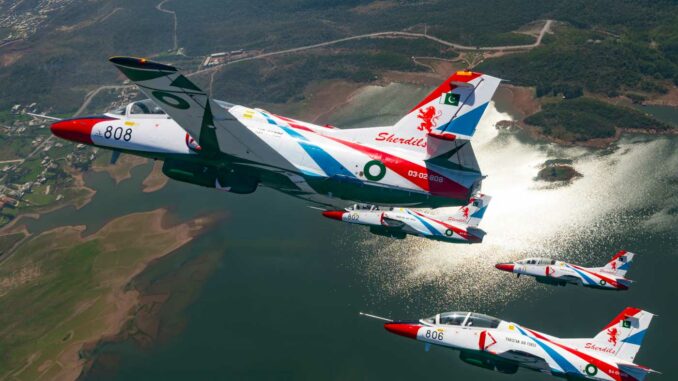
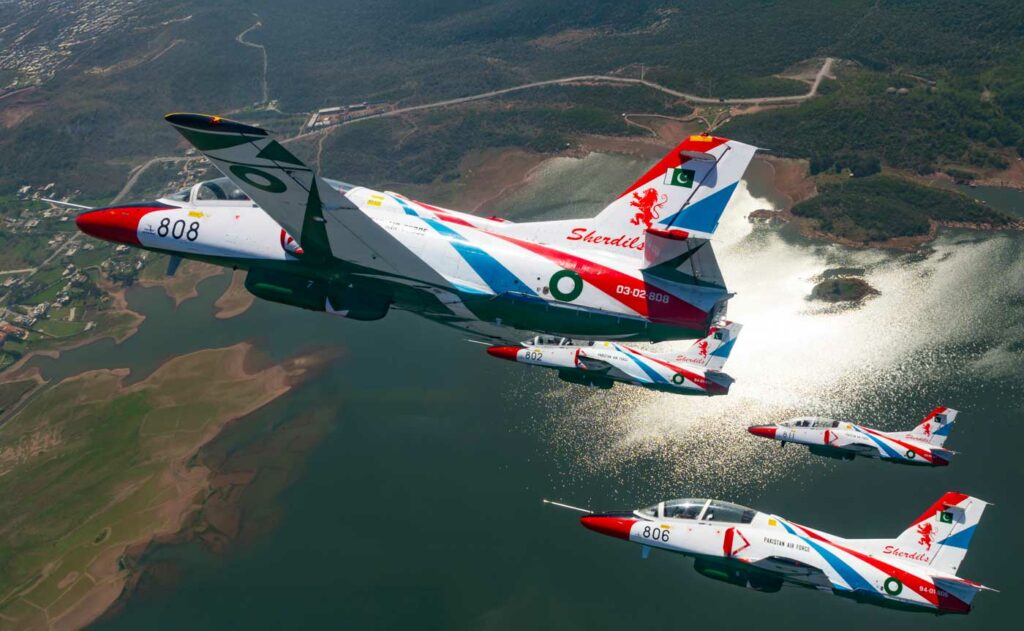
The core of the agreement includes 10 Karakoram-8 light attack aircraft. These two-seater aircraft, designed in cooperation between Pakistan and China, are versatile: they can be used for pilot training as well as light ground support missions. Their cost is generally estimated at between $10 million and $15 million per unit, making them a financially viable option for armies seeking renewed air power.
Another key element is the delivery of more than 200 drones for reconnaissance, surveillance, and kamikaze attacks. This fleet could include models such as the Shahpar-II UCAV, capable of strike missions with high autonomy, and other UAVs more specialized in real-time intelligence gathering.
The agreement also provides for the delivery of advanced air defense systems, designed to protect strategic areas from enemy drones and air strikes, thereby increasing the resilience of Sudanese forces. Discussions also mention the possible inclusion of JF-17 Thunder fighters, multi-role aircraft produced in Pakistan in collaboration with China, although their presence in the final contract has not been confirmed.
In addition, Super Mushshak training aircraft could be supplied to rapidly train new pilots, filling an urgent need to rebuild a coherent and effective air force.
Pakistan’s geostrategic role and export ambitions
This contract marks an important milestone for the Pakistani defense industry, which is rapidly expanding in the international market. Pakistan seeks to position itself not only as a domestic producer but also as an exporter of comprehensive military capabilities, offering solutions ranging from drones to light combat aircraft.
In Islamabad’s economic context, subject to an International Monetary Fund (IMF) program and under pressure to balance its finances, the development of this sector represents a potential source of foreign exchange and economic stability.
Politically, this type of agreement allows Pakistan to strengthen its strategic ties with countries in the Middle East and Africa, responding to increased demand for alternative suppliers to the major Western or Russian powers. This positioning is all the more important as some states in the region are seeking to diversify their sources of armaments in the face of more restrictive approaches by traditional suppliers.
The possible involvement of third parties, particularly Gulf countries such as Saudi Arabia, which could play a role as mediators or financiers of the agreement, adds a significant geopolitical dimension. This reflects regional rivalries and alliance networks that extend far beyond East Africa.
The expected impact on the Sudanese conflict
The arrival of these additional resources could change the military dynamics in Sudan. Having superior drones and light attack aircraft would give the Sudanese army increased capacity for surveillance of the territory, targeted strikes, and defense against enemy air attacks.
The provision of advanced air defense systems is particularly significant in a conflict where drones already play a major role. It could reduce the vulnerability of government forces to attacks and enable them to regain the initiative in certain contested areas.
However, several challenges remain. Integrating this new equipment requires extensive personnel training, enhanced logistics, and appropriate infrastructure, which could slow down its effective deployment in the field. Furthermore, the escalation of military capabilities may intensify the conflict and prolong the fighting if it is not accompanied by a political process.
Regional dimensions and geopolitical risks
Sudan remains an area of strategic interest due to its location along the Red Sea, a crucial shipping route for global trade, and its natural resources, particularly gold. This importance attracts regional and international powers, each seeking to increase its influence.
The agreement with Pakistan reflects this reality: it is not just a commercial transaction, but a geopolitical choice that could redraw alignments in the region. Other actors, such as Iran, have already provided military support, including drones, to the Sudanese army.
A significant strengthening of Sudan’s military capabilities could also influence the balance of power between regional powers, exacerbate tensions between rival blocs, and complicate international peace efforts.
An uncertain but decisive trajectory
The arms pact between Sudan and Pakistan comes at a crucial moment.
It illustrates the increasing complexity of military relations in conflict zones, the emergence of new arms suppliers, and the way in which states are attempting to fill their strategic gaps through international agreements.
The concrete impact of this cooperation will depend on the ability of Sudanese forces to integrate these systems, the evolution of the conflict with the RSF, and the reactions of other regional actors.
This development thus marks an important milestone in the Sudanese civil war, while reflecting profound transformations in the networks of influence and power that shape security in Africa and beyond.
Sources
Reuters – Pakistan finalizes $1.5 billion arms deal with Sudan to supply weapons and aircraft.
Zonebourse – Analysis of the Pakistan-Sudan arms deal.
Defense Security Asia – Pakistan expands arms exports to Sudan.
The Sudan Times – Pakistan close to finalizing arms deal.
Arab News – Additional details on the arms deal.
War Wings Daily is an independant magazine.