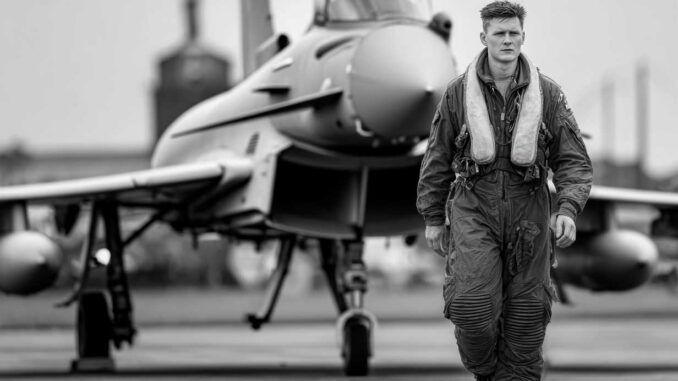
The RAF is experiencing a profound crisis in pilot training, marked by record delays, a shortage of instructors, and costly outsourcing abroad.
Summary
The Royal Air Force is facing a structural crisis in fighter pilot training. Whereas an operational pilot used to be trained in around three years, the process now takes seven to eight years, a delay deemed “disastrous” by several internal reports and independent observers. This situation is the result of a combination of factors: a chronic shortage of instructors, undersized flight schools, and persistent technical problems with the Hawk T2, the cornerstone of advanced training. Lacking sufficient national capacity, the RAF is forced to outsource part of its training to Italy or the United States at high cost, while struggling to maintain its front-line personnel. This situation fuels fears of a “hollow air force”, capable of fielding modern aircraft but lacking fully qualified pilots to operate them sustainably.
A worrying trend in training times
Training a fighter pilot is a long process, but one that is well managed in the major Western air forces. Until the mid-2010s, the RAF was able to train a combat-ready pilot in around three to four years, from initial selection to arrival in an operational squadron.
Since then, the trajectory has deteriorated significantly. According to several internal audits, it now takes seven to eight years for a pilot to reach full qualification on the Typhoon or F-35B. Some students even experience prolonged waiting periods, sometimes exceeding twelve months, between two phases of training.
This increase in time is not simply an administrative inconvenience. It automatically reduces the number of available pilots, increases overall costs, and undermines long-term workforce planning.
A critical shortage of instructors
The most frequently cited factor is the shortage of flight instructors. At the beginning of 2025, only one in three instructor positions was actually filled in certain RAF training units. This situation is the result of a vicious circle.
Instructors are drawn from operational squadrons. However, these units are themselves under pressure, with a limited number of qualified pilots and a high operational tempo. Detaching experienced pilots for training directly weakens the front line.
Added to this is a problem of attractiveness. Experienced pilots are highly sought after by civil aviation, particularly airlines, which offer salaries and job security that are difficult to match. The RAF struggles to retain these key profiles long enough to maintain a sufficient pool of instructors.
The Hawk T2, a weakened link
The Hawk T2 training aircraft, used for advanced training, is another major sticking point. This aircraft was supposed to be a modern solution, capable of effectively preparing pilots for fourth- and fifth-generation fighters.
In practice, the fleet has suffered from recurring technical problems. Difficulties related to engines, avionics, and parts availability have reduced the number of hours that can actually be flown. In some years, the availability rate has fallen well below contractual targets.
The result: canceled training slots, students grounded, and a backlog of delays that is difficult to clear. Each week lost on the Hawk T2 then had a knock-on effect on the entire training chain.
Outsourcing has become unavoidable
Faced with the congestion of the national system, the RAF made the pragmatic choice to outsource part of the training. British pilots are sent to Italy, particularly to schools using the M-346, or to the United States, to participate in joint programs with the US Air Force and US Navy.
From an educational standpoint, these training programs are high quality. They make it possible to maintain a minimum flow of qualified pilots. But they are expensive. Between tuition fees, logistical support, travel, and accommodation, the bill amounts to tens of millions of pounds per year.
Above all, this outsourcing creates structural dependency. The RAF no longer has complete control over its training schedule and must deal with the priorities and constraints of foreign partners.
Direct pressure on combat squadrons
This training crisis is not confined to schools. It is resulting in increasing pressure on front-line squadrons. Typhoon and F-35B units have to absorb fewer and sometimes less experienced pilots, while maintaining high operational commitments, particularly within the framework of NATO.
Squadron leaders must constantly juggle training, actual missions, and maintaining skills. This situation increases crew fatigue and limits the ability to ramp up in the event of a major crisis.
Several analysts believe that the RAF now has modern aircraft but insufficient human resources to operate them fully over the long term.
The specter of a “hollow air force”
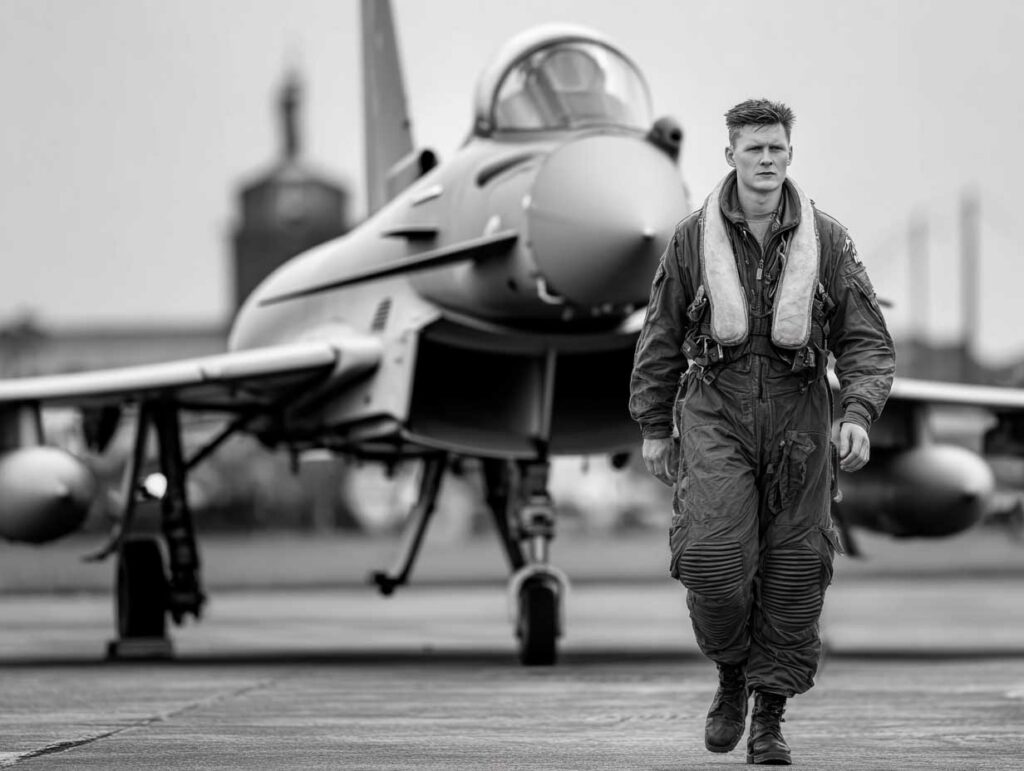
The term “hollow air force” is increasingly being used in British specialist circles. It refers to a force that has advanced technological capabilities on paper, but whose operational depth is insufficient.
In the case of the RAF, the risk is clear. High-performance, interconnected aircraft capable of complex missions, but a limited number of fully qualified pilots to support a prolonged conflict. This fragility is all the more worrying given that the United Kingdom positions itself as a pillar of NATO’s deterrence and air posture in Europe.
Structural causes beyond training
It would be simplistic to reduce the crisis to a mere training problem. It also reflects budgetary and organizational choices made over several decades. Staff reductions, the closure of certain bases, and the partial privatization of training have gradually reduced the room for maneuver.
The just-in-time approach, which is effective in times of stability, is now showing its limitations in a context of increased international tensions. The RAF finds itself with little capacity to absorb technical or human contingencies.
Possible avenues for recovery
The British authorities have launched several initiatives. These aim to improve instructor retention, increase the availability of the Hawk T2, and optimize the use of advanced simulators. Contractual adjustments with manufacturers are also being considered to improve aircraft maintenance and availability.
However, these measures will only have an effect in the medium term. Training an instructor, and then a pilot, remains a lengthy process. No plan can quickly make up for the years lost.
A strategic challenge for British credibility
The pilot training crisis goes beyond the RAF alone. It affects the overall military credibility of the United Kingdom. In an environment marked by the rise of competing air forces and the return of high-intensity risk, human resources are once again becoming a determining factor.
Technology is not enough. Without sufficient numbers of properly trained pilots, even the best aircraft remain underutilized. The current trajectory raises a simple but far-reaching question: is the UK prepared to make a long-term investment in rebuilding its training system, or will it accept increasing dependence on external partners?
The answer will determine the RAF’s real place in the European military balance in the coming decades.
Sources
- Reports from the UK National Audit Office on aviation training
- UK Ministry of Defense parliamentary hearings
- Specialist analyses of the Royal Air Force and pilot training
- Public data on the Hawk T2 program
- Publications from UK think tanks on the UK’s air posture
War Wings Daily is an independant magazine.