
The SCAF has been postponed again, following a decision by Berlin. Industrial disagreements, rivalry with the GCAP, and the risk of Europe falling behind technologically.
Summary
On January 2, 2026, Berlin confirmed a further postponement of the key decision on the next phase of the Future Air Combat System. This additional delay comes at a time of already tense relations between Paris and Berlin, marked by persistent disagreements over industrial governance and the sharing of responsibilities. Meanwhile, the competing GCAP program, led by the United Kingdom, Japan, and Italy, is moving forward with a clear roadmap and a target entry into service in 2035. This contrast fuels concerns about continental Europe’s ability to remain in the technological race with the United States and Asian powers. More than just an administrative delay, this setback reveals the structural weaknesses of the SCAF: complex political trade-offs, industrial rivalries, and the difficulty of aligning strategic ambition with budgetary discipline.
The new postponement reignites Franco-German tensions
The confirmation from Berlin came as yet another negative signal. A German government spokesperson indicated that the expected decision on the next phase of the SCAF was not ready and would be postponed again. No specific date has been put forward, which is fueling uncertainty.
For Paris, this postponement is difficult to accept. France has been pushing for several months to secure a clear sequence of program phases in order to avoid a break in industrial and technical capacity. On the German side, the discourse remains cautious. Berlin cites the need for additional guarantees on governance, costs, and the distribution of industrial tasks.
This difference in pace illustrates a now well-established reality: Franco-German cooperation in defense is patchy, and SCAF is the most emblematic example of this.
SCAF, a strategic program under pressure
The SCAF program is not like other projects. It must ensure the replacement of the Rafale and Eurofighter by 2040 and shape European air strategy for several decades to come. It is based on a “system of systems” architecture, combining a new-generation fighter aircraft, drones, and a combat cloud.
On paper, the ambition is considerable. In reality, it faces political and industrial complexity rarely seen before. Three nations, several industrial champions, and sometimes divergent visions of technological sovereignty.
The postponement announced in early January further weakens an already tight schedule. Each delay pushes back the demonstrators, lengthens the validation phases, and automatically increases costs.
Industrial disagreements at the heart of the deadlock
At the center of the tensions are industrial tensions between Dassault Aviation and Airbus. The issue is not new, but it has still not been resolved. It concerns the leadership of the aircraft pillar, the division of labor, and control of certain key technological components.
France advocates a clear division of responsibilities, with a designated prime contractor for the NGF fighter jet. Germany, supported by Spain on certain points, argues for a more balanced sharing of responsibilities, reflecting financial and industrial contributions.
These differences slow down decision-making. Each compromise takes a long time to negotiate. Each phase becomes a subject of political debate. As a result, the program is moving forward, but without the fluidity needed to meet its ambitious goals.
The striking contrast with the GCAP program
While the SCAF is stalling, the Global Combat Air Program is progressing. The GCAP, which brings together the United Kingdom, Japan, and Italy, has more centralized governance and a clearer timeline. The stated objective is to enter service around 2035.
This contrast is fueling growing unease in continental Europe. On the one hand, there is the ambitious SCAF project, slowed down by complex trade-offs. On the other, there is the GCAP program, which capitalizes on closer cooperation and strong political momentum.
For manufacturers and the armed forces, the comparison is cruel. It raises a simple question: is Europe capable of successfully completing a sixth-generation European fighter program without getting bogged down in its own decision-making mechanisms?
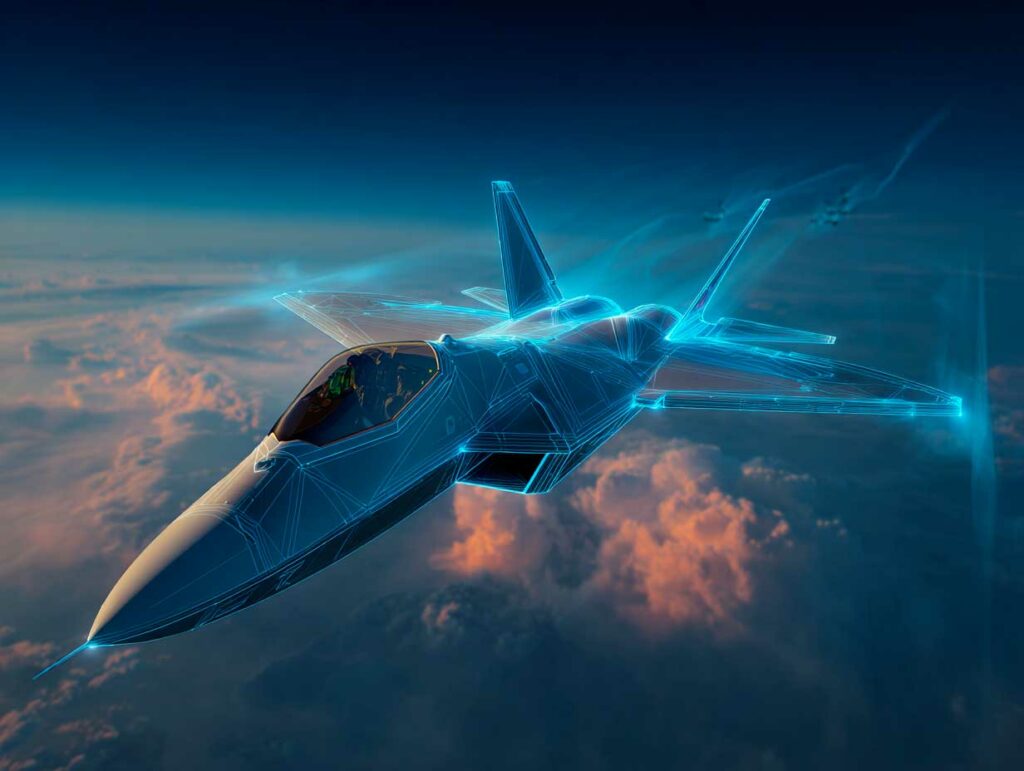
The risk of European technological decline
The postponement announced on January 2, 2026, is not neutral in technological terms. Time is a key factor in the development of combat systems. Delaying a decision today means postponing tests tomorrow and risking a lasting delay.
The United States is continuing its work on next-generation systems, combining manned platforms, drones, and advanced data networks. In Asia, Japan and South Korea are investing heavily in modern air architectures.
Faced with these dynamics, Europe cannot afford prolonged stagnation. The SCAF was supposed to be a lever for European air superiority. With all the delays, it could become a catch-up program rather than a leap forward.
The budgetary issues behind the political discourse
Officially, the debate focuses on governance and industrial efficiency. Behind the scenes, however, the budgetary issue is omnipresent. The financing of the SCAF program is expected to reach very high amounts over several decades, with estimates well exceeding €100 billion in total costs.
In a context of strained public finances, each government seeks to limit its exposure and maximize national benefits. This logic is understandable, but it complicates the construction of a common vision.
Berlin’s decision to postpone the program also reflects political caution: embarking on a new phase means making a long-term financial commitment. However, internal consensus is not always achieved, particularly in the Bundestag.
The industrial consequences of an uncertain timetable
A program of this magnitude cannot be managed with repeated pauses. Manufacturers need visibility in order to invest, recruit, and retain rare skills. Each postponement weakens the value chain.
For France, the SCAF is a pillar of European industrial sovereignty in the field of military aeronautics. For Germany and Spain, it must also guarantee tangible industrial benefits. If the schedule remains unclear, there is a risk of a gradual erosion of skills, to the benefit of other more predictable programs.
This uncertainty may also push some players to favor intermediate solutions, such as purchasing or modernizing existing equipment, to the detriment of a long-term vision.
The message sent to partners and allies
Beyond the Franco-German-Spanish trio, the postponement of the SCAF is being closely watched by European partners and NATO allies. It fuels doubts about Europe’s ability to carry out a high-level aviation program on its own.
This signal contrasts with the political discourse on strategic autonomy. It lends weight to the arguments of those who believe that Europe remains structurally dependent on American technologies for its critical capabilities.
The SCAF was supposed to prove the opposite. Each additional delay weakens this demonstration.
A political decision that has become inevitable
The postponement of January 2, 2026 confirms a trend: technical and industrial trade-offs have reached their limits. The program cannot move forward without a clear political decision at the highest level.
Paris is waiting for a firm commitment. Berlin is asking for guarantees. Madrid is observing and adjusting its position. Without strong impetus, there is a risk of prolonged deadlock, or even a partial rethinking of the European air combat project.
Recent history shows that major military programs do not survive indecision. The SCAF will be no exception to this rule. Either the capitals agree on a robust compromise, or Europe will have to accept that others will define the standards for tomorrow’s air combat.
Sources
Reuters, January 2, 2026, statements by the German government spokesperson on the SCAF
French Ministry of the Armed Forces, official files on the Future Air Combat System
Bundestag, minutes of debates on European armament programs
European industrial analyses of the GCAP program
French and German parliamentary reports on European aeronautical cooperation
War Wings Daily is an independant magazine.