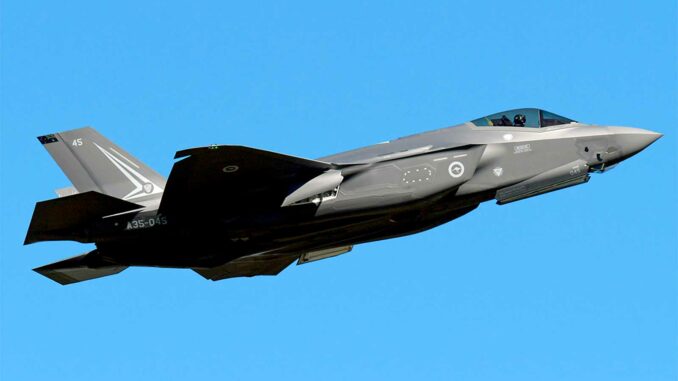
With 191 deliveries in 2025, the F-35 is widening the industrial gap. What are the Rafale, Eurofighter, Gripen, J-20, JF-17, and Tejas producing, and at what cost?
In summary
In 2025, Lockheed Martin delivered 191 F-35s, a record that changes the scale of comparisons. This volume exceeds the combined current production rates of competing Western programs, even as Europe attempts to regain momentum with the Rafale, Eurofighter Typhoon, and JAS 39 Gripen. In contrast, China is advancing more discreetly but more quickly, with fighter jet production estimated at several dozen, or even more than a hundred aircraft per year, depending on the family. Pakistan and India, meanwhile, are producing at more irregular rates, constrained by engines, assembly lines, and cash flow. Behind these figures lies a brutal reality: production rate is not just an industrial indicator. It determines the ability to replace losses, honor exports, and impose technical standards. The F-35 benefits from a shared market and financing; the other programs foot the bill, each on their own.
The figure that crushes the comparison
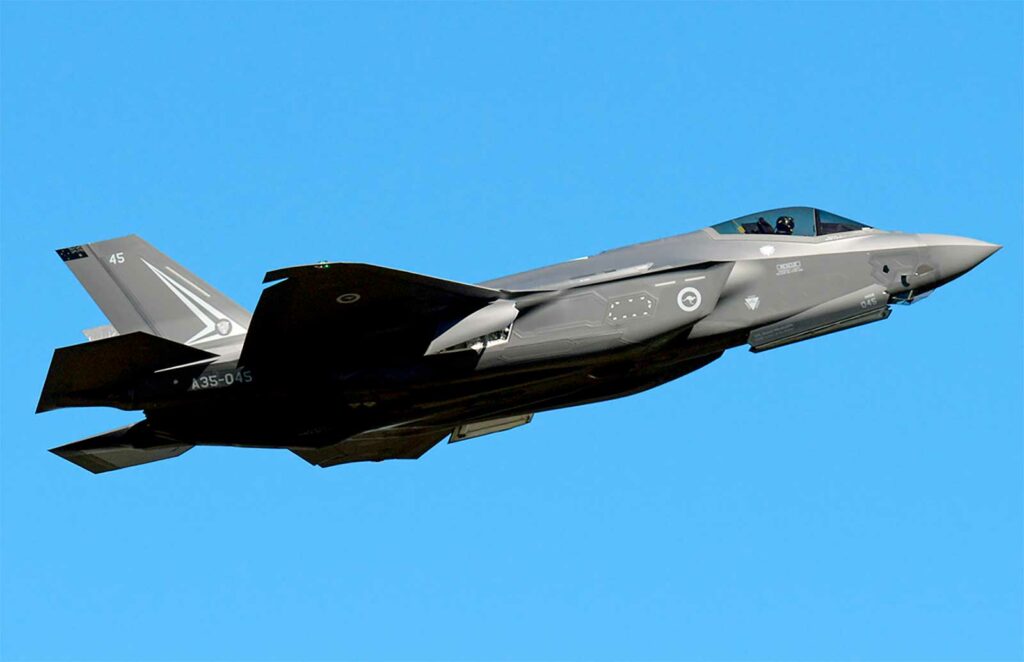
The starting point is simple. In 2025, Lockheed Martin announces 191 deliveries of the F-35 Lightning II. This is in stark contrast to 2024 (110 deliveries) and the previous record of 142 aircraft. Lockheed adds a sentence that sums it all up: annual production of the F-35 is now running at a rate “five times faster” than any other allied fighter program still in production.
This is not a record of combat performance. It is an industrial observation. And, at a time when attrition is once again becoming a credible scenario, industry carries as much weight as doctrine. A fleet is modernized at the speed of the factory, not at the speed of press releases.
The mechanics of the F-35 that manufactures mass
The success of the F-35 is not a technological “miracle.” It is a model program. It stacks up customers, therefore orders, therefore batches. It creates a standard, and therefore stable demand. And it transforms this demand into continuous investment capacity.
Assembly sites that cement the coalition
The program relies on three final assembly and check-out (FACO) sites: Fort Worth (United States), Cameri (Italy), and Nagoya (Japan). This detail is as much political as it is industrial. These sites reduce certain bottlenecks, but above all, they create lasting national interests around the program. Once a chain is qualified, no one wants to be the one to “break” the ecosystem.
Economies of scale that become a military advantage
The volume effect does more than just lower unit costs. It secures parts inventories, stabilizes subcontractors, improves repair rates, and speeds up retrofits. In other words, it reinforces the “long term.” Reuters notes that the F-35 program accounts for about one-third of Lockheed Martin’s revenue. That’s huge. This automatically encourages the company to maintain its pace, even when other segments are slowing down.
European production rates remain low
Europe still produces modern fighter jets. But today, it does not have a dynamic comparable to that of the F-35.
French production on the rise, without changing category
Dassault Aviation reports that it delivered 26 Rafale aircraft in 2025 (15 for export, 11 for France), compared to 21 in 2024. This is a clear increase. It is also a reminder that even a “good” year in Europe remains a “low volume” year compared to the F-35.
This pace serves two conflicting objectives. Delivering exports is vital to finance the industrial base. But delivering to France is essential to maintain operational credibility. In a context of tension, this forces trade-offs, sometimes invisible: standards, delivery priorities, ramp-up schedules.
Typhoon production must accelerate… but starts from a low base
The consortium speaks of a current rate of about 12 aircraft per year, with an announced ramp-up to 20 aircraft per year “within 36 months,” and an ambition to reach 30 if exports follow. This ambition is a direct response to Europe’s strategic awakening.
The problem is the friction of reality. Eurofighter acknowledges that it still takes around 50 months between signing a contract and delivery. In other words, even if Europe signs quickly, Europe will deliver slowly, at least for several years. And during that time, the F-35 will continue to deliver monthly.
The Gripen case, between actual production and claimed capacity
Saab says it can produce 20 to 30 Gripens per year and even double that if a very large contract is confirmed. At the same time, several analyses point out that the Linköping site has long been producing around a dozen aircraft per year, and that ramping up production requires investment, recruitment, and time.
The important point is not to decide between one figure and another. The important point is the dependence on continuity of orders. Without a steady flow, a European production line remains fragile. The F-35, on the other hand, has a much broader and therefore more resilient customer base.
Chinese production is growing rapidly, but remains difficult to measure
China is the other side of the debate. But the comparison is less transparent: Beijing publishes little reliable data on factory output. We must therefore work with open estimates, and with caution.
Observed stocks give an order of magnitude
The IISS reports more than 200 Chengdu J-20s and around 280 J-16s in service by the end of 2023. This already sends a message: when it comes to modern fleets, China thinks in terms of volume.
Estimates of annual production vary, but they do converge on one trend. China is industrializing several families of fighters in parallel. Current estimates suggest around 40 J-10Cs per year and more than 100 J-16s per year. RUSI, for its part, cites an order of magnitude of around 100 new fighters per year and projects strong growth for the J-16 fleet. Depending on the scenario, China is therefore in a “high volume” zone, with a dynamic closer to the American approach than the European one.
The Chinese budget fuels longevity
China has announced a 2025 defense budget of around 1.78 trillion yuan (around $246 billion) and a 7.2% increase. The scope is not identical to that of Western budgets. But this figure illustrates a trajectory: the rise in power is being financed over the long term, and combat aviation is part of that.
Pakistani and Indian supply chains caught between ambition and constraints
In South Asia, the logic is different. The needs are real. The desire for sovereignty is strong. But the industrial supply chain is more constrained.
Pakistan and exports as an industrial lifeline
The JF-17 Thunder is designed to be exportable and “financeable.” In early January 2026, Reuters reported on discussions in which part of Saudi loans (approximately $2 billion) could be converted into JF-17 orders, in a package that could reach $4 billion. The message is clear: exports are becoming an instrument of financial policy, not just defense policy.
This strategy is also an admission of constraint. Pakistan announced a 2025-2026 defense budget of approximately 2.55 trillion rupees (approximately $9 billion) excluding pensions, and 3.292 trillion (approximately $11.67 billion) including pensions. At these levels, fleet renewal is a balancing act.
India and autonomy hampered by engine bottleneck
India is pushing for autonomy with the HAL Tejas (and its developments). But the pace depends on a trivial and decisive factor: engines.
In September 2025, HAL publicly explained that improving the GE-404 supply chain is a necessary step to speed up deliveries, and indicated that it is still operating with a tight engine flow.
On paper, India’s ambition is clear: to accelerate domestic production, reduce dependence on imports, and export more. Reuters also mentions Indian defense spending of $78.7 billion for 2025-2026, including approximately $21 billion for equipment. The issue is not just “how much India spends.” It is “how much India transforms into delivered aircraft.”
The logic that really matters to military leaders
We can talk at length about radars, missiles, and stealth technology. But in 2025-2026, the question comes back down to earth: who can deliver quickly, regularly, and over the long term?
Production of 191 aircraft per year provides a replacement and ramp-up capacity that current European programs do not have. It also makes it possible to accelerate exports and impose a standard. This standard, in turn, increases the pace. It is a mechanism of assumed but effective dependence.
Europe is trying to pick up speed again. It has even started to talk like a “war” industry, with targets for pace and deadlines. But it must choose between concentration and costly dispersion. China is advancing at a pace that is difficult to verify, but which is supported by industrial and budgetary consistency. Pakistan and India show that aeronautical sovereignty is played out in the details: engines, suppliers, financial stability.
The real test in the coming years will be clear without jargon: who will turn their announcements into factory output, quarter after quarter, without being caught up by the reality of defense budgets?
Sources
- Reuters, “Lockheed says 2025 F-35 deliveries hit 191…”, January 7, 2026.
- Lockheed Martin, press release “F-35 Breaks Delivery Record…”, January 7, 2026.
- Reuters, “Lockheed Martin delivers 110 F-35 fighter jets in 2024”, January 8, 2025.
- Dassault Aviation, “Deliveries, order intakes… as of December 31, 2025,” January 2026.
- Eurofighter, “Eurofighter at ‘Strategic Turning Point’ Says CEO,” May 14, 2025.
- Janes, “Paris Air Show 2025: Eurofighter to increase production…,” June 18, 2025.
- Reuters, “Saab ready to expand Gripen fighter production…,” October 24, 2025.
- International Institute for Strategic Studies, The Military Balance 2024 (fleet data).
- RUSI, analysis of Chinese fighter production and fleets.
- Reuters, “China maintains defense spending increase at 7.2%…,” March 5, 2025.
- Reuters, “Pakistan boosts defense budget by 20%…,” June 10, 2025.
- Reuters, “Pakistan, Saudi in talks on JF-17 jets-for-loans deal…”, January 8, 2026.
- Times of India, information on the Tejas Mk1A engine chain, September 11, 2025.
- Delhi Policy Group, “India’s Defense Budget 2025-26,” 2025.
War Wings Daily is an independant magazine.