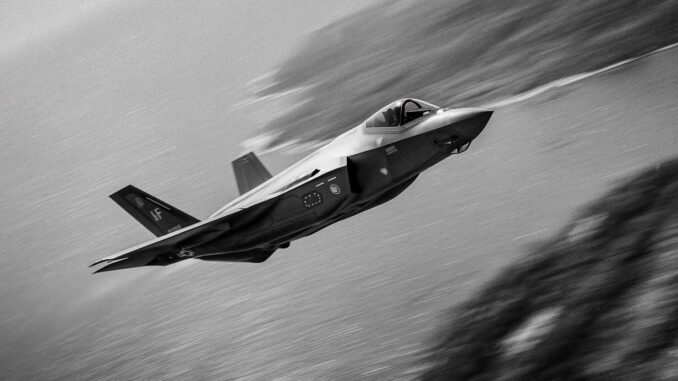
US strikes in Somalia, the rise of NGAD, and the effectiveness of the F-35B against Chinese radars: a sequence that reveals US strategy.
Summary
On January 8, the US Africa Command, AFRICOM, conducted several targeted air strikes in Somalia against positions held by Al-Shabaab and the local branch of Islamic State. These operations are a reminder of the US’s ongoing military commitment on the African continent, with a focus on precise and limited counterterrorism. At the same time, thousands of miles away, Washington is stepping up its efforts on a completely different front: technological air superiority. The US Air Force is pushing ahead with the NGAD program, a future sixth-generation fighter jet, while closely evaluating the performance of the F-35 Lightning II. Recent exercises have reportedly shown that the F-35B version has defeated, even “ridiculed,” Chinese JY-27 radars. Behind these seemingly unrelated events lies a strategic coherence: strike locally when necessary, while preparing for tomorrow’s high-intensity warfare.
The security context in Somalia
Somalia remains one of the most unstable theaters in the Horn of Africa. Despite the efforts of the federal government and the support of regional partners, armed groups retain a high capacity for harm. Al-Shabaab, affiliated with Al-Qaeda, remains the main insurgent actor, while a branch of the Islamic State maintains a more limited but symbolically strong presence.
The United States considers these groups to be a direct threat to regional stability and, ultimately, to its own interests and those of its allies. In this context, targeted airstrikes are a preferred tool. They aim to neutralize leaders, disrupt logistics networks, and reduce the capacity to plan attacks.
The January 8 strikes and their operational rationale
On January 8, AFRICOM confirmed several air strikes carried out in coordination with the Somali authorities. These strikes targeted positions identified as command centers or areas where fighters were gathering. According to available information, no civilian casualties were reported, a point systematically highlighted by the US command.
Militarily, these operations rely on air assets capable of striking with great precision. The United States uses armed drones in this type of mission, as well as combat aircraft operating from regional bases or aircraft carriers. The key lies in responsiveness and discretion, in order to limit the exposure of forces and avoid escalation.
These strikes illustrate a clear doctrine: a reduced military presence on the ground, but a permanent long-range strike capability. This approach limits political and human costs while maintaining constant pressure on armed groups.
A two-speed air war
The Somali sequence shows one facet of American air power: the daily, almost routine use of advanced means against asymmetric adversaries. But at the same time, the US Air Force is thinking on a completely different scale. The potential confrontation with technologically advanced powers, such as China, requires maintaining a clear qualitative advantage.
It is in this context that we must understand the attention paid to the performance of the F-35 and the acceleration of the NGAD program. The strikes in Somalia are a matter for the immediate present. Technological assessments are a matter for the strategic future.
The F-35B at the heart of US assessments
The F-35B, a short takeoff and vertical landing version, is often presented as the most complex variant of the F-35 program. Its ability to operate from basic bases or amphibious ships makes it a key tool for the Marines and their partners.
In recent months, the Pentagon has stepped up its monitoring of its performance, particularly in relation to new-generation enemy detection systems. Exercises conducted in the Indo-Pacific region have served as a full-scale test bed. According to several corroborating sources, the F-35B has demonstrated a stealth penetration capability that exceeds expectations when faced with Chinese JY-27 radars.
JY-27 radars and their limitations
The JY-27 is a Chinese VHF radar, often presented as a response to Western stealth aircraft. In theory, low frequencies offer a better probability of detecting stealth shapes, at the cost of lower accuracy. Beijing regularly promotes this type of sensor as a key element of its air defense networks.
However, detection is only one step. For a radar to be truly effective, it must provide actionable data for missile guidance or interception. This is precisely where the F-35 is said to have made the difference. By combining a reduced radar signature, active emissions management, and advanced data fusion, the aircraft was able to remain outside credible firing ranges.
How the F-35 “ridiculed” these systems
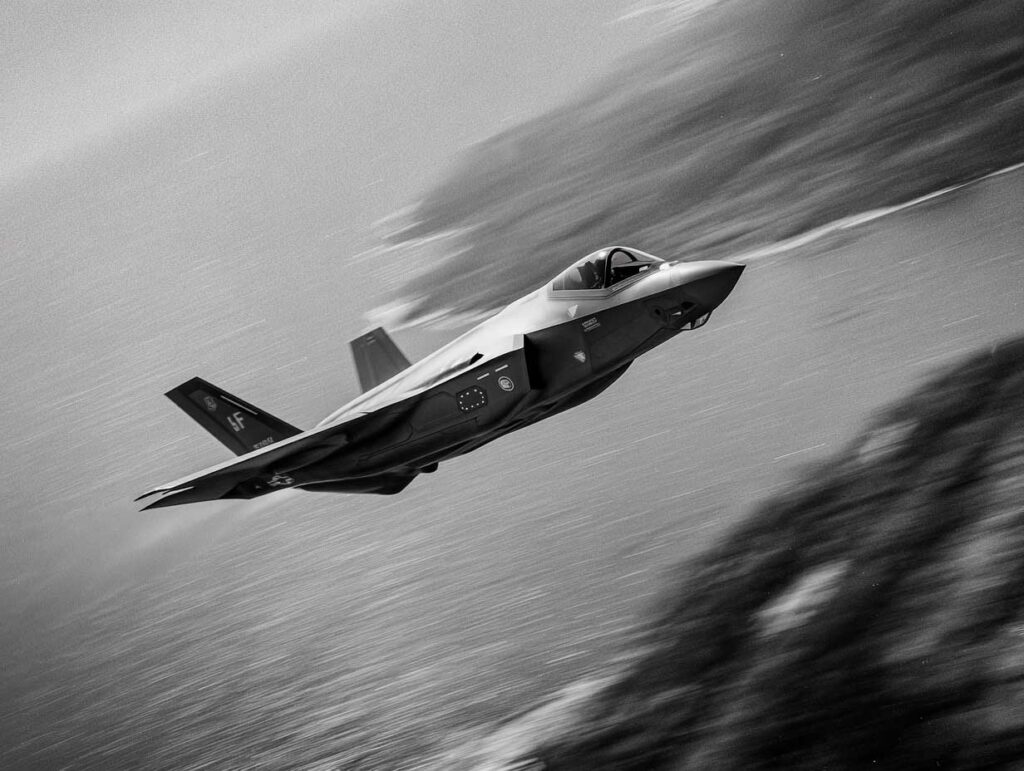
The expression that the F-35 “ridiculed” the JY-27 radars does not mean a total absence of detection. Rather, it refers to an inability to transform raw detection into a reliable firing solution. American pilots could have maneuvered, adjusted their flight profile, and exploited onboard electronic warfare to jam or saturate enemy sensors.
The F-35 does not fly alone. It is part of a network in which each aircraft shares information in real time. This approach makes it possible to desynchronize enemy systems by multiplying the angles and modes of attack. Faced with this, an isolated radar, even one that performs well on paper, sees its effectiveness plummet.
These results reinforce American confidence in the relevance of stealth combined with advanced digital capabilities. They also explain why the Pentagon continues to invest heavily in the ongoing improvement of the F-35, despite criticism of its cost and maintenance.
The role of NGAD in long-term strategy
While the F-35 remains central, the US Air Force is already preparing for the next step. The NGAD program aims to develop a sixth-generation air dominance system. This is not just an aircraft, but a combination of manned fighters, accompanying drones, and advanced command architectures.
The acceleration of NGAD reflects a strategic concern. Washington anticipates that its adversaries will gradually close the technological gap. To maintain a decisive lead, it is necessary to prepare for the next breakthrough. NGAD must offer increased range, enhanced survivability, and even greater integration of autonomous capabilities.
In this regard, the lessons learned from exercises involving the F-35 are invaluable. They help identify what works today and what needs to be improved tomorrow.
Consistency between operations and technology
At first glance, the strikes in Somalia and the exercises against Chinese radars appear to be unrelated. However, they are part of the same logic. The United States seeks to maintain total freedom of action in the air, whether it is neutralizing an armed group in the Horn of Africa or penetrating sophisticated defenses in Asia.
This consistency is based on heavy investment, but also on a clear doctrine.
Air superiority is not taken for granted. It must be maintained, tested, and demonstrated on a regular basis.
A sequence that reveals the American stance
The juxtaposition of these events offers a snapshot of the American military stance. On the one hand, there are targeted, discreet, and politically controlled strikes against non-state actors. On the other, there is open technological competition with powers capable of challenging access to airspace.
The message sent is twofold. It reminds armed groups that geographical distance offers no lasting protection. It signals to states capable of deploying advanced systems that American stealth and networked warfare remain one step ahead.
This dynamic does not guarantee the absence of challenges. The costs, complexity, and rapid evolution of technologies impose difficult choices. But it shows that Washington intends to remain in control of the tempo, both in peripheral theaters and in global strategic competition.
Sources
Official US Africa Command press releases on air strikes in Somalia.
Pentagon statements and public documents on the F-35 program and performance monitoring.
Open analyses of Chinese JY-27 radars and low-frequency detection capabilities.
US Air Force reports and prospective studies on the NGAD program and future air superiority.
War Wings Daily is an independant magazine.