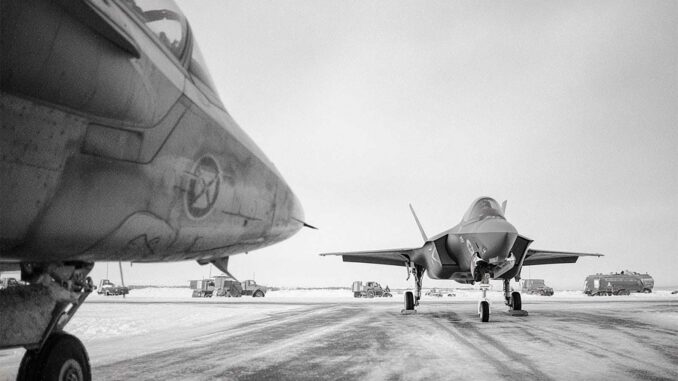
Choosing the F-35, bringing back the Gripen, industrial pressure: Canada faces a strategic, economic, and sovereign debate over its future fighter fleet.
Summary
Canada has officially chosen the F-35A to replace its aging CF-18s, with an announced order for 88 aircraft. However, the debate is not over. On January 16, new industry reports revived the idea of a mixed fleet, supported by part of the public and certain industry players. At the heart of this revival is Swedish manufacturer Saab, which is promoting the Gripen E as a credible complementary or alternative solution. The main argument is no longer solely operational, but economic and industrial, with the promise of 12,600 jobs in Canada and extensive technology transfer.
Behind this controversy lie fundamental questions: industrial sovereignty, strategic dependence on the United States, real life-cycle costs, and adaptation to Canada’s geographical constraints. The debate thus goes beyond a simple technical comparison to question Canada’s long-term vision for air defense and industrial policy.
The official choice of the F-35 and its rationale
The Canadian strategic framework
In 2023, the Canadian government confirmed the acquisition of 88 F-35As, at an estimated purchase price of CAD 19 billion, plus approximately CAD 70 billion over the entire life cycle spanning more than 40 years. This choice aims to ensure interoperability with NATO and NORAD allies in a context of strategic hardening in the Arctic and North Atlantic.
The F-35 is presented as a “system” aircraft, capable of operating in heavily defended environments thanks to its stealth capabilities, sensor fusion, and integration into allied combat networks. For Ottawa, this is an investment aligned with the dominant Western standards until the 2060s.
A logic of alignment with the United States
Canada shares continental air defense with the United States. In this context, the political argument is clear: choosing the same aircraft as the US Air Force and several European partners reduces operational and doctrinal risks. The Royal Canadian Air Force also benefits from access to a vast ecosystem of training, maintenance, and modernization.
But this logic of alignment also fuels criticism. Some experts point to a structural dependence on the US industry, particularly for software updates, critical parts, and centralized logistics management.
The return of Gripen to the public debate
A bold industrial offensive by Saab
On January 16, Saab published a new study highlighting the major economic benefits for Canada if the Gripen E were to be selected, even partially. The figure put forward is striking: 12,600 direct and indirect jobs, mainly in aeronautics, electronics, and maintenance.
Unlike the F-35 program, Saab promises extensive local production, transfer of intellectual property, and increased autonomy for the Canadian forces. The Swedish manufacturer emphasizes the possibility for Canada to fully control the maintenance and development of the aircraft on its soil.
The concept of a mixed fleet
The idea of a mixed fleet is not new. It consists of combining a high-tech aircraft, the F-35, with a lighter and less expensive fighter, the Gripen E. This model is already being used by several European countries.
Under this approach, the Gripen would be used for air policing, Arctic surveillance, and certain air defense missions, while the F-35 would be reserved for high-intensity operations. Proponents of this approach believe it would reduce operating costs while maintaining a high level of capability.
Technical comparisons are often simplified
Different operational philosophies
Directly comparing the F-35 and the Gripen is like comparing two different philosophies. The former is designed to penetrate contested airspace thanks to its stealth capabilities and advanced sensors. The latter favors flexibility, resilience, and the ability to operate from dispersed bases.
The Gripen E is optimized for operations from short, sometimes degraded runways, with reduced logistics. Saab highlights a deployment time of less than 20 minutes and limited ground crews. In a country with vast distances and extreme weather conditions, this argument resonates.
Operating costs and availability
Public estimates indicate an hourly cost for the F-35A of around $30,000 to $35,000 (approximately €27,000 to €32,000), despite US efforts to reduce it. Saab claims that the Gripen E has an hourly cost of less than $10,000 (approximately €9,200).
These figures remain controversial, but they fuel a recurring criticism: a fleet composed exclusively of F-35s could lead to a reduction in the number of annual flight hours per pilot, with a potential impact on training.
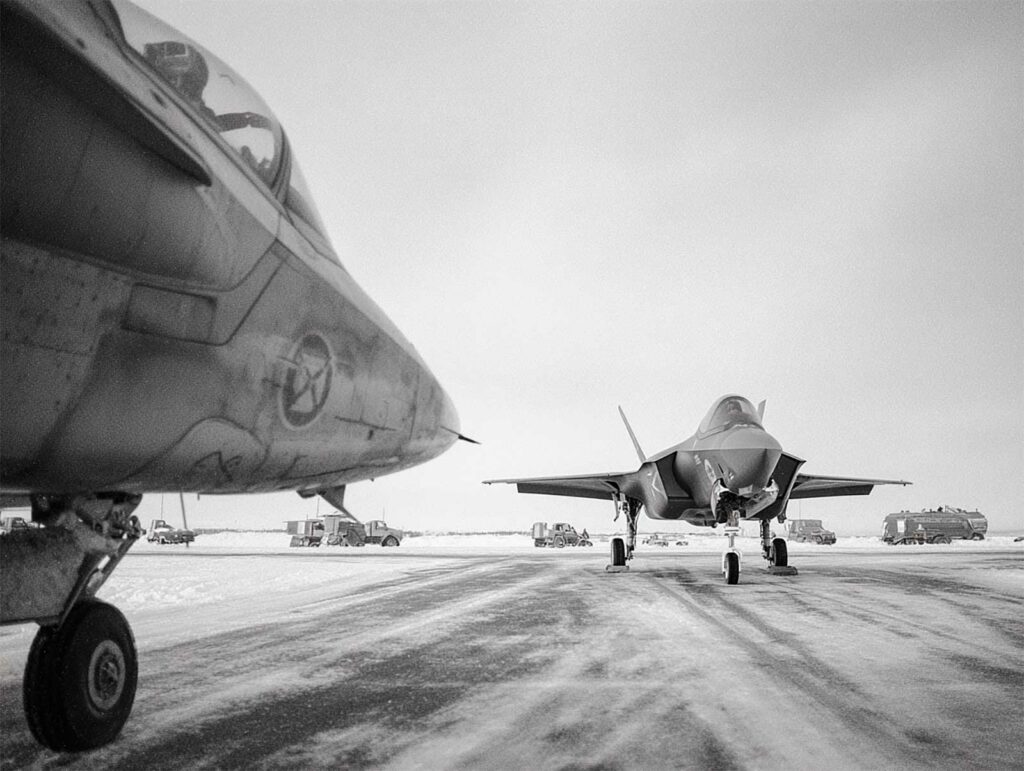
Industrial and sovereignty issues
The special case of Canadian industry
Canada has a dense aerospace industry, concentrated mainly in Quebec and Ontario. The F-35 program offers contracts to Canadian companies, but these are not guaranteed in the long term and depend on the competitiveness of suppliers.
Conversely, Saab promises structured national industrialization, with the possibility for Canada to become an export hub for the Gripen in North America. This promise appeals to certain economic players, but it implies a partial rethinking of the choice already made.
Technological dependence or controlled autonomy
The debate goes beyond economics. It touches on strategic sovereignty. With the F-35, certain critical data and updates remain under US control. The Gripen, presented as more open, would offer greater freedom to integrate national systems.
This issue is central in a context where geopolitical tensions remind us of the importance of control over decision-making and support chains.
Real but limited political pressure
Public opinion and budgetary trade-offs
Polls show that Canadian opinion is divided. Part of the population questions the relevance of a program considered costly, given the significant social and climate needs. The figure of C$70 billion over the F-35’s life cycle is regularly cited in public debate.
However, there is little political leeway. Reversing an already signed contract would entail financial penalties and a delay in capacity that would be difficult for the Royal Canadian Air Force to accept.
An additional option unlikely in the short term
While the debate on the fleet mix is gaining media visibility, its practical implementation appears limited in the short term. Integrating a second type of aircraft would entail additional training, logistics, and doctrine costs.
Canadian authorities regularly reiterate that the priority is the rapid entry into service of the F-35, with the first deliveries expected in the middle of the decade.
A debate that reveals a broader unease
The Gripen–F-35 controversy is not just about industrial competition. It reveals a strategic unease: how to reconcile integration into Western alliances, budgetary control, and national industrial ambition?
Canada finds itself at a crossroads.
By choosing the F-35, it secures its interoperability and military credibility. By listening to Saab’s arguments, it weighs the cost of this decision in terms of autonomy and direct economic benefits. The debate is not over, but it already has the merit of raising a central question: what vision does Canada have for its air defense over the next 40 years?
Sources
Saab industry press releases
Canadian Department of National Defense public documents
Canadian parliamentary reports on the fighter program
Canadian federal budget data
Specialized publications on aerospace defense
War Wings Daily is an independant magazine.