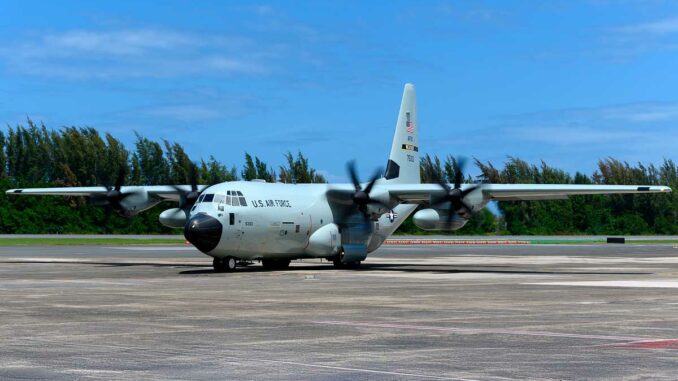
Tunisia receives a 42-year-old used American C-130H: a useful addition or an awkward symbol? Analysis of costs, real needs, and possible alternatives.
Summary
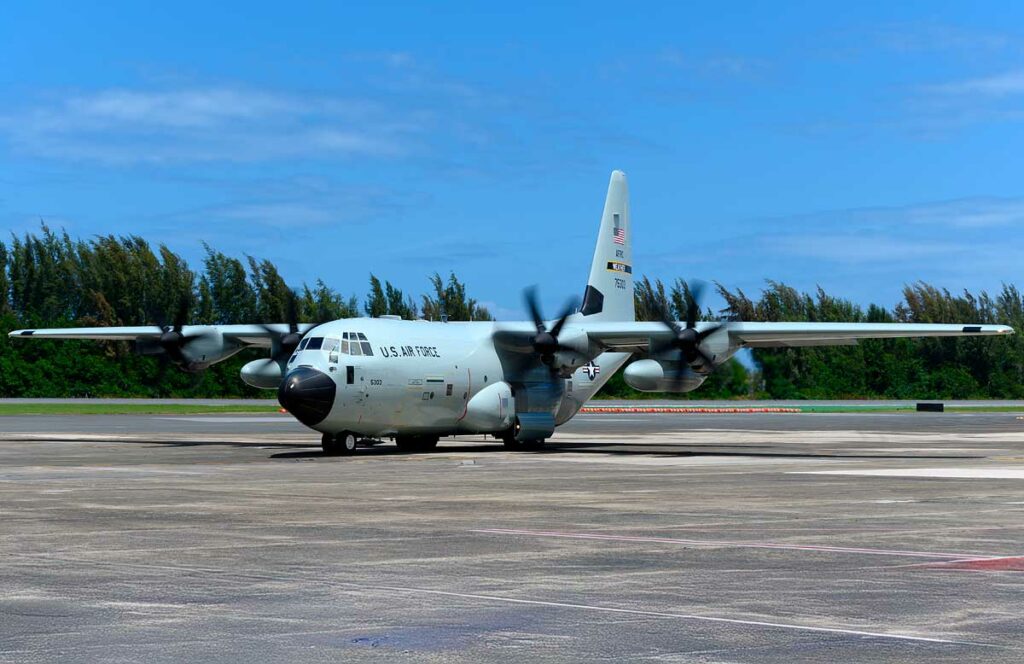
The arrival on January 13, 2026, of a used C-130H Hercules donated by the United States to the Tunisian Air Force sparked a wave of comments, often mocking, sometimes concerned. The aircraft is old, around 42 years old, and this age raises questions: why integrate such an old transport aircraft in 2026? In reality, the choice is based on pragmatic logic. Tunisia must maintain tactical transport, logistical support, and emergency evacuation capabilities at a low acquisition cost, within a constrained budgetary context. The aircraft was transferred as part of a cooperation agreement, with an official value estimated at 36 million Tunisian dinars (approximately $12 million), a level that is incomparable to a new aircraft. The issue is therefore not “purchase” in the traditional sense, but the cost of maintaining it in good condition and its actual availability. Useful, yes, but only if maintenance is kept up. Otherwise, it becomes a fragile political showcase.
The arrival of the C-130H provokes more reaction than reassurance
The ceremony was held at the Sidi Ahmed base (Bizerte) on January 13, 2026, with an overtly diplomatic staging. Official statements present this transfer as a strengthening of transport and rapid response capabilities. On paper, this makes sense: a country seeking to secure its borders and manage emergencies always benefits from having robust tactical transport.
But public opinion has focused on two elements in particular: the aircraft is old, and it is being presented as an improvement. The discrepancy is striking.
This controversy is classic. In military aviation, age is not automatically a problem if the aircraft has been properly maintained. The real issues are maintenance, structural wear and tear, parts availability, and local capacity to maintain the fleet.
The concrete reasons why Tunisia is taking this C-130H
We need to look at the logic of the state rather than the emotion of the moment.
Low acquisition cost thanks to the US mechanism
Tunisia is receiving this aircraft through a mechanism similar to an equipment transfer, generally associated with the Excess Defense Articles program. The idea is simple: the United States transfers equipment that has been withdrawn from service or is surplus to requirements, sometimes providing associated support (training, parts, refurbishment).
The US press release values the package at 36 million Tunisian dinars, or approximately $12 million. At this price, there is no comparison with a new aircraft. Modern tactical transport aircraft cost tens of millions of euros per unit, sometimes much more depending on the configuration.
This budgetary reality explains a lot: Tunisia is primarily purchasing a “right to capacity,” not technological modernity.
A real operational need, even without a declared war
Tunisia does not have a luxury transport fleet. It has a basic need: to move personnel and equipment quickly and to carry out domestic or regional missions.
A C-130 is typically used for:
- troop and cargo transport
- support for deployed units
- medical evacuations or emergency logistics
- humanitarian aid and crisis management
- cooperation and exercises with partners
These are missions with high political and operational value, even in peacetime.
The exact role of the C-130H in the Tunisian system
The C-130 is not a “show” aircraft. It is a logistical tool.
The H model remains a benchmark platform, capable of carrying a payload capacity of 19 tons (42,000 lb, or approximately 19,090 kg) and achieving a typical range of approximately 3,800 km (2,050 nautical miles) depending on the mission profile.
For Tunisia, this means being able to quickly connect bases, deploy equipment, or support internal security operations, including in a context of regional tensions.
Another point that is often overlooked is that a transport aircraft is also a diplomatic tool. A C-130 can be used to deliver aid, repatriate personnel, or participate in joint missions. It is a means of “presence” as much as it is a means of transport.
The real impact on Tunisian capabilities: useful, but not miraculous
It would be wrong to say that this aircraft is useless. But to present it as revolutionary would be an exaggeration.
A reinforcement of the fleet, but a very old fleet
According to data provided by specialized sources, this delivery would bring the Tunisian C-130 fleet to a total of about six aircraft (mainly Hs, with at least one B), with a high average age. The average age mentioned is close to 45 years for the entire fleet. This is enormous for a tactical fleet, even if some Hercules aircraft age well.
The implications are simple:
- potentially irregular availability
- heavy and cyclical maintenance
- long downtime if parts are missing
- need for trained technicians and stocks
An immediate gain, especially if the aircraft flies quickly and often
The aircraft will only have a positive impact if Tunisia can fly it, and therefore maintain it. A C-130 grounded due to a lack of parts or structural defects becomes an embarrassing symbol, as it crystallizes the idea of “donated but unusable” equipment.
Efficiency therefore depends on the associated chain: parts, tools, upgrades, training, and fuel budget.
The Tunisian budgetary context that explains the choice of “the possible”
This choice may be judged harshly, but the environment must be taken into account.
The Tunisian budget is under pressure. The 2026 finance law provides for an increase in the Defense Ministry’s budget to around 6.322 billion dinars, but the country continues to face financing pressures and a high public deficit.
In this context, buying new is often an illusion. The trade-offs are brutal:
- social priorities
- inflation
- debt
- internal security
- land and naval equipment
Air transport is vital, but rarely a priority when it comes to “new purchases.”
Was it relevant to accept a 42-year-old aircraft?
The honest answer can be summed up in one sentence: it is relevant if the objective is to have low-cost capacity, not modern capacity.
What makes the choice defensible
- Low entry price, so the decision is “possible”
- Proven, robust, versatile aircraft type
- Widespread standard, so parts are potentially accessible
- Strengthening of cooperative ties, useful for training and support
What makes the choice questionable
- Aging: structures, corrosion, fatigue
- Uncertain availability if support is not massive
- Risk of publicity stunt: one more aircraft, but few actual flights
- Public image: we are showing a ramp-up, but we are receiving very old equipment
This is where the real judge comes in: the availability rate over 12 to 24 months.
For the same budget, could we have bought “better”?
If we think strictly in terms of an acquisition budget of around $12 million, the options are limited.
Theoretical alternatives, but often impractical
- A small twin-engine turboprop light transport aircraft may fall within this price range, but it cannot replace a C-130 in terms of volume or versatility.
- A more modern tactical transport aircraft, such as a C-295 or C-27J, generally costs much more when new, especially with support, training, and parts.
- A newer (and refurbished) C-130 may be available on the used market, but upgrade and logistics costs quickly add up.
In short: at this price point, the C-130H is not “the best,” but it is one of the only options that offers true heavy-lift capability at a low entry price.
The pitfall, once again, is the cost of ownership.
The controversial question: is there corruption involved?
We must remain rigorous. Making accusations without proof is a mistake. But analyzing governance risks is legitimate.
There are two possible scenarios.
The rational and probable scenario
Tunisia seizes an opportunity for cooperation, receives a valuable aircraft, and obtains additional capacity without purchasing new equipment. Politically, this is easy to defend: “we are strengthening logistics at low cost.”
The suspicious scenario, which may fuel public anger
Anger arises when the population believes that:
- the money has been spent on equipment that is of little use
- the aircraft is mainly a PR stunt
- hidden maintenance costs will skyrocket
- decisions have been made without transparency
If Tunisia does not communicate on specific points (refurbishment, remaining hours, maintenance plan, operating budget), the risk of perception becomes political.
The best way to dispel suspicions is not through rhetoric. It is through operational transparency: is the aircraft flying? How often? At what cost? For what missions?
What this delivery reveals about Tunisian defense in 2026
This story tells us something essential: Tunisia is not short of ideas, it is short of margins.
Accepting an old C-130H is a “realistic” solution in a constrained economy. But this solution is only good if it is accompanied by a serious maintenance and training plan.
Otherwise, the country will accumulate aging platforms and spend its time repairing rather than operating. And that is where capacity deteriorates: not through a lack of aircraft, but through a lack of availability.
The final point that many forget: an aircraft is only as good as its flight rate
If this C-130H joins a fleet that flies regularly, it will be useful. It will increase tactical transport capacity, strengthen crisis response, and provide the state with a concrete tool.
If the aircraft remains grounded, it will become a lasting symbol. Not one of cooperation, but one of a defense forced to buy “old” because it cannot buy “right.”
Between these two futures, everything depends on maintenance discipline, parts inventory, and the budgetary capacity to support the tool over time. It’s less spectacular than a ceremony, but much more decisive.
Sources
US Embassy in Tunisia – Press release on the transfer of a C-130H, January 13, 2026
FlightGlobal – Tunisia takes delivery of former USAF C-130H, January 16, 2026
Airforce Technology – Tunisia receives new C-130H Hercules aircraft from US, January 14, 2026
La Presse (Tunisia) – Official handover of a C-130H to the Tunisian Air Force, January 13, 2026
Business News (Tunisia) – Reception of a new C-130H aircraft in Bizerte, January 13, 2026
US Embassy in Tunisia – Announced value of the transfer (36 million TND), November 18, 2024
US Air Force – C-130 Hercules fact sheet (capabilities and payload)
Tunisienumerique – 2026 defense budget proposal (6.322 billion TND), November 11, 2025
War Wings Daily is an independant magazine.