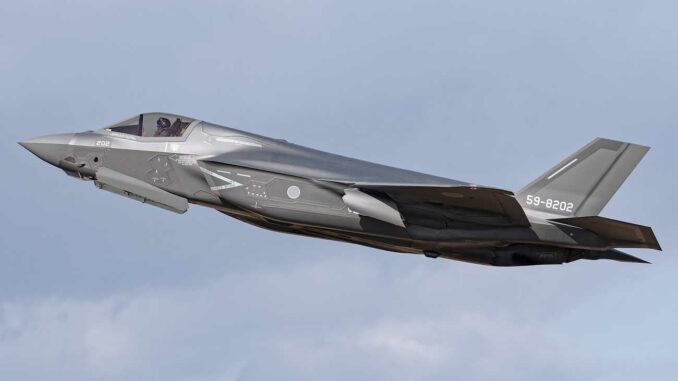
Washington withdraws F-35s from Cold Response in Norway, prioritizing the Middle East. What this means for NATO’s Arctic training.
In summary
The United States has reduced its air participation in the Cold Response 2026 exercise in Norway, notably withdrawing the F-35s that were initially planned. The decision is explained by rising tensions with Iran and the reallocation of assets to the Middle East. On paper, the exercise remains massive: approximately 25,000 military personnel, with a ground component of around 11,800 people in Norway, the rest engaged at sea, in the air, and in Finland, from March 9 to 19, 2026. But this withdrawal is not insignificant. It specifically affects the rarest and most in-demand capabilities: fifth-generation fighter jets, crews, planning, refueling, and all the mechanics of air coordination. The political signal is clear: in the face of a crisis in the Middle East, Arctic Europe takes a back seat. The test for the Alliance is therefore simple: maintain the level of training and consistency on the northern flank even when Washington moves its key assets elsewhere.
The US withdrawal and what it really says about the hierarchy of priorities
The fact has been confirmed by Norway: some of the planned US forces will not be coming, and the reduction concerns the air component, including F-35s. The implicit message is brutal but logical. The same resources cannot be everywhere at the same time.
US military planning is based on constant trade-offs between theaters. When a crisis arises around Iran, “high-value” assets are drawn to the most exposed command, often that of the Middle East. It is not a question of prestige. It is a question of deadlines, ammunition stocks, available flight hours, and logistics chains.
This decision should therefore be viewed without romanticism. The United States is not “leaving” the Alliance. It is simply reminding us that its primary constraint is global. And in an acute crisis, Norway is not the number one priority.
The mechanics of the exercise and what remains despite the withdrawal
Norway organizes Cold Response to train allied forces in a demanding Nordic environment. The logic is simple: if you know how to operate in snow, long nights, wind, and sparse roads, you will be more resilient elsewhere.
The figures that frame the scale
Cold Response 2026 is announced to involve around 25,000 military personnel. Around 11,800 are training on Norwegian soil. The rest are operating at sea, in the air, and in Finland. The main period announced runs from March 9 to 19, 2026.
Command is provided from a Norwegian-American headquarters in Reitan, near Bodø.
These figures are important because they put the shock into perspective. The exercise is not collapsing. It is continuing. But the part that is being distorted is the most expensive to reproduce: complex air coordination, over long distances, in harsh weather conditions.
The immediate effects on the air component
If you remove American aircraft, you also remove controllers, planners, maintenance teams, and often part of the air “tempo.” It’s not just a lack of figures on the tarmac. It’s a decrease in training density.
The risk is real: fewer combined flight slots, less interaction between fighter jets, transport aircraft, helicopters, refueling aircraft, and ground-to-air defense. Yet it is precisely this network that creates an effective coalition.
The role of F-35s in an Arctic exercise and what we lose without them
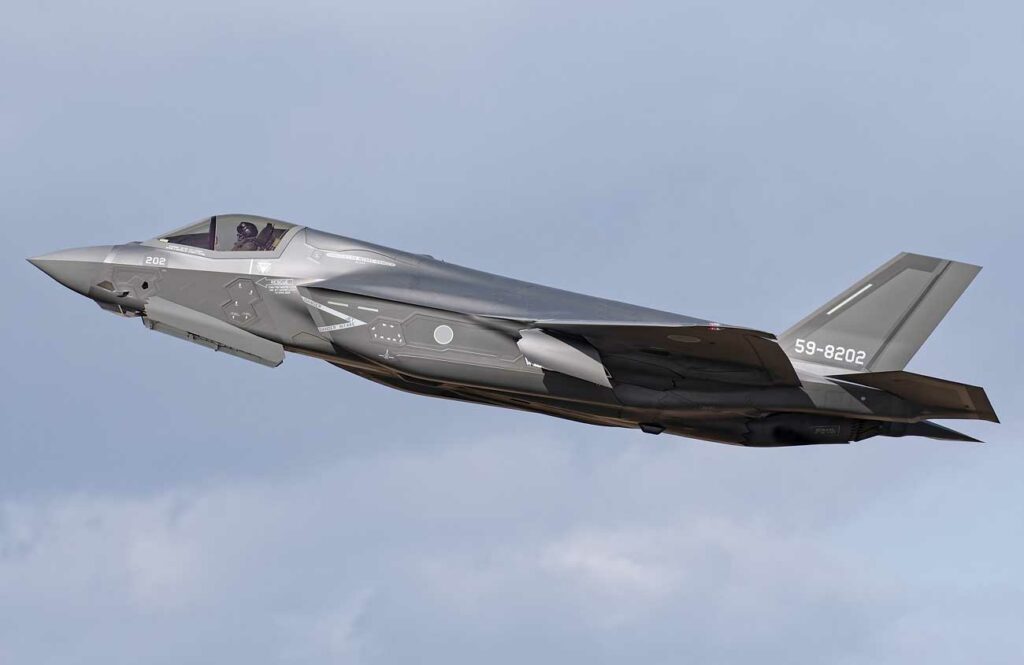
The F-35 is not just a “stealth” aircraft. It is a hub of sensors and a tool for collecting, merging, and sharing information. In NATO exercises, it is often used to enhance training.
Without going into sensitive details, the typical contribution of an F-35 can be summarized in three functions.
The advanced sensor function
The F-35 detects, classifies, and shares leads. It pushes training toward scenarios where information is imperfect, where the adversary jams, and where decisions must be made quickly. Without this component, we can still fly. But we fly in a more “traditional” way.
Modern strike function
Arctic training is not just a white backdrop. It simulates strikes, area interdiction, ground support, and attacks on moving targets. Removing F-35s reduces the variety of possible tactical profiles, especially those that incorporate penetration, survivability, and fine coordination.
The NATO integration function
The most important point is integration. The F-35s serve as a catalyst for interoperability between nations. Fewer American F-35s means fewer opportunities to test common procedures, data exchanges, and coalition discipline under pressure.
The link with Iran and the reality of American global “coverage”
The decision is part of a broader context of rising tensions around Iran, with a reinforcement of American assets in the region. In this type of situation, there are multiple immediate needs: air defense, potential strikes, base protection, and naval posture.
This is where the logic of scarce resources comes into play. Modern fighter jets are not just platforms. They are packages: aircraft + pilots + parts + ammunition + refueling aircraft + intelligence + political authorization.
An exercise in Norway requires extensive planning, but it remains “programmable.” A crisis in the Middle East is, by definition, unprogrammable. The crisis almost always wins.
The Arctic dimension and the difference between “training in the cold” and “being ready”
Talking about “Arctic preparations” without specifics is a mistake. The Arctic is not a marketing theme. It is a physical constraint.
Weather constraints that eat into availability
The cold affects batteries, hydraulic fluids, de-icing, runway conditions, and maintenance. Cycles become longer. Breakdowns increase. Weather windows close quickly. Under these conditions, the value of an exercise comes as much from the hours lost as from the hours gained, because we learn to manage friction.
Distance and logistics as the real issue
In the North, distances are tyrannical. Roads are few and far between. There are fewer usable ports and airfields. Units must learn to live with limited stocks, long delivery times, and dependence on convoys.
This is an area where the United States plays a structuring role, particularly through its culture of rapid projection. Reducing their air presence means reducing part of this logistical stress test.
The Norwegian safety net and possible compensations
The bad news is the decline in US air training. The good news is that Norway and several allies already have fleets of F-35s and credible air assets.
Norway, for example, has finalized the delivery of 52 F-35As. This does not automatically replace an American component, as the roles are not identical and volume matters. But it does mitigate the impact: the exercise is not doomed to revert to “pre-5th generation” training.
Another factor is that Norway has a very special allied support infrastructure, notably the pre-positioning of U.S. Marine Corps equipment in Norway. These stocks facilitate the rapid deployment of units. Even if air power is reduced, the logistical and ground lessons can still be very rich.
The strategic cost for NATO and the risk of a “training gap”
The main risk is not an immediate capability gap. It is a training gap.
If crises in the Middle East multiply and the United States regularly withdraws its most sophisticated assets from European exercises, NATO may see the emergence of an awkward asymmetry: Europe holds the ground and the North, but the most advanced air layer becomes intermittent.
This is a concrete problem, not a theoretical one. Coalition procedures deteriorate without repetition. The quality of air command, refueling rotations, and ground-to-air defense integration is maintained only by frequency.
The question is therefore straightforward: how many exercise cycles can the Alliance absorb with a reduced US presence before the training value declines, even if troop numbers remain high?
The political and operational test that this episode imposes on the Alliance
This episode forces NATO to respond in two ways.
The planning response
The first response is to design “modular” exercises that can absorb the absence of a nation without losing the core of the scenario. It’s less glamorous. It’s essential.
The European capability response
The second is more sensitive: if the United States quickly reallocates its resources to the Indo-Pacific and the Middle East, then European allies must be able to carry out more advanced air missions on their own, including the associated training.
The truth is simple: NATO cannot proclaim unity if actual availability depends too much on a single actor. The withdrawal of the F-35 is not a break. It is an accounting reminder. External crises impose their own timetable. The Alliance does not have the luxury of training “when all is well.”
The most useful lesson to be learned
There are two possible interpretations. The first, emotional, speaks of abandonment. It is of little use. The second, operational, is more cold-hearted: an exercise is not just training, it is a measure of resilience.
If Cold Response 2026 retains its value despite the partial absence of US assets, NATO proves that it can withstand constraints and continue to learn. If, on the contrary, the exercise loses its airborne substance and settles for a land-based showcase, then the North becomes a theater where numbers are displayed but modern warfare is rehearsed less.
The real tension lies between communication and preparation. An ally that withdraws its aircraft to manage a crisis is not an ally that betrays. But an Alliance that does not know how to compensate for this withdrawal exposes itself to a very real weakness: the habit of dependence.
Sources
Forsvaret (Norwegian Armed Forces), official page “Cold Response 2026” (updated February 2026).
Norway.no, “Statement on Norwegian Exercise Cold Response 2026” (CORE26, schedule and personnel).
Reuters, February 13, 2026 article on the deployment of a second US aircraft carrier to the Middle East amid tensions with Iran.
Reuters, February 19, 2026 article on rising tensions and US deployments near Iran.
U.S. Marine Corps (marines.mil), “Cold Response: 25,000 NATO Allies Launch High-North Exercise” (January 2026).
DVIDS / U.S. Marine Corps, information on the Marine Corps Prepositioning Program–Norway and its equipment (MCPP-N program).
Anadolu Agency, reprinting Norway’s confirmation of the withdrawal of US air assets, including F-35s (February 20, 2026).
Lockheed Martin, press release on the delivery of the 51st and 52nd F-35As to the Royal Norwegian Air Force (April 2025).
War Wings Daily is an independant magazine.