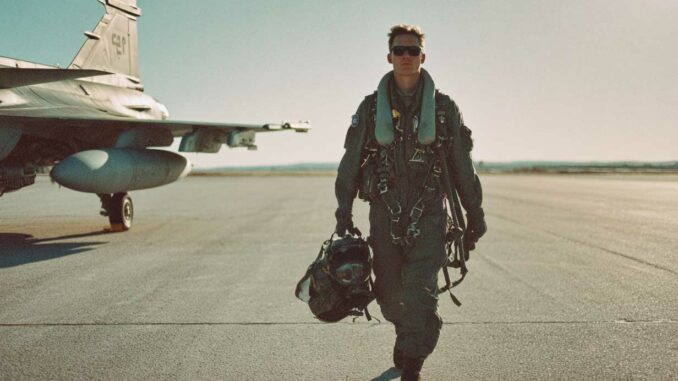
In Sweden, the fighter pilot crisis has revealed deep-seated discontent over pensions, salaries, and retention at the worst possible strategic moment.
In summary
The Swedish pilot crisis is not just another labor dispute. It has exposed a structural weakness at the most delicate moment for Stockholm: entry into NATO, made official on March 7, 2024, followed by gradual integration into air policing and regional defense missions between 2024 and 2026. The heart of the controversy is well known. A former retirement age of 55 was overturned by a reform that, for some pilots, pushed the end of their careers back to 67, leaving them with a strong sense of broken promises. In 2022, around half of fighter pilots reportedly threatened to leave or take extended leave. The crisis cannot be explained by money alone. It is a combination of fatigue, insufficient recognition, administrative burdens, competition from the civilian sector, and a feeling of being treated as interchangeable executives when they are rare specialists. Sweden has since partially calmed the revolt with wage agreements and adjustments. But the strategic message remains stark: training a pilot takes years, losing one takes a signature.
The crisis that erupted at the worst possible moment for Stockholm
The Swedish sequence took on a strategic dimension because it came at a time when the country was entering a new security environment. After Russia’s invasion of Ukraine, Stockholm accelerated its rapprochement with the Atlantic Alliance, culminating in its official accession on March 7, 2024. This accession immediately changed the status of Swedish combat aviation. Sweden was no longer just a close partner of NATO. It became an ally responsible for contributing directly to deterrence, air surveillance, and security on the northern flank.
In this context, the emergence of a threat of mass resignations among fighter pilots was politically devastating. By the summer of 2022, several sources indicated that around half of Swedish fighter pilots were considering either resigning or taking extended leave. This was not a minor issue. For a small air force, losing not just a few individuals, but a significant core of experienced personnel, weakens the entire chain: patrol leaders, instructors, tactical supervision, experience transfer, rotation planning, and qualification maintenance.
The issue is all the more serious given that Sweden does not have an inexhaustible supply of human resources. Its combat aviation is based on a relatively concentrated format centered around the Saab JAS 39 Gripen, with an ongoing transition to the Gripen E. The challenge is therefore not only quantitative. Each experienced pilot counts for more than in a very large air force.
The pension reform that served as the trigger
The heart of the crisis lies in the pension and end-of-career scheme. For a long time, Swedish military pilots have benefited from the possibility of retiring at 55, a mechanism justified both as implicit salary compensation and as recognition of the physical and operational constraints of the profession. The break came with the implementation of the PA 16 scheme, which changed the conditions for a significant portion of the personnel. For the pilots concerned, the old scheme was replaced by a system that required them to remain in the institution until age 67, often in administrative or staff positions, without compensation deemed equivalent.
This is where resentment exploded. The problem was not just the age itself. The problem was the breach of a moral contract. Pilots who had been trained, recruited, and retained according to certain rules felt that the conditions had been changed midway through. The then head of the Swedish Air Force, Carl-Johan Edström, himself acknowledged that requests for leave were “almost 100%” related to the new retirement agreement. This kind of admission is rare. It shows that the command knew full well that the issue was neither peripheral nor exaggerated.
Let’s be frank: in highly specialized combat professions, a poorly calibrated HR reform can cause damage far greater than what is indicated in the budget tables. On paper, postponing retirement may seem rational. In reality, if those concerned prefer to leave early, retire or join another employer, the apparent savings turn into a dead loss.
The unease that goes far beyond pensions alone
It would be a mistake to reduce the pilot crisis to a pension dispute. Academic work and specialist analyses published on the Swedish case show that the exodus of pilots is based on a range of causes. The level of remuneration is one of them, but not the only one. Other factors include the burden of administrative tasks, poor career visibility, family strain, a feeling of lack of recognition, the constraints of mobility, and the impression of being treated less well than their rare skills would justify.
This point is central to understanding why civilian companies represent a credible threat. The civilian sector is not only attractive because of the potential for higher salaries. It often offers a clearer career path, a more stable family life, less hierarchical uncertainty, and a more direct relationship between qualifications and remuneration. For an experienced fighter pilot, the temptation is therefore not only financial. It is also existential. After a certain amount of time, some prefer a career in aviation that is still valued, but less abrasive.
The case of SAS often comes up in the debate because it symbolizes this Scandinavian civilian alternative. Even without detailed public accounting of each transition from the military to this company, the risk is real: civilian carriers are recruiting, and they are looking for qualified, disciplined profiles that are already familiar with complex operations. The threat is therefore not theoretical. It is structural.
The capacity gap that primarily threatens experienced executives
When we talk about a “capacity gap,” we shouldn’t just imagine empty cockpits. The first effect of a pilot shortage affects the most experienced pilots. Yet they are the ones who keep the system running. A senior fighter pilot is not just another driver.
They are often instructors, evaluators, mission leaders, mentors to young crew members, and sometimes tactical experts in an entire segment. Losing them means losing both immediate capacity and years of knowledge transfer.
Research published on pilot departures from the Swedish armed forces highlights this imbalance: premature departures can exceed the capacity to replace them through training. It’s a brutal but simple point. Training an operational pilot takes several years. Training a credible instructor takes even longer. Long-term leave or resignation therefore creates a void that the administration cannot fill in the short term.
For an air force in transition, with the gradual arrival of the Gripen E, this risk is even higher. Each new version of aircraft requires conversion skills, references, and managers capable of building the doctrine of use and transferring experience to the squadrons. An HR crisis in the midst of this shift is not a matter of comfort. It is a matter of military effectiveness.
NATO needs pilots who are ready, not just aircraft that are available
NATO membership has given Sweden a new responsibility on the northern flank, in the Baltic and in the Arctic. Starting in 2025, Stockholm began contributing more directly to NATO Air Policing, and in March 2026, Swedish Gripens were deployed to Iceland as part of an allied air surveillance mission. This shows that integration is no longer theoretical. Sweden is now expected to make real contributions.
But NATO does not need showcases. It needs qualified crews that are available and numerous enough to sustain the effort over time. A squadron with beautiful aircraft but not enough experienced pilots will quickly see its sortie generation, flexibility, and training capacity deteriorate. This is why the pilot crisis has caused concern beyond Stockholm. In the Swedish debate, some have sometimes presented the issue as an internal social conflict. In reality, it already affected the operational credibility of an incoming ally.
The paradox is cruel. Sweden is joining the Alliance at a time when its air capabilities are particularly sought after, especially in the North. But it is also at this point that the institution is discovering how much its pilots no longer feel sufficiently recognized.
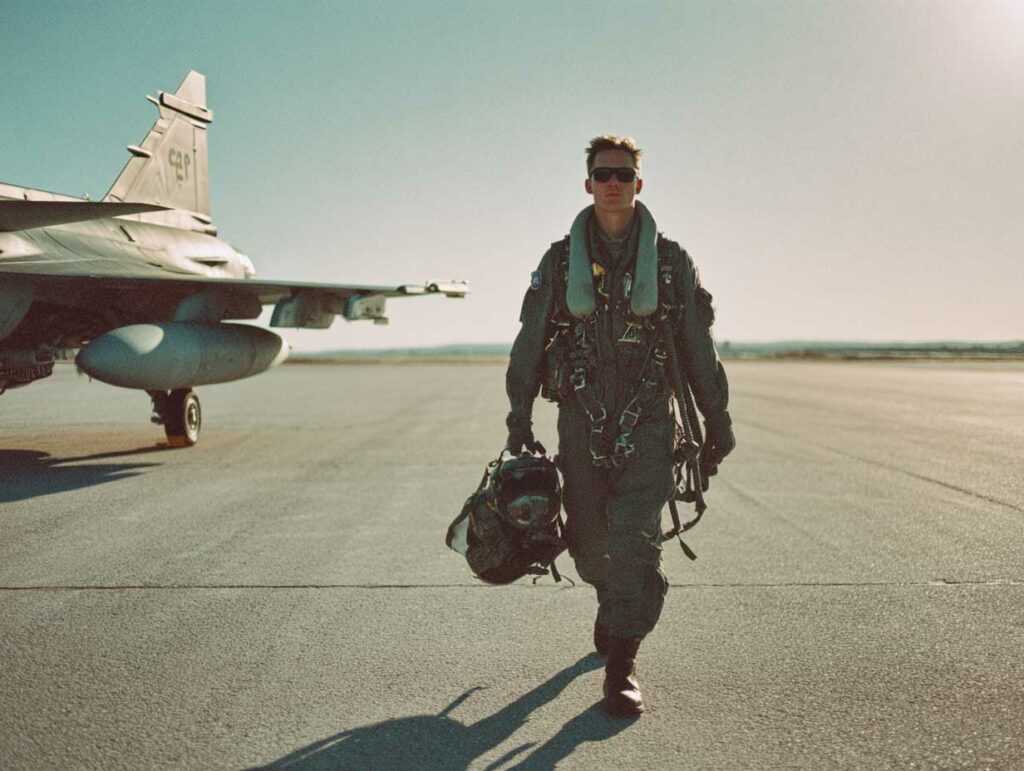
The Swedish response that calmed the revolt without solving the problem
The situation did not remain static. In 2023, the Swedish armed forces and officer representatives reached a new agreement that included pay rises, clearer provisions on pensions for those who were no longer covered by the 55-year-old scheme, and better coordination between the employer and staff representatives. Swedish sources then indicated that most of the pilots who had requested leave were returning to their posts.
However, it would be naive to conclude that everything has been resolved. An agreement can stop immediate bleeding, but it does not automatically repair years of frustration. The issue has left its mark. Above all, it has revealed a broader truth about European armies: when the threat increases, everyone talks about ammunition, budgets, and platforms. Much less is said about retaining rare human skills. Yet without these skills, the rest quickly loses its operational value.
Sweden has therefore bought time and avoided the worst. But it has not eliminated the underlying dilemma.
How can pilots who are subject to high-intensity demands, years of training, and extreme responsibility be convinced that they are recognized as being up to the task?
The financial debate raises a broader question of recognition
This is the crux of the debate. Fighter pilots are not just disputing their pay level. They are challenging the gap between strategic rhetoric and concrete recognition. Since 2022, Northern Europe has been talking more about territorial defense, power projection, resilience, and high-intensity warfare. But if, at the same time, the most rare specialists feel that they are being treated less well than the civilian market allows, the strategic discourse quickly comes up against its own contradictions.
Sweden is not an isolated case in this regard. Other Western armies are experiencing retention tensions among pilots, technicians, and controllers. What makes the Swedish case particularly telling is its brutality. The country discovered in a short period of time that an HR reform could have a major impact on a growing strategic need.
There is a simple lesson here for the whole of Europe. At a time when armies are rediscovering the possibility of a demanding conflict, talent management is no longer a side issue. It is a matter of power. A fully qualified Gripen pilot cannot be replaced with a communication campaign or a decree published too late.
The real question this crisis poses for Northern Europe
The Swedish pilot crisis has shown that a country can have high-performance aircraft, a strong industry, and a strategic framework reinforced by NATO, while remaining vulnerable on a much more prosaic point: the loyalty of its operational personnel. The problem was not just pension reform. It was the signal sent to a rare military elite: you are essential, but not enough for the system to adjust before the crisis.
Sweden has corrected part of the problem. That’s good. But the real test will come over time. If the pilots stay, if training picks up, if the squadrons retain their instructors, and if the transition to the Gripen E goes smoothly, then the episode of 2022-2023 will appear as a salutary warning. Otherwise, it will remain as the moment when Stockholm realized too late that an empty cockpit costs much more than a wage concession.
War Wings Daily is an independant magazine.