Available aircraft, qualified pilots, maintenance, and budgets: an investigation into the true combat capability of European air forces.
In summary
The actual availability of European air forces is much lower than the fleet figures often cited. On paper, Europe has more than 2,000 combat aircraft and several thousand military helicopters. In practice, only a fraction are immediately capable of waging war. Heavy maintenance constraints, a shortage of qualified pilots, logistical complexity, and budgetary pressure greatly reduce actual operational capacity. Depending on the country, the peacetime availability rate varies between 40% and 70%, with possible temporary peaks in the event of a crisis, at the cost of accelerated fleet wear and tear. This survey reviews the main European air forces, country by country, including fighter aircraft, helicopters, human resources, and budgetary impact. It shows a fragmented European air force, dependent on heavy industrial choices, and still far from a large-scale sustained air warfare capability.
The concept of actual availability in wartime
The difference between nominal fleet and combat capability
The number of aircraft listed in military inventories does not reflect the actual capacity to conduct high-intensity air operations. A combat aircraft is only considered actually available if it meets three conditions simultaneously:
- it must be technically operational,
- have a qualified and trained crew,
- be supported by a complete logistics chain.
In most European air forces, 20 to 30% of aircraft are permanently grounded for scheduled maintenance. Added to this are unexpected downtime, aircraft dedicated to training, and those assigned to secondary missions.
The human factor, often underestimated
Availability does not depend solely on the machines. An operational fighter pilot needs between 150 and 180 flight hours per year to maintain a credible combat level. However, several European countries are struggling to reach these thresholds due to a lack of fuel budgets, training slots, or sufficient support personnel. In some cases, the number of qualified pilots is lower than the number of aircraft available.
France’s situation, between ambition and structural tension
A versatile fleet under pressure
France has around 225 combat aircraft, mainly Rafales, supplemented by a few Mirage 2000s at the end of their service life. The technical availability rate of the Rafale varies between 55% and 65% depending on the period and version. This means that, on average, 120 to 140 aircraft are actually operational.
Helicopters, a recurring problem
The helicopter segment is more critical. The Tiger, NH90, and Cougar sometimes have availability rates of less than 45%. Maintenance requirements, the diversity of standards, and the aging of certain airframes weigh heavily on operational capacity.
The budgetary impact
France spends around 2% of its GDP on defense. An increasing proportion of this is absorbed by maintaining operational readiness. Each hour of Rafale flight time costs tens of thousands of euros, which automatically limits the amount of training that can be carried out.
The British model: technologically advanced but fragile
A small but highly specialized fleet
The United Kingdom has around 160 combat aircraft, mainly Typhoons and F-35Bs. The F-35’s availability rate is structurally lower, often close to 50%, due to the complexity of the system and international logistical dependence.
A chronic shortage of pilots
The Royal Air Force is facing an erosion of its pool of pilots, who are attracted to civil aviation. Despite efforts to retain staff, some units can only field a limited number of fully qualified crews for extended operations.
A strained budget
The UK defense budget remains high in absolute terms, but inflation and the costs of next-generation programs are reducing operational flexibility.
Germany: a large but largely unavailable fleet
The German paradox
With more than 230 combat aircraft (Eurofighter and Tornado), Germany has one of the largest air forces in Europe on paper. In reality, availability rates have long stagnated at around 40 to 50%.
Maintenance and structural burdens
The complexity of support contracts, industrial fragmentation, and prolonged underinvestment have degraded availability. Helicopters, particularly the NH90, have experienced very high downtime rates.
The post-2022 budget shock
The massive budget increase is specifically aimed at correcting these weaknesses. But money does not instantly create mechanics, parts, and pilots.
Italy and Spain: credible but limited capabilities
Italy: between the F-35 and the Eurofighter
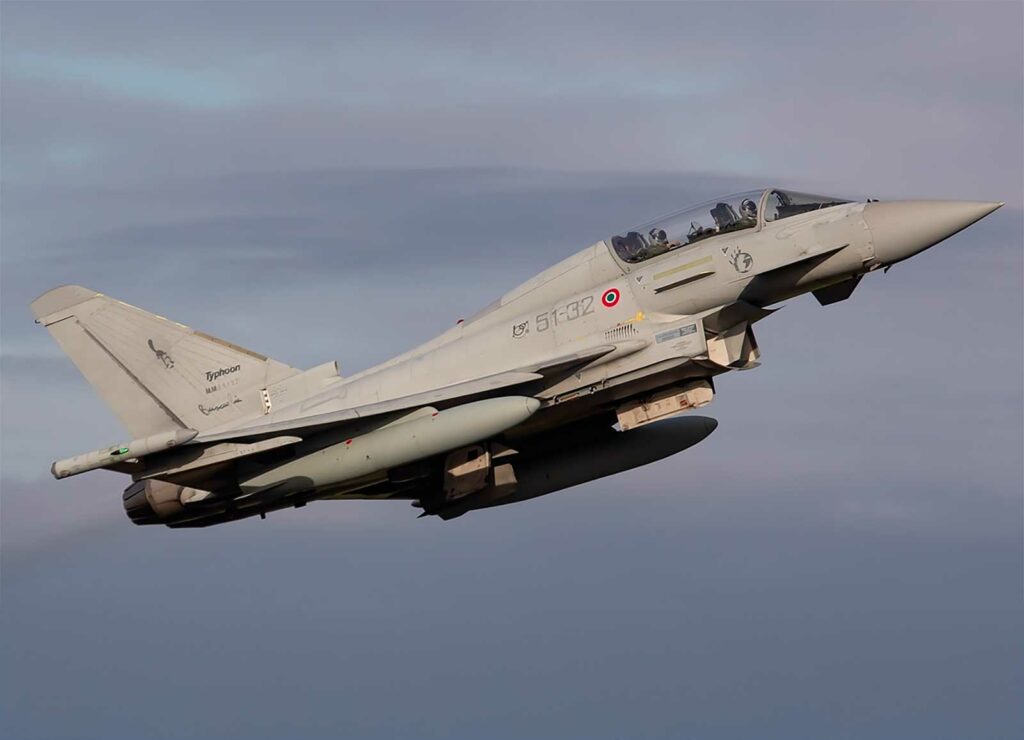
Italy has around 180 combat aircraft. Overall availability is better than the European average, at around 60%, thanks to a solid industrial base and advanced logistical experience with the F-35.
Spain, an aging fleet
With around 140 combat aircraft, Spain maintains a decent capability, but older fleets require increasing maintenance efforts. The number of fully operational pilots remains a limiting factor.
Northern Europe: efficiency but reduced volume
Scandinavian countries
Finland, Sweden, and Norway have smaller but often better-maintained fleets. Availability rates can reach 65-70%, thanks in particular to doctrines focused on resilience and dispersion.
The constraint of numbers
Even with good availability rates, the absolute volume of aircraft remains low, limiting the ability to sustain a prolonged air campaign without allied support.
Central and Eastern Europe: dependence and transition
Heterogeneous fleets
Poland, Romania, the Czech Republic, and Slovakia operate fleets in transition, mixing older aircraft with new acquisitions. Availability rates vary greatly, sometimes falling below 50%.
The human challenge
In these countries, pilot training and retention are major challenges, exacerbated by international competition and historically constrained budgets.
Military helicopters, Europe’s weak link
Structurally low availability
Whether for combat, transport, or maneuver helicopters, European availability rates rarely exceed 50%. Maintenance cycles are long and costly.
A direct impact on ground operations
This low availability limits close air support, medical evacuation, and force mobility, reducing the overall capacity to conduct high-intensity warfare.
The real cost of availability
The budget spiral
Improving availability means more parts, more personnel, more inventory, and more flight hours. Every point of availability gained comes at a high price. In several countries, maintaining operational readiness now absorbs more than 40% of the air force budget.
The strategic dilemma
European air forces face a difficult choice:
- preserve fleets for the long term,
- or maximize short-term availability at the cost of accelerated wear and tear.
What European operational reality reveals
The picture is stark. Europe has credible but fragmented air capabilities, with a heavy dependence on NATO and the United States for prolonged high-intensity operations. Actual availability remains the Achilles heel of European air forces, much more so than the number of aircraft ordered.
The real challenge in the coming years will not be to announce new acquisitions, but to keep what already exists flying sustainably, with sufficient numbers of pilots and budgets capable of absorbing the real cost of modern air warfare.
Sources
NATO Defense Planning Capability Review
National audit reports
European defense ministries
IISS Military Balance
National aviation support and maintenance agencies
War Wings Daily is an independant magazine.