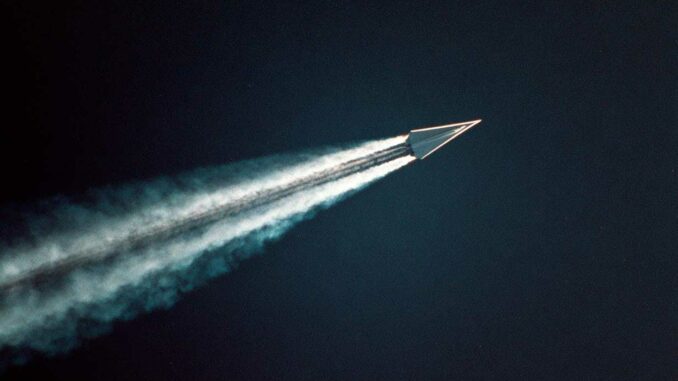
Ghost aircraft or real military program? A detailed look back at Aurora, the secret aeronautical project that has fueled rumors, hypotheses, and debate for thirty years.
Summary
For more than thirty years, the Aurora has fueled debate and speculation in the world of military aviation. Presented as a secret Aurora aircraft intended to succeed the SR-71 Blackbird, this program has never been officially recognized. However, ambiguous budgetary clues, indirect testimony, and apparent inconsistencies in the Pentagon’s communications have fueled the Aurora myth. Attributed to a US Air Force black program, the aircraft is believed by some to be an Aurora hypersonic aircraft capable of high-altitude reconnaissance missions. No formal evidence has been provided to confirm the operational existence of this classified experimental aircraft. Technological, human, and industrial limitations make its deployment plausible but extremely challenging. Beyond the technical reality, the legend of the Aurora reveals above all the strategic role of military secrecy and the United States’ ability to maintain doubt about its true aeronautical capabilities.
The strategic context that gave rise to the Aurora hypothesis
In the late 1980s, the United States faced a strategic dilemma. The SR-71 Blackbird, the main high-altitude strategic reconnaissance aircraft, was nearing the end of its operational life. Capable of flying at over 3,200 km/h (Mach 3+) and at an altitude of around 24,000 m, it remained expensive to operate. Its hourly cost already exceeded $200,000 at the time, not to mention its heavy logistics and limited availability.
At the same time, advances in Soviet ground-to-air defenses and the emergence of new radars were gradually reducing the SR-71’s superiority. It was in this context that some analysts began to talk about the emergence of a faster, more discreet successor capable of penetrating contested airspace without the possibility of interception. The Aurora project thus appeared to be a credible hypothesis in an environment marked by the opacity of the US Air Force’s black programs.
The budgetary origin of the name Aurora
The term “Aurora” first appeared officially in Pentagon budget documents in the mid-1980s. One line mentions funding entitled “Aurora,” without any detailed description. Defense journalists quickly made the connection with a classified aeronautical program.
The US authorities later explained that the term was simply a budget code name used to conceal funds allocated to several projects. This explanation did not quell the controversy. For many, the Aurora program was a real project deliberately hidden behind opaque accounting lines, a common practice in the US Air Force’s black program.
The technical characteristics attributed to the Aurora aircraft
According to the most widely held assumptions, the Aurora hypersonic aircraft would be capable of speeds between Mach 5 and Mach 6, or approximately 6,000 to 7,400 km/h, at altitudes exceeding 30,000 m. At these speeds, an aircraft could cover more than 1,600 km in less than fifteen minutes, significantly reducing the windows of detection and interception.
Some scenarios suggest combined propulsion, combining turbojets, ramjets, and possibly superramjets. This type of architecture, while theoretically plausible, remains extremely complex to master in terms of thermal control. At Mach 6, the surface temperature exceeds 1,000°C in certain critical areas.
No manufacturer has ever confirmed having produced such an operational aircraft. However, the United States has been investing for decades in secret American aeronautical technology, particularly in the hypersonic field, which fuels the doubt.
Testimonies and observations attributed to the Aurora
One of the elements most often cited by supporters of the Aurora legend concerns auditory testimonies collected in the southwestern United States and the United Kingdom. In the 1990s, residents reported a series of detonations, different from the classic supersonic bang, sometimes described as a “prolonged roar.”
These sounds could correspond to very high-speed flight tests. However, subsequent analyses show that they could also be linked to missile tests, conventional experimental aircraft, or misinterpreted atmospheric phenomena.
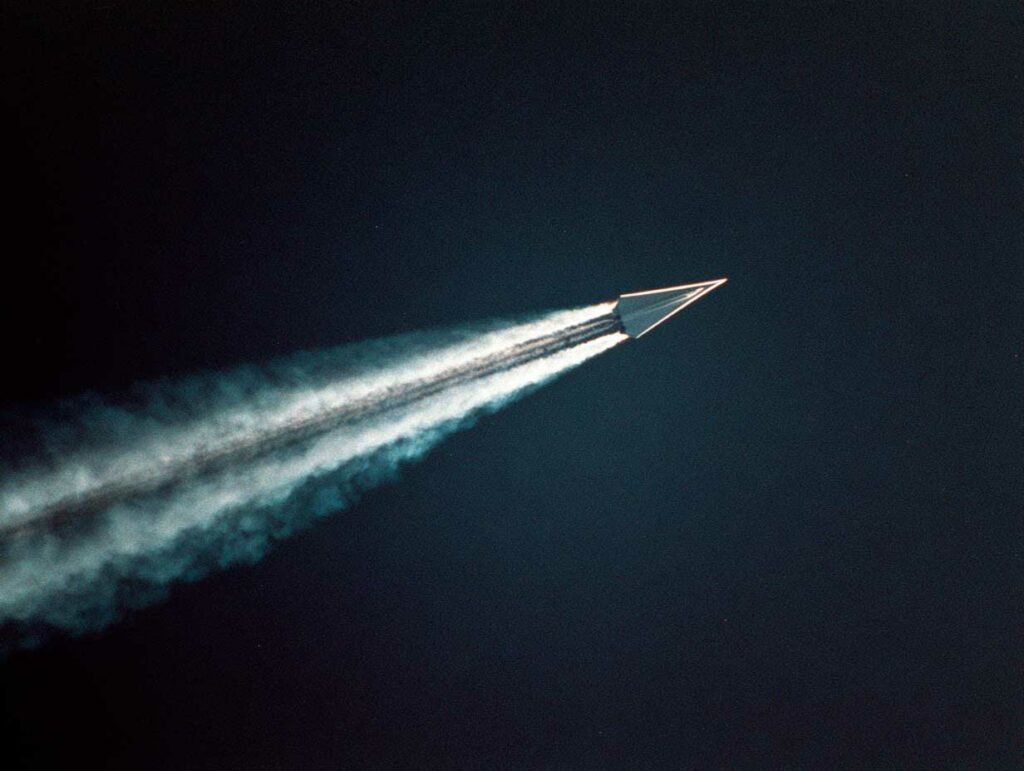
No clear, documented visual observations of the Aurora ghost plane have ever been authenticated. The few photographs purported to show it have turned out to be images of conventional aircraft or optical phenomena.
The hypothesis of a successor to the SR-71
When the SR-71 was officially withdrawn from operational service in the 1990s, the question of its replacement became central. Officially, the United States claims to rely on advanced reconnaissance satellites. These offer global coverage, but remain predictable in their orbits and vulnerable to anti-satellite capabilities.
For some experts, the Aurora reconnaissance aircraft would have filled this gap by offering flexible, fast, and discreet capabilities. However, there is no concrete evidence to confirm the operational existence of such an aircraft. Budgets allocated to satellites increased significantly in the 2000s, which tends to weaken the argument for a secret aerial replacement.
The role of black programs in the confusion
The United States has a long tradition of classified projects. Before its official unveiling, the F-117 Nighthawk was nothing more than a rumor. The same is true of the B-2 Spirit. This culture of secrecy automatically fuels the myth of American black programs.
In this context, the supposed Aurora aircraft becomes an almost inevitable figure. It embodies the idea that a higher level of technology exists but remains deliberately hidden. This perception is reinforced by the fact that some experimental programs are never made public, even after they have been abandoned.
The industrial and human limitations of manned hypersonic flight
One point that is often underestimated concerns human constraints. At Mach 5 or higher, flight profiles impose significant acceleration and extreme thermal environments. Keeping a pilot in such conditions on long missions poses serious physiological challenges.
This is one of the reasons why current hypersonic research focuses primarily on unmanned vehicles. This reality weakens the idea of a secret American Aurora aircraft that was piloted and fully operational as early as the 1990s.
The Aurora as a psychological deterrent
Some analysts believe that the rumor surrounding the Aurora may have been deliberately perpetuated. Leaving doubt about the existence of an aircraft capable of striking or observing any point on the globe in a matter of minutes is a powerful psychological deterrent.
In this interpretation, the legend of the secret American aircraft serves both strategy and actual technology. It obscures the perception of American capabilities and forces potential adversaries to consider the worst.
Current projects and the legacy of the Aurora myth
Today, the United States officially acknowledges that it is working on hypersonic programs, particularly in the context of experimental demonstrators. These projects are clearly a continuation of research that has been ongoing for several decades.
Whether it existed or not, the Aurora aeronautical project has left a lasting mark. It symbolizes the blurred line between technological reality, military secrecy, and mythological construction. More than just an aircraft, the Aurora has become a concept.
A legend that speaks volumes about American military secrecy
Although the Aurora has never been confirmed, its story remains revealing. It shows how opacity, combined with partial clues and a collective fascination with military innovation, can give rise to a lasting myth. In a world where strategic transparency remains limited, this type of legend still has a bright future ahead of it. And perhaps that is the true function of the Aurora: to remind us that, in the shadows, some questions will always remain unanswered.
War Wings Daily is an independant magazine.