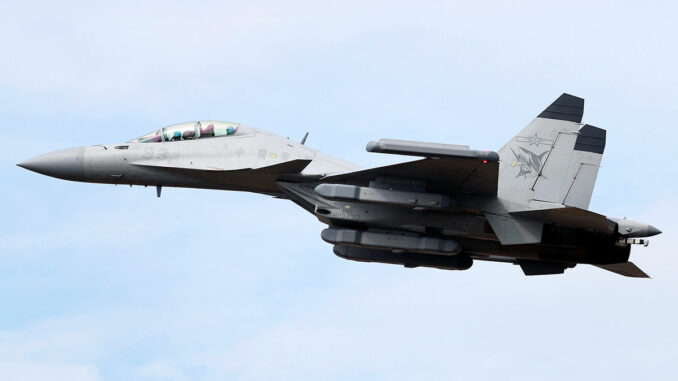
Tokyo accuses Beijing of locking fire control radar onto its aircraft near Okinawa, a serious act that raises questions about military stability in East Asia.
Summary
Japan has revealed that Chinese fighter jets twice locked their fire control radar onto Japanese aircraft operating near Okinawa. This type of illumination is considered a hostile military act as it is the final technical step before firing a missile. Beijing strongly denies the allegations and accuses Tokyo of interfering with legitimate naval exercises. The incident comes amid an already tense strategic environment marked by Sino-Japanese rivalry, the gradual militarization of the East China Sea, and the sensitive issue of Taiwan. The affair highlights the risks of escalation linked to the growing proximity between rival air forces and raises questions about the room for maneuver available to prevent a tactical incident from escalating into a major crisis. This confrontation, which appears to be technical in nature, reflects a much deeper strategic competition.
The incident reported by Tokyo and the airspace concerned
The Japanese Ministry of Defense said that two Chinese J-15 fighter jets had directed their fire control radar at a Japanese F-15 flying southwest of Okinawa. The two incidents reportedly took place several hours apart, the first lasting about three minutes and the second nearly half an hour. The Japanese aircraft were monitoring Chinese naval operations in an international zone regularly used by Beijing’s naval groups to reach the Pacific.
Tokyo emphasizes that there was no violation of its airspace, specifying that the Japanese aircraft maintained a distance compatible with international safety procedures. This clarification is intended to counter Chinese accusations that Japanese forces came dangerously close to a naval exercise.
Beijing categorically rejects the facts. The Chinese military claims that it was the Japanese aircraft that “disrupted” a training exercise at sea. China asserts that the incident was “fabricated” to justify, in its view, closer military ties between Tokyo and Washington. This rhetoric reflects the persistent mistrust between the two countries and the importance of air operations in their respective demonstrations of power.
How fire-control radar works and its role in air combat
To understand the seriousness of the incident, it is necessary to explain what fire-control radar actually is. Unlike surveillance radars, which scan a large area of space to detect intrusions, fire-control radar focuses a narrower beam on a single target. Its role is to continuously record the position, speed, altitude, and acceleration variations of the tracked aircraft.
This lock-on provides the weapons system with the data necessary for accurate firing. When a fire-control radar is activated, the targeted aircraft receives a specific alert, which is different from a simple detection. This alert indicates that the adversary is in an operational mode that could trigger a medium-range air-to-air missile, such as a PL-12 or PL-15 for the Chinese forces. These missiles can reach a target traveling at speeds of up to 100 kilometers.
Radar lock-on is therefore neither symbolic nor insignificant: it is a clear tactical gesture, understood by all military crews as the phase immediately preceding an actual shot. Illumination constitutes a change in operational attitude, as it forces the targeted aircraft to immediately assess whether to break off engagement, maneuver, or call for backup.
The threatening nature of lock-on and its immediate effects on a pilot
Japan refers to this as an “extremely dangerous” act. In reality, a pilot who notices radar illumination knows that his aircraft is considered a priority target. This triggers a rapid assessment sequence: is it intimidation, a test, or the prelude to a shot?
For the Japanese forces, the duration of the second lock-on—about thirty minutes—increases the concern. Being held under firing radar for so long forces the pilot to remain on high alert, which complicates flight management, increases cognitive load, and creates a greater risk of unintentional error.
The incident is all the more serious because it occurred near the Miyako Strait, a strategic passage allowing Chinese ships to access the deep waters of the Pacific. This area, where Japanese, Chinese, and American aircraft frequently cross paths, is one of the most sensitive in the region.
Radar lock-on can trigger a chain reaction:
- a pilot may believe that a shot is imminent,
- an escorting aircraft may interpret the maneuver as hostile,
- a command may decide to reposition forces,
- a diplomatic protest may quickly escalate into a military crisis.

Strategic analysis of a gesture that goes beyond simple intimidation
The context in which this episode occurred explains its impact. In 2022, Japan adopted a new national security strategy that increases its military budget, modernizes its fighter fleet, and introduces the possibility of counterattacks in response to a direct threat. China views these developments with concern, considering them part of a strategy aimed at hindering its regional expansion.
The incident reflects a broader trend: the rise of Chinese presence in areas that Beijing considers essential to its naval strategy. In 2024, China had carried out more than 850 military sorties in Taiwan’s air identification zone, and sustained activity around Okinawa suggests a desire to impose its presence around the first island chains in the Pacific.
For Tokyo, the incident serves as a warning about the level of risk that Chinese patrols now pose. Japanese officials speak of a threshold of intimidation being crossed, especially since previous maritime incidents have already caused tension in the past, notably the illumination of a Japanese destroyer by a Chinese ship in 2013.
The act can also be seen as an implicit response to Japan’s position on Taiwan. Several recent statements in Tokyo have raised the possibility of active support in the event of conflict. For Beijing, demonstrating its ability to exert direct pressure on Japanese air assets sends a political message.
Diplomatic reactions and possible adjustments on the Japanese side
The Japanese government summoned a Chinese representative and lodged a strong protest, demanding that this type of action not be repeated. Tokyo insists on the safety of its crews and the need to comply with international rules on air interception.
China, for its part, maintains that the naval exercise was legitimate and that the Japanese aircraft approached dangerously close. It denounces a “manipulation” intended to strengthen the US military presence in the region.
Japan’s allies have expressed their support, recalling the importance of freedom of navigation and overflight. However, the most eagerly awaited reaction concerns the Japanese military itself. Several options are being considered:
- intensification of F-15 and F-35A patrols,
- strengthening of advanced detection capabilities,
- improvement of communication protocols with US forces,
- more regular deployment of AWACS aircraft to monitor Chinese air activities.
These adjustments reflect a growing concern: the proximity between rival forces increases the likelihood of an incident that goes beyond the diplomatic sphere.
The regional implications of an incident that goes beyond the immediate actors
This radar lock-on does not only concern China and Japan. It is part of a regional dynamic in which:
- the United States is strengthening its presence in the Western Pacific,
- Taiwan is facing sustained military pressure,
- ASEAN countries are concerned about the accelerated militarization of their waters,
- Australia and South Korea are adjusting their own positions.
The East China Sea is now a hotbed of conflicting interests. Tensions there are fueled by technology, political trajectories, and the absence of robust de-escalation mechanisms. A radar lock-on could thus trigger an uncontrollable sequence of events, simply due to a miscalculation.
The major risk lies in the normalization of this type of action. As it is repeated, each side may feel compelled to respond more vigorously to preserve its credibility. It is this mechanism—well known to strategists—that transforms tactical friction into strategic breakdowns.
Air stability threatened by increasingly sophisticated military capabilities
The incident reveals an undeniable fact: the technological capabilities of Asian armies have reached such a level that the margin for error has been considerably reduced.
The combination of high-performance radars, long-range missiles, and modern multi-role aircraft creates an environment where decision-making is faster, more sensitive, and more risky.
The central question therefore becomes: in a region where every player is seeking to assert its presence, how can a safe airspace be maintained, free of major incidents?
China’s radar lock-on has reignited this debate and serves as a reminder that local stability rests on a fragile line that can be crossed in a matter of seconds.
Sources
Reuters; The Independent; AP News; Guardian; Al Jazeera; SCMP.
War Wings Daily is an independant magazine.