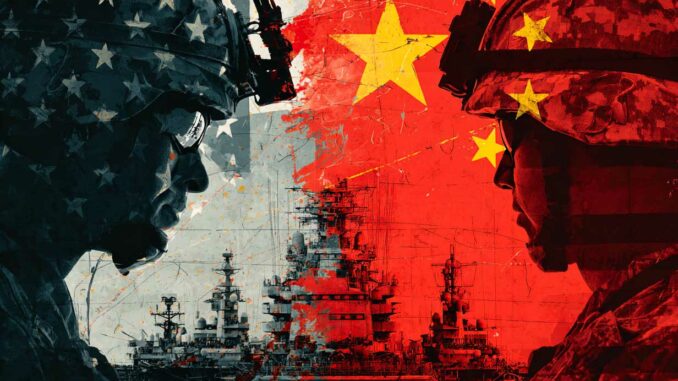
Beijing sanctions 20 US companies and 10 executives. Defense, space, drones: a detailed analysis of an industrial and diplomatic standoff.
Summary
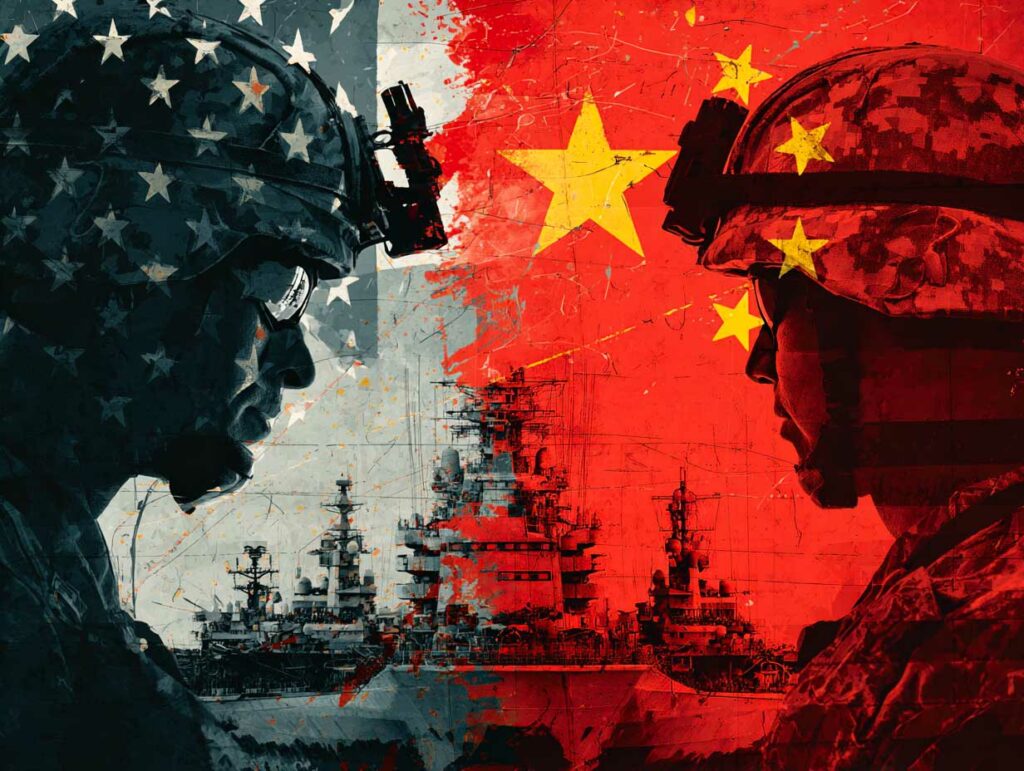
On December 26, the Chinese Ministry of Foreign Affairs formalized a new wave of sanctions targeting 20 US companies and 10 individuals, mainly from the defense, aerospace, and dual-use technology sectors. The measures explicitly target production centers such as Boeing St. Louis and executives from groups such as Northrop Grumman and Anduril, accused by Beijing of undermining Chinese security interests through arms sales and technological cooperation deemed sensitive. These sanctions are part of a controlled escalation in response to US restrictions on semiconductor exports and arms sales to Taiwan. Beyond the immediate economic impact, which is limited by these players’ already reduced exposure to the Chinese market, the message is political and industrial: China is making more visible use of coercive measures to deter, signal, and structure its own value chains around national champions such as CASC, CASIC, and AVIC. The measured US response confirms a lasting but calibrated confrontation.
The diplomatic and industrial context of the sanctions
The decision announced on December 26 by the Chinese Ministry of Foreign Affairs comes amid structural tensions between Beijing and Washington. For several years, the two capitals have been stepping up cross-restrictions, combining export controls, blacklists, individual sanctions, and regulatory pressure. What is new is the nominal targeting of industrial facilities and executives, accompanied by a clear communication strategy.
For China, these measures are a response to acts deemed hostile: US arms sales to Taiwan, military technology cooperation, and the participation of US companies in programs considered to undermine Chinese sovereignty. The timing, at the end of the year, is also intended to draw a red line before the opening of new sectoral trade negotiations.
The nature of the sanctions announced
The Chinese sanctions combine several levers. They include a ban on exports of dual-use goods to the targeted entities, a freeze on assets held in China, visa restrictions for the executives concerned, and a ban on cooperation with Chinese partners, including subsidiaries and joint ventures.
Legally, these measures are based on Chinese law against foreign sanctions and national security regulations. They are designed to be reversible and flexible, giving Beijing room for diplomatic adjustment without a complete breakdown in relations.
Targeted US companies
The official list includes 20 companies, mostly related to defense, aeronautics, space systems, and drone technologies. Among the most prominent targets are Boeing units, including the St. Louis site, historically associated with military programs. Also targeted are groups and subsidiaries of Northrop Grumman, involved in sensor, missile, and command systems.
The list also includes newer players in the US military-technology complex, such as Anduril, which specializes in autonomous drones and surveillance systems. Other companies affected operate in the radar, secure communications, satellite, and critical components segments.
It is noteworthy that most of the companies targeted have limited direct commercial exposure to the Chinese market as a result of previous US restrictions. This confirms the primarily symbolic and deterrent nature of the measure.
Sanctioned individuals and their profiles
At the same time, 10 executives and managers have been named and sanctioned. They include senior executives, former officers who have become industry leaders, and decision-makers involved in the sales and development strategy for military systems. Personal sanctions include a ban on entering Chinese territory and the freezing of all local financial interests.
This individual targeting aims to personalize the pressure by signaling that strategic decisions have direct consequences. Beijing is thus seeking to influence the ruling circles, even if the real effectiveness of this approach remains limited by these individuals’ low dependence on China.
The role of Chinese groups CASC, CASIC, and AVIC
The sanctions must be viewed in light of China’s industrial strategy, which is structured around public champions. China Aerospace Science and Technology Corporation (CASC), China Aerospace Science and Industry Corporation (CASIC), and Aviation Industry Corporation of China (AVIC) embody this rise in power.
These groups cover the entire spectrum: ballistic and cruise missiles, space launchers, satellites, fighter jets, and drones. By strengthening sanctions against its American competitors, Beijing is protecting its domestic market, reducing residual dependencies, and accelerating technological substitution. The message is clear: China favors complete strategic autonomy, even at the cost of increased fragmentation of global value chains.
The real economic impact and its limits
In the short term, the direct financial impact on American companies remains limited. The turnover generated in China by these players is modest, often less than 5% of their global revenues for the segments concerned. The sanctions therefore do not significantly affect their immediate financial prospects.
On the other hand, the indirect effect is more noticeable. Asian partners and certain international customers may be reluctant to cooperate with entities explicitly sanctioned by Beijing, for fear of compliance risks or trade reprisals. This halo effect, which is difficult to quantify, is one of the desired objectives.
Reactions from the United States
Washington has reacted in a measured manner. The State Department has denounced the sanctions as “baseless,” while reaffirming the right of American companies to operate in accordance with national laws and international commitments. No immediate countermeasures have been announced, signaling a desire to avoid escalation.
In Congress, several elected officials called for increased support for the targeted industries and for accelerating programs to relocate critical supply chains. This stance confirms a rare political consensus on the need to reduce dependence on China in strategic sectors.
A long-term strategic reading
These sanctions illustrate a shift: China is no longer using only defensive tools, but is resorting to targeted coercion to defend its industrial and security interests. By choosing symbolic targets and identifiable leaders, Beijing is seeking to structure the balance of power without causing a systemic shock.
For the United States, the response is to absorb the cost and pursue technological segmentation. Both strategies converge towards a more fragmented world, where cross-sector cooperation becomes the exception.
What this means for global industry
In the medium term, this sequence reinforces the trend toward technological bipolarization. Companies will have to choose ecosystems, adapt their supply chains, and invest in geopolitical compliance. Costs are rising and lead times are lengthening, but strategic visibility is improving for players who are able to anticipate.
For Chinese groups, the opportunity is real: to capture domestic market share and accelerate internal innovation. For American manufacturers, the challenge is to maintain their technological lead while managing an increasingly restrictive regulatory environment.
Sources
– Chinese Ministry of Foreign Affairs, official statement on sanctions dated December 26.
– Public statements by the U.S. Department of State.
– Institutional documents from CASC, CASIC, and AVIC on their industrial activities.
War Wings Daily is an independant magazine.