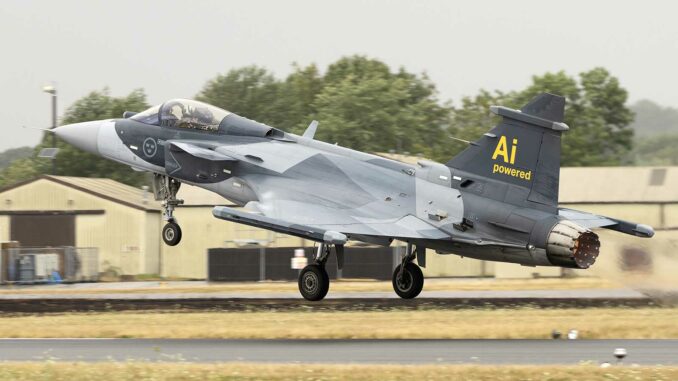
Bogotá suspends the purchase of the Rafale at the last minute and reopens the competition with the F-16 and Gripen. Analysis of the reasons and budgetary issues.
Summary
On February 20, 2026, Colombia surprised everyone by suspending a project to acquire Rafale aircraft valued at around €3.2 billion. While the French aircraft seemed to be the frontrunner to replace the aging Kfir, Bogotá reopened the competition, leaving the American F-16 and Swedish JAS 39 Gripen back in the running. This reversal comes amid internal budget constraints, political pressures, and strategic trade-offs. The Rafale offered high air superiority and multi-role strike capabilities, but at a significant overall cost over 30 years. The F-16 and Gripen have lower acquisition and maintenance costs. This reversal highlights the tension between capability ambitions and budgetary discipline in a region where military spending remains modest. The final decision will determine not only the architecture of Colombia’s air defense, but also its industrial and strategic alliances.
Colombia’s reversal and the end of an agreement presented as imminent
The issue of replacing Colombia’s IAI Kfir aircraft has been ongoing for more than a decade. These aircraft, acquired in the 1980s and modernized several times, are approaching the end of their operational life. Their maintenance is becoming costly and complex, particularly in terms of spare parts availability and flight safety.
In 2025, Dassault Aviation’s Rafale seemed to have taken the lead. The offer was for a contract worth around €3.2 billion, including the aircraft, training, initial support, and a logistics package. For a country with an annual defense budget of around $10-11 billion (approximately €9-10 billion), such a contract represents a significant commitment.
On February 20, 2026, however, Bogotá announced that no final contract would be signed at this stage. The competition is officially reopened. Lockheed Martin’s F-16 and Saab’s JAS 39 Gripen are once again being considered.
This is not a simple technical adjustment. It is a political signal.
Budget constraints at the heart of the change
The weight of the acquisition cost
A €3.2 billion contract does not only cover the purchase of airframes. It includes weapons, simulators, infrastructure, and initial support. For a fleet estimated at around 15 aircraft, the total unit cost exceeds €200 million per aircraft, including the environment.
The F-16 Block 70/72, according to recent contracts, generally costs between €80 and €120 million per aircraft, depending on the configuration and options.
The Gripen E has a comparable catalog price, often quoted at around €85 to €100 million per unit, with a strong argument in terms of flight hour cost.
If Colombia is aiming for a fleet of 16 to 18 aircraft, the overall difference could represent several hundred million euros at the time of purchase.
Life cycle cost
The real difference can be measured over thirty years. The cost per flight hour of the Rafale is estimated by open sources to be between €15,000 and €20,000, depending on the usage profile. The F-16, depending on the version, is often between €12,000 and €18,000. The Gripen claims to have a lower cost, sometimes announced at around €8,000 to €10,000.
Although these figures vary depending on the calculation methods used, the trend is clear: for a small air force, financial sustainability is a determining factor. A difference of €5,000 per flight hour over 200 hours per year per aircraft represents €1 million per year for a fleet of 10 aircraft. Over 20 years, this becomes a significant factor.
The Colombian government must choose between military modernization and social priorities. The national economic context, marked by budgetary constraints and civil infrastructure needs, weighs heavily on the decision.
The political and diplomatic considerations behind the issue
Balance with the United States
Colombia has a close security relationship with Washington. The F-16 offers direct interoperability with US forces. It facilitates access to a logistics ecosystem and cooperation programs.
Choosing the Rafale would have been a sign of autonomy and strategic diversification. Returning to the F-16 can be interpreted as a more traditional alignment.
The Swedish industrial argument
The JAS 39 Gripen, meanwhile, highlights technology transfer and local assembly offers. Saab has already developed this model of cooperation in Brazil, where Gripens are assembled locally.
For Bogotá, such an approach could create jobs and structure an aerospace industrial base. This factor is not limited to the purchase price. It concerns sovereignty and local added value.
Technological differences between the candidates
The positioning of the Rafale
The Rafale is a 4.5-generation multi-role aircraft equipped with an RBE2 AESA radar, an integrated SPECTRA electronic warfare system, and proven multi-role capability in overseas operations. It can provide air superiority, ground strike, and reconnaissance missions in a single sortie.
For Colombia, this means a clear leap in capability compared to the Kfir.
The profile of the F-16 Block 70
The F-16 Block 70 also features APG-83 AESA radar, modernized avionics, and broad compatibility with Western weaponry. It is a proven aircraft, with more than 4,600 units produced worldwide.
Its maturity reduces industrial and technical risks.
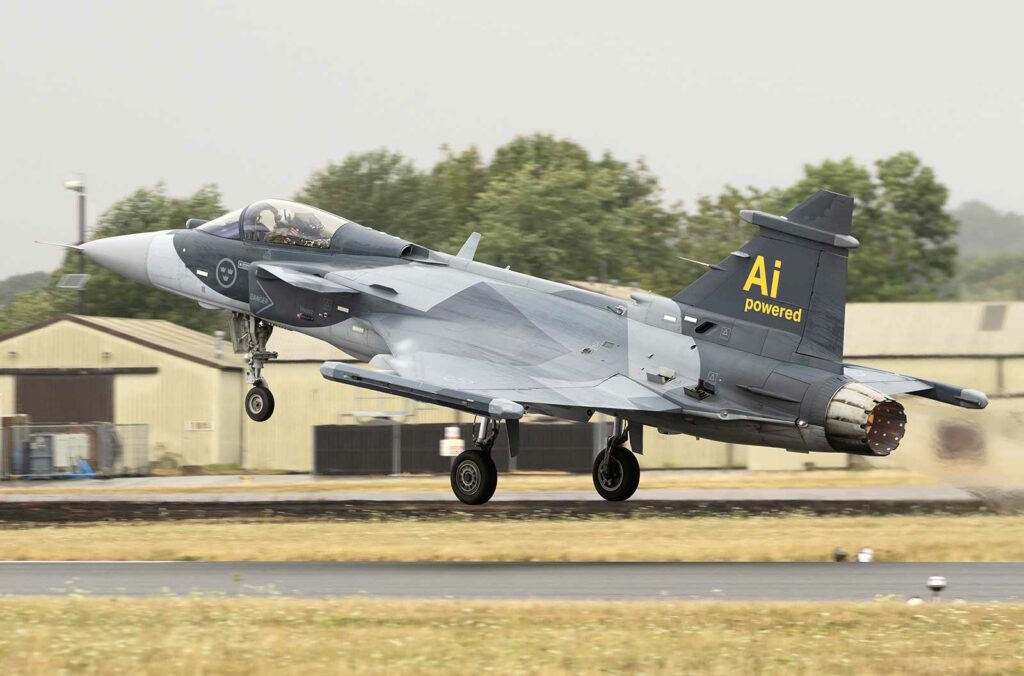
The logic of the Gripen E
The Gripen E relies on modern software architecture, simplified maintenance, and reduced operating costs. It incorporates an AESA radar and an advanced data link.
Its central selling points are flexibility and controlled costs.
Potential budget savings from abandoning the Rafale
If Colombia opted for an F-16 or a Gripen at a cost of €500 to €800 million less than the initial overall budget, the savings would be equivalent to several years of investment in other capabilities: ground-to-air defense, drones, or naval modernization.
The gain is not only immediate. It also concerns long-term sustainability. Lower fixed costs mean more room for maneuver in the event of an economic crisis.
However, a less ambitious choice may also mean reduced capabilities in terms of electronic warfare or the integration of specific weapons.
Regional strategic credibility in question
Colombia operates in a relatively stable regional environment, but one marked by internal tensions and cross-border challenges. The priority needs remain surveillance, deterrence, and rapid response capabilities.
A Rafale would offer clear qualitative superiority. An F-16 or Gripen would offer a more economical balance.
The final decision will reflect the hierarchy of national priorities: maximum power or budgetary balance.
The signal sent to French industry
For Dassault Aviation, this reversal is a setback. Latin America is a strategic market. After successes in Brazil (with the Gripen) and sales of F-16s in the region, a Colombian contract would have strengthened France’s presence.
Abandoning the project at this stage highlights the difficulty of selling a high-end aircraft to countries with severe budget constraints.
This does not call into question the qualities of the Rafale. It simply serves as a reminder that technical performance is not enough. The overall price and financing model are decisive factors.
The short-term outlook and possible scenarios
Three scenarios are emerging.
The first is a return to the F-16, for political and financial reasons.
The second is a choice of the Gripen, to combine reduced cost and industrial partnership.
The third is a prolonged postponement, extending the life of the Kfirs with increased risk.
The key factor will be the Colombian government’s ability to secure acceptable financing without compromising other national priorities.
This case illustrates a simple reality: when it comes to purchasing fighter jets, the decision is never purely military. It is budgetary, industrial, and diplomatic. The reversal on February 20, 2026, does not reflect strategic instability. It reveals a permanent tension between technological ambition and financial responsibility. The final choice will determine which path Bogotá favors. And it will redraw the map of aeronautical influence in Latin America for the next generation.
Sources
Official statements by the Colombian government, February 2026
Industry press releases from Dassault Aviation, Lockheed Martin, and Saab
Public data on unit costs for the F-16 Block 70, Gripen E, and Rafale
Budget reports from the Colombian Ministry of Defense
IISS Military Balance analyses, recent editions
War Wings Daily is an independant magazine.