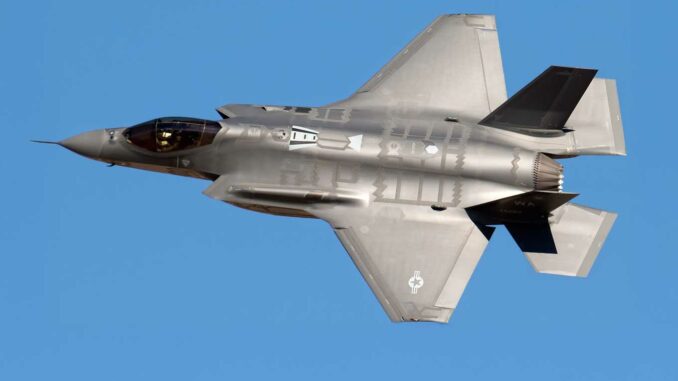
Behind the announcement of 600 F-35s in Europe, how many will remain in service, at what cost, and with what strategic dependence on Russia?
In summary
The idea of Europe fielding 600 F-35s before the end of the decade is impressive. The total becomes plausible if we add up the orders and announcements. But the useful question is not the fleet on paper: it is the number of aircraft capable of taking off, with qualified pilots, ammunition, parts, and up-to-date software. Availability data published in the United States shows that a fleet can fall to around half of its aircraft being “mission capable.” However, an air force is not measured solely in terms of airframes. Training, often carried out in the United States, remains a bottleneck. The cost of ownership weighs heavily on European budgets, and industrial and software dependence increases political risk. Against Moscow, the F-35 offers an advantage in terms of sensors and networking, but it cannot replace ground-to-air defenses, logistical depth, or the resilience of bases.
The promise of critical air mass
The argument is simple. Add up European purchases, add in US aircraft based on the continent, and you get a fleet that “carries weight” against Russia. In this narrative, six hundred F-35s would almost be enough on their own to create a glacis. The idea is appealing because it transforms an industrial program into a security guarantee.
Except that inventory is not a posture. An immobilized airframe, a pilot who is not qualified on the current software version, a fleet that flies infrequently due to a lack of parts—all of these factors count as much as a delivered aircraft. And that’s where the slogan falls apart. The right question is not “how many to buy,” but “how many to line up on a Tuesday morning, without warning, with the right tactical effects.”
The calculation behind the figure
The figure “six hundred” varies depending on what is included in the scope. Do we include American aircraft stationed in Europe? Do we count options, intentions, and planned increases? Or only firm contracts? In practice, the discourse often mixes these three categories.
The European map of announced fleets
Based on publicly announced plans by governments and industry summaries, the total already far exceeds the symbolic threshold:
- United Kingdom: long-term fleet objective, with a discussed transition to a larger share of aircraft optimized for range and cost.
- Italy: ambition for an expanded fleet, beyond the initial format, driven by a major industrial role and dual capability.
- Netherlands: format reinforced by additional purchases.
- Norway: mature program, with a now structured fleet.
- Denmark: format revised upwards in the regional context.
- Belgium: initial order supplemented by an extension decision.
- Poland: accelerated ramp-up, with a front-line approach on the eastern flank.
- Finland: massive replacement of a historic fleet, with a volume that changes the Nordic scale.
- Germany: initial purchase calibrated for a critical mission, with a temptation to expand.
- Switzerland: politically sensitive acquisition, and therefore exposed to cost trade-offs.
- Czech Republic: shift to fifth generation, but with a long timeline.
- Greece: gradual entry, through an initial format.
- Romania: acquisition project that consolidates the southeastern flank.
Within this scope, reaching or exceeding “six hundred” becomes plausible if we consider the target formats, not just the aircraft already financed and contracted. This validates the figure… but at the cost of ambiguity: we are talking about a long-term snapshot, not an available order of battle.
The difference between a theoretical fleet and a usable force
Two corrections immediately dampen enthusiasm.
The first is calendar-related. Some countries take delivery quickly. Others spread it out over a decade.
Some make announcements, then renegotiate. One example suffices: German delivery schedules have been presented as tight, with operational milestones pushing full capacity towards the end of the decade. This means that a fleet figure “at the end of the decade” is mechanically inflated if we add aircraft still on the production line or still in initial training.
The second is political. An order can be “revised” when inflation, operating costs, and industrial constraints combine. The temptation is strong for a government to preserve the announcement and reduce the reality: staggered deliveries, reduced format, and fewer flight hours.
The hidden part of the fleet that is actually available
The uncomfortable subject is operational availability. It is a cold indicator. It ignores communication. It only looks at aircraft that are capable of a given mission, in a given configuration.
US audit reports show an unstable reality. For the most common variant, the “mission capable” rate has fallen to around half in a recent year. And even when the average seems “acceptable,” it masks discrepancies: a country with a small fleet suffers more from a lack of parts; a country on the rise suffers from a lack of technicians and instructors; a country that is deployed suffers from component turnover.
Let’s look at a simple example: if Europe has 500 aircraft actually delivered, a rate of 50% means that 250 aircraft are capable of fulfilling a mission at any given time. The others are not “useless.” They are undergoing maintenance, awaiting parts, being retrofitted, or grounded due to technical constraints. But in the face of a sudden crisis, they don’t count.
The issue is all the more sensitive given that software modernization is ongoing. Each major standard upgrade changes the rules: weapons integration, sensor performance, electronic warfare, compatibility. Fleets are becoming heterogeneous. And a heterogeneous fleet is a fleet that trains less quickly and deploys more slowly.
The cost of a fifth-generation fleet
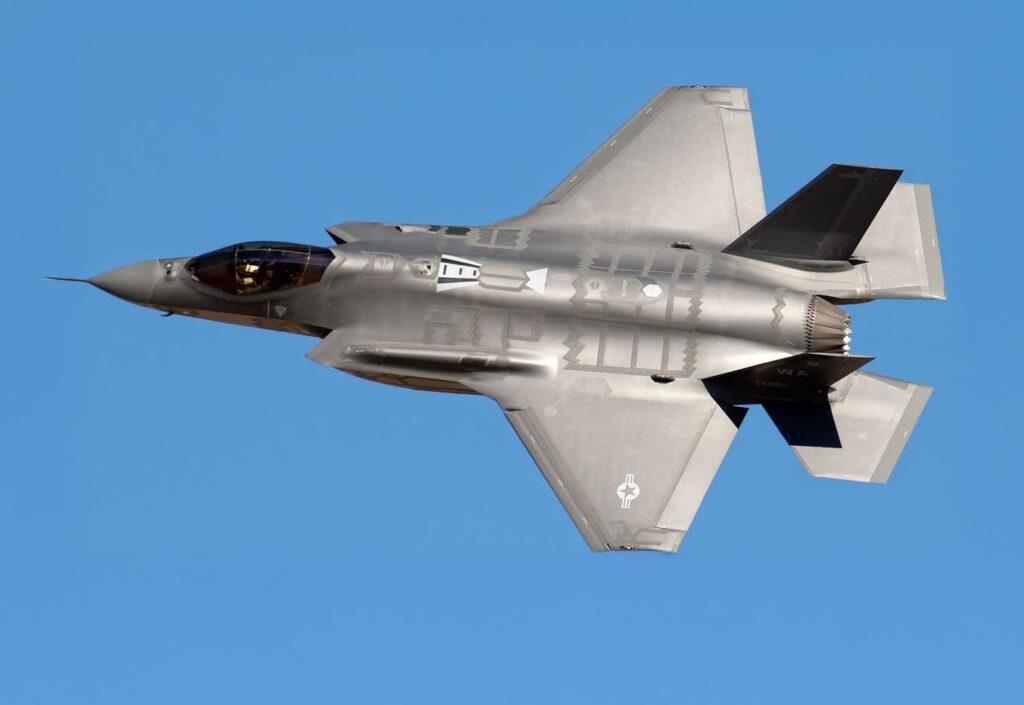
We cannot defend the figure of “six hundred” without mentioning the cost per flight hour. European armies do not just pay for the purchase. They pay for maintenance. They pay for engines, avionics modules, software chains, infrastructure, simulators, and classified networks.
The American cost trajectory is a warning. Audits highlight inflation in the total cost of ownership over the lifetime of the program, to the point that it is regularly described as a multi-trillion-dollar effort spanning several decades. The logic is well known: the more reliability constraints are discovered, the more maintenance is required; the more maintenance is required, the more parts are consumed; the more parts are consumed, the more dependent we become on a global supply chain that is already under strain.
Engine technology is a good example. Expected developments (power, thermal management, growth in electrical load) are driving costly upgrades. And these upgrades take a long time. For Europeans, this means one very simple thing: a fleet that is billed as “massive” can, in budgetary terms, become a “babysat” fleet, which flies less to keep the accounts in check, and therefore trains less, and therefore delivers less.
Pilot training as a bottleneck
An air force is not a collection of aircraft. It is a system of skills. And pilot training is where communication collides with reality.
Firstly, because the fifth generation is changing the profession. The cognitive load is increasing. The proportion of “mission management” and “sensor management” is growing. Initial training must incorporate networking, data use, and electromagnetic discretion procedures. This requires more simulators, more instructors, and more time.
Secondly, because many European nations are outsourcing part of the pipeline to American schools and bases, sometimes in multinational arrangements. This is effective. But it is saturatable. When sales increase, the queue gets longer. The result is mechanical: aircraft delivered faster than pilots, or pilots trained but with no aircraft available to maintain their qualifications.
Finally, because actual flight hours are becoming the sinews of war. An army may own aircraft, but if it reduces hours to save money, it pays later in terms of availability and safety. British public reports illustrate this dilemma: a fleet may exist, but only achieve a fraction of its mission objectives due to a lack of personnel, parts, and flight hours.
Strategic dependence on software and logistics
The most political debate is not about stealth. It is about logistical dependence and the digital ecosystem.
The program relies on a global support chain, frequent updates, and a management and planning system that has evolved over the years. The name changes, but the principles remain the same: centralization of maintenance data, parts management, configuration management, and software rights management. Today, this universe is often summarized by an acronym: ODIN.
This raises three straightforward questions.
The first is sovereignty of use. Can a country decide on its own the pace of modernization, the integration of ammunition, or the certification of a configuration? In reality, there is some leeway, but it is not infinite. And the time it takes to integrate “national” weapons shows that sovereignty is bought, not decreed.
The second is resilience in a crisis. If political or industrial tensions slow down the delivery of parts, the impact is felt on the tarmac. A “networked” fleet is powerful, but it is also sensitive: it requires networks, authorizations, patches, and components.
The third is industrial dependence. The more Europe focuses on a single platform, the more it reduces its ability to arbitrate. This is not a moral judgment. It is market mechanics.
The risk of timing and standards
The real Achilles heel of a “single” fleet is synchronization. Delays in modernization, partial standards, batches delivered with incomplete capabilities—all of this can turn a promise into a pile of versions.
The issue became apparent with the modernization known as Block 4. It is supposed to bring new capabilities, but it also adds dependencies: computing power, memory, cooling, testing, certifications. A rapidly growing European fleet logically ends up with a heterogeneous fleet. And heterogeneity comes at a cost: in training, maintenance, planning, and availability.
This is where we need to be blunt.
A fleet of 600 aircraft “on paper” may, in practice, be a fleet where some are awaiting upgrades, others are awaiting parts, and others are flying less to preserve resources. The figure is reassuring. Day-to-day management is worrying.
Confrontation with Russia beyond the symbol
When it comes to Russia, the “600 versus a few dozen” argument plays on contrast. Yes, Russia’s fifth-generation fleet remains limited, and the Su-57 is not being produced at the same rate as Western aircraft. But Russia is not just about fifth generation. It has a dense ground-to-air defense system, geographical depth, and a stockpile of long-range vectors that target bases, depots, radars, and command centers.
This is where the “six hundred” promise needs to be reframed. The F-35 brings a real advantage in terms of sensors, data fusion, and coordination, and therefore potential networked air superiority. It can help open corridors, identify, share, and prioritize. But it does not eliminate the need for European ground-to-air defense, hardening of bases, dispersion of assets, ammunition stocks, refueling aircraft, electronic warfare, and robust repair chains.
In short, the advantage comes from the complete system, not just the aircraft. A Europe that buys heavily but neglects bases, logistics, and training may achieve the opposite of the desired effect: increased dependence, average availability, and a more fragile deterrent than advertised.
The awkward question before signing the next check
The question is not “should we” buy. Many countries have already decided. The question is: what do we really want to buy?
If the goal is European sovereignty, then we must invest as much in the ecosystem as in the aircraft itself: stocks, engine workshops, repair capabilities, simulators, training centers, networks, cyberdefense, base protection, jamming capabilities, ammunition, and common doctrines. Without this, the figure “six hundred” will remain a mere poster.
If the goal is deterrence, we must accept a simple truth: deterrence is a combination of available aircraft, trained pilots, ready ammunition, and a robust network that can survive strikes. In this area, the announced fleet can be a strength… or a dependency, depending on how Europe finances the rest of the system.
Sources
Lockheed Martin, F-35 Lightning II, “Fast Facts” (January 2026).
Government Accountability Office, GAO-24-106909, “F-35 Joint Strike Fighter: Program Continues to Encounter Production Issues and Modernization Delays” (May 2024).
Government Accountability Office, GAO-24-106703, “F-35 Sustainment: Costs Continue to Rise While Planned Flying Hours Decrease” (April 2024).
National Audit Office, “The UK’s F-35 capability” (July 2025).
Janes, article on the delivery schedule and German operational capability (July 2025).
Finnish Defense Forces, communication on the HX program and training system (December 2025).
Reuters, articles on the resumption of TR-3-related deliveries, financial restraint per aircraft, review of the Swiss format, and availability observed in 2024 (2024–2025).
The War Zone, analysis of the status of deliveries and the Russian fifth-generation fleet (November 2025).
Aviation Week, information on the additional Dutch purchase (September 2022).
War Wings Daily is an independant magazine.