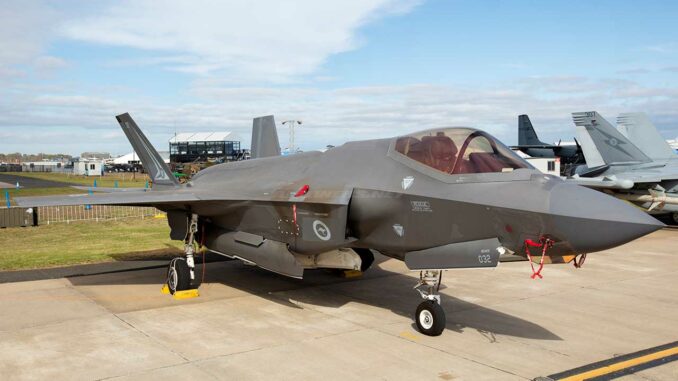
While the F-35 is gaining ground in Europe, some countries have rejected the American aircraft. This is a strategic choice with serious industrial and budgetary consequences.
Summary
The F-35 Lightning II has become the dominant fighter jet in Europe. More than 15 European countries have ordered it or put it into service, making the American aircraft the de facto standard for NATO. However, several countries have chosen not to purchase the F-35, despite political, industrial, and operational pressure. Behind these decisions lie major issues: military sovereignty, technological dependence, budgetary orientation, and the survival of the European aerospace industry. The purchase of an F-35 is not limited to an initial acquisition; it commits a country for several decades through maintenance, software updates, and American supply chains. This article provides a detailed overview of the European countries that have resisted the F-35, analyzes their motivations, and assesses the financial and strategic consequences of a Europe in which an increasing share of air defense budgets is captured by the United States.
The F-35 as the cornerstone of European air defense
In less than fifteen years, the F-35 has become the most purchased fighter jet in Europe. The United Kingdom, Italy, the Netherlands, Belgium, Poland, Norway, Denmark, Finland, Germany, Switzerland, the Czech Republic, and Greece have all chosen the American aircraft. Ultimately, more than 600 F-35s are expected to be in service on the continent.
This success is not solely technical. It is based on a global strategy: NATO integration, immediate interoperability with US forces, access to a global supply chain, and the promise of informational superiority. But this dominance raises a central question: which European countries have rejected this model, and why?
France, the pillar of strategic refusal
France is the most emblematic case. It never considered purchasing the F-35, preferring to invest in the Rafale, a fighter jet developed and produced on its territory. This choice is primarily political and industrial.
Paris considers that complete control of the air combat chain, from sensors to missiles, is a pillar of national sovereignty. The F-35, with its proprietary software, its dependence on the ODIN logistics system, and its updates controlled by the United States, is deemed incompatible with this vision.
In budgetary terms, the investment is massive but geared towards national industry. A Rafale costs around €90 to €100 million to purchase, but every euro spent feeds into the French and European ecosystem. Conversely, an F-35 represents an outflow of funds, both in terms of acquisition and maintenance.
Sweden and the logic of industrial autonomy
Sweden did not purchase the F-35 and remains loyal to the JAS 39 Gripen. This choice is based on a clear doctrine: to maintain an independent national air capability that is suitable for territorial defense and financially sustainable.
The Gripen is less stealthy than the F-35, but it offers much lower operating costs, estimated at around $7,000 to $8,000 per flight hour, compared to more than $30,000 for the F-35 according to several estimates. For Stockholm, logistical and software dependence on the United States represents a strategic risk.
Sweden also favors flexibility: the ability to operate from dispersed bases, rapid maintenance, and national control of updates. These criteria are difficult to reconcile with the F-35 model.
Spain and constrained budgetary arbitration
At this stage, Spain has not ordered any F-35s for its air force. Madrid operates Eurofighter Typhoons and is preparing to upgrade them, while postponing decisions on replacing the oldest F-18s.
While discussions are underway for a naval version of the F-35B for the navy, the overall cost of the program is holding back any quick decisions. Spain has to contend with limited defense budgets and multiple priorities.
Investing in the F-35 would not only involve a high initial purchase price, but also a long-term commitment to American maintenance, estimated at more than 70% of the total cost of the aircraft over its life cycle. This is a burden that would be difficult to sustain without making tough trade-offs.
Hungary and the continuity of existing choices
Hungary did not purchase the F-35 and operates Gripen aircraft leased and then purchased from Sweden. This choice, although old, has been consolidated over time.
Budapest favors a solution that is already integrated, mastered, and adapted to its regional needs. Switching to the F-35 would have meant a complete overhaul of training, infrastructure, and logistical support, for an operational gain considered marginal in view of the perceived threats.
Serbia and the deliberate break with the Western model
Serbia obviously did not purchase the F-35, but its case illustrates another European reality. Belgrade is turning to non-Western or hybrid solutions, including Russian or Chinese aircraft.
This choice is based as much on geopolitical considerations as on budgetary ones. Above all, it shows that the F-35 is not a universal standard, but a tool deeply linked to the American and Atlanticist strategic architecture.
European countries without modern fighter aircraft
Several European states simply have no fighter aircraft or no longer have autonomous air combat capabilities. This is the case for countries such as Luxembourg, Slovenia, and the Baltic states, which rely on NATO air policing.
In these countries, the question of the F-35 does not even arise. Their dependence is total, but accepted, due to a lack of financial and industrial resources.
Budgets captured by the United States
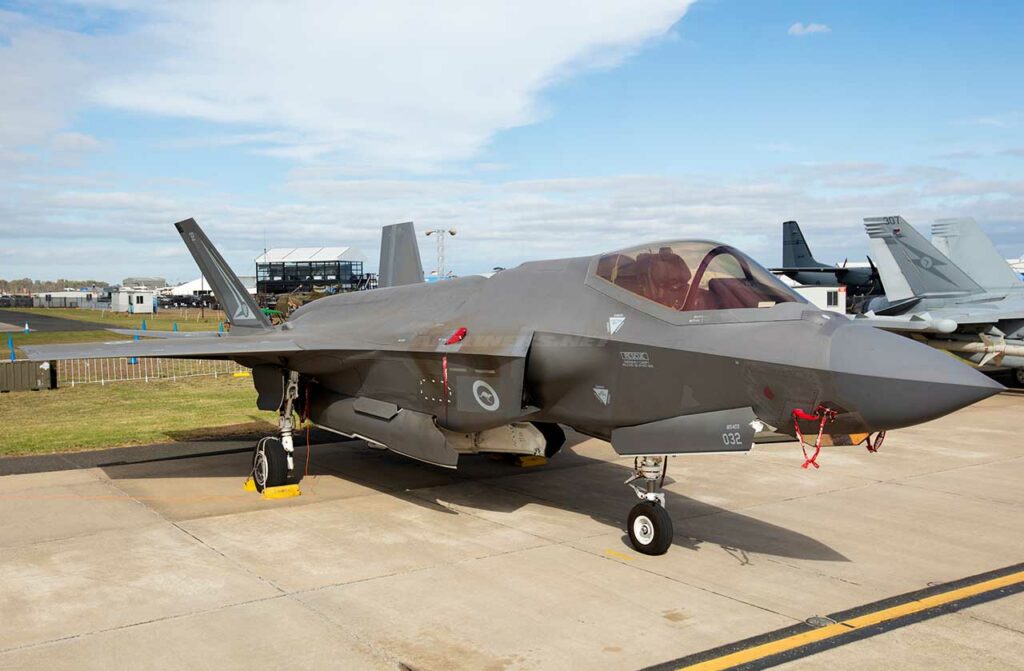
Each F-35 purchased in Europe represents a massive budget transfer to the United States. The average purchase price is around $80 to $90 million, but this figure is misleading.
Over a 40-year life cycle, the total cost per aircraft can exceed $200 to $250 million, including maintenance, spare parts, software updates, and support. Most of these expenses are captured by the US ecosystem.
On a European scale, this represents tens of billions of euros that will not be invested in European programs, whether it be the Rafale, the Eurofighter, or future projects such as the SCAF.
Structural and lasting dependence
Buying the F-35 means accepting long-term dependence. Software updates, which are essential for maintaining operational capabilities, are centralized. Mission data is transmitted via American systems. Heavy maintenance depends on approved hubs.
This dependence raises a strategic question: what happens in the event of a major political disagreement with Washington? Even if only theoretical, this scenario worries some states, which prefer to retain a degree of autonomy.
A fragmented European air force
European countries that have not purchased the F-35 now appear to be exceptions rather than a structured alternative. What they have in common is a more or less assertive desire to preserve strategic or budgetary autonomy.
But this resistance remains in the minority. The dominance of the F-35 is creating a two-speed Europe: on the one hand, air forces that are deeply integrated into the American system; on the other, a few states attempting to maintain independent capabilities.
This divide will have lasting consequences. It will determine Europe’s ability to design its own fighter jets, finance joint programs, and decide independently on the use of its air power.
Sources
- Public data from European defense ministries
- Government Accountability Office reports on the F-35 program
- Industry analyses of the F-35’s life-cycle costs
- Publications specializing in European military aviation
- Think tank studies on European military sovereignty and dependence
War Wings Daily is an independant magazine.