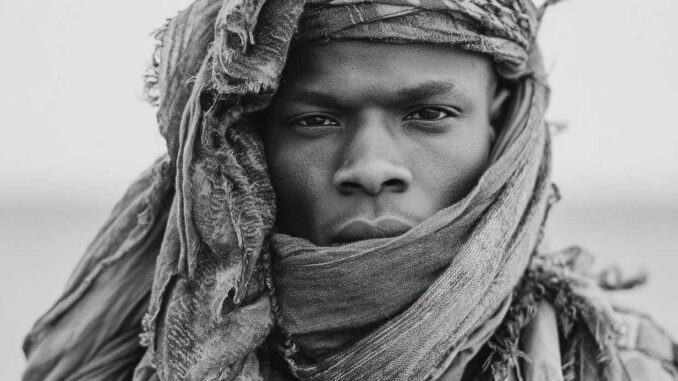
Mali, Burkina Faso, and Niger launch the FU-AES. The goal: to strike faster against JNIM and ISIS in the Sahel. But the real battle will be logistical.
Summary
On December 21, 2025, Mali, Burkina Faso, and Niger officially created the FU-AES, a joint military force announced to have 5,000 troops. The political signal is clear: to pool security efforts within the Alliance of Sahel States and demonstrate autonomy from Western partners. Operationally, the challenge is to concentrate units in the three-border area, where sanctuaries, supply routes, and clandestine economies overlap. The main adversaries are JNIM (affiliated with Al-Qaeda) and Islamic State in the Sahel. The force promises better joint operations, with a joint command post, air coordination, and intelligence efforts. Its effectiveness will depend less on the announcement than on three variables: the quality of the command, the logistics chain, and the protection of civilians, which is now at the heart of the balance of power.
The political decision and what the FU-AES covers
On December 21, the authorities of the three states presented the FU-AES as a now operational structure, with a designated command and a command organization in place. The announcement is in line with the institutional trajectory of the AES, which has become a confederation, and with the stated desire to regain control of a war that has been going on for more than a decade.
Behind the rhetoric lies a simple constraint: each army is already fighting, but separately, with borders that armed groups can cross in a matter of hours. A joint force therefore aims to reduce the time between the detection of a threat and action, and to prevent military pressure in one country from automatically pushing combatants into a neighboring country.
The theater of operations: the three-border area, a tactical trap
The so-called three-border area combines several factors that make the war long-lasting:
- a vast and largely uncontrolled geography, with operational distances measured in hundreds of kilometers;
- informal traffic routes (trails, water points, markets) that are used for both trade and armed networks;
- an intertwining of local communities and militias, where human intelligence is crucial but fragile.
In this space, “control” is not a continuous line. It is a mosaic of held points, more or less secure corridors, and areas where the state is only present during an operation.
Human cost as a strategic indicator
The central Sahel remains the global epicenter of terrorism according to recent international rankings. In 2024, Burkina Faso was reported to be the most affected country, with more than 1,500 deaths attributed to terrorism over the year, according to public reports. Beyond the deaths, the shockwave is social: forced displacement, school closures, and extortion of the local economy.
In October 2025, the UNHCR estimated that there were approximately 4 million displaced persons in Burkina Faso, Mali, Niger, and neighboring countries. This figure gives an idea of the scale of the challenge: a force of 5,000 men cannot “solve” a crisis of this magnitude. At best, it can create windows of security in key areas, if used consistently.
Targeted jihadist groups and their modus operandi
The adversary is not a single bloc. Two poles structure the insurgency.
JNIM, deep roots, and pressure on capitals
JNIM operates as a coalition, capable of combining rural guerrilla warfare, harassment of transport routes, complex attacks on military installations, and local social control. Its effectiveness often stems from its ability to blend into local tensions, levy taxes, arbitrate conflicts, and target symbols of the state.
In 2024-2025, several analyses described an intensification of actions towards southern Mali and increased pressure on regions and economic routes. This strategy is less about classic “military victory” than about suffocation: making travel risky, increasing the cost of transport, isolating garrisons, and then imposing local arrangements.
Islamic State in the Sahel: brutality and competition
Islamic State in the Sahel (often associated with the legacy of EIGS) is distinguished by more frequent mass violence against civilians and a logic of terror designed to break community cohesion and discourage any cooperation with the state. In the tri-border area, it also seeks to capture roads and resources.
The rivalry between these two poles matters. It can lead to clashes between groups, but it can also lead to escalating atrocities or spectacular operations to demonstrate dominance.
The operational promise: command, aviation, intelligence
A joint force is only useful if it corrects structural weaknesses. Three areas are crucial.
Command: decide quickly, decide correctly
The advantage of a joint system is that it synchronizes planning and execution. This requires:
- clear rules of command (who decides, at what level, with what resources);
- the ability to share information without national retention;
- a mechanism for resolving political friction, which is inevitable when an operation goes wrong.
A joint staff can speed up maneuvering, but it cannot replace trust. In the Sahel, mistrust spreads quickly: between armies, between regular units and auxiliaries, and between states and populations.
Air coordination: the advantage of time
In such a vast area, air power is primarily used to save time: to locate, track, deter, and support. In concrete terms, air coordination must cover:
- observation (drones, light aircraft, helicopters if available);
- fire support (depending on national fleets);
- medical evacuation, which is often under-resourced, even though it is crucial to the morale and survival of isolated units.
Air power does not compensate for a lack of ground forces. It compensates for a delay. If there are no units capable of quickly exploiting a sighting, the effect is mainly psychological and temporary.
Intelligence: the most lacking tool
Useful intelligence is that which allows intervention before the attack, not after. This implies:
- protected human intelligence (informants, local leaders, networks);
- rapid exploitation of data (interceptions, images, reports);
- the ability to distinguish an armed group from a community, which is the most difficult boundary to draw.
The FU-AES is expected to deliver on this point. If it becomes a machine for producing “reactionary operations” without prevention, the insurgency will retain the initiative.
The central question: how to fight without creating more enemies
Let’s be frank: in this type of war, an army can lose politically even if it wins tactically. The reason is simple: civilians arbitrate, out of fear or interest, between several powers. If the population considers the state to be more dangerous than the jihadists, the insurgency gains ground without a decisive “battle.”
There are two known risks:
- heavy operations with collateral damage, which destroy human intelligence and fuel enemy recruitment;
- uncontrolled local militarization (militias, auxiliaries), which can increase abuses and reprisals.
The FU-AES will therefore have to impose joint discipline. This is difficult but essential, as jihadist propaganda thrives on blunders, humiliations, and unpunished violence.
Material limitations: logistics determine the outcome
An announced force of 5,000 men may seem significant.
In reality, this figure is quickly “eaten up” by reality:
- unit rotation (you can’t hold the ground 365 days a year with a single contingent);
- protection of bases and convoys;
- vehicle maintenance, fuel, spare parts;
- evacuation of the wounded and medical support.
In a theater where convoys can travel 200 to 600 km to resupply a base, logistics becomes the main target. Armed groups understand this: they attack roads, trucks, markets, and fuel depots. An effective joint force will therefore have to secure less “territory” and more “flows.”
What the FU-AES can achieve, and what it cannot promise
The FU-AES can produce concrete gains if it sets realistic objectives:
- reducing the freedom of movement of armed groups on a few priority corridors;
- protecting population centers and strategic markets;
- regaining the initiative through targeted operations against leaders, IED workshops, and enemy logistics networks;
- improving cross-border cooperation, which is currently too slow.
However, it cannot promise general “pacification” in the short term. The depth of the crisis is as much political and social as it is military. Armed groups thrive on the local failure of services, land conflicts, a predatory economy, and mistrust of the state.
The credibility of the FU-AES will be tested in three ways
The first test will be the ability to conduct a complex joint operation and then hold an area without retreating under pressure.
The second test will be minimal transparency on results. Announcing “neutralizations” without proof, or hiding losses, ultimately destroys internal and external confidence. Opponents, on the other hand, communicate quickly and loudly.
The third test will be managing relations with civilians. If the force does not protect, it will lose. It’s brutal, but that’s the rule in this war.
The FU-AES is therefore less a “new army” than a gamble on a method: better decision-making, better coordination, better support. If this gamble fails, the central Sahel will remain a war of invisible positions, where 5,000 men make no difference. If it succeeds, the force can at least regain the initiative in key areas and offer a political space for something other than a military response alone.
Sources
- Africanews (December 21, 2025) – “Mali: Goïta announces the launch of the AES unified force”
- Medi1News (December 2025) – “The Alliance of Sahel States launches its unified force”
- Africa24 TV (December 21, 2025) – “Africa: launch of the AES Unified Force”
- Le Monde (January 22, 2025) – “Niger, Burkina Faso, and Mali create an army of 5,000 soldiers…”
- UNHCR (October 10, 2025) – “UNHCR calls for urgent international support…”
- Institute for Economics & Peace (March 2025) – Global Terrorism Index 2025 (PDF)
- ACLED (2024-2025) – Analyses of violence in the Sahel and JNIM activity
- Reuters (January 22, 2025, via reprints) – Statements on the 5,000-strong joint force (reprinted by TV5MONDE Info)
War Wings Daily is an independant magazine.