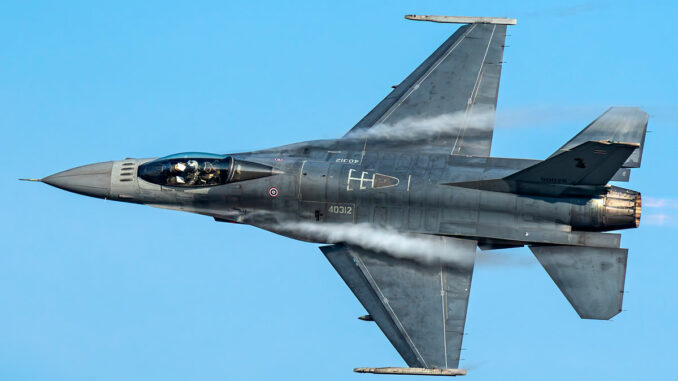
The Royal Thai Air Force’s air strikes against Cambodian targets expose an asymmetrical balance of power and a dangerous crisis for Southeast Asia.
In summary
The Royal Thai Air Force‘s strikes against Cambodian military targets mark a clear escalation in the crisis on the Thai-Cambodian border. For the first time in years, Bangkok is openly using air power against its neighbor, following the death of a Thai soldier and exchanges of artillery fire. This intervention comes amid an already tense situation, with violent fighting in July 2025 that left dozens dead and displaced hundreds of thousands of civilians along an 800-km border. The contrast between Thailand’s military power and Cambodia’s virtually non-existent air force is stark: more than 100 fighter jets on the Thai side, compared to a few armed helicopters on the Phnom Penh side. Beyond the numbers, these air strikes raise a fundamental question: how far can a state exploit its overwhelming air superiority without turning a local crisis into a crisis in Southeast Asia with lasting economic and political effects?
The return of air combat on the Thai-Cambodian border
The Thai-Cambodian border is not a clear line on a map. It remains marked by long-standing disputes, inherited from the colonial period and reignited around sensitive areas such as the Preah Vihear temple sector. Since 2008, there have been regular exchanges of fire, with artillery and ground combat that have already caused dozens of deaths and the displacement of thousands of civilians.
In 2025, the tension reached a new level. In July, the two countries clashed for several days. BM-21 Grad rockets reportedly struck Thai territory, damaging civilian infrastructure, while ground units clashed at several points more than 200 km apart along the line of contact. Estimates indicate at least 48 deaths and approximately 300,000 people displaced on both sides of the border in a matter of days.
The recent strikes in December are a continuation of this crisis. Bangkok accuses Phnom Penh of opening fire again, killing one Thai soldier and wounding several others. In response, Thai authorities have ordered combat missions against Cambodian “military infrastructure”: ammunition depots, command centers, logistics hubs and, according to some sources, a complex used as a drone control center. Phnom Penh maintains that its forces did not seek escalation, but the facts are clear: bombs fell on its territory, with civilian casualties reported.
On the diplomatic front, this resumption of hostilities comes despite a truce negotiated a few months earlier. This ceasefire, presented as a regional success, was nevertheless based on fragile foundations: unresolved territorial disputes, nationalism fueled by governments, and an arms race in Southeast Asia. The resumption of fighting shows that the political framework alone is incapable of containing a crisis in which military leaders see air power as a quick solution to “correct” the balance of power on the ground.
The superiority of the Royal Thai Air Force over a Cambodian army without an air force
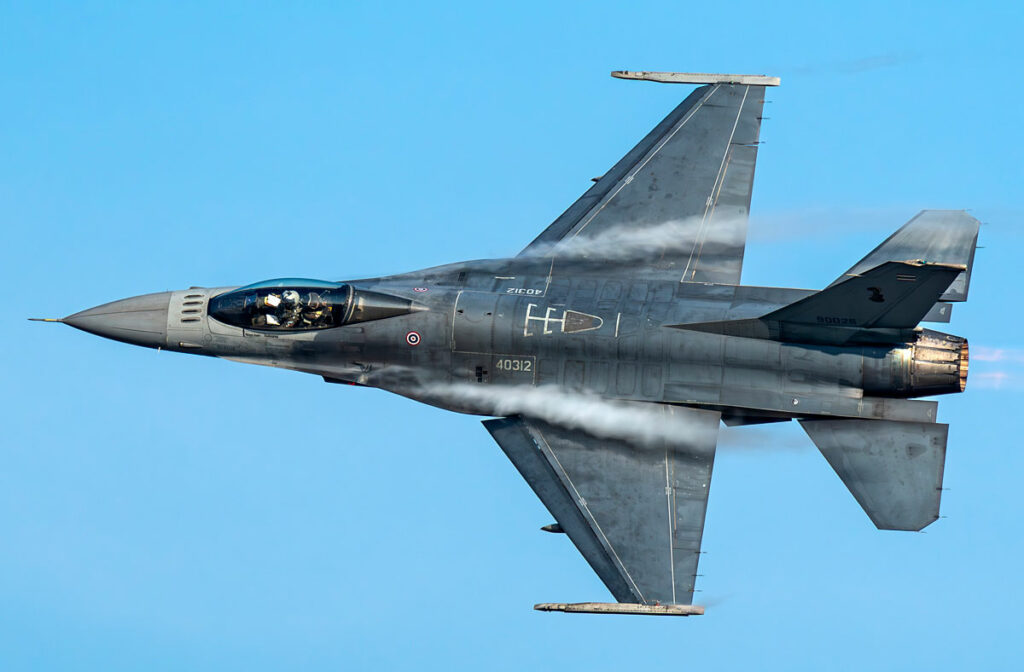
Militarily, the contrast is stark. The Royal Thai Air Force has approximately 109 fixed-wing combat aircraft and armed training derivatives. The fleet includes nearly 47 F-16A/Bs, approximately 33 modernized Northrop F-5Es, 11 Saab Gripen C/Ds, and about 20 Alpha Jets for support and advanced training. In addition, there are AT-6 Wolverine light attack aircraft and PC-6s used for close support and surveillance. This array of aircraft gives Bangkok options ranging from show of force to precision strikes.
In contrast, the Cambodian Air Force has virtually no fighter aircraft. Its inventory is limited to a few Chinese-made Harbin Z-9 helicopters with light attack capabilities. These aircraft can carry a dozen soldiers or limited payloads, but they cannot compete with F-16s or Gripens in terms of speed, range, or survivability in a contested environment. In other words, Phnom Penh has no credible means of challenging Bangkok’s air superiority.
This imbalance translates into almost total freedom of action for Thai F-16s and, if necessary, for Gripens. A flight of six F-16s can be deployed to the border in a matter of minutes, with guided munitions capable of striking specific targets several dozen kilometers inside enemy territory. At these altitudes, Cambodian ground-to-air defenses are limited to a few portable systems or anti-aircraft artillery, which are mainly effective against helicopters or low-flying aircraft.
This technical reality has a direct political consequence: as soon as the crisis goes beyond infantry firefights, Bangkok is strongly tempted to use its fighter jets to “correct” the balance of power. This is especially true given that Thailand is already investing in the next generation of Gripen E/F aircraft to replace its oldest F-16s, confirming a long-term strategy aimed at remaining a major air power in Southeast Asia. Conversely, Cambodia, whose GDP per capita remains below €2,000, has neither the budgetary resources nor the infrastructure to support a modern combat air force.
Thai air strikes: military logic and operational limitations
The Thai authorities insist on the “targeted” and “legal” nature of their air strikes. Official statements refer to compliance with international law and the desire to minimize civilian casualties. On paper, this approach is based on three pillars: selection of identified military targets (depots, command centers, logistics routes), use of guided weapons to reduce collateral damage, and mission planning according to strict security protocols.
In practice, an F-16 or Gripen raid relies on a complete chain of intelligence, identification, and validation. Airborne, ground-based, and satellite sensors collect data on troop and equipment movements. Once the target is confirmed, the air force plans the attack based on weather conditions, enemy defenses, and proximity to populated areas. GPS- or laser-guided munitions theoretically make it possible to strike a building or facility with a dispersion of a few meters.
But war does not follow a technical specification. In a densely populated border area, where villages, civilian warehouses, and military infrastructure are located side by side, the slightest identification error results in civilian deaths. Reports from the areas hit speak of destroyed homes and non-combatant casualties. Even in the absence of confirmed figures, the probability of significant civilian damage is high when targets near populated areas are struck.
It should also be remembered that each hour of flight time for an F-16, including ammunition and support, costs tens of thousands of euros. These operations consume a significant portion of the budget of the Thai army, which is already engaged in a costly modernization program. From a strictly military point of view, the strikes reduce ammunition stocks, destroy depots, and disrupt communications. But they do not “solve” the central issue: a poorly defined border, exploited by political elites, and a neighbor that is not going to disappear.
Finally, these strikes expose the aircraft to real risks. Even though Cambodia does not have fighter jets, it can take advantage of more modern surface-to-air weapons supplied by third-party partners. Rumors of shots fired at a Thai F-16 have already circulated, denied by Bangkok, but revealing a key point: as soon as an aircraft is hit or shot down, the perception of the conflict changes, both inside and outside the country.
Regional consequences for security in Southeast Asia
These battles are not confined to an isolated valley. They are fueling a crisis in Southeast Asia already fragmented by maritime rivalries in the South China Sea, internal tensions within ASEAN, and questions about the role of the major powers.
The repeated activation of the Thai military air force against a weaker neighbor sends a signal to the region: land disputes can once again escalate into open conflict, with the involvement of combat aircraft. For countries such as Vietnam, the Philippines, and Malaysia, which are already monitoring Chinese movements at sea, this land drift is a reminder that they can be affected on several fronts.
The economic consequences are immediate. Hundreds of thousands of civilians have already been displaced, roads closed, and border areas evacuated. Cross-border trade, based on road transport and small-scale daily commerce, has been disrupted. For economies where a significant portion of the population still lives off agriculture and informal trade, a few weeks of closure can represent very heavy losses, with no compensation mechanism.
On the diplomatic front, ASEAN once again finds itself in difficulty. The organization claims to be a regional forum for security, but it has few coercive means at its disposal. Mediation is possible, as are statements of appeasement, but there is nothing to really compel the parties to cease fire. The major powers exploit this space: China provides economic support to Cambodia, while the United States remains a key military partner of Thailand. Each keeps an eye on the other, while avoiding direct engagement.
To be clear, Thailand’s military power does not resolve this dilemma. It strengthens Bangkok’s ability to strike quickly and hard, but it also increases the risk of miscalculation. A misinterpreted raid, a strike that is too deadly, and a limited conflict can escalate into a wider confrontation, with increased pressure from public opinion and nationalist rhetoric.
The limits of air superiority in a border crisis
At first glance, the situation seems simple: a country with a modern air force imposes its will on a neighbor lacking similar capabilities. In reality, air superiority is a tactical tool, not a political solution.
Thailand can continue to strike Cambodian positions, destroy depots, and target infrastructure. But it cannot, through bombing alone, permanently redraw the Thai-Cambodian border or guarantee that Phnom Penh will accept a status quo that it perceives as humiliating. Regional history is full of examples where military victory has led only to a fragile truce.
For Cambodia, the absence of an air force does not prevent it from having means of causing harm. Ground forces can use artillery, rockets, and even mines along busy routes. These weapons are cheap, difficult to neutralize completely, and often affect civilians. In the medium term, there is a risk that the war of position along the border will turn into a low-intensity conflict, with regular skirmishes, a few rockets fired at night, and the local population held hostage for the long term.
Finally, we must be clear-headed: while Thailand has a significant military advantage, it is gambling with its political credibility. A series of air strikes perceived as disproportionate could tarnish its image in the region and beyond, give ammunition to its opponents, and fuel claims that it is taking advantage of a weak neighbor to resolve by force what diplomacy has failed to manage.
The central question therefore remains open: does Bangkok want to use its superiority to obtain a more favorable negotiating position, or to impose a solution through military pressure? Until this line is clarified, the border will remain a point of tension, and each strike a risky gamble on the ability of the two capitals to stop before the point of no return.
Sources
– Analysis of the order of battle of the Royal Thai Air Force and the Royal Cambodian Air Force (public air inventory data and figures for 2024-2025).
– International press articles on the Thai-Cambodian border crisis in 2025 (air strikes in July and December, human toll and population displacement).
– Academic studies and research center reports on the territorial dispute over Preah Vihear and the history of clashes since 2008.
– Specialized analyses on the use of F-16s and Gripens in Southeast Asia (hourly cost, air-to-ground capabilities, doctrines of use).
– Comparative economic data for Thailand and Cambodia (GDP, defense spending, standard of living) from international statistical databases.
War Wings Daily is an independant magazine.