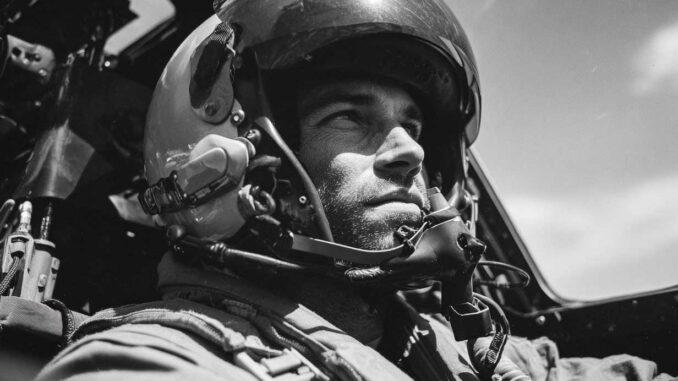
A deep dive into the daily lives of Rafale and F-35 pilots, far from the glamour of Hollywood and cinematic clichés.
In summary
The image of the fighter pilot, largely shaped by the Top Gun franchise, oscillates between solitary heroism and constant adrenaline. The operational reality in the French Air and Space Force or the US Air Force is radically different. The job is defined by extreme intellectual demands, where the management of complex weapons systems takes precedence over instinctive dogfighting. Pilots spend around 80% of their time on the ground, dedicated to meticulous mission preparation and rigorous debriefings. Between the physiological constraints of load factors and a dense administrative routine, daily life is a struggle against cognitive attrition. This article deconstructs the myth to reveal a high-precision profession, where fifth-generation technology transforms the warrior of the skies into a data manager under high pressure, far from the romanticism of Californian sunsets.
The end of romantic dogfighting and the advent of network-centric warfare
Movies love to film swirling battles where the pilot’s skill makes the difference in a gunfight. In reality, modern air combat, or Beyond Visual Range (BVR), takes place at distances exceeding 37 kilometers (20 nautical miles). The pilot of a Rafale or F-22 Raptor does not wait to see the enemy aircraft before engaging. He manages information flows from active electronically scanned array (AESA) radars, tactical data links such as Link 16, and optronic sensors.
Technology has shifted the focus from physical skill to mental agility. Pilots no longer “fly” their aircraft in the traditional sense; they supervise a weapons system. The complexity lies in data fusion. The cockpit becomes a crisis management center where every second of latency in decision-making can be fatal. Unlike Maverick, who breaks the rules, real pilots follow extremely strict rules of engagement (ROE) dictated by international law and centralized command.
The daily administrative and technical routine in a squadron
The life of a fighter pilot does not begin on the tarmac, but in a meeting room. A typical day in a squadron often begins at 7:30 a.m. with a general weather briefing and an update on the status of the fleet. Preparing for a standard 1.5-hour training mission requires between three and four hours of preparatory work. Pilots study ground-to-air threats, radio frequencies, and flight plans with surgical precision.
Much of the week is devoted to “ancillary” tasks. In France, as in the United States, a pilot is also an officer. They manage flight safety, exercise planning, and human resources files. The ratio of flight time to ground time is often frustrating for young recruits. A front-line pilot flies an average of 160 to 200 hours per year to maintain their operational qualification, which is barely four hours per week.
Physiological constraints and high-level athletic training
The human body is not designed to function at 9 G (nine times Earth’s gravity). At this level of pressure, blood is drained to the lower limbs, risking G-LOC (G-induced Loss of Consciousness), a fatal loss of consciousness. To counter this, pilots use the anti-G maneuver (AGSM), a technique involving forced breathing and intense muscle contraction.
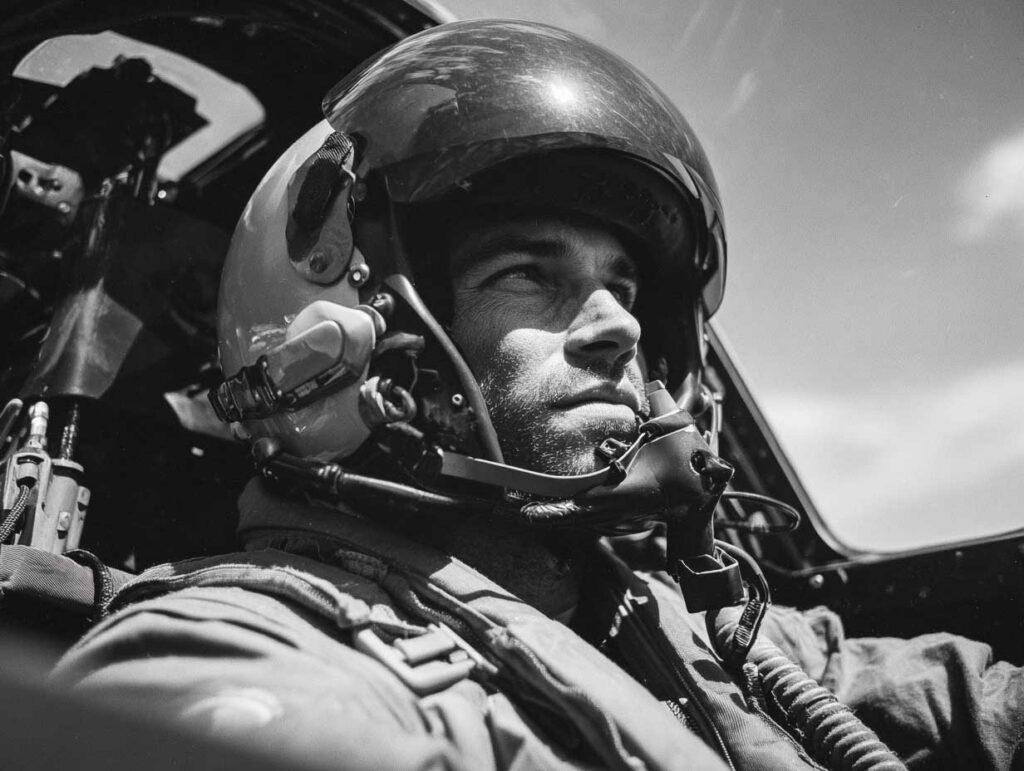
Physical training is therefore a professional requirement, not a leisure activity. A fighter pilot is a high-level athlete specializing in cardiovascular endurance and strengthening the neck and back muscles. The helmet, weighed down by night vision goggles or a helmet-mounted display (HMD), can weigh up to 15 kilograms (33 pounds) during a tight maneuver. Chronic neck pain is common in the profession, a far cry from the image of the relaxed pilot in a leather jacket.
The reality of permanent air safety posture
In France, the “Police du Ciel” (Sky Police) is invisible to the general public. Pilots are on alert 24 hours a day as part of the Permanent Security Posture (PPS). When a threat is detected or a civilian aircraft loses radio contact, a “scramble” (emergency takeoff) is ordered. Pilots must be in the air in less than 7 minutes.
Waiting in the alert rooms is the antithesis of glamour. It is a life of vigilance, spent in flight suits, ready to spring into action, but often ending with a return to calm without takeoff. In the United States, NORAD alerts follow a similar pattern. This psychological tension, that of prolonged waiting followed by an adrenaline rush, requires a mental balance that cinema struggles to convey. It is not a matter of impulsive bravery, but of cold, procedural responsiveness.
Initial training and the ruthless selection process
Becoming a fighter pilot is a journey of more than five years, marked by a failure rate of up to 80% during the selection phases. In France, the course takes place in Salon-de-Provence before moving on to Cognac for basic training, then Cazaux for weapons specialization. Every flight is an exam. The debriefing is the most dreaded stage: every mistake, no matter how small, is analyzed publicly for hours.
This culture of excellence leaves no room for “free spirits.” Paradoxically, humility is the most sought-after quality. A pilot who overestimates his abilities is a danger to himself and his patrol. Teamwork, or “Crew Resource Management,” is the cornerstone of success. In a single-seat cockpit, the pilot is physically alone, but he is part of an overall system that includes AWACS, refueling aircraft, and ground troops.
The cost of excellence and fleet attrition
An aircraft such as the Lockheed Martin F-35 Lightning II costs around $80 million to purchase, but its cost per flight hour exceeds $35,000. This economic reality dictates training. High-fidelity flight simulators now replace some of the actual flight hours. They can simulate complex failures and saturated threat environments that would be impossible or too costly to reproduce in the sky.
Training is not limited to flying. A pilot must master thousands of pages of technical manuals. The transition to fifth-generation aircraft has increased the cognitive load. Pilots are no longer required to be the best shots, but to be the best data analysts. In China, the Chengdu J-20 pilot training program follows a similar learning curve, emphasizing the integration of information systems and electronic warfare.
The social consequences and the burden of operational commitment
The image of the bachelor pilot and party animal is a relic of the 1950s. Today, most pilots are fathers or mothers facing prolonged absences. Overseas operations (OPEX) often last several months, during which the pace is grueling: night flights, oppressive heat, and the stress of actual combat.
The transition from training to combat missions is a shock that Top Gun obscures. Dropping a real bomb, such as a 250-kilogram AASM (Air-to-Surface Modular Weapon), is anything but virtual. The moral and legal responsibility weighs heavily on the shoulders of young officers in their thirties.
Post-traumatic stress disorder (PTSD) also exists among pilots, although it has long been taboo in this highly competitive environment.
Fatigue management and long-duration missions
Bombing or protection missions can last more than 8 hours, requiring several in-flight refuelings. Maintaining optimal concentration for such a long period of time, confined to a cramped cockpit where you cannot stand up, is a test of endurance. Managing natural needs and food intake is a logistical challenge in itself.
In-flight refueling, often described as a formality in movies, is one of the most delicate maneuvers, especially at night or in bad weather. You have to approach a tanker such as an Airbus A330 MRTT at speeds of 500 km/h (approximately 270 knots) and maintain a stable position just a few meters away. The slightest error can lead to a catastrophic collision.
The gap between the silver screen and the cockpit has never been wider. Where cinema celebrates instinct and rebellion, the military demands rigor and perfect integration into an overall system. The modern fighter pilot is less a knight of the skies than a combat engineer, capable of withstanding extreme physical stress while solving tactical equations in real time. This reality, although less romantic, reflects a level of demand far greater than that of any Hollywood scenario. The fascination with this profession perhaps lies precisely in this ability to remain completely cold-blooded in situations where adrenaline should overwhelm everything else. The future of the profession is now taking shape alongside drones and artificial intelligence, raising a new question: what place will remain for humans in a war where machines calculate faster than even the most trained brain?
Sources
- Ministry of the Armed Forces – Air and Space Force: Activity reports and training courses.
- US Air Force: F-35A Lightning II Fact Sheet and operational cost statistics.
- Jane’s Defense Weekly: Analysis of AESA radar and BVR combat capabilities.
- Study by the Directorate General of Armament (DGA) on human factors and G-LOC.
- Report by the Court of Auditors on the maintenance of military aircraft in operational condition (MOC).
- NATO Standardization Office: Communication and Liaison Procedures 16.
War Wings Daily is an independant magazine.