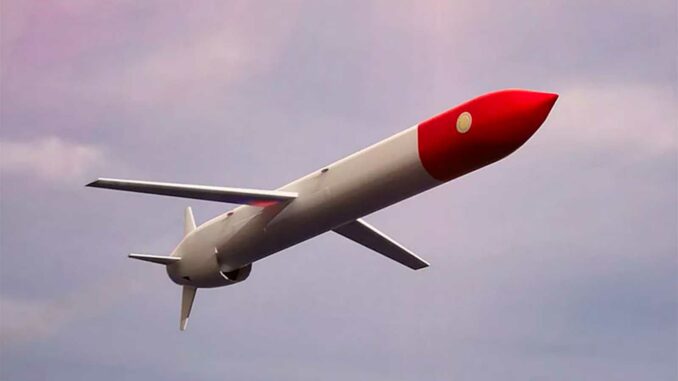
Burevestnik, “Skyfall” nuclear missile, atomic propulsion: what is the promise of unlimited range worth, and why is this project reviving global nuclear security?
Summary
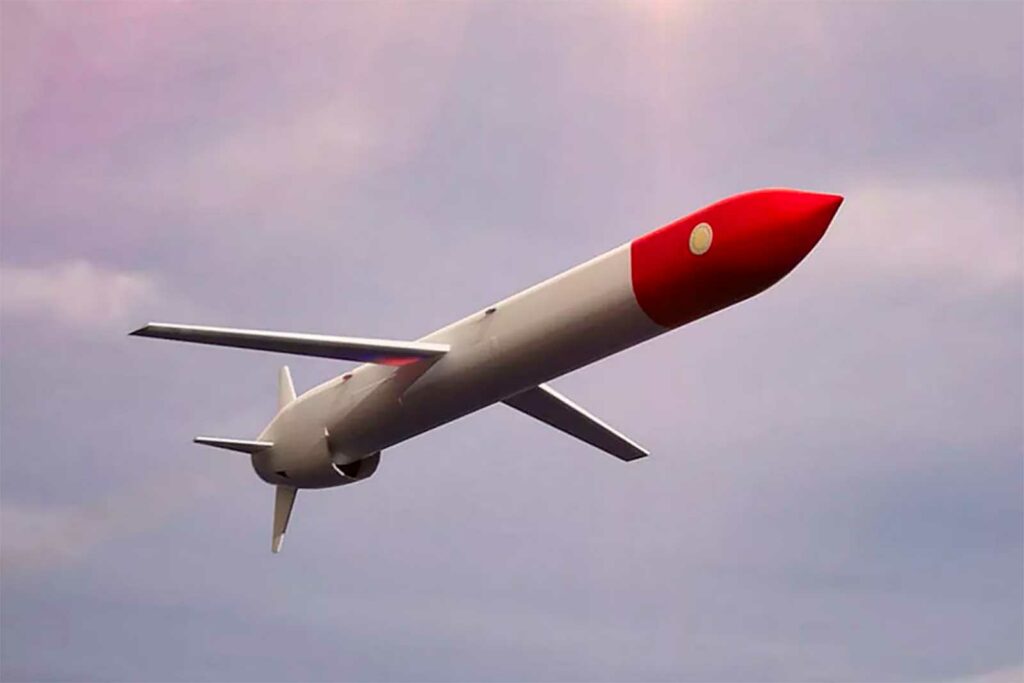
The Burevestnik, nicknamed “Skyfall” by NATO, is back in the news after Russian statements reporting a “successful” test launch in the fall of 2025. The idea is radical: replace the conventional fuel of a cruise missile with a small reactor to achieve very long endurance and unpredictable trajectories. Russian authorities are talking about a flight of around 15 hours and 14,000 km, which would bring the weapon closer to military use. But the technical reality remains unclear, and the program’s history includes alleged failures and a serious incident in 2019 near Nyonoksa, associated with a radiological accident. The strategic advantage would be to bypass defenses by choosing atypical approach routes, at the cost of major environmental and political risks. The United States already explored a similar concept during the Cold War (Project Pluto), but then abandoned it. For China, there is currently no solid evidence of an openly identified equivalent program.
The return of an idea abandoned during the Cold War
The term “nuclear-powered missile” is not new. In the 1950s and 1960s, Washington and Moscow imagined devices capable of traveling intercontinental distances without relying on limited liquid or solid fuel. The goal was simple: to guarantee strike capability even as defenses advanced.
The idea was shelved, not for lack of imagination. It was because it presented a number of difficulties that technology cannot easily overcome: miniaturizing a reactor, managing extreme temperatures, ensuring safety, and controlling contamination. The return of the subject in 2025 is therefore no technical coincidence. It is a strategic signal, sent in a context where Russian nuclear rhetoric has once again become a tool of pressure.
The promise of the Burevestnik, between range and unpredictability
Russia presents the Burevestnik missile as a response to anti-missile systems. The core of the message is freedom of trajectory. A ballistic missile follows a constrained, fast, and highly monitored trajectory. A cruise missile, on the other hand, can fly lower, change course, and exploit gaps in radar coverage.
What Moscow adds here is duration. The theoretically unlimited range of the Burevestnik means that the missile would no longer be limited by tons of kerosene. It could take very roundabout routes, pass through areas with little coverage, and arrive from an unexpected azimuth. This is precisely what circumvention strategies seek to achieve: complicating defense planning, saturating attention, and multiplying uncertainties.
However, we must be frank. An announced “unlimited” range does not mean “invulnerable.” Above all, it means that fuel is no longer the limiting factor. The real limits become mechanical and electronic: material lifespan, guidance reliability, vibration resistance, sensor performance, and navigation robustness.
Nuclear propulsion, an engine that changes the logic of flight
The principle of a reactor that replaces the combustion chamber
In a conventional cruise missile, a turbojet engine burns fuel and heats a stream of air to produce thrust. In a nuclear concept, the idea is to keep the same general design, but replace combustion with a heat source derived from fission.
The scenario often mentioned is that of an engine in which air is compressed, heated by a nuclear core, and then accelerated upon ejection. Technically, this could be a cycle similar to a turbojet “heated” by a reactor, or a nuclear ramjet concept, depending on the assumptions. The details of the Burevestnik remain classified, but the challenge is well known: to operate a small reactor with very high specific power in a small volume and in an environment of acceleration and severe thermal stresses.
The physical constraints that make the weapon so difficult
The first problem is protection. A reactor produces neutrons and gamma radiation. In a manned aircraft, shielding is added, which is heavy. In a missile, the shielding can be reduced because there is no crew. But it cannot be eliminated entirely, because the electronics must be protected, rapid degradation must be prevented, and handling and maintenance must be possible.
The second problem is heat. The materials in the core and surrounding structures are under constant stress. Endurance of several hours is already a challenge. Days or weeks would require highly advanced industrial expertise, particularly in alloys and coatings. This is one of the reasons why promises of “flight for months” should be read as a theoretical hypothesis, not as a routinely demonstrated capability.
The 2025 tests: what we know and what we don’t know
The Russian speech at the end of October 2025 marked a turning point in the media. The authorities claim that a launch traveled approximately 14,000 km (8,700 miles) in nearly 15 hours. This gives an average speed of about 930 km/h, consistent with a subsonic craft. In other words, the sequence described resembles a long, stable flight rather than a simple “ignition” lasting a few minutes.
In this narrative, the Burevestnik missile tests in late 2025 serve a dual purpose. First, to show that the concept is alive and well despite doubts. Second, to suggest that it is close to deployment maturity. It is also a way to reignite the debate on thresholds, threat perception, and nuclear communication.
But we must remain precise. The outside world does not have access to complete telemetry or the exact flight profile parameters. For example, we do not know how much of the flight would actually be powered by the jet engine, nor how the missile would have handled the critical phases (start-up, transition, power maintenance). The gap between a political statement and a sustainable military capability can be significant.
The Nyonoksa accident, a stark reminder of the radiological risk
One of the most serious incidents in the history of the vehicle was the accident in August 2019 near Nyonoksa, in the Arkhangelsk Oblast. Russian specialists died, and a temporary increase in radioactivity was measured in the area, with levels reported to be several times higher than background levels.
Although Moscow gave cautious explanations, many observers linked the event to a propulsion system involving an isotopic source or a nuclear component related to the development of the Burevestnik. This is precisely the structural risk of such a weapon: in the event of launch failure, crash, or recovery at sea, the issue is no longer just military. It becomes health, environmental, and diplomatic.
This is where we understand why the environmental risks of a nuclear-powered missile are not a secondary argument. They may be part of the “strategic cost” of the program, including for Russia: restricted test areas, waste management, increased secrecy, and exposure to international criticism.
The reality of the project, between operational weapon and signaling tool
There are two possible interpretations, and they are not mutually exclusive.
The first is industrial: Russia is genuinely seeking to deploy a missile capable of atypical approaches to complicate US and allied defenses. In this logic, the new-generation Russian nuclear missile would be a “supplementary” piece of a modernized arsenal, useful in particular in scenarios where Russia would want to guarantee a residual strike capability after an initial salvo.
The second is psychological and political: Burevestnik is a strategic narrative weapon. It maintains the image of a Russia capable of circumventing any defense, and it fuels the perception of a lasting balance of power. In this interpretation, even a partial capability is enough to produce an effect. An imperfect program can still serve as leverage, especially if adversaries have to prepare for the worst.
In both cases, we must avoid the classic mistake of imagining that a weapon must be perfect in order to be threatening. A technically limited weapon can still be disruptive if it forces defensive investments, internal debates, and doctrinal adjustments.
Strategic implications beyond the slogan “unlimited range”
Bypassing defenses and putting pressure on alert
With the Russian Skyfall missile, the challenge is not just to “get past” a shield. It is to dilute the very notion of a likely direction of attack. A defense is built on assumptions: axes, windows, flight times, priorities. A long-endurance cruise missile can theoretically play on all these parameters.
This can lead to increased continuous surveillance, including in areas previously considered secondary. It can also increase the cognitive load on warning systems, with a risk of false alarms, over-interpretation, and decisions made under stress.
Blurring the lines between conventional and nuclear
The Burevestnik is presented as nuclear. But the central issue is perception. A low-flying cruise missile may be detected late. If its payload is nuclear, the pressure on the decision-maker increases: should the alert be treated as a strategic attack upon detection, or should confirmation be awaited? This is a problem of stability, not just technology.
This is where the international debate on autonomous nuclear weapons finds concrete ground. Even if the weapon does not change the balance in terms of the number of warheads, it can complicate crisis management.
Countermeasures: sensors, interceptors, and resilience
Countermeasures do exist. They are not “magical,” but they are real.
First, a subsonic cruise missile can still be intercepted. It can be tracked by ground-based radars, airborne surveillance aircraft, fighter patrols, and space-based sensors, depending on its profile. The difficulty comes from their diverted trajectories and low flight, not from total invisibility.
Then there is the question of reaction times. Paradoxically, a craft that flies for hours is exposed to detection for longer. It does not have the speed of a ballistic missile. If it is spotted early, it offers opportunities for engagement.
Finally, there is resilience: multiplying layers of defense, strengthening command continuity, and limiting the vulnerability of critical infrastructure. Faced with a weapon designed to exploit weaknesses, the rational response is to reduce blind spots, not to wait for a “perfect shield.”
Do the United States and China have similar weapons?
A distinction must be made between “nuclear” and “nuclear-powered.” The United States has and is modernizing nuclear-tipped cruise missiles, but that does not mean it uses a reactor as an engine.
Washington has historically explored the conceptual equivalent with Project Pluto, intended for a nuclear-powered cruise missile. Ground tests demonstrated the feasibility of a nuclear ramjet reactor with a power output of several hundred megawatts before the program was shut down in 1964. The reasons were both strategic and political: the rise of ICBMs, the difficulty of flight testing, and the environmental cost, which was deemed unacceptable. Today, American modernization is focusing more on stealthy, conventional cruise missiles, such as the AGM-181 LRSO, which is not known to be nuclear-powered.
For China, open sources describe a rapid rise in cruise missiles and strategic delivery systems, but they do not provide any evidence of a program comparable to the nuclear-powered Burevestnik. Chinese work exists on advanced engines (including ramjet-type technologies in other categories), but to date, there is no evidence of an officially identifiable “Chinese Skyfall.” In short, China is making rapid progress on the delivery vehicle, but the leap to an onboard missile reactor is not publicly documented as a priority.
The political significance of the Burevestnik in Russia’s 2025 arsenal
The Burevestnik must be viewed in a broader context: the modernization of Russia’s nuclear arsenal and strategic communication that emphasizes “non-standard” systems. In this landscape, Russia’s new-generation nuclear deterrent seeks to show that it can thwart adversaries’ plans, particularly in response to debates on missile defenses and the expansion of detection architectures.
Vladimir Putin’s announcements about the Burevestnik missile are therefore not just a technical statement. They are part of a political sequence, where the innovation on display serves to remind the West of Russia’s capacity for harm and to influence Western calculations.
It is also a resumption of Russian nuclear testing in the political sense of the term: it puts nuclear power back at the center of strategic discourse, even if the event is not an atmospheric nuclear test. The message is clear: Russia wants to be seen as capable of opening up avenues that others have abandoned for reasons of risk.
The major sticking point for global security
With the nuclear-powered cruise missile, the deepest concern is not just its range. It is the implicit acceptance of a radiological risk in peacetime for a debatable military gain. A ballistic missile or a conventional cruise missile does not “contaminate” a trajectory in the event of failure. A reactor-powered system, on the other hand, creates a potential externality: crash, loss at sea, debris, recovery.
This is where the phrase global nuclear security in the face of Burevestnik takes on its full meaning. The issue goes beyond the Moscow-Washington duel. It affects the sea, the Arctic, air routes, and international accident management.
The paradox is striking: to demonstrate a supposedly “invincible” weapon, it must be tested. And the more it is tested, the more the world is exposed to an atypical risk that is difficult to justify politically outside of a logic of extreme confrontation.
The final question that Burevestnik poses to the nuclear powers
The Burevestnik strategic weapon is not just about performance. It raises a question of doctrine: how far is a power willing to go, including taking environmental risks, to create uncertainty for its adversary?
If the promise of unlimited range is confirmed, it will require adjustments: more persistent surveillance, greater coordination between allies, and a constant effort on “low-altitude” air and missile defense. If only half of this is confirmed, the weapon can still have a political effect, fueling the feeling of a confrontation without safeguards.
Ultimately, the global strategic stability challenged by the Burevestnik depends less on a distance record than on a collective choice: to accept that flying reactors will become a normal variable in the balance of power, or to reimpose limits before the next accident makes headlines.
Sources
Reuters (Oct. 26, 2025) – Russia tested new nuclear-powered Burevestnik cruise missile, top general says
Reuters (Oct. 26, 2025) – What is Russia’s Burevestnik missile?
Arms Control Association (Nov. 1, 2025) – Russia Tests Nuclear-Powered Cruise Missile, Torpedo
IISS (Nov. 20, 2025) – Russia’s Burevestnik and Poseidon tests
CSIS (Nov. 4, 2025) – Russia’s Nuclear-Powered Burevestnik Missile: Implications for Missile Defense
AP News (Oct. 2025) – Russia has tested a new nuclear-capable missile, Putin and top general say
Scientific American (Oct. 29, 2025) – Russia’s Burevestnik nuclear-powered missile is a very bad idea
BASIC (Oct. 11, 2023) – Brief: Burevestnik
Bulletin of the Atomic Scientists (Aug. 20, 2019) – Project Pluto and the trouble with Russia’s nuclear-powered cruise missile
Wikipedia – Project Pluto (factual data on dates and ground tests)
Wikipedia – Nyonoksa radiation accident (factual elements and chronology)
NDU Press (2014) – A Potent Vector: Assessing Chinese Cruise Missile Developments
War Wings Daily is an independant magazine.