The United States has authorized a $3.7 billion arms sale to Denmark. Why was this decision made, what equipment is included, and who will finance the operation?
Summary
Washington has just approved a major arms sale to Denmark: 200 AIM-120C-8 AMRAAM air-to-air missiles for $730 million and a vast ground-to-air defense and command package—Integrated Battle Command System (IBCS), radars, launchers, communications—valued at $3 billion. This package aims to strengthen the Nordic country’s air and missile defense capabilities, improve interoperability with allied forces, and respond to changes in the security environment in Europe. This transaction is based on Danish financing, but is legally supported by the U.S. government’s Foreign Military Sale procedure. By agreeing to this sale, the United States intends both to support a NATO ally and to ensure the continuity of its military industry. But this decision raises questions about the arms race in Europe, regional strategic balances, and the evolution of small states’ defense capabilities in the face of modern air threats.
The context of the sale
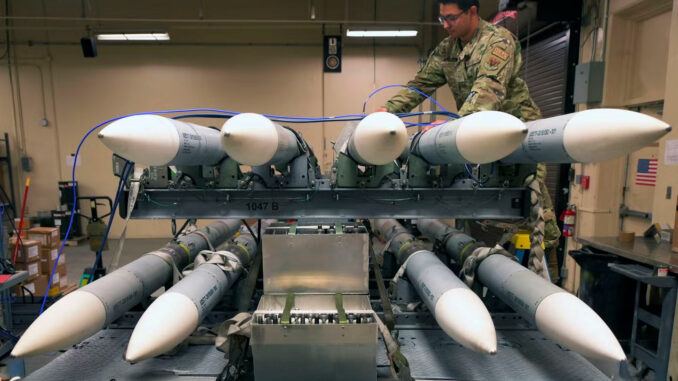
The sale of $3.7 billion worth of weapons from the United States to Denmark has been officially approved by the US government. This plan has two distinct components. The first involves 200 AIM-120C-8 AMRAAM missiles and associated support, for an estimated amount of $730 million. The second consists of a complete package of ground-to-air defense and command elements: the Integrated Battle Command System, radars, launchers, communication systems, support vehicles, and technical maintenance, for an estimated $3 billion.
The argument put forward by the US Department of Defense was that this sale serves US foreign policy and national security objectives by strengthening the defense of a NATO ally, contributing to political and economic stability in Europe.
The equipment sold and its technical implications
AIM-120C-8 AMRAAM missiles
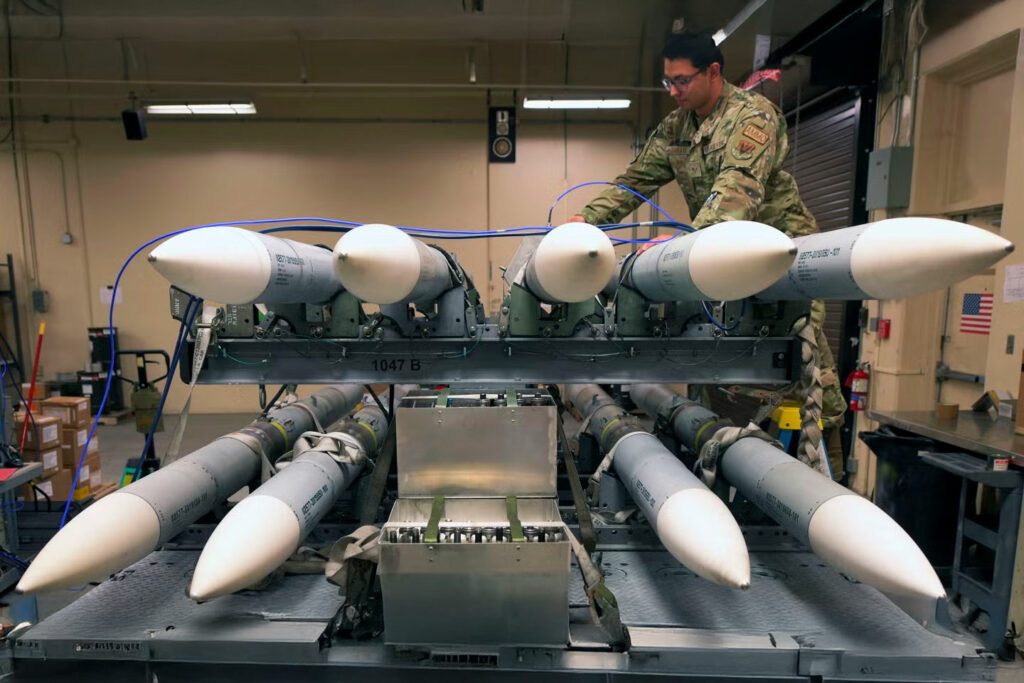
The AIM-120 AMRAAM missile is an active radar-guided air-to-air missile used in particular by fighter-interceptors. The C-8 version is a modernized variant, now widely used in foreign arms sales. With 200 units, Denmark is significantly strengthening its air superiority capabilities and its defense against airborne threats such as missiles, aircraft, and drones.
This type of missile increases the country’s air deterrence capability, but also ensures interoperability with aircraft and allies using the same ammunition. This improves the consistency of defense systems within NATO.
The IBCS system and ground-to-air defenses
The IBCS package includes Sentinel A4 radars, launchers, operations centers, fire control networks, cryptographic systems, support vehicles, and all the necessary long-term logistical equipment.
The system is designed to provide ground-based air and missile defense capable of intercepting multiple targets—aircraft, missiles, drones—at various distances and altitudes by coordinating radars, launchers, and the command network. It also improves resilience against saturation threats and provides strategic coverage of the national territory.
The missile + IBCS combo gives Denmark comprehensive air and ground protection, tailored to contemporary security challenges in Europe, particularly in a context marked by increased geopolitical tensions and hybrid threats (drones, cruise missiles, air attacks).
Why is Denmark investing?
There are several reasons for this choice.
Firstly, the changing security landscape in Europe, with a return to confrontation and the questioning of the certainty of lasting peace. For a country like Denmark, located close to strategic areas, strengthening its defense is becoming a priority.
Secondly, the desire to ensure full interoperability with NATO and US forces. By adopting standard systems, Denmark ensures that it will be able to operate consistently with its allies in the event of a crisis.
Furthermore, this type of purchase reflects a modernization of military capabilities to anticipate modern air threats (missiles, drones, stealth threats) and equip itself against potential adversaries. The IBCS package, in particular, offers an integrated defense architecture that is better suited to current challenges than disparate systems.
Finally, the decision is also political: it marks Denmark’s commitment to collective defense, strengthens its ties with the United States, and affirms its determination to maintain a credible force in a context of renewed international tensions.
Who is financing the deal and how is the financing organized?
The sale is formalized through the US Foreign Military Sale (FMS) procedure. This means that Denmark itself will finance the purchase, in dollars, from the United States. The role of the United States is to provide equipment, support services, training, and technical assistance. Thus, the agreement does not require the deployment of permanent US personnel.
The financing comes from the Danish defense budget, which is voted on by the country’s parliament. The total cost—$3.7 billion—represents a substantial effort, but corresponds to a significant upgrade in military capabilities, justified by the rise in threats.
The US companies involved in the supply include RTX Corporation (for missiles), as well as Lockheed Martin, Northrop Grumman, and Leidos Inc. for the IBCS system and associated components.
No offset agreement (industrial compensation or production cooperation) has been disclosed at this stage. The operation is expected to be managed without the permanent deployment of US forces on Danish soil, which facilitates internal political acceptance.
Strategic implications in Europe
This sale marks a significant strengthening of the military capabilities of a European NATO ally. It could encourage other states to modernize their defenses, which could accentuate a rearmament dynamic.
It also illustrates the continuing role of the United States as a major arms supplier in Europe. Installing their systems with allies strengthens American influence in the continent’s defense architecture.
At the same time, it raises the question of dependence on American technology. In the event of diplomatic tensions, a country like Denmark would remain dependent on Washington for maintenance, support, software updates, and ammunition replacement.
Finally, from a military perspective, the introduction of modern air-to-air missiles and a robust surface-to-air system changes the balance of deterrence: Danish airspace becomes more defended, which may influence regional strategic calculations in the Baltic Sea or the North Sea, and NATO’s collective defense posture against air or ballistic threats.
Risks and questions raised
This type of purchase raises several questions.
Politically, the Danish population and political parties may question the appropriateness of such an investment—the cost is high and this may fuel a debate on the country’s involvement in militarization, in a context where some are advocating for a more balanced European collective defense.
Strategically, dependence on American systems may limit a state’s sovereignty: in the event of a diplomatic conflict, access to ammunition, spare parts, or technical support could be compromised.
There is also a risk of a regional arms race: if Denmark modernizes its defenses, other countries could respond by doing the same, which could increase tension in certain sensitive areas.
Finally, the acquisition of high-tech systems requires rigorous training and maintenance. Logistical challenges, operational maintenance, upgrades, and integration into national structures can prove costly in the long term.
An operation that reveals contemporary defense dynamics
This agreement reveals several significant trends. First, the return of a real need for territorial and air defense in Europe in the face of real or potential threats. Second, the importance of interoperability between allies—standardized systems, shared ammunition, common doctrines—as the foundation of collective strategy.
Third, it confirms the central role of the United States as a supplier of advanced international weapons. Even as European industries grow in strength, many countries continue to rely on proven American technologies.
Finally, it highlights the need for a democratic debate on defense: what level of commitment, what dependence, what costs, what future for national security in an unstable world.
The Danish plan, if it materializes, could serve as a model for other countries. But it must also be accompanied by a clear-headed examination of the costs, dependencies, and long-term strategic consequences.
War Wings Daily is an independant magazine.