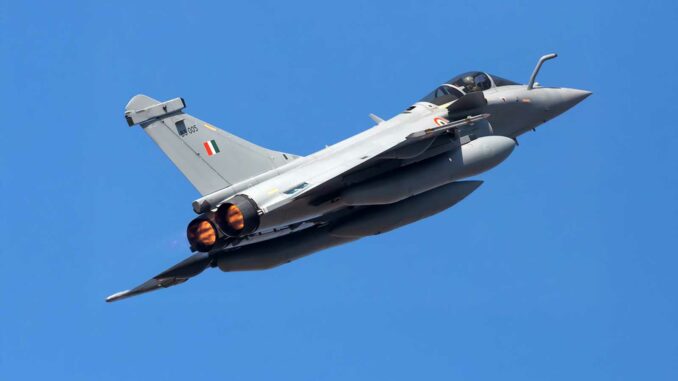
New Delhi grants Acceptance of Necessity for 114 Rafale jets (≈$40 billion). Production in India, technology transfers, impact on Dassault and the IAF.
Summary
On February 12, 2026, India’s Defense Acquisition Council (DAC) granted Acceptance of Necessity (AoN) for the acquisition of 114 Rafale aircraft from Dassault Aviation, as part of an intergovernmental agreement estimated at approximately 3.25 lakh crore rupees (≈ $40 billion, or approximately €37 billion), part of a wave of defense purchases valued at 3.6 lakh crore. This is not yet a firm contract, but a major political green light that opens the door to detailed negotiations. Approximately 90 aircraft are expected to be assembled in India with significant local content. The operation will have major industrial implications for Dassault, Safran, and their partners, as well as for French delivery planning. Key issues include the standard chosen, technology transfers, the schedule, pilot training, and payment terms.
The Indian decision and its actual legal scope
The Acceptance of Necessity is not a contract. It is a validation of principle. It means that the military leadership and the Ministry of Defense consider the operational need to be established and that financing is politically feasible. In India, this step is fundamental. It triggers the drafting of a detailed acquisition dossier, the negotiation of industrial clauses, the scope of technology transfers, and financial terms.
The amount mentioned, approximately 3.25 lakh crore rupees (3.25 trillion rupees), represents nearly €37 billion at the current exchange rate. Based on 114 aircraft, the average unit cost is around €325 to €350 million per aircraft, including armament, training, simulators, initial support, and infrastructure. This figure should not be compared to the “bare” price of an aircraft. It includes a complete package covering several decades.
This project is a continuation of the contract signed in 2016 for 36 Rafale aircraft to be delivered between 2020 and 2022. At the time, the agreement was valued at around €7.8 billion. India is now looking to expand its fleet to a critical mass that will enable it to equip several additional squadrons and replace aging MiG-21s and Jaguars.
Politically, the announcement comes ahead of a French presidential visit. The timing is not neutral. It reflects a strategic convergence between Paris and New Delhi in the Indo-Pacific.
The Rafale standard envisaged for the Indian Air Force
The central question concerns the standard. The current Indian Rafales are close to the F3R standard, with RBE2 AESA radar, Meteor air-to-air missiles, and SCALP air-to-surface missiles.
For this new batch, India could aim for a standard close to F4, or even F4.2, incorporating improvements in connectivity, data fusion, and electronic warfare.
The F4 standard includes enhanced data link capabilities, improved predictive maintenance, and upgrades to the SPECTRA system. These elements are crucial in the face of the modernization of the Chinese (J-20) and Pakistani (J-10C) fleets.
The choice of standard will influence the cost and schedule. A native F4 standard would simplify future integration, but assumes full maturity of software and sensors at the time of Indian production.
Production in India and local content
Approximately 90 aircraft are expected to be assembled in India. This will require the establishment of a local assembly line, probably with Hindustan Aeronautics Limited (HAL) or a consortium including Indian private players.
New Delhi’s stated goal is to achieve a high level of local content, sometimes mentioned as around 50%. In practice, the airframe could be partially manufactured locally, with critical sub-assemblies still produced in France. Safran’s M88 engine would most likely continue to be manufactured in France, although some parts could be produced under license.
The technology transfer will mainly concern final assembly, secondary structures, wiring, and certain software components. Sensitive technologies related to electronic warfare algorithms or certain radar processing will remain under French control. This is an industrial reality. No country transfers its critical codes in their entirety.
The impact on Dassault’s production and French planning
Dassault Aviation already has a large order book. The current production rate is around two to three aircraft per month. The addition of 114 Rafales represents several years of production.
France will have to arbitrate. If Indian production starts quickly, the first aircraft will probably be manufactured in France before the gradual transfer to India. This could temporarily lengthen delivery times for the French Air and Space Force, unless the production rate is increased.
Increasing the production rate means expanding the supply chain, securing electronic components, and recruiting qualified personnel. In a context of tensions over semiconductors and critical alloys, this is a delicate exercise.
Integration into the Indian Air Force
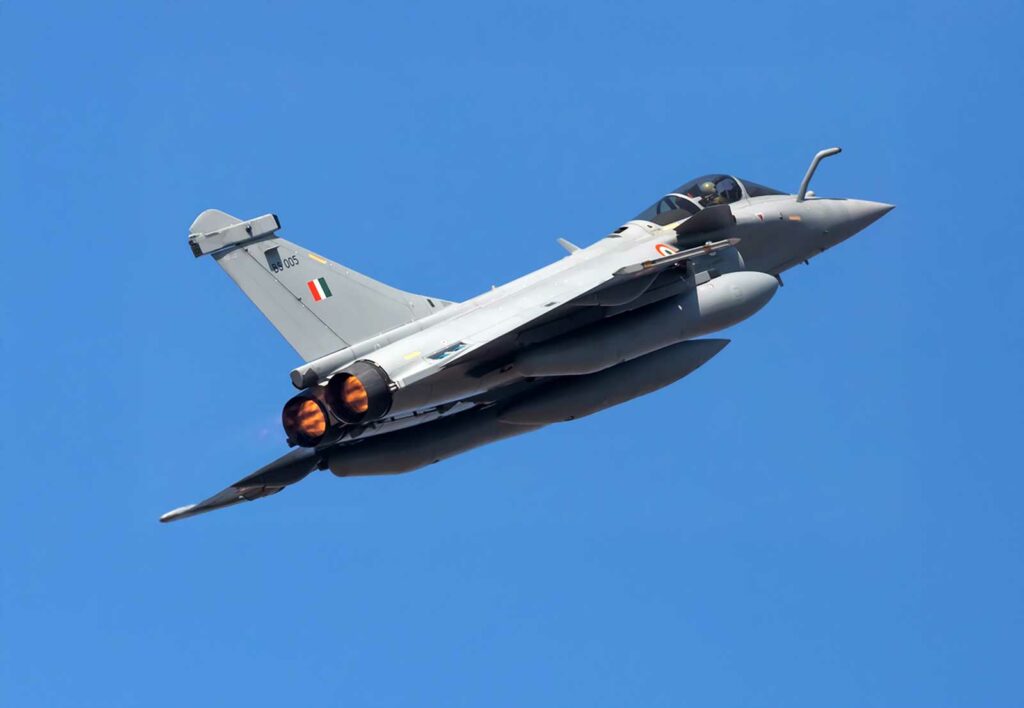
The Indian Air Force (IAF) already operates 36 Rafales spread across two main bases. The integration of 114 additional aircraft would equip at least six additional squadrons.
The IAF is aiming for a target format of 42 squadrons. It currently has around 31 to 32. The Rafale is intended to fill part of this capability gap.
Pilot training will remain mixed. The first classes will probably continue to be trained in France, at the Saint-Dizier base, before training capabilities in India ramp up with local simulators and instructors.
The Rafale requires a high level of training. Its optimal operation requires regular flight hours and robust logistical support.
Financial terms and payment schedule
A contract of this size is generally structured in several tranches. India makes an initial down payment, often around 10 to 15%, followed by payments staggered according to industrial milestones.
Financing may include French sovereign guarantees. Payments are spread over 7 to 10 years. The annual budgetary impact thus remains compatible with India’s spending trajectory.
India’s overall defense budget for 2025-2026 exceeds $75 billion. The acquisition of the Rafale therefore represents a significant but sustainable share, spread over several fiscal years.
Technology transfers and their real limits
New Delhi is demanding substantial transfers. France will agree to a significant transfer of assembly and heavy maintenance technology. However, sensitive software components and certain radar technologies will remain protected.
India is seeking to strengthen its industrial autonomy. But complete mastery of a 4.5-generation fighter requires decades of accumulated experience. The Franco-Indian partnership aims to strike a balance: sufficient transfer to support local industry, while protecting French strategic technologies.
Regional strategic implications
The acquisition of 114 Rafales changes the regional balance. It strengthens India’s capacity vis-à-vis Pakistan and adds a deterrent element vis-à-vis China.
The Meteor missile, with a range of over 150 kilometers, changes the dynamics of air combat beyond direct sight. The integration of precision air-to-ground capabilities also strengthens India’s strategic depth.
This decision is not just industrial. It is part of a broader strategic partnership between Paris and New Delhi, including space, maritime, and cybersecurity.
This program has not yet been signed. It will have to survive contract negotiations and budgetary arbitrations. But the direction is clear. India is counting on the Rafale to consolidate its regional air superiority and strengthen its industry. France, for its part, is playing a major card in its industrial diplomacy. The coming months will tell whether the AoN will turn into a firm contract. If so, the Indo-Pacific air map will be permanently changed.
Sources:
Ministry of Defense India – Defense Acquisition Council releases
Dassault Aviation – Annual results and delivery data 2024-2025
Indian Budget Documents 2025-2026
Press statements French Presidency 2026
Indian Air Force fleet data public reports
War Wings Daily is an independant magazine.