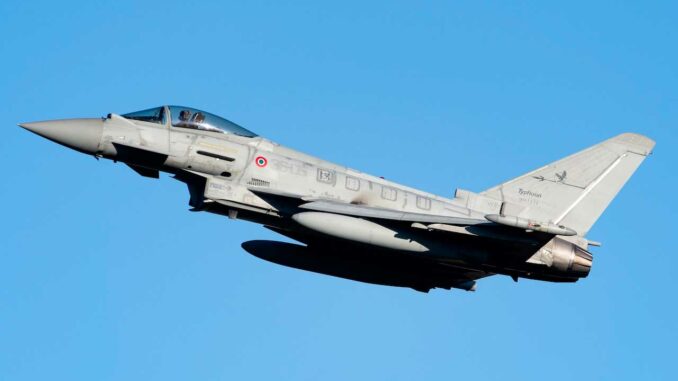
Bangladesh has signed a letter of intent with Leonardo for up to 16 Eurofighter Typhoons, marking a strategic turning point in the modernization of its air force in the face of competition from the Rafale and J-10.
Summary
The Bangladesh Air Force formalized a letter of intent with Leonardo S.p.A. for the potential acquisition of Eurofighter Typhoon multi-role jets on December 9, 2025, in Dhaka. This letter is part of the country’s Forces Goal 2030 modernization program, which plans to replace an aging fleet of combat aircraft with a generation of more efficient platforms. The number of aircraft envisaged is around 10 to 16 units, with an estimated budget of between $3 billion and $4 billion, including aircraft, systems, logistical support, and training. The Eurofighter is currently one of the most advanced multi-role aircraft in Europe, with strong air superiority and strike capabilities. Bangladesh is also considering other candidates such as the French Dassault Rafale and the Chinese Chengdu J-10, but the European offer stands out clearly. This decision could strengthen Dhaka’s strategic ties with European industry while influencing regional balances and technological cooperation, at a time when programs such as SCAF are affirming the future of European combat aviation.
The strategic context of Bangladesh’s decision
The Bangladesh Air Force, known by the acronym BAF, currently operates a diverse fleet consisting mainly of Chinese-made aircraft such as the Chengdu F-7 (derived from the MiG-21) and a small number of Russian MiG-29s for air defense missions. These platforms are reaching or exceeding their technological and logistical limits, posing a major challenge to operational capability and national airspace security.
Bangladesh has therefore included capacity-building priorities for all its armed forces in its Forces Goal 2030 program, with a particular focus on combat aviation. Initially, options including Chinese aircraft such as the Chengdu J-10CE or even Pakistani platforms were considered, but the need for a more technologically advanced solution that was interoperable with Western standards gradually steered Dhaka towards Europe.
The signing of the letter of intent with Leonardo S.p.A., leader of the Eurofighter consortium which also includes Airbus and BAE Systems, marks a decisive step in this process. It formalizes the intention to enter into in-depth negotiations with a view to a firm contract, while reflecting increased political and military confidence in the European offer.
Details of the letter of intent and provisional timetable
The letter of intent (LOI) signed on December 9, 2025, in Dhaka is not a binding contract, but it sets out a clear roadmap for future negotiations between the Bangladesh Air Force and Leonardo. The ceremony was attended by the Chief of the Bangladesh Air Staff, Air Chief Marshal Hasan Mahmood Khan, the Italian Ambassador to Bangladesh, and representatives of Italian industry, underscoring the diplomatic and strategic importance of the agreement.
According to specialized media, the number of Eurofighters envisaged is between 10 and 16 aircraft, a figure that corresponds to the requirements expressed several years ago in Dhaka’s multi-role tender. This volume would enable the BAF to achieve credible air superiority, strike and territorial defense capabilities.
The delivery schedule has not yet been defined, as it depends on the outcome of contract negotiations, allocated funding, and production capacity. Nevertheless, an initial negotiation period of several months is expected, followed by a firm agreement likely to be signed by 2026–2027. The first deliveries could then take place in the late 2020s or early 2030s, depending on industrial capacity and the technical adjustments required.
The budgetary and financial impact of the operation
The $3 to $4 billion budget mentioned for this type of acquisition includes not only the aircraft themselves, but also a range of essential services: training for pilots and mechanics, setting up a maintenance infrastructure that meets Western standards, acquiring suitable ammunition, and long-term logistical support.
This amount must be compared to previous expenditures for the maintenance of older platforms, which were often logistically fragile and costly in terms of spare parts, particularly under international sanctions for Russian-made equipment. From this perspective, opting for a modern European aircraft can reduce certain renewal costs while significantly increasing operational capabilities.
Investment in a fleet of multi-role fighters represents a significant portion of Bangladesh’s defense budget. Financial planning is therefore part of a long-term strategy. It requires sustained budgetary allocation and clear priorities on the part of the government so that equipment can be integrated without jeopardizing other essential programs.
The capabilities and advantages of the Eurofighter Typhoon
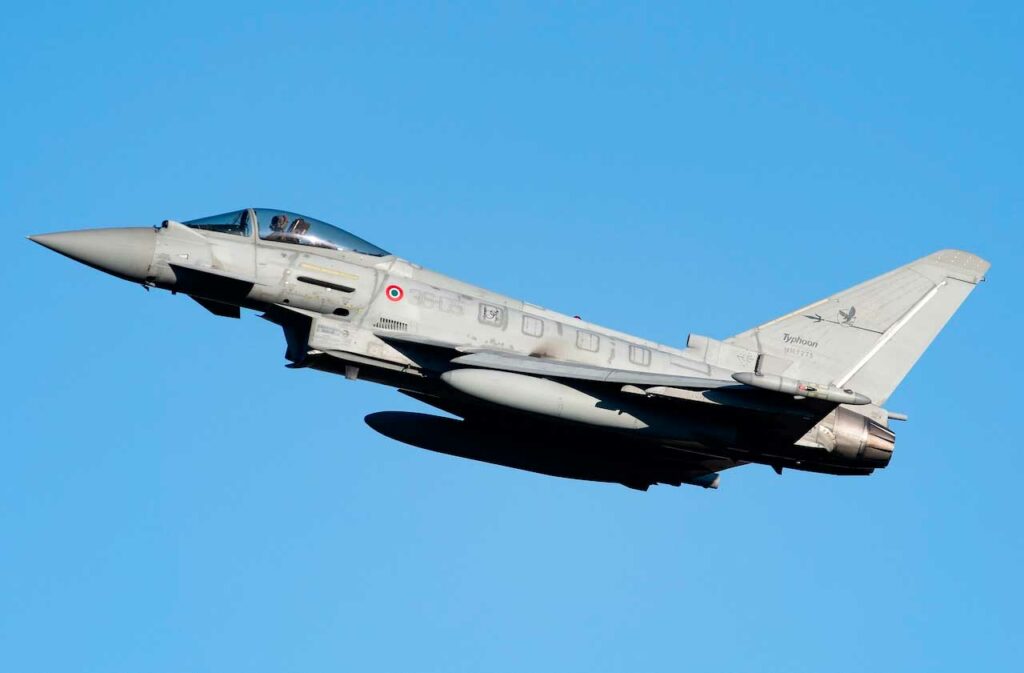
The Eurofighter Typhoon is a combat aircraft developed through European cooperation between Germany, Spain, the United Kingdom, and Italy. It is considered one of the most versatile multi-role aircraft of its generation, capable of performing air superiority, fast intercept, ground attack, and reconnaissance missions.
Featuring a delta-wing canard design and powerful turbofan engines, the Typhoon can fly at supersonic speeds while offering excellent maneuverability. The modern version included in discussions with Bangladesh features active electronically scanned array (AESA) radars, advanced electronic warfare systems, and full integration of the latest generation of air-to-air and air-to-ground munitions. These features allow the aircraft to compete with advanced fourth-generation aircraft in terms of detection, survivability, and firepower.
The introduction of the Eurofighter into the Bangladeshi Air Force would represent a significant qualitative leap from the Chengdu F-7 and MiG-29 currently in service. The latter are from earlier technological generations and are now limited in the face of modern threats, whether stealth aircraft, sophisticated radar systems, or long-range missiles.
Operational integration and technical challenges
Integrating an aircraft as sophisticated as the Typhoon poses significant challenges. First, pilots and technicians must receive specialized training, often provided in Europe or by certified instructors. This requires the establishment of extensive training programs and agreements between governments to facilitate exchanges.
Second, maintenance and spare parts supply must be organized according to Western standards. This involves establishing logistics lines, support infrastructure, and appropriate certification procedures, which represents an investment in time and resources.
Finally, the acquisition of modern ammunition compatible with Eurofighter standards adds another level of complexity, as the BAF will have to negotiate with third-party suppliers for air-to-air missiles, guided bombs, and advanced targeting systems.
The impact on regional balance and the European response
Bangladesh’s commitment to European fighter jets can be interpreted as a sign of strategic diversification in a complex regional environment. The Bangladesh region is influenced by several major powers, including China, India, and the United States, each seeking to strengthen its bilateral relations with Dhaka.
Choosing a European aircraft such as the Typhoon, rather than a Chinese or Russian aircraft, may strengthen political and military ties with the European Union and NATO, while offering Dhaka greater strategic autonomy from a technological standpoint.
This decision also comes at a time when the European defense industry—faced with challenges such as the SCAF (Future Combat Air System) program, which aims to develop a new generation of combat aircraft—is seeking to maintain its global competitiveness. An order from Asia could support European export momentum and encourage other countries to consider the Eurofighter as a viable option against competitors such as the Rafale or American aircraft.
Alternatives evaluated and political considerations
Before signing the letter of intent with Leonardo, Bangladesh evaluated several alternatives, including the French Dassault Rafale and the Chinese Chengdu J-10CE. The Rafale, recognized for its proven capabilities and versatility, was a serious competitor in the market, but the Typhoon now appears to be the favorite.
The case of the J-10CE reflects an initial desire to maintain a strategic link with China, particularly given the historical relations between Dhaka and Beijing. However, the logistical challenges associated with a heterogeneous fleet and the desire to bring the BAF up to higher technological standards probably tipped the balance.
Towards a new era for the Bangladesh Air Force
The signing of this letter of intent represents a turning point for the Bangladeshi air force. If a contract is finally signed and implemented, the Eurofighter Typhoon fleet would transform the country’s combat capabilities, enabling it to compete with other regional air forces.
This development could also encourage other nations to revisit their combat aircraft acquisition strategies, particularly in light of new-generation European programs such as the SCAF, which aims to define the combat aircraft of tomorrow.
Beyond simply replacing aircraft, the introduction of the Typhoon signals a broader ambition: to transform the BAF into a modern force capable of responding to the security challenges of the 21st century while integrating into a framework of enhanced international cooperation.
Sources
- Flight International report on the Eurofighter LOI with Leonardo.
- Wikipedia: Forces Goal 2030 overview and context for Bangladesh Air Force.
- Defence Security Asia detailed analysis of Eurofighter capabilities and strategic implications.
War Wings Daily is an independant magazine.