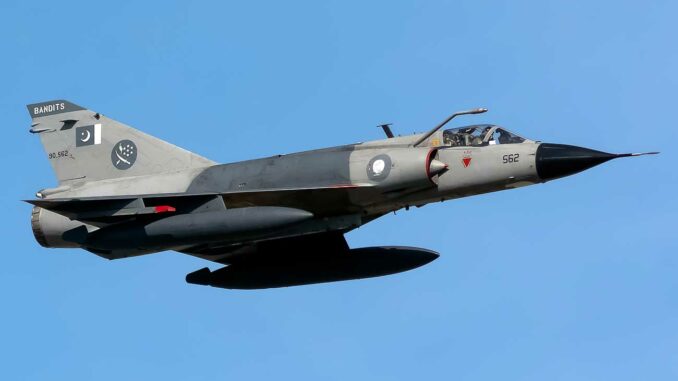
From Morane to Rafale, French industry has built a coherent, exportable fighter jet sector focused on multi-role capabilities.
In summary
The history of French fighter jets is not a series of isolated “hits.” It is an industrial trajectory. It began with wartime aviation driven by urgency, moved on to accelerated learning about jet engines, and then stabilized around a method: developing airframes, engines, and especially electronics in stages, without disrupting operational continuity. This logic explains the longevity of the Mirage families, the effectiveness of the “delta” and then “delta-canard” design, and the role played by exports in financing and production rates. It also sheds light on a French strategic choice that is often misunderstood: aiming for an aircraft that is less specialized than some foreign champions, but capable of providing air defense, attack, reconnaissance, deterrence, and aircraft carrier deployment from the same platform. This choice has a cost and a trade-off. It requires dense avionics, extensive weapons integration, and a demanding doctrine of use. In return, it produces a flexible, politically useful, and industrially sovereign tool. Today, the Dassault Rafale embodies this approach, with an order book that weighs heavily on the supply chain and continuous modernization that emphasizes sensors, data links, and survivability in contested environments.
Long industrial continuity, from 1914 to the jet age
France has built a military aviation culture over time. It stems primarily from a simple fact: since World War I, aircraft have become a tactical tool, then a strategic tool. This pressure forged expertise in structure, motorization, production, and doctrine of use. After 1940, the collapse of the land forces did not eliminate engineering. It weakened it, then reconfigured it. It was in this context that aircraft such as the Morane-Saulnier MS.406, then the Dewoitine D.520, served as technical benchmarks: cleaner aerodynamics, better weapon integration, and the pursuit of high-altitude performance. On paper, these fighters remained “on par” with the standards of the time. In practice, they illustrate a problem that would often recur: a good aircraft cannot compensate for an industry under pressure, insufficient volumes, and a doctrine that was sometimes behind the times in terms of actual use.
The performance figures cited in your text are useful, but they should be read as orders of magnitude. The maximum speeds announced are obtained in specific profiles. Operational ceilings depend on load, temperature, and engine condition.
The important issue lies elsewhere: World War II highlighted that superiority is not only a matter of top speed. It depends on the ability to climb quickly, maintain a sustained speed, be repaired quickly, and be guided by an intelligence and control chain. This learning experience paved the way for the post-war leap forward.
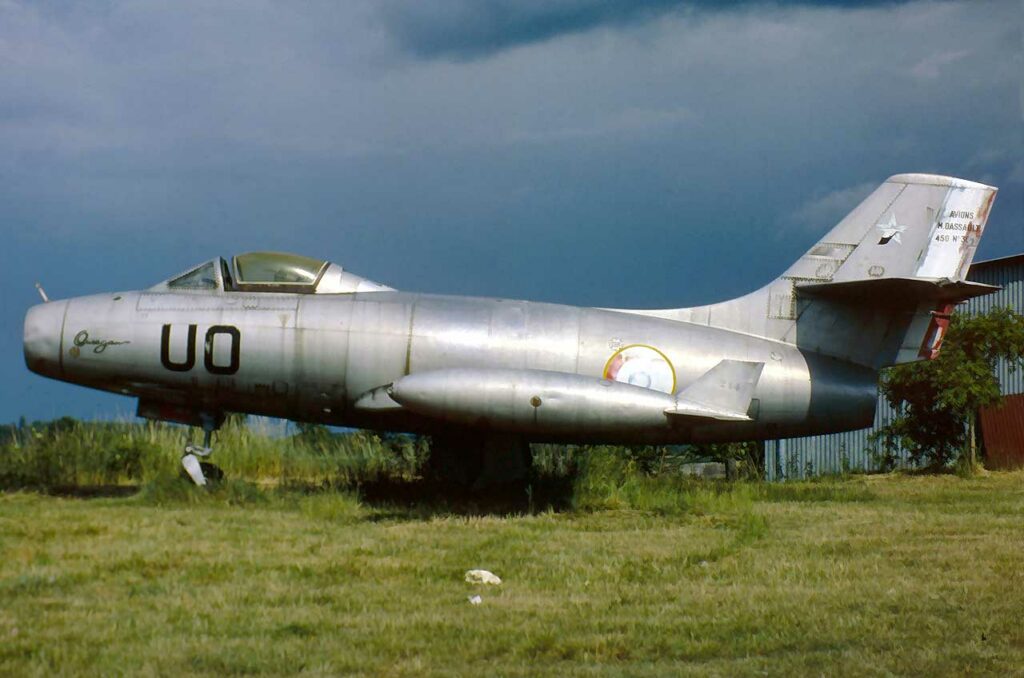
After 1945, France took a sharp turn: adopting jet engines, structuring a national industrial base, and reducing dependence on foreign suppliers. The first Dassault jets, including the Dassault Ouragan, were less an end than a beginning: learning to mass produce, making new systems reliable, setting up maintenance chains, and standardizing subassemblies. This “real-world learning” phase explains what followed. In modern fighter aircraft, the aircraft is no longer an isolated object: it is a node in a system (radar, communications, refueling, weapons, predictive maintenance). France gradually built this coherence, accepting innovation in stages rather than permanent disruption.
The shift to incremental innovation: a method rather than a slogan
The central idea in your text is that of progressive innovation. It deserves technical treatment. “Incremental” innovation does not mean “small.” It means “integratable.” In a fighter jet, each change can upset the balance between weight/center of gravity, cooling, electrical power, electromagnetic compatibility, and software security. A poorly thought-out modernization comes at a price in terms of availability and costs. The French method, championed by Dassault and its ecosystem, consists of securing the airframe, then gradually upgrading the avionics and weaponry, while maintaining a stable supply chain.
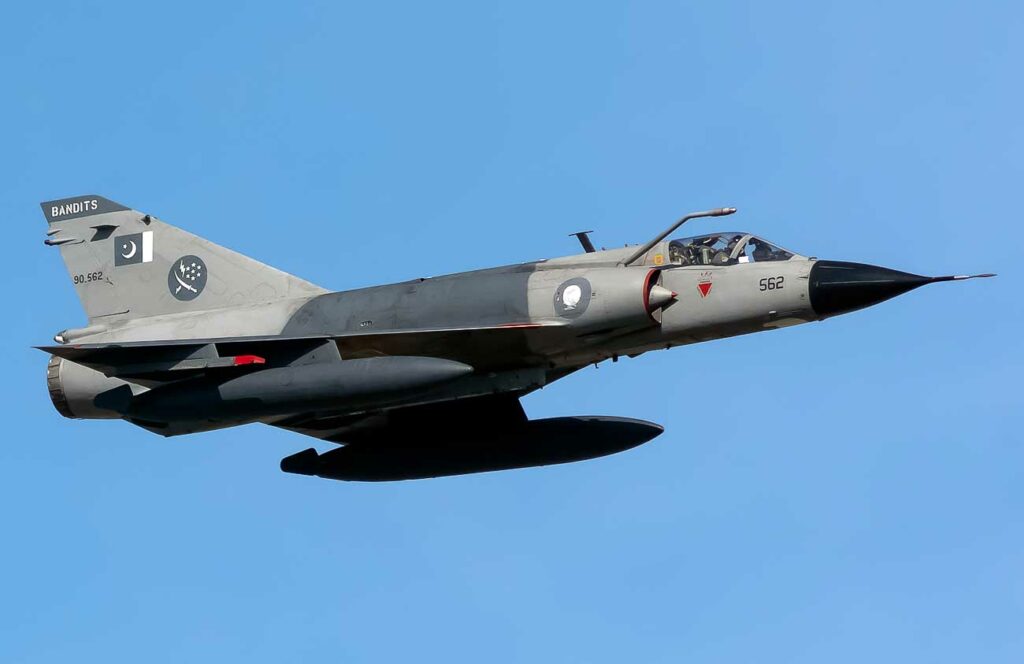
The switch from the Mirage III to the Mirage F1 illustrates this logic. The Mirage III symbolizes the delta wing and supersonic speed, with an accepted compromise: excellent performance at high speed and altitude, but penalties at low altitude and low speed (approach, slow maneuvers, fuel consumption). The Mirage F1 abandons the delta wing in favor of a swept wing. This was not an “aesthetic” choice. It was a choice of flight envelope. At low altitude, the swept wing and high-lift devices improve maneuverability, stability, and efficiency. The result is a more versatile aircraft in a context where ground attack, penetration, and low-altitude interception are becoming critical.
Then came the Mirage 2000, which returned to the delta wing, but with a different technological context: modernized flight controls, more accurate navigation systems, and cleaner sensor integration. The delta wing became relevant again because electronics and engines compensated for some of the aerodynamic limitations. This is precisely the core of the approach: we do not judge a wing shape in isolation. We judge the airframe-engine-sensors-weapons package as a whole.
This diagram also explains the shift towards electric flight controls and the integration of a richer software architecture. The modern aircraft is a flying computer,
and performance depends as much on the quality of sensor fusion as on the aerodynamic profile. This trajectory does not make France “unbeatable” everywhere. It makes it consistent: an industry capable of sustaining platforms, exporting versions, and absorbing modernizations without having to redesign everything.
The fighters of 1939-1945, a lesson in real performance and production
Your list begins with the MS.406 and the D.520. This is a logical choice, but we must avoid a “catalog” reading. What matters is the difference between theoretical performance and operational performance. The MS.406, which was widely used at the start of the conflict, was a decent aircraft, but it was overtaken by German technological advances and, above all, by the enemy’s overall organization. Its historical significance is clear: it embodies an industry that produced in volume but entered combat with insufficient room for modernization.
The Dewoitine D.520, on the other hand, shows what a more successful design can achieve: better aerodynamic finesse, more convincing armament, and a feeling of maneuverability often emphasized by pilots. Technically, the aircraft made progress in specific areas: integration of a 20 mm cannon in the centerline, better visibility, higher speed, and a ceiling of around 10,000 m. But again, the conclusion is not “the aircraft was good, so everything was fine.” A fighter aircraft is part of a system: detection, alert, guidance, ammunition, parts, trained pilots, engine availability. When this system is under stress, the gap quickly widens.
Why is this part useful today? Because it reminds us of a rule that remains true in 2026: air superiority is not just a matter of technical specifications. Contemporary conflicts confirm that the ability to generate sorties, maintain aircraft, protect bases, and integrate aircraft into an ISR (intelligence-surveillance-reconnaissance) chain is decisive. In short, a “small but perfect” fleet can lose out to a “well-supported and well-organized” fleet.
This lesson sheds light on France’s subsequent actions. After the war, the implicit objective became to build industrial autonomy so as to no longer be dependent on an external political agenda, and to establish robust maintenance and training chains. France was not just looking for a high-performance aircraft. It was looking for a sustainable industry. This is not a very “romantic” point, but it is a central one. It explains why the state and industry often accepted cautious choices, compatible with maintenance and evolution, rather than taking risks that were too fragile in the long term.
The first Dassault jets, entering the mechanics of the Cold War
The Ouragan, the Mystère IV, and the Super Mystère form a coherent sequence: moving from the discovery of the jet engine to the mastery of level supersonic flight. In your text, speeds increase rapidly, which is normal. But the interest is not only in speed. The interest is in industrialization and standardization.
With the Ouragan, France established jet production that was no longer experimental. This was a turning point: it was no longer just a matter of manufacturing a series of aircraft, but of developing the capacity to manufacture them. This involved processes, quality, interchangeability of parts, and a structured relationship between the military and industry. The Mystère IV, with swept wings, facilitated adaptation to high transonic and subsonic speeds, and above all to more complex ground attack profiles. The aircraft became a mission tool, not just an interceptor.
The Super Mystère added another step: reaching Mach 1 in horizontal flight. Technically, this required a airframe adapted to shock waves, more responsive engines, and stricter thermal and structural management. But the real advance, in terms of capabilities, was doctrinal: we entered a world where interception and alert became permanent functions. Ground radars, controllers, and scramble procedures structured the activity. The aircraft is designed to take off quickly, climb quickly, and engage quickly.
This period paved the way for the “Mirage brand.” The delta wing design prevailed because it offered an elegant solution to the need for speed and structural simplicity. The delta wing has fewer moving parts, a robust structure, and good high-speed handling. In exchange, it requires adapted piloting and procedures. This compromise is acceptable in terms of interception, and becomes an advantage when it comes to producing variants and exporting.
This point leads to an industrial consequence: France is equipping itself to make families last. Export becomes an accelerator. It amortizes fixed costs, stabilizes production lines, and finances developments. It is a reality that is sometimes poorly understood, but simple: without export customers, a medium-sized power cannot easily maintain a complete high-level fighter aircraft industry. France understood this early on and built an export offering that could be used by forces that did not have the means for a highly specialized fleet.
The Mirage and Jaguar families: multi-role as an exportable product
The Mirage years are a demonstration of this. The Mirage III, with its delta wing, became a symbol of efficiency: speed, climb, simplicity, and adaptability. It served as an interceptor, then switched to attack and reconnaissance as needed. Production volumes (all Mirage III/5/50 variants) were significant on a European scale, and exports were massive. This had a direct effect on the industry: more series, more field feedback, and more budgets for development.
The Mirage F1 extends this idea, but with a modified wing to better suit low-altitude profiles. It targets a specific need: surviving penetration, maintaining maneuverability, and improving the mission spectrum. The Mirage 2000 then consolidates a French formula: an agile, modernizable aircraft, suited to interception but capable of attack. The industrial data is clear: 600 Mirage 2000s produced, with about 50% exported. This is not a “detail.” It is an economic pillar. It explains why the platform remains in service for so long and why countries invest in renovations rather than replacing everything at once.
The case of the Jaguar is different, but instructive. The SEPECAT Jaguar is a Franco-British program designed for ground attack and reconnaissance, with demanding low-altitude profiles. This type of aircraft responds to a tactical reality: low-altitude support and attack require a robust airframe, good stability, and significant payload capacity. According to some sources, more than 500 Jaguars have been produced, around 573 for the entire program. It has a long operational life, particularly in India. The lesson here is both political and industrial: cooperation can work when the specifications are clear and the industrial distribution is accepted. It becomes more complex when it comes to the “core” of air superiority, as states want to retain control over architecture, stealth, sensors, and codes.
As a direct consequence, France has often favored autonomy on the core elements (design, integration), while cooperating on components or weapons. This is a pragmatic position. It is not “nice.” It is defensive in the industrial sense: not allowing oneself to be held captive by a partner on critical elements.
The Super Étendard and carrier-based fighter aircraft: a costly but fundamental specialty
The Dassault Super Étendard occupies a special place, as it links fighter aircraft to the sea. Carrier-based fighter aircraft impose tougher mechanical and operational constraints: reinforced landing gear, arresting hooks, corrosion resistance, the ability to be handled on deck, and stricter safety requirements. On a national scale, maintaining this capability is no easy task. It is expensive. It is also a strategic assurance: it allows for the projection of strike and reconnaissance capabilities without depending on a local land base.
The Super Étendard, designed as a carrier-based attack aircraft, became famous for its use of anti-ship missiles. Its technical interest lies in its integration: sensors, navigation, targeting, and weapons designed to strike at sea. This is an area where France has sought system consistency: aircraft + missile + doctrine. The reality is less “heroic” than the usual narrative: at sea, the problems are concrete. Bad weather, crew fatigue, the pace of deck operations, maintenance in a salt environment, and accelerated wear and tear from landings. Carrier-based aviation is not a backdrop. It is a permanent constraint.
This specialization prepares the Rafale Marine. It avoids a skills gap. It maintains teams, procedures, and standards. This is a key point: in such a complex field, a ten-year gap results in a loss of know-how that is difficult to recover. France has therefore agreed to keep platforms in service, modernize them, and then move on to the next generation.
There is also a political consequence: a carrier-based aircraft has diplomatic value. It can be deployed without negotiating every detail of a land-based stationing.
This provides some leeway. But this leeway does not come for free. It depends on an aircraft carrier group, refueling aircraft, ammunition, a logistics chain, and demanding training. To say that “carrier-based aircraft” solve everything is a simplistic statement. The reality is harsher. They increase autonomy, but they also increase costs and pressure on personnel.
The Rafale, a conscious choice: less specialized, more systemic
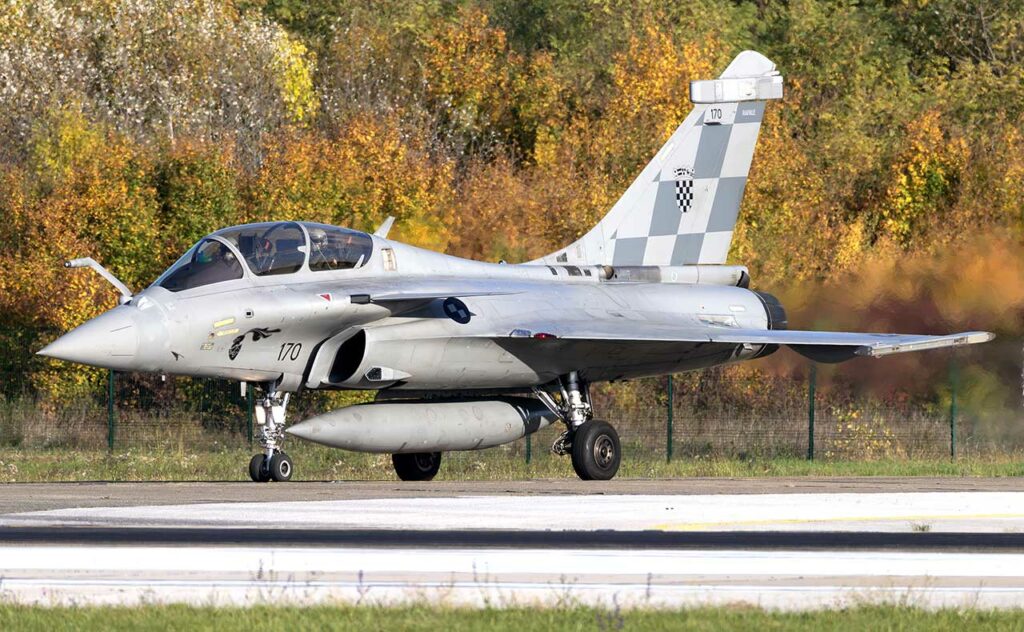
The Dassault Rafale crystallizes the French approach: a multi-role aircraft, continuously modernized, and designed for a variety of missions with the same airframe. In your text, the comparison with the F-22 and Su-35 is useful, but it needs to be made more technical. The F-22 is an air superiority fighter, optimized for stealth and air-to-air engagement, with a focus on penetration and information advantage. The Su-35 focuses on high maneuverability, engine power, and robustness, with a different approach to avionics integration. The Rafale takes a “balanced” approach: advanced sensors, multi-weapon integration, air-to-air, air-to-ground, reconnaissance, and deterrence missions depending on configuration.
This choice is consistent, but it requires discipline: avionics and electronic warfare become central. It is not the airframe alone that makes the difference. It is the ability to detect, classify, engage, jam, coordinate, and survive in a saturated environment. This is where we understand the importance of electronic warfare and mission architectures. Effectiveness is measured by the speed of the OODA loop (observe, orient, decide, act), by resilience to jamming, and by the ability to operate in coalition while maintaining national modes.
On the industrial front, recent public data show a high order book and a production rate that must keep pace. Dassault reports 26 Rafales delivered in 2025 (15 for export, 11 for France) and 26 Rafale aircraft ordered for export in 2025. Industrial analyses put cumulative orders for the Rafale at more than 500 aircraft since the start of the program, with exports accounting for the majority of orders in recent years. This puts pressure on subcontractors, engines, electronics, and deadlines. This is not a minor issue. A tight supply chain reduces the margin for quickly replacing sold or lost aircraft and forces the government to arbitrate between exports, training, stocks, and modernization.
This is where “frank” reflection is needed. The multi-role aircraft is a rational choice for a country that does not want to maintain three different fleets. But it is not a “magic” choice. It requires highly trained crews, a variety of ammunition, competent maintenance of complex systems, and stable industrial governance. Without these things, multi-role becomes an empty phrase. With them, it becomes a strength: a single platform that covers a wide range of missions and facilitates planning.
The best French fighter planes
Morane-Saulnier MS.406
Maximum speed: Approximately 300 mph
Maximum altitude: Approximately 9,600 meters
Maximum range: Approximately 1,000 km
The Morane-Saulnier MS.406 was a French fighter aircraft used during World War II. It was one of the most numerous fighter aircraft in the French Air Force at the start of the war, but it was slightly inferior in performance to the German aircraft of the time.
Dewoitine D.520
Maximum speed: Approximately 530 km/h
Maximum altitude: Approximately 10,000 meters
Maximum range: Approximately 1,025 km
The Dewoitine D.520 was a French fighter aircraft used during World War II. Designed in the 1930s, it was comparatively competitive with the early Luftwaffe fighter aircraft. The D.520 was appreciated for its maneuverability and powerful armament. It served primarily as an interceptor, although it was also used for ground attack missions.
Dassault Ouragan
Year withdrawn from service: 1972 (in France)
Maximum speed: Approximately 940 km/h
Maximum altitude: Approximately 13,000 meters
Maximum range: Approximately 920 km
The Dassault Ouragan was one of the first jet fighters built by Dassault. It was designed to meet the needs of the French Air Force after World War II and was the first French-designed jet fighter to enter production.
Dassault Mystère IV
Year withdrawn from service: 1981 (in France)
Maximum speed: Approximately 1,120 km/h
Maximum altitude: Approximately 15,000 meters
Maximum range: Approximately 910 km
The Dassault Mystère IV was a subsonic fighter aircraft used in the 1950s and 1960s. It was a development of the Mystère II, designed with swept wings. It was used by the French Air Force primarily as a ground attack and interception aircraft during the Cold War.
Dassault Super Mystère
Year of withdrawal from service: 1977 (in France)
Maximum speed: Approximately 1,180 km/h (Mach 1.12)
Maximum altitude: Approximately 15,000 meters
Maximum distance: Approximately 870 km
The Dassault Super Mystère was a French supersonic fighter aircraft. It was a development of the Mystère IV and the first French Air Force aircraft capable of exceeding Mach 1 in horizontal flight. It was used primarily for interception and ground attack missions. The Super Mystère was replaced by newer generation fighter aircraft, such as the Mirage III.
Dassault Mirage III
Year of withdrawal from service: 1994 (in France)
Maximum speed: Approximately 2,350 km/h (Mach 2.2)
Maximum altitude: Approximately 18,000 meters
Maximum range: Approximately 1,200 km
The Mirage III is a Cold War fighter aircraft developed by Dassault Aviation. Designed in the 1950s as a light interceptor, its role expanded to that of an attack aircraft. Its delta wing design was innovative at the time and allowed it to reach supersonic speeds. The Mirage III was one of the most successful French fighter aircraft, sold to many countries.
SEPECAT Jaguar
Year of withdrawal from service: 2005 (in France)
Maximum speed: Approximately 1,699 km/h (Mach 1.6)
Maximum altitude: Approximately 14,000 meters
Maximum range: Approximately 850 km
The SEPECAT Jaguar is a Franco-British ground attack and reconnaissance aircraft. It was jointly developed by Breguet (later part of Dassault Aviation) in France and the British Aircraft Corporation (BAC) in the United Kingdom. It was used for low-altitude ground attack and tactical reconnaissance missions.
Dassault Mirage F1
Year of withdrawal from service: 2014 (in France)
Maximum speed: Approximately 2,200 km/h (Mach 2.2)
Maximum altitude: Approximately 20,000 meters
Maximum range: Approximately 2,300 km
The Dassault Mirage F1 is a multirole fighter aircraft developed to replace the Mirage III. It differs in that it has swept wings rather than delta wings, which improves its low-altitude flight performance and maneuverability. It was used by the French Air Force for various roles, including interception, reconnaissance, and ground attack.
Dassault Super Étendard
Year of retirement: 2016 (in France)
Maximum speed: Approximately 1,180 km/h (Mach 1.13)
Maximum altitude: Approximately 13,700 meters
Maximum range: Approximately 1,682 km
The Dassault Super Étendard is a carrier-based attack aircraft. It is an improved version of the Étendard IVM and was developed for service with the French naval air force. Capable of launching anti-ship missiles and equipped with a variety of weapons, it is famous for its use in the Falklands War.
Dassault Mirage 2000
Year of entry into service: 1984
Year of retirement: Still in service with some air forces (as of 2023)
Maximum speed: Approximately 2,336 km/h (Mach 2.2)
Maximum altitude: Approximately 17,060 meters
Maximum range: Approximately 1,550 km
The Mirage 2000 is a multi-role fighter aircraft developed by Dassault Aviation. This aircraft was designed to be a light interceptor but also capable of ground attack missions. With its delta wing and powerful SNECMA M53 engine, it is known for its maneuverability and speed. It has been widely used by the French Air Force and has been exported to many countries.
Dassault Rafale
Year of withdrawal from service: Still in service (in 2023)
Maximum speed: Approximately 2,223 km/h (Mach 1.8)
Maximum altitude: Approximately 15,235 meters
Maximum range: Approximately 3,700 km with three external fuel tanks
The Dassault Rafale is a 4.5th generation multi-role fighter aircraft developed by the French company Dassault Aviation. The goal of its development was to produce an aircraft capable of performing various missions, such as air interception, reconnaissance, and ground attack. Innovative thanks to its delta-canard design and partial stealth technology, it also features advanced electronics and a high payload capacity. Used by the French Air and Space Force and the French Navy, it has also been exported to other countries.
Strategic and economic consequences, between sovereignty and real dependencies
The first consequence is operational sovereignty. Maintaining a national fighter aircraft industry allows for quick decision-making. It also provides freedom of integration: national weapons, national operating procedures, and developments adapted to doctrine. This point is rarely stated directly, but it is central: a combat aircraft is not a neutral product. It carries dependencies. Codes, cryptography, components, supply chains, export authorizations for subsystems. The more national the industry is, the more France reduces the risk of having restrictions imposed on its use. This does not eliminate all dependencies, as modern electronics rely on globalized components. But it does reduce the most critical risk: the political or technical impossibility of upgrading the aircraft as desired.
The second consequence is industrial. Exports play a stabilizing role. They finance part of the ramp-up, maintain skills, and avoid the “stop-and-go” effect that destroys teams. But they also create tension. When a country sells aircraft from its own stocks, it gains diplomatic time, but it temporarily weakens itself in terms of available volume. This forces it to accelerate domestic orders, push production, and accept a temporary capacity gap. This tension is real. It translates into scheduling choices, budgetary trade-offs, and pressure on the forces to maintain training.
The third consequence is budgetary. A modern fleet does not only cost money to purchase. It also costs money to maintain, in terms of ammunition, simulators, software updates, and infrastructure. When a state promises a certain fleet size, it must finance the ecosystem. Otherwise, the result is a fleet that exists “on paper” with limited availability. Recent debates in Europe show that availability has become as much a political indicator as a military one. It is also an industrial indicator: it shows whether the supply chain is holding up.
Finally, there is a doctrinal consequence: France has a combat air force that must be able to act alone, but also integrate into a coalition. This requires reconciling sometimes contradictory requirements: interoperability on the one hand, autonomy on the other.
This compromise is rarely comfortable. It requires constant efforts in terms of data links, standards, cybersecurity, and procedures. It is a fundamental task, far removed from announcements. And it is precisely this work that will determine the real effectiveness of fighter aviation in 2026.
War Wings Daily is an independant magazine.