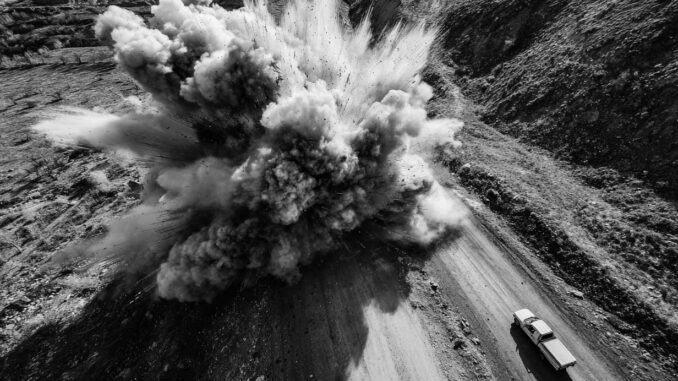
From military loitering munitions to $500 FPVs, technical anatomy, US-Europe-China-Russia players, costs, guidance, and tactical effects.
In summary
Kamikaze drones are single-use devices designed to seek out a target, wait for the right moment, and then destroy themselves on impact. They range from micro infantry drones to long-range models inspired by the Shahed, to mass-produced FPVs. Their effectiveness comes from a simple assembly: a cell, a military payload, a camera, a piloting link, and more or less autonomous guidance. The war in Ukraine has shown their main strength: saturate, strike quickly, and force the enemy to spend money on defense. American, European, Israeli, Turkish, Russian, Iranian, and Chinese manufacturers are ramping up production, while local workshops are producing thousands of units per month. Kyiv has planned to purchase millions of FPVs by 2025, a sign of industrialization. The central question remains: how can targeting control be maintained and forces protected when these drones become as commonplace as shells on the front line?
Kamikaze drones and the confusion of words
The term kamikaze drone is convenient, but it covers several technical and industrial realities. On the one hand, “loitering munition” is designed as a complete weapon: it is launched, it patrols, it observes, then it dives. On the other hand, the first-person-view contact drone is more of a small, remotely operated vehicle, quickly produced, quickly consumed, and continuously improved.
This confusion is not a minor detail. It explains the often unfounded public debates: some refer to a drone as a reusable device, others as a missile. However, loitering munitions lie precisely on this borderline: they borrow their persistence and camera from drones, and their disposable nature and military payload from missiles. The reference works on loitering munitions emphasize this hybridization and the rapid evolution of uses, from tactical systems to long-range saturation strikes.
The technical sequence of a “one-way” mission
The airframe and propulsion system set the pace
The starting point is a lightweight airframe. Tactical models favor electric power: reduced noise, limited thermal signature, simple logistics (batteries), moderate speed. Long-range models tend to use a small propeller-driven combustion engine, which is noisier but much more durable. This choice dictates everything: flight time, altitude, payload, vulnerability to jamming and detection.
On a representative electric system such as the Lancet-3, industrial documentation published by ZALA/Kalashnikov indicates a cruising speed of around 80 to 110 km/h (50 to 68 mph), an endurance of around 40 minutes, and a military payload of around 3 kg (6.6 lb) for a takeoff weight of around 12 kg (26 lb). In other words, this type of munition is not designed to “sprint,” but to loiter long enough to find an opportunity and strike a high-value target.
The camera, the pilot, and the decision loop
Most kamikaze drones follow a simple loop: see, decide, strike. The view comes from an EO/IR sensor (day/night depending on the version), sometimes stabilized, sometimes basic. The decision often remains human: the operator confirms the target before impact. Even when the electronics offer automatic tracking, the operational value is not to “let the machine do its job,” but to reduce the time between detection and destruction, while retaining the ability to interrupt an attack if the situation changes.
The result is a paradoxical weapon: modern in terms of video and communications, classic in terms of its terminal effect. It does not neutralize “gently.” It destroys.
Communications and guidance, a real area of vulnerability
In most cases, the Achilles heel is not the warhead. It is the data link.
Contact drones rely on radio links that carry signals from a few kilometers to a few dozen kilometers, depending on the terrain, the antennas, and the presence of relays. They are vulnerable to jamming, directional detection, and sometimes interception.
Hence a modern obsession: surviving GNSS jamming and radio interference. The goal is for a drone to lose GPS, suffer a degraded link, and still be able to complete its approach. On military systems, this requires hardening (antennas, filtering, fallback modes) and more expensive navigation algorithms. It’s a brutal reality: the “cheap” kamikaze drone quickly becomes expensive as soon as you want to make it robust in a contested environment.
Technologies that have shifted the cost-effectiveness ratio
Navigation without GPS is no longer a luxury option
At short range, an operator can fly “by camera” and do without GPS. But as soon as you factor in distance, bad weather, the coordination of multiple attacks, or an automatic return to a search area, navigation becomes central. Manufacturers therefore combine GNSS and inertial navigation, then add recalibration techniques (vision, scene correlation, trajectory updating). In practice, this transforms a slow aircraft into a credible saturation weapon, because it maintains a useful trajectory even when the electromagnetic environment deteriorates.
The war in Ukraine has also accelerated a more brutal innovation: fiber optic control on certain contact drones. The idea is simple: instead of transmitting by radio, the drone unrolls a wire, making control much less sensitive to jamming. Reports have documented operational uses with cable lengths of around 10 to 20 km (6 to 12 mi), with obvious constraints (fragility, logistics, risk of entanglement), but a clear benefit against electronic warfare.
Military payload, between industrial standards and stock adaptation
In an industrial program, the warhead is designed, tested, and integrated with safety devices. On mass-produced contact drones, the reality is more gray: we see the adaptation of pre-existing warheads (grenades, anti-tank ammunition, hollow charges), because they are already available and because the front line imposes short cycles. Feedback from the field frequently describes the adaptation of warheads from existing ammunition (grenades, anti-tank hollow charges, fragmentation effects), which illustrates the logic of using available stock rather than designing dedicated warheads.
Let’s be clear: this adaptation is quick, but it increases the variability of the terminal effect and the risk of accidents. Above all, it reveals a strategic change: strike power no longer depends solely on heavy weapons factories, but also on workshops capable of rapid assembly, iteration, and absorbing daily losses.
The families of kamikaze drones that dominate today
Micro-systems for infantry, designed for contact
The benchmark model on the American side remains AeroVironment’s Switchblade family. The Switchblade 300 is designed for infantry: rapid deployment, tube launch, real-time video. Open sources typically cite an endurance of about 15 minutes and a range of about 10 km (6 mi) for the Switchblade 300. Its value is tactical: transforming an opportunity (an observer, a light vehicle, a position) into a strike without waiting for artillery.
Economically, US congressional summaries cited by the trade press give a ballpark figure of around $6,000 for the Switchblade 300 (outside of a detailed contractual context), which explains its appeal in terms of volume.
In budget documents, the figure can be much higher: according to an analysis cited by Forbes, budget lines suggested a cost per shot of around $52,914, which often reflects a broader scope (complete system, support, quantities) than just the ammunition itself.
Anti-tank and anti-radar ammunition, to break “assets”
The upper level targets harder targets: armored vehicles, artillery pieces, radars, command posts. On the Russian side, the Lancet-3 has become emblematic. Industry documentation mentions a warhead of around 3 kg (6.6 lb) and a flight profile of around 40 minutes.
In a Reuters dispatch, an expert cited a cost of around 3 million rubles (approximately $35,000 at the time) per drone, which explains the logic of attrition: a weapon accurate enough to destroy an expensive “asset” and cheap enough to be used in volume.
On the Israeli side, the offering has been structured for a long time. IAI promotes the Harop, a “search and attack” system with two-way communication, advertised with an endurance of up to 9 hours. Elbit offers the SkyStriker, with flight times of around 2 hours with a 5 kg (11 lb) warhead, or around 1 hour with 10 kg (22 lb). These systems cost more than a trench drone, but they offer greater range, better observation, and a more credible terminal payload on hard targets.
Long-range “one-way” drones, designed to saturate the rear
The most strategic category is that of long-range “one-way” drones: Shahed-136/Geran-2 on the Russian side, but also new European projects. Their logic is less about tactical duels than defense equations: dozens of simultaneous threats, each precise enough to target infrastructure, a depot, a power plant, or a logistics hub.
Public estimates of the cost of the Shahed-136 vary, but widely cited analyses put the price tag at around $20,000 to $50,000 per drone, depending on the supply chain and configuration. It is not “free.” It is simply low enough to force the adversary to choose between costly interception and accepting damage.
In Europe, France officially launched two prototypes of remotely operated munitions (MTO) in January 2026, with announced performance figures of over 500 km (311 mi) range, a speed of over 400 km/h (249 mph), and a payload of 40 kg (88 lb). . The message is political and industrial: remote strike tools that are “producible” are needed, not just rare missiles.
FPV drones, the ultimate weapon of mass destruction
The lower end of the spectrum has become the most widely used. FPV is not, by nature, a feat of engineering. Its advantage is industrial: civilian components, light workshops, continuous improvement, rapid learning. Reuters reported that in 2025 Ukraine planned to purchase 4.5 million FPV drones for approximately $2.6 billion, a sign of a shift toward mass production.
This industrialization explains a stark reality: it is not only large manufacturers that matter, but the ability to organize supply chains, standardize parts, train operators, and absorb daily losses.

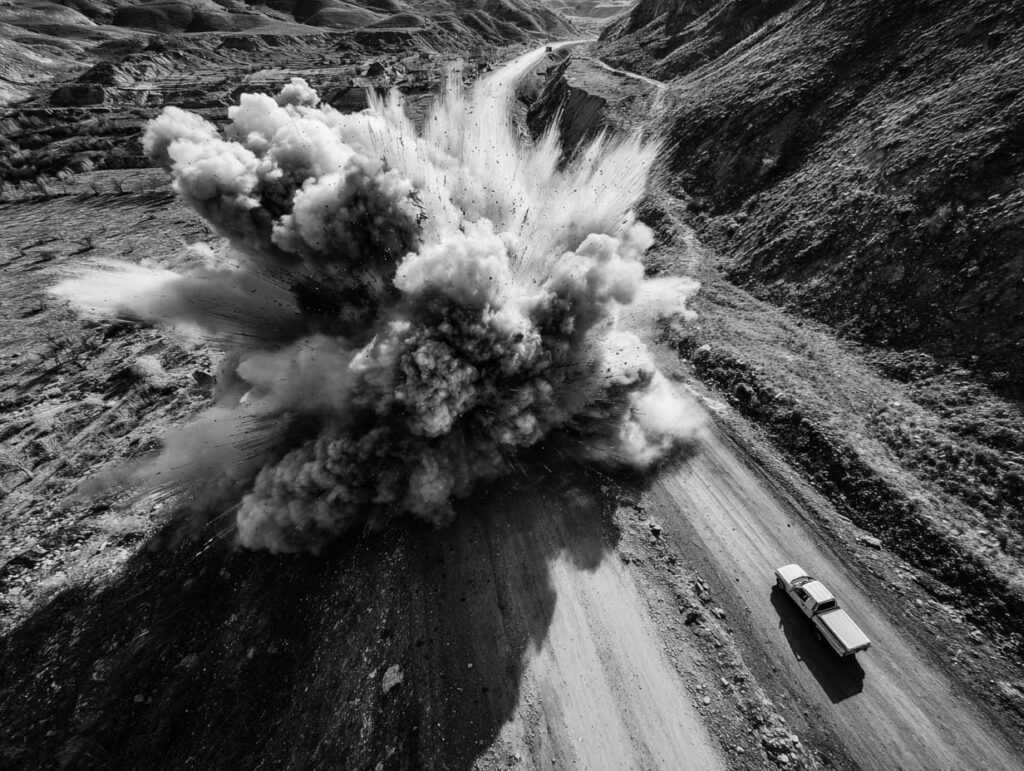
Manufacturers and supply chains by major regions
The United States: between portable systems and a “program” approach
The American industrial heartland is dominated by certified portable systems, with a framework of contracts, support, and doctrine. AeroVironment (Switchblade) illustrates this approach: standardize, industrialize, then deliver batches with training and maintenance. The United States is also exploring modular solutions, such as Anduril’s Altius family, designed to vary mission profiles and integrate across multiple platforms.
What distinguishes the American ecosystem is the clear separation between what is considered a hobby (civilian FPV) and what is considered a military program (certification, security, logistics). This does not make the approach “superior” in every way, but it reduces improvisation in favor of integration.
Europe, catching up at a rapid pace
Europe has long been held back by fragmented procurement and slow programs. The war in Ukraine has broken this inertia. In 2025, Poland signed an agreement to purchase 10,000 Warmates from WB Group, a clear indicator of a shift towards volume.
In the same vein, Germany is accelerating with new players: Helsing is presenting the HX-2 as a strike drone designed for mass production, announced with a range of up to 100 km (62 mi), and a “distributed” manufacturing approach.
France, for its part, is seeking to cover all strata: short-range munitions (Colibri/Larinae programs) and a ramp-up in operational depth via the MTO prototypes announced by the DGA in 2026.
Russia, between tactical innovation and constrained production
Russia has a practical advantage: it accepted early on that these systems would be consumed en masse. ZALA/Kalashnikov pushed the Lancet, while the integration of the Iranian Shahed (Geran-2) provided an “acceptable” long-range capability in terms of cost.
But the downside is well known: several analyses based on captured equipment highlight a dependence on imported components, and therefore a vulnerability to sanctions and logistical pressure. Electronic warfare is a constant race: if a link is compromised, it is necessary to iterate, change frequencies, add relays, or switch to wired solutions.
China, a discreet supplier and laboratory for concepts
China is less visible in the theaters observed by the West, but it has an exportable offering and considerable industrial power. Systems such as the CH-901 are described as tactical loitering munitions, launched from mobile units, with ranges of around ten kilometers and payloads adapted to light targets.
The key point is not a specific model. It is the ability to mass-produce cells, electric motors, optics, and electronic components, and thus to quickly supply a domestic market or foreign customers.
Other players, often more influential than is commonly acknowledged
Israel remains a technological pillar, with a complete range (Harop, SkyStriker, HERO) . Recent industrial documents on the HERO-120, for example, highlight a system designed for anti-armor and man-in-the-loop use, with EO/IR sensors and various engagement modes.
Turkey, via STM (Kargu) and others, has positioned itself in the field of loitering munitions suitable for close-quarters operations and export.
Finally, Iran has demonstrated the strategic importance of a “simple but sufficient” product: the Shahed-136 does not need to be sophisticated, it needs to be produced, launched in salvos, and force the enemy to disperse.
The costs, volumes, and true economics of these weapons
The issue is not just the unit price. We need to think in terms of systems: control stations, training, logistics, doctrine, countermeasures. But the shock is the drop in the entry price. At a few hundred or thousand euros per unit for contact drones, an army can buy a firepower density that was once reserved for artillery or aviation.
French sources have mentioned a target unit cost of around €5,000 for certain tactical remote-controlled munitions, precisely to enable bulk purchases. At the other end of the scale, more durable and heavier systems easily exceed tens of thousands of euros, as they are equipped with stabilized sensors, more robust links, and more massive warheads.
Mass warfare then makes the differential decisive. This is where the cost-exchange effect becomes brutal: if a $20,000 drone forces a $200,000 interception, the defender is exhausted. If, in addition, the salvo mixes drones, decoys, and missiles, the defense must sort under pressure, with a low margin for error.
The impacts on the ground and the ensuing response
Kamikaze drones first change the geometry of the front line. They make stationary positions dangerous: immobile artillery, stationary vehicles, and visible antennas become opportunities. They also accelerate sensor warfare: whoever sees first and transmits quickly wins, even with a modest payload.
The response cannot be solely kinetic. Effective anti-drone defense combines at least: detection (radar, acoustic, optronic), electronic warfare (jamming, decoys), passive protection (nets, camouflage), and interception (small arms, cannons, missiles, interceptor drones). Recent reports describe the rise of dedicated interceptor drones, priced at around €2,000 to €5,000 per unit, precisely to avoid using expensive missiles against cheap drones.
But we must be clear-headed: no single layer is sufficient on its own. Jamming hinders but does not stop everything. Nets protect but not everywhere. Missiles intercept but ruin. The sustainable response is a combination of layers, plus discipline in camouflage and mobility. Kamikaze drones do not “win” the war. They impose a permanent price.
Comparison with other weapons and what drones really replace
Kamikaze drones replace some guided artillery missions: striking a visible target quickly, with acceptable accuracy, while avoiding a more cumbersome firing cycle. They also replace some air support missions when enemy defenses make aircraft too risky.
However, it does not replace cruise missiles in terms of speed, shells in terms of volume, or aircraft in terms of flexibility. Its advantage lies elsewhere: persistence, last-minute target selection, and the possibility of high-density strikes at a reasonable cost. In other words, it is less a “super projectile” than a means of transforming information (an identified target) into action (neutralization) at short notice.
The final question, the one that overshadows everything else
The debate on autonomy is often caricatural. In the field, the trend is simpler: the more electronic warfare progresses, the more we seek automatic aids (tracking, robust navigation, locking), because an operator cannot manage everything in a saturated and jammed environment.
Academic analyses of the risks and effects of loitering munitions highlight a point that is rarely stated openly: the industrialization of strikes does not reduce responsibility, it makes it more difficult to exercise and prove.
What is coming is probably not a magical “autonomous revolution.” It is an industrialization of precision strikes and a parallel industrialization of protection. The real question becomes: who can produce, train, repair, and adapt faster than the other, without losing political and moral control over the use of force?
Sources
Directorate General of Armament (DGA), press release on remote-controlled ammunition (MTO) prototypes, January 22, 2026
Reuters, article on Ukraine’s plan to purchase FPV drones in 2025 (volumes and budget)
Reuters, dispatch on the estimated cost of a Lancet drone (order of magnitude in rubles and dollars)
ZALA / Kalashnikov Concern, industrial brochure “Lancet-3” (characteristics, speeds, endurance, payload)
Center for the Study of the Drone at Bard College, reference publications on loitering munitions
The Guardian, report on the operational use of fiber optic FPV drones in Ukraine
Le Monde, article on the emergence of interceptor drones and their announced costs
CSIS, public analyses and estimates on the unit cost of the Shahed-136 and the logic of saturation
Israel Aerospace Industries (IAI), Harop product sheet (endurance and concept of use)
Elbit Systems, SkyStriker product documentation (endurance and payloads)
WB Group, communication on the Warmate acquisition agreement (volumes)
Helsing, communication on the HX-2 strike drone (announced range and production rationale)
ODIN / Wilson Center, descriptive sheets on Chinese loitering munition systems (e.g., CH-901)
Forbes, analysis of “per shot” costs mentioned in US budget lines on Switchblade
Wikipedia and open compilation sources, technical entries on Switchblade 300 (range and endurance data)
War Wings Daily is an independant magazine.