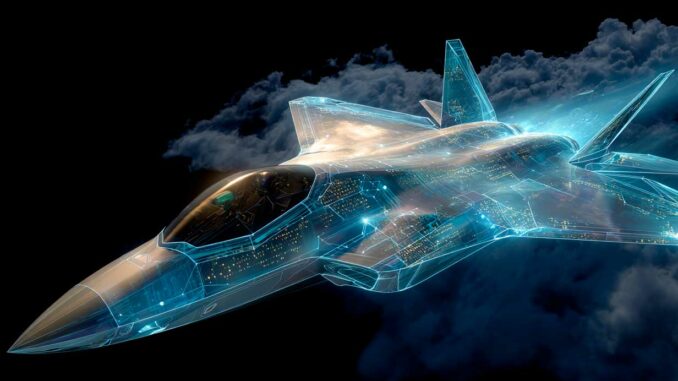
SCAF promises collaborative combat based on networks and software, but these key components are crystallizing tensions over sovereignty and intellectual property.
In summary
The Future Air Combat System (SCAF) relies less on an aircraft than on a digital architecture. The core of the program is not just the NGF, but a set of software, data networks, and algorithms designed to enable collaborative combat between piloted aircraft, drones, and sensors. It is precisely this dimension that is the focus of industrial and political concerns. Control of the code, communication architectures, and operational data determines military sovereignty, freedom of use, and strategic autonomy. The differences between France and Germany relate less to the airframe or engines than to the governance of these digital building blocks. Mechanisms for compartmentalization, division of responsibilities, and protection of intellectual property have been devised, but they remain fragile. For Berlin, access to these technologies represents a major industrial lever. For Paris, the risk is that it will dilute the strategic know-how accumulated over several decades.
Collaborative combat at the heart of SCAF
Collaborative combat is presented as the major breakthrough of SCAF. It is no longer a single aircraft, but a system of systems. The NGF, escort drones, satellites, ground sensors, and command centers must share information in real time. The goal is to speed up the decision-making loop, overwhelm the adversary, and maximize collective effectiveness.
In this model, superiority no longer relies solely on kinematic performance or stealth. It depends on the ability to collect, merge, and distribute data in a matter of seconds. The pilot becomes a combat manager, assisted by algorithms capable of prioritizing threats and proposing tactical options.
This promise explains the ambition of the program. It also explains why software and networks have become the main battleground between industrial partners.
The most sensitive technological building blocks
Contrary to appearances, aircraft airframes and engines are now well-mastered technologies. They are complex, of course, but relatively well-regulated contractually. Software poses a different problem. It is constantly evolving. It incorporates building blocks of artificial intelligence, massive data processing, and cybersecurity.
In SCAF, several layers are critical. First, secure communication networks, capable of operating in a jammed or degraded environment. Next, data fusion software, which transforms heterogeneous data streams into a usable tactical image. Finally, decision support algorithms, which directly affect the conduct of operations.
These building blocks determine operational autonomy. Whoever controls the code controls the rules of combat. This is why they are perceived as more sensitive than any hardware component.
Digital sovereignty as a red line
For France, sovereignty is not limited to the final assembly of an aircraft. It includes complete control of critical software architectures. The F-35 experience has had a profound impact on European military leaders. Dependence on closed systems controlled by an external actor limits freedom of use and complicates the autonomous development of capabilities.
Within the framework of the SCAF, the fear is clear. Too broad a sharing of source codes or access rights could lead to a loss of control over essential functions. Ultimately, this could limit a country’s ability to adapt the system to its operational needs or political choices on its own.
This concern explains France’s firm stance on certain building blocks, particularly those related to the overall architecture of collaborative combat.
Measures envisaged to protect intellectual property
In response to these tensions, several mechanisms have been discussed. The first is based on a strict division of industrial responsibilities. Each nation would be responsible for certain pillars, with clearly defined intellectual property. This model aims to avoid a total dilution of know-how.
A second lever is the compartmentalization of codes. Interfaces would be shared, but not necessarily internal algorithms. This approach allows for interoperability without total transparency. It is already used in certain multinational programs, but remains complex to manage in a system as integrated as SCAF.
Finally, specific contractual agreements on the use, modification, and export of software have been considered. They seek to provide a legal framework for what technology cannot always lock down.
A source of structural tensions in the program
These issues are not secondary. They have already caused blockages, delays, and political tensions. SCAF is not just a technological project. It is a permanent compromise between different industrial and strategic visions.
France approaches the program with a culture of national control of combat systems, inherited from the Rafale and nuclear deterrence. Germany, for its part, favors a more collaborative approach, in which technology sharing is seen as a means of strengthening European industry as a whole.
These two approaches are not incompatible, but they do generate friction. Collaborative combat, by its very nature, makes these frictions visible and difficult to circumvent.
Germany’s strategic interests
For Berlin, access to collaborative combat technologies is a major issue. German industry, which is very strong in certain areas, lags behind in integrated air combat system architectures. The SCAF is seen as an opportunity to move upmarket.
Mastering critical software components would enable Germany to strengthen its industrial and technological defense base. It would also give it greater influence in future European programs, beyond the SCAF alone.
From a military standpoint, these technologies are essential for fully integrating the Bundeswehr into high-intensity operations. They are a prerequisite for interoperability with allies and the ability to operate in an information-saturated environment.
A mutual dependency that is difficult to avoid
Despite tensions, no partner can move forward alone. Collaborative combat requires deep interoperability. A fragmented system, in which each nation excessively protects its own components, would lose some of its operational value.
This is the ambiguity of SCAF. Absolute sovereignty is incompatible with a truly collaborative system. Conversely, sharing without safeguards would weaken national strategic autonomy.
The compromise sought is therefore inherently unstable. It relies as much on political trust as on contractual clauses and technical solutions.
The risk of underperforming collaborative combat
Another issue, less often mentioned, is that of final performance. Excessive compromises on software could lead to a less responsive, less agile, and therefore less effective system when faced with adversaries who do not have the same political constraints.
The United States and China are investing heavily in integrated architectures with centralized governance. SCAF must find a model that can compete without getting lost in bureaucratic complexity.
If collaborative combat becomes a stack of negotiated subsystems, it may not deliver on its operational promises.
A political as well as a technological equation
The debate on SCAF software and networks goes far beyond the industrial sphere. It raises a fundamental question: how far are European states prepared to share their sovereignty in order to build a credible common capability?
Collaborative combat is a force multiplier. But it also reveals the fault lines within Europe. The ability to resolve these issues will determine not only the future of SCAF, but more broadly the credibility of Europe as an autonomous military actor.
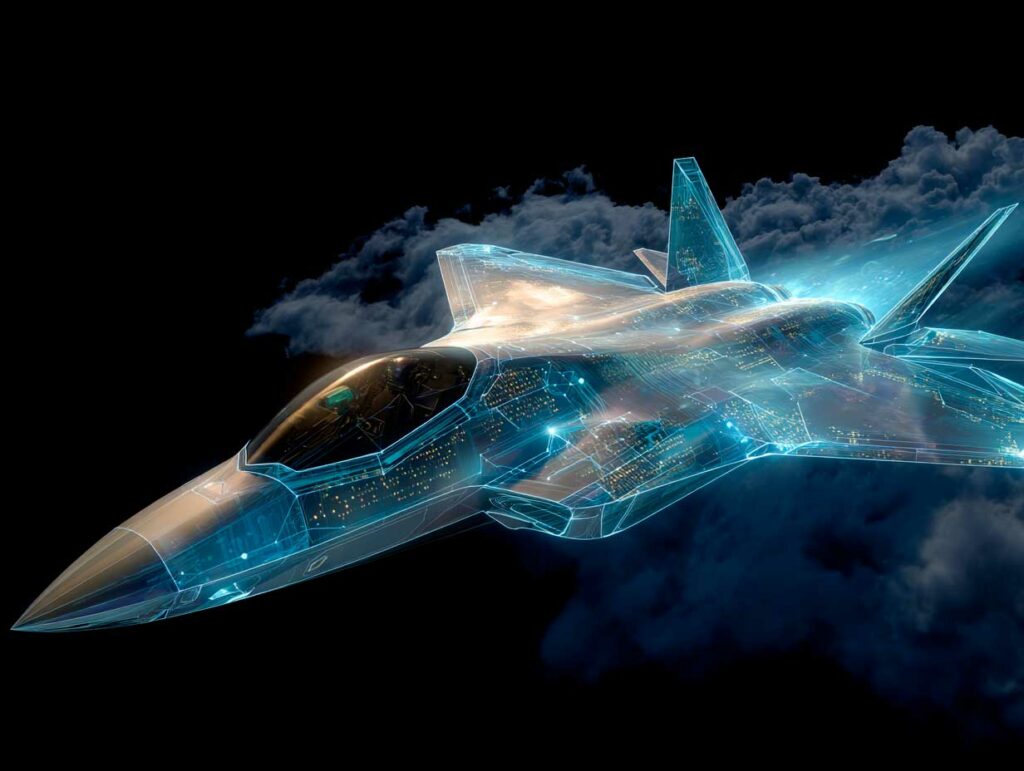
In this program, the real aircraft of the future is invisible. It is made up of lines of code, protocols, and access rules. And that is precisely why it is frightening.
Sources
- Official statements from the French Ministry of the Armed Forces
- Institutional press releases from Dassault Aviation and Airbus Defence and Space
- French and German parliamentary reports on the SCAF
- Specialist analyses of European defense and air combat systems
- Academic publications on collaborative combat and digital sovereignty
War Wings Daily is an independant magazine.