France and Germany are at loggerheads over leadership of the future fighter jet program. German industry accuses Dassault of monopolizing the €100 billion European project.
Summary
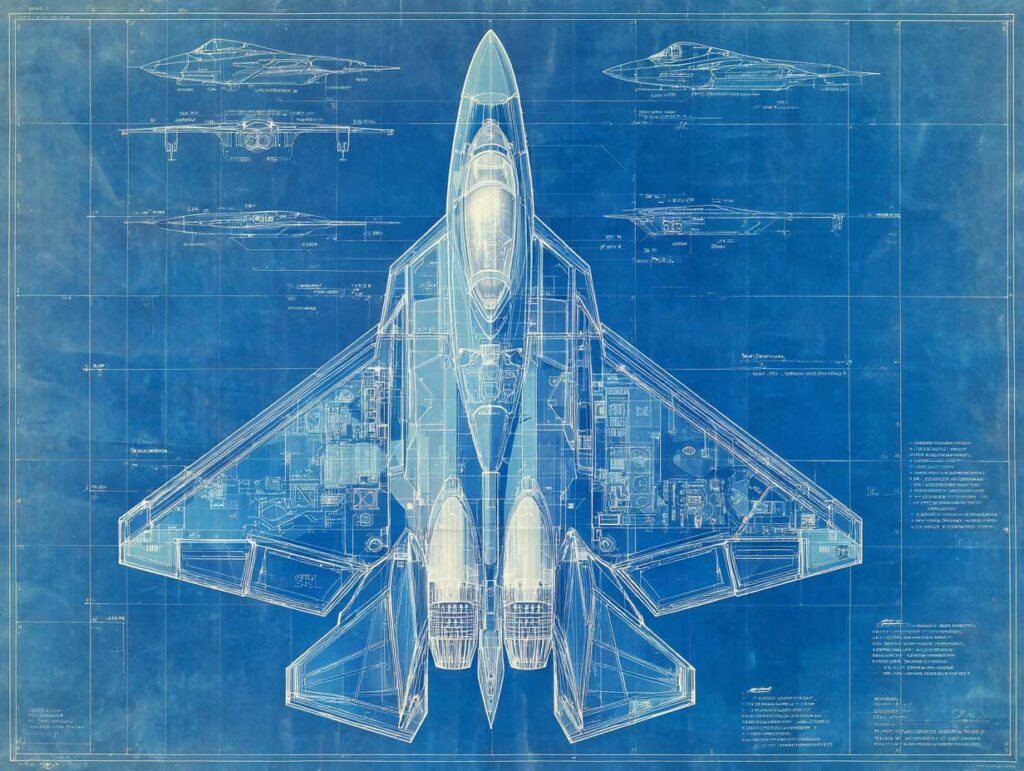
The SCAF program is experiencing its most serious crisis since its launch in 2017. The German aerospace industry, represented by the BDLI, and the IG Metall union accuse Dassault Aviation of demanding exclusive control over the design of the new-generation fighter jet. They criticize the French manufacturer for its intransigence on project governance and the choice of suppliers. Berlin is now threatening to leave the program or to develop two separate aircraft instead of one. This escalation jeopardizes a project estimated to cost between €80 billion and €100 billion over three decades. The tensions pit two incompatible industrial visions against each other. Dassault is demanding 80% of the workload on the NGF fighter, while Airbus is advocating for a fair distribution. Chancellor Friedrich Merz has postponed any decision until after February 2026.
The breakdown of trust between industrial partners
On January 9, 2026, in the German daily newspaper Handelsblatt, Marie-Christine von Hahn, CEO of the German Aerospace Industries Association, and Jürgen Kerner, vice president of the IG Metall union, deemed Dassault’s leadership position unacceptable. This public statement marked a turning point in Franco-German relations regarding the Future Combat Air System.
The rift widened in early December 2025. Jürgen Kerner and Thomas Pretzl, Chairman of the Works Council of Airbus Defence and Space, declared that they no longer trusted Dassault. On December 8, IG Metall took a further step by sending a letter to the German Ministers of Defense and Finance. In it, the union stated that it was happy to collaborate with French companies, but not with Dassault.
In November 2025, the BDLI accused the French aircraft manufacturer of being responsible for the SCAF’s delay due to its dogmatic insistence on exclusive control over the aircraft’s design and the choice of participating suppliers. The German association believes that German taxpayers’ money is financing a project in which Berlin is gradually losing all strategic influence.
The standoff over project management
Dassault Aviation, designated as the prime contractor for the New Generation Fighter, is facing a structural governance problem. The French manufacturer does not have the necessary leverage to play its role in relation to Airbus, which has twice the say thanks to the involvement of its German and Spanish subsidiaries in this project.
Éric Trappier, CEO of Dassault Aviation, sums up the situation. He explains that this mode of governance, where the leader has only one-third of the decision-making power, means that industrial considerations can clash with other interests. The process is proving to be long and difficult.
The French request has caused outrage across the Rhine. On July 7, 2025, according to the German trade publication Hartpunkt, France officially notified Berlin of its intention to control 80% of the workload within the program. This requirement does not concern the entire SCAF, but mainly focuses on the development of the NGF fighter.
Berlin perceives this demand as a unilateral act. German industry, notably Airbus Defence & Space, Hensoldt, and MTU, risks losing entire segments of the program. German companies fear being relegated to the status of mere subcontractors.
The German proposal for two separate aircraft
Faced with this impasse, the BDLI and IG Metall are proposing a radical solution. In an article published in the Handelsblatt, Marie-Christine von Hahn and Jürgen Kerner call for a commitment to two aircraft within the FCAS, out of responsibility for the security of Europe, its employees, and the idea of an autonomous and capable Europe.
Marie-Christine von Hahn characterizes this solution as an evolution of the project, allowing for different national priorities and reducing efficiency losses where cooperation makes economic and technological sense. Germany could thus develop its own fighter jet while collaborating on drones and the Combat Cloud.
The two representatives argue for continued collaboration on engines, unmanned systems, networking, and sensors, but for separate paths on the development of the manned fighter. Germany has long-standing expertise in aircraft construction.
This proposal reflects a desire for strategic autonomy. Von Hahn and Kerner suggest that Germany, with its robust federal budget, should be able to invest with confidence and take bold industrial steps by launching its own program before seeking partners, rather than joining a multinational project.
The budgetary weight of a colossal project
The SCAF represents an unprecedented investment. The program’s budget is estimated at between €80 and €100 billion, spread out until 2040. This amount encompasses not only the NGF fighter but also an entire system of systems integrating escort drones, combat cloud, engines, and new-generation weapons.
The 2020 finance law provided for €1.4 billion in commitment authorizations to cover the launch of the first development activities for the demonstration program. The planned investment in the SCAF, split equally between Paris and Berlin, amounts to around €4 billion by 2025-2026 for the demonstrator, and €8 billion by 2030.
Most of the people we talked to thought that a program like SCAF would be unthinkable for a single country, as the development costs of such a complex program would be way out of reach for a single national budget. Developing an air combat system is now more expensive than it used to be.
Engine manufacturers Safran and MTU pointed out that the United States had paid more than $1 billion over the past two years to each of its two engine manufacturers, Pratt & Whitney and General Electric, to maintain their lead in hot engine components. This compares with the Turenne 2 upstream study program, worth €115 million, notified by the DGA to Safran.
The threat of a shift to other partners
Germany is considering concrete alternatives. There is talk of a possible rapprochement with the Tempest program, developed by Great Britain with Italy and Japan, which seems to be more advanced than the SCAF. This competing project is in direct competition with the Franco-German-Spanish initiative.
Volker Mayer-Lay, a member of the Christian Democratic Union of Germany, member of the Bundestag Defense Committee, and rapporteur for the Luftwaffe, asserts that the French are not seeking partnership but demanding subordination. In his view, Germany has no reason to bow to this diktat.
The MP insists that Germany must have the courage to draw clear conclusions: either cooperation on an equal footing or new partners who truly embody the word cooperation. This position reflects a growing sentiment in the Bundestag.
In August 2025, the German trade publication Griephan Briefe reported that Michael Schoellhorn, CEO of Airbus Defense & Space, had told Chancellor Friedrich Merz that he would see no reason to continue the SCAF if Dassault Aviation prevailed on the issue of governance. This statement illustrates the rift at the top.
France’s position of resistance
Paris refuses to budge on its red lines. Emmanuel Macron stated on October 29, 2025, that if the partners were not happy with what had been decided and did not agree to continue, they were free to leave the SCAF. The French president explicitly links the fate of the SCAF to that of the MGCS tank program.
Emmanuel Macron has clearly warned that if Berlin calls into question the joint aircraft project, France will be forced to call into question the joint tank. This strategy aims to remind Germany of the cost of going it alone and to maintain a balance in bilateral military cooperation.
Dassault Aviation is confident. Éric Trappier points out that the company knows how to do everything from A to Z and has the necessary skills. The French manufacturer highlights its unique experience in designing combat aircraft such as the Rafale.
Dassault has made it known that it would be able to carry out the SCAF project on its own, from start to finish, if no agreement were reached. This stance aims to demonstrate that France has a credible alternative, even if it would be more financially restrictive.
The schedule under political pressure
The deadlines are fast approaching. Phase 1B of the program, launched in 2023 and scheduled for completion in 2026, aims to develop the technologies that will be installed on a demonstrator aircraft scheduled to fly in 2028-2029. Phase 2 involves the actual construction of the demonstrator, which Dassault wants to lead.
On January 29, 2026, Chancellor Friedrich Merz announced that decisions on the future of the program had been postponed. The year 2026 was supposed to mark the start of massive investments in the program.
According to reports, the German government expects final clarification on the future of the project from the French side by the end of February 2026 at the latest. This tight deadline puts the negotiators under extreme time pressure.
Chancellor Friedrich Merz reportedly told cabinet members in January, after a conversation with President Emmanuel Macron, that there would no longer be a joint fighter jet and that a solution involving two different fighter jets would be pursued. If this information is confirmed, it would spell the end of the SCAF as originally conceived.
Intellectual property and autonomy issues
The battle also centers on control of technology. Dassault, as an experienced European aircraft manufacturer and designated prime contractor, believes it has the right to keep some of its manufacturing secrets in the name of intellectual property protection. The French manufacturer complains that it does not have a free hand in choosing subcontractors.
This issue goes beyond the simple industrial framework. It touches on European strategic sovereignty. The SCAF should enable Europe to maintain technological independence from the United States and China in the field of sixth-generation fighter aircraft.
The initial distribution of tasks provided for a balance. One-third for Dassault, one-third for Airbus Germany, and one-third for Airbus Spain. However, this distribution has been a source of tension from the outset. Dassault, with its wealth of experience, wants to retain complete control over the aircraft’s design.
Germany fears technological dependence. If Dassault controls the system architecture and intellectual property of key technologies, German companies would be confined to secondary roles. This prospect is considered unacceptable for the German defense industrial base.
The Franco-German antagonism over the SCAF reveals structural flaws in European defense cooperation. Two industrial models are at odds. Dassault defends a logic of integrated prime contractor, acquired after decades of successful national programs. Airbus advocates a model of equal multinational cooperation, inherited from the Eurofighter culture. These two philosophies struggle to coexist within the same program.
The window for negotiation is rapidly closing. February 2026 could mark either a historic compromise or the definitive collapse of Europe’s largest arms project.
The stakes go far beyond the technical realm. The question is whether Europe can still carry out major joint defense programs or whether it must resign itself to fragmented initiatives that are more vulnerable to American and Asian competition. There is a real risk that Germany will shift toward other alliances, permanently weakening the Franco-German axis in defense matters.
War Wings Daily is an independant magazine.