Launched against Iran on February 28, Operation Epic Fury has resulted in massive strikes and tactical gains. But its strategic outcome remains uncertain.
In Summary
Operation Epic Fury entered a paradoxical phase in mid-March 2026. In immediate military terms, the United States and its partners have achieved significant results: approximately 6,000 targets struck in thirteen days, more than 90 Iranian ships damaged or destroyed, and a broad campaign against command centers, missile sites, air defenses, naval capabilities, and drone production. The resources deployed are on a rare scale: B-1, B-2, and B-52 bombers, stealth fighters, aircraft carriers, destroyers, Tomahawk missiles, HIMARS, attack drones, and the entire regional missile defense arsenal. But this offensive picture has a downside. Washington acknowledges approximately 140 wounded U.S. service members over ten days, including eight with serious injuries, and at least seven deaths as of March 8. Above all, the central question remains unanswered: Epic Fury causes extensive destruction, but does not yet clearly explain how this destruction is to translate into a stable political outcome.
Operation Epic Fury is part of a campaign of coercion against Iran
The operation was launched by U.S. Central Command at 1:15 a.m. on February 28, 2026, on the orders of the U.S. president. In its official statement, CENTCOM presents the campaign as an effort to dismantle the Iranian regime’s security apparatus by prioritizing strikes on sites deemed to pose an imminent threat. The first announced targets included the Revolutionary Guards’ command and control facilities, air defense systems, missile and drone launch sites, as well as military airfields. From the outset, therefore, the intention was not a limited show of force. It was a campaign of deep-seated disruption.
The problem is that the political definition of the war’s objectives subsequently shifted. Reuters reports that the White House and the Pentagon have in turn emphasized the destruction of Iran’s offensive missiles, the crushing of the Iranian navy, the neutralization of capabilities supporting regional proxies, and the goal of never allowing Tehran to acquire nuclear weapons. This layering of objectives gives the operation a logic of strategic coercion, but also a fragility: the more objectives accumulate, the harder it becomes to determine what would constitute a clear victory.
The U.S. strategy relies on the rapid paralysis of Iranian military functions
The initial details provided by General Dan Caine describe a very classic sequence of modern air warfare, but on an exceptional scale. On February 27, before the start of open strikes, U.S. Cyber Command and U.S. Space Command worked to disrupt, degrade, and blind Iranian detection and communication capabilities. On February 28, more than 100 aircraft launched from land and sea carried out a first synchronized wave, accompanied by Tomahawk missiles and precision ground-to-ground fire.
Reuters reports that more than 1,000 targets were struck in the first 24 hours. The objective is clear: to disrupt the enemy’s tempo before it can mount a coherent response.
In the days that followed, the campaign targeted command centers, intelligence infrastructure, ballistic missile sites, air defenses, and naval forces. According to Reuters, this initial phase was intended to “stun and disorient” them, while allowing U.S. forces to establish a form of air superiority over the theater. This is a key point. Operation Epic Fury was not conceived primarily as a ground occupation. It is a campaign to dominate the domains: command, air, sea, missiles, communications, and logistics.
The resources deployed demonstrate a concentration of power rarely seen in the past two decades
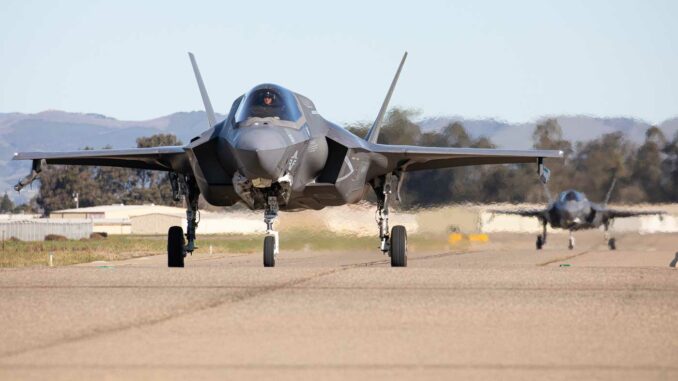
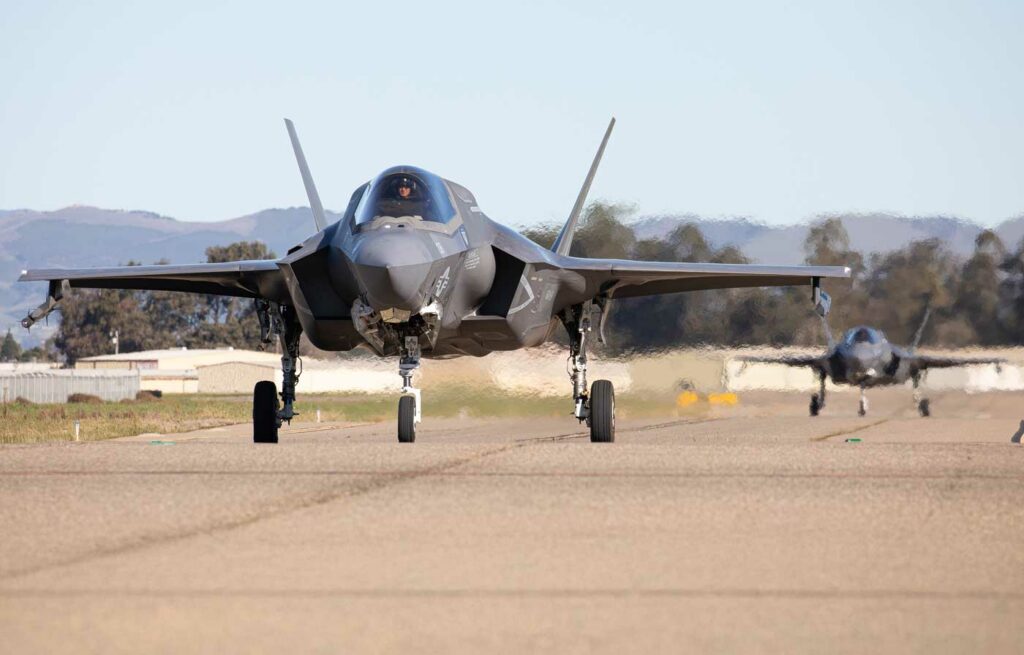
The official report published by CENTCOM after ten and then thirteen days provides a very clear picture of the arsenal mobilized. It includes B-1, B-2, and B-52 bombers, F-15, F-16, F-18, F-22, and F-35 fighters, EA-18G electronic warfare aircraft, advanced air early warning aircraft, E-2D Hawkeyes, U-2s, RC-135s, P-8s, MQ-9 Reapers, Patriot and THAAD systems, M-142 HIMARS, nuclear-powered aircraft carriers, missile destroyers, aerial and naval refueling aircraft, as well as LUCAS drones. CENTCOM also mentions unspecified “special capabilities.”
This list is no mere window dressing. It shows that Washington has deployed a comprehensive architecture of strike, intelligence, command, missile defense, and logistical support. This is not just about bombing. It is about sustaining operations over the long term against ballistic counterattacks, drone attacks, naval threats, and regional disruptions. The fact that Reuters refers to this as the largest U.S. military operation since the 2003 invasion of Iraq clearly illustrates the scale of the commitment.
The targeted sites reveal a strategy of partially disarming the regime
CENTCOM’s briefing materials also reveal the targeting logic. In addition to the initial targets already announced, after thirteen days, the list expanded to include weapons production sites, surface-to-air installations, and naval mine-laying capabilities, including ships, factories, and warehouses related to this capacity. The March 12 document reports approximately 6,000 targets struck and 90+ Iranian vessels damaged or destroyed, including 60+ ships and 30+ mine-laying vessels.
This means that the operation has clearly shifted from immediate neutralization of the threat to a broader degradation of Iran’s military capabilities.
This expansion makes operational sense. Iran has long relied on a combination of missiles, drones, maritime access denial, logistical dispersion, and asymmetric capabilities. Striking the launchers without targeting production facilities would have offered only a temporary respite. Striking the fleet without targeting the mining infrastructure would have left the threat to oil traffic unchecked. Epic Fury therefore seeks to dismantle the military framework that allows Tehran to impose costs from a distance. This is militarily rational. It is also what makes the campaign more politically burdensome.
The military results are visible, but they come at a cost
Washington is highlighting rapid gains. As early as March 2, Reuters reported that the first phase had established sufficient air superiority to protect U.S. forces and extend the strikes. The Pentagon also stated that the number of Iranian strikes had dropped significantly as weapons stockpiles and launchers were destroyed. From a strictly tactical standpoint, Operation Epic Fury thus appears to have achieved part of its goal: reducing the intensity and coordination of the Iranian response.
But the human cost is real. Successive CENTCOM statements reported three deaths as of March 1, four then six on March 2, before a total of seven deaths was announced on March 8 following the death of a soldier wounded in Saudi Arabia during the initial Iranian attacks. Reuters subsequently revealed that approximately 140 U.S. service members had been wounded in ten days, most of them slightly, with 108 already returned to duty at the time of the official statement. Eight remained seriously injured. This is therefore far from a cost-free campaign for Washington.
The mid-March 2026 assessment shows a tactical victory, but not yet strategic control
As of mid-March, the operation continues “relentlessly,” according to the White House. On March 14, Reuters further reported that any attempt at a ceasefire had been ruled out and that Epic Fury was continuing. At the same time, the operation intensified further with the U.S. strike on military targets on Kharg Island, the nerve center of Iranian oil exports. According to Reuters, Kharg handles approximately 90% of Iran’s oil exports, with around 1.55 million barrels per day passing through the island out of 1.7 million exported in 2026. The message is twofold: Washington wants to increase military pressure, but also to signal that it can target Iran’s strategic economy without yet directly striking the oil infrastructure itself.
This is where the assessment becomes more mixed.
On the one hand, Operation Epic Fury proved that the United States could strike quickly, deeply, and hard, while containing part of the retaliation. On the other hand, Iran succeeded in imposing significant regional costs. Reuters notes that Tehran carried out retaliatory strikes against bases, diplomatic sites, airports, hotels, and oil infrastructure in the Gulf. The Strait of Hormuz was virtually closed, with major effects on energy and maritime transport. An operation can destroy many targets and, despite everything, leave the central problem intact: how to prevent the adversary from continuing to disrupt the regional economy without sliding into an even broader war?
Epic Fury’s real weak point remains the post-strike phase
The strongest criticism, reported by Reuters as early as March 7, concerns the lack of a clearly defined endgame. If the objective is to reduce Iran’s missiles and navy, military indicators may suffice. If the objective is to permanently prevent Iran from supporting its proxies and acquiring nuclear weapons, the campaign changes in scale and duration. If the implicit objective becomes reshaping the power structure in Tehran, then Epic Fury enters a much more politically dangerous zone.
This ambiguity is not a minor detail. It shapes how we judge the results. As of mid-March 2026, Epic Fury is neither a tactical failure nor a complete strategic success. It is a high-intensity campaign that has severely degraded Iran’s military apparatus, but has not yet demonstrated that it can produce regional stability, a safe reopening of maritime routes, or a controlled political exit. The strike on Kharg even shows that the logic of escalation remains alive. The more economic levers enter the fray, the greater the risk of things spiraling out of control.
The mid-March assessment shows above all a war that knows how to strike, but not yet how to end
Operation Epic Fury has fulfilled part of its military promise. It has demonstrated U.S. capabilities in concentration, joint coordination, and destruction on a very large scale. It has weakened air defenses, struck command centers, depleted stockpiles and launchers, targeted the Iranian navy, and expanded pressure to include production and mining capabilities. That is significant.
But the story doesn’t end there. By mid-March 2026, the decisive question is no longer whether Epic Fury strikes hard. That is a given. The question is whether Washington can convert this operational superiority into a clear political outcome without getting bogged down in a campaign that grows ever larger, ever more costly, and ever harder to stop. A war may dominate the air, the sea, and the electromagnetic spectrum. It does not automatically dominate what comes next.
Sources
U.S. Central Command, “U.S. Forces Launch Operation Epic Fury,” February 28, 2026.
U.S. Central Command, “Operation Epic Fury” operations page.
U.S. Central Command, “Operation Epic Fury Fact Sheet: The First 10 Days,” March 9, 2026.
U.S. Central Command, “Operation Epic Fury Fact Sheet: The First 13 Days,” March 12, 2026.
U.S. Central Command, situation reports from March 1, 2, and 8, 2026, on U.S. casualties.
Reuters, March 2, 2026, initial timeline of the operation and description of the first wave.
Reuters, March 5, 2026, clarification from the Pentagon on military objectives.
Reuters, March 7, 2026, analysis of political risks and the lack of a clear endgame.
Reuters, March 10, 2026, estimate of U.S. casualties.
Reuters, March 14, 2026, refusal to agree to a ceasefire at this stage and continuation of the operation.
Reuters, March 14, 2026, strike on Kharg Island and oil-related issues.
War Wings Daily is an independant magazine.