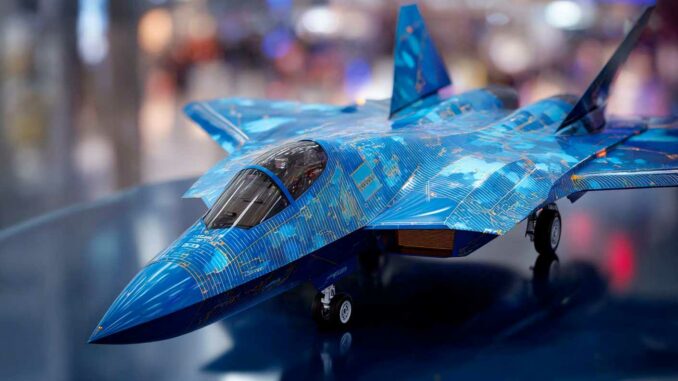
The SCAF was supposed to embody a united European defense. Instead, it highlights the French, German, and industrial divisions surrounding the future fighter jet.
In Summary
The SCAF was supposed to be the most ambitious symbol of a united European defense. Launched by France and Germany in 2017, with Spain joining in 2019, the program was intended to pave the way for the post-Rafale and post-Eurofighter era through a new-generation fighter jet, drones, sensors, engines, connected weapons, and a combat cloud. Nine years later, the project is on the verge of collapse. The cause is not merely technical. It is political, industrial, and strategic. France wants to retain sovereign control over the future aircraft, particularly for nuclear deterrence and naval aviation. Germany refuses to be reduced to the role of financier or subcontractor. Dassault Aviation demands true project leadership. Airbus Defence and Space demands a balanced industrial partnership. The result: approximately 3.2 billion euros have already been committed to Phase 1B, without guaranteeing progression to the next phase.
The SCAF was meant to be a system, not just an aircraft
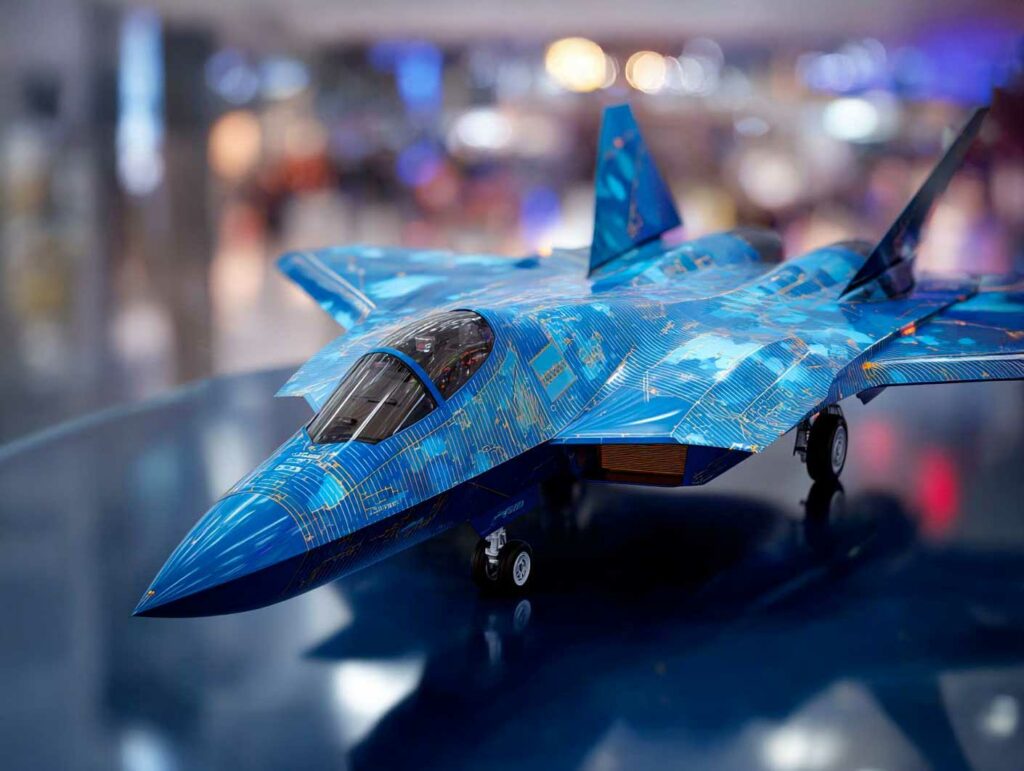
The Future Air Combat System is often presented as a European fighter jet. That is an oversimplification. The SCAF is designed as a complete system. At its core is the New Generation Fighter, or NGF, a fighter jet intended to replace the French Rafale and the German and Spanish Eurofighter by 2040. But this aircraft must not fly alone.
It must be accompanied by support drones, known as Remote Carriers. Some could serve as decoys. Others would carry sensors, jam enemy radars, or carry weapons. The whole system would be connected via a combat cloud—that is, a digital architecture capable of sharing data among aircraft, drones, satellites, ground-to-air systems, ships, and command centers.
The stakes are clear. In a high-intensity conflict, the fighter jet is no longer limited to its speed, maneuverability, or radar. It becomes a node in a network. It must detect, fuse, transmit, jam, survive, and strike. The SCAF was intended to allow Europe to stay in this race against the United States, China, and Russia.
On paper, the logic was sound. In practice, it ran into a brutal question: who’s in charge?
NGF governance has become the breaking point
The main sticking point concerns the future fighter jet itself. Dassault Aviation has been designated prime contractor for the NGF pillar. For the French manufacturer, this position is not merely an honorary title. It must grant real authority over the aircraft’s architecture, technical decisions, and the selection of subcontractors.
The French position rests on a strong argument. Dassault is the only manufacturer in the trio to have designed a complete modern fighter jet—the Rafale—entirely on its own, from the drawing board to export. Airbus Defence and Space has solid experience with the Eurofighter, but that program was developed in partnership with BAE Systems and Leonardo. Germany has not single-handedly developed the complete architecture of a fighter jet in decades.
France’s fault, however, is real. Paris and Dassault have long defended the prime contractor role with such firmness that Berlin eventually saw it as a desire for dominance.
France wants an aircraft capable of operating from an aircraft carrier, carrying airborne nuclear deterrence, and remaining compatible with an expeditionary operational culture. These requirements are legitimate for France. They do not align with German needs.
Germany’s fault is just as clear. Berlin wants a balanced industrial partnership, but a fighter jet isn’t built like a three-column Excel spreadsheet. The logic of “fair industrial return” may protect domestic jobs. It can also kill technical efficiency. A stealth, connected, armed, and certified aircraft requires clear leadership. If every critical decision must be negotiated between competing manufacturers, the timeline becomes untenable.
The result is an impossible compromise: France wants a lead designer, Germany wants balanced co-production, and Airbus refuses to be a mere supplier in a program led from Saint-Cloud.
France bears heavy responsibility
France is not merely a victim of the SCAF’s deadlock. It shares part of the blame.
France’s first mistake was launching a highly political program before finalizing military requirements. Paris wanted to make the SCAF a symbol of European cooperation. But a fighter jet is not a Franco-German press release. It must meet a doctrine, certification requirements, a weight envelope, propulsion choices, stealth trade-offs, and operational scenarios.
France has very specific requirements. The future aircraft must be capable of participating in airborne nuclear missions. It must also be compatible—at least according to French doctrine—with deployment from an aircraft carrier. This entails a reinforced structure, landing gear constraints, resistance to carrier landings, and adaptation to catapults and naval operations. Germany does not have this requirement.
France’s second mistake was underestimating the shift in the balance of power. In 2017, Berlin was investing little in its defense. Following Russia’s invasion of Ukraine, Germany shifted to a new budgetary scale. It is less willing to accept a secondary role. France has retained its reflex for strategic leadership. Germany has begun to speak as a major financier.
France’s third misstep is failing to strike a balance earlier between sovereignty and cooperation. If certain technologies related to stealth, flight control, flight laws, the nuclear mission, or system architecture cannot be shared, this should have been made clear from the outset. Cooperating while refusing to transfer critical components creates a toxic ambiguity.
Finally, Dassault benefits from the Rafale’s commercial success. This strengthens its position. But it also reduces its incentive to compromise. The company knows it can defend a credible national trajectory. This is rational for it. It is more problematic for a program funded by three states.
German responsibilities are just as clear
Germany also bears major responsibility for the impasse.
Germany’s first mistake is to confuse industrial cooperation with technical co-leadership. Berlin wants to protect Airbus Defence and Space, its design offices, its expertise, and its jobs. That is normal. But demanding de facto equality on the core of the aircraft, when Dassault has the most direct experience in fighter architecture, creates constant friction.
Germany’s second mistake is political sluggishness. The Bundestag exercises strict budgetary control. This is healthy for democracy. But when applied to such a complex combat program, this process has often slowed down decision-making. Every phase becomes a negotiation. Every installment becomes a political test. The industrial schedule suffers as a result.
Germany’s third mistake is strategic ambiguity.
Germany has chosen the American F-35 to carry out NATO’s nuclear mission. It remains committed to the Eurofighter. It wants to have a say in the SCAF. It is also eyeing the competing GCAP program, led by the United Kingdom, Italy, and Japan. This range of options gives Berlin flexibility. It undermines French confidence.
Germany’s fourth misstep is wanting a European aircraft without accepting all the consequences of shared European leadership. If Airbus wants to be a co-owner of the technological core, it must also accept the technical responsibilities and risks. Yet industrial competence cannot be decreed through budget allocation. It is demonstrated by the ability to deliver a coherent, certifiable, and exportable aircraft.
Spain remains committed, but it complicates the industrial equation
Spain is sometimes portrayed as a secondary player. This is inaccurate. Madrid joined the program in 2019 and also defends its industrial interests. Indra plays an important role in sensors, systems, and certain digital components. Airbus also represents Spanish interests in several aspects of the program.
Spain’s entry has given the SCAF greater European weight. It has also made the industrial distribution more complex. A Franco-German program was already difficult. A Franco-German-Spanish program is even more so. Each country wants benefits. Each manufacturer wants to preserve its expertise. Each ministry wants to justify its contribution to its parliament.
This logic is understandable. But it clashes with the reality of a fighter jet. The NGF cannot be divided up indefinitely. Stealth, aerodynamics, engines, mission systems, sensors, weapons, and maintenance must be integrated from the outset. The more fragmented the division of labor, the greater the technical risk.
Taxpayers are already footing a hefty bill
The issue of cost is central. The SCAF is generally estimated at around €100 billion over its entire lifespan, sometimes between €80 and €100 billion depending on estimates. Some recent assessments even suggest a higher cost when development, acquisition, infrastructure, testing, maintenance, and successive upgrades are added together.
The amounts already committed are significant. The initial contracts amounted to tens, then hundreds of millions of euros for concept studies and the initial phase. Phase 1B, awarded in late 2022, totals 3.2 billion euros for approximately three and a half years of work. It is intended to fund architectural studies, technology maturation, demonstrators, and test preparation.
In theory, this sum is shared among France, Germany, and Spain. For France, the order of magnitude is therefore approximately 1.1 billion euros for Phase 1B. Added to this are national projects, mentioned in French parliamentary documents, amounting to around 700 million euros. The French investment related to the SCAF and its national components can therefore be estimated at approximately 1.8 billion euros for this phase.
The problem is not just the amount. It is the return on this expenditure. Spending 3.2 billion euros to prepare a demonstrator makes sense if the program moves on to the next phase. Spending that amount only to ultimately find that the partnership is politically and industrially incompatible would be much harder to justify.
Here, the taxpayer is funding studies, expertise, engineering firms, and technological components. Not everything is lost if the SCAF falls apart. Some technologies could be reused. But the opportunity cost is real. Every year lost brings Europe closer to a capability gap between current aircraft and the combat systems of the 2040s.
The timeline is slipping dangerously
The initial timeline targeted an entry into service around 2040. That date was already tight. Designing a new-generation fighter jet takes several decades. The Rafale itself is the product of a long cycle, from the political decisions of the 1980s to its full operational maturity.
Phase 1B was intended to pave the way for the next steps. Phase 2 was supposed to enable the development of a demonstrator, with flights expected by the end of the decade. However, the Phase 2 contract was not finalized by the expected deadline. Mediation efforts between Dassault and Airbus have failed or, at the very least, have not produced a clear resolution by spring 2026.
This delay is serious. A two- or three-year delay at the demonstrator stage can turn into a five- to ten-year delay in entering service. Meanwhile, the United States is continuing to develop its collaborative combat architectures. The United Kingdom, Italy, and Japan are moving forward with the Global Combat Air Programme. China is making rapid progress in stealth aircraft, drones, and electronic warfare.
Europe therefore risks repeating its old mistake: funding multiple competing programs that are too late, too expensive, and produced in too small quantities.
The Real Disaster Is Strategic
The word “disaster” may seem excessive. It is not, however, if one looks at the issue from a strategic perspective.
The SCAF was supposed to solve three European problems. It was supposed to preserve a defense industrial base capable of designing a complete combat aircraft. It was supposed to prevent fragmentation among the Rafale, Eurofighter, Gripen, and future competing programs. It was supposed to give Europe sovereign capability in the face of American dependence.
For now, it is having the opposite effect. It exposes national differences. It reignites industrial rivalries. It shows that Europe knows how to launch symbolic programs but struggles to enforce the discipline needed to see them through.
France wants to protect its sovereignty. It is right. Germany wants to protect its industry. It is right, too. But the two positions become incompatible when pushed to their limits. A fighter jet cannot simultaneously be French in sovereignty, balanced in German terms, Spanish in its economic benefits, NATO-interoperable, exportable, naval, nuclear, stealthy, connected, and governed without a clear leader.
This is the crux of the problem. The SCAF lacks neither money, engineers, nor ambition. It lacks a political consensus accepted by all.
The possible way out requires a tough choice
Three scenarios are emerging.
The first is maintaining a unified SCAF. This would require Dassault to retain actual project management control over the NGF, while giving Airbus and Indra substantial responsibilities in other key areas: drones, combat cloud, sensors, simulation, and collaborative systems. This is the most technically rational solution. It is also the most politically difficult for Berlin.
The second scenario is the separation of the future aircraft. France would develop its own next-generation fighter, while Germany and Spain could pursue a different path. The partners would continue to cooperate on combat cloud, drones, or certain digital standards. This option would limit the political fallout, but it would result in several competing European aircraft.
The third scenario is a gradual abandonment. The SCAF would survive in rhetoric, but each country would prepare a national or alternative solution. This would be the worst-case scenario: billions spent, expertise scattered, a lost timeline, and increased dependence on foreign solutions.
The question is therefore no longer whether the SCAF is going through a crisis. It is already in one. The real question is whether Paris, Berlin, and Madrid still want to build a common military tool or merely preserve diplomatic appearances.
Europe’s defense capabilities are not judged by its exhibition models. They are judged by its ability to make decisions. Regarding the SCAF, we must now choose between disciplined cooperation, with a clearly identified leader, or an open acknowledgment of separation. Continuing to fund ambiguity would be the most costly decision.
War Wings Daily is an independant magazine.