China’s Atlas system promises to coordinate 96 drones. A tactical breakthrough that threatens conventional air defenses in Asia.
In summary
China has unveiled the Atlas system, a mobile platform capable, according to Chinese state media, of coordinating up to 96 drones from a single command vehicle. The system consists of a Swarm-2 launch vehicle, a command post, and a support vehicle. Each Swarm-2 can carry and launch 48 fixed-wing drones, with an announced three-second interval between each launch. This demonstration does not merely showcase a new launcher. It reflects a broader evolution in Chinese strategy: using swarms of drones to reconnoiter, jam, saturate, and strike. Against India, particularly along the Line of Actual Control, this capability could complicate high-altitude air defense. But caution is warranted. Atlas is being showcased by Beijing. Its actual combat performance, under jamming and against modern defenses, remains to be proven.
The Atlas system shows a China focused on algorithmic warfare
The unveiling of the Atlas system marks an important milestone in the display of Chinese military power. Beijing is no longer just showcasing fighter jets, ballistic missiles, or ships. China is now showcasing autonomous combat architectures, designed to operate in networks and saturate airspace.
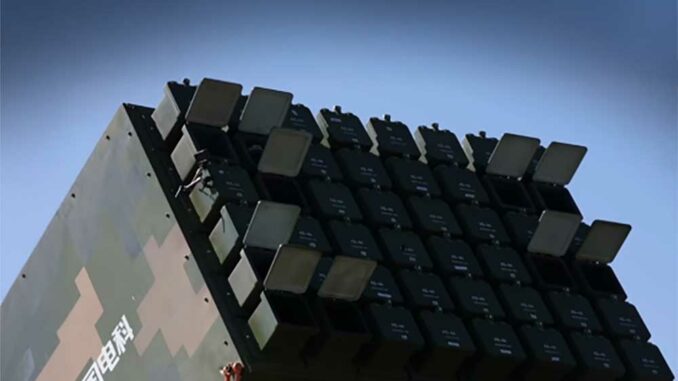
According to information broadcast by CCTV and reported by the Chinese press, Atlas combines three main components: a Swarm-2 launch vehicle, a command vehicle, and a support vehicle. The Swarm-2 can transport and launch 48 fixed-wing drones. The command vehicle can oversee up to 96 drones simultaneously. This data is key. It means the system is not intended to be a simple drone battery. It is designed as a combat node capable of organizing a coherent aerial force.
The Chinese demonstration showed a complete sequence: reconnaissance of several visually close targets, identification of a command vehicle, opening of the launcher, deployment of drones, in-flight lock-on, and precision strike. It should be noted that this sequence remains a controlled demonstration. It does not prove that the system would function the same way against an adversary equipped with jamming, decoys, multi-layer radars, and anti-drone systems. But it does reveal China’s military intent.
The message is clear. China wants to reduce the time between detection, decision-making, and strike. It also wants to shift part of the operator’s cognitive load to algorithms. In modern warfare, this logic matters just as much as the drone’s range or payload.
The Swarm-2 transforms the military truck into an aerial swarm generator
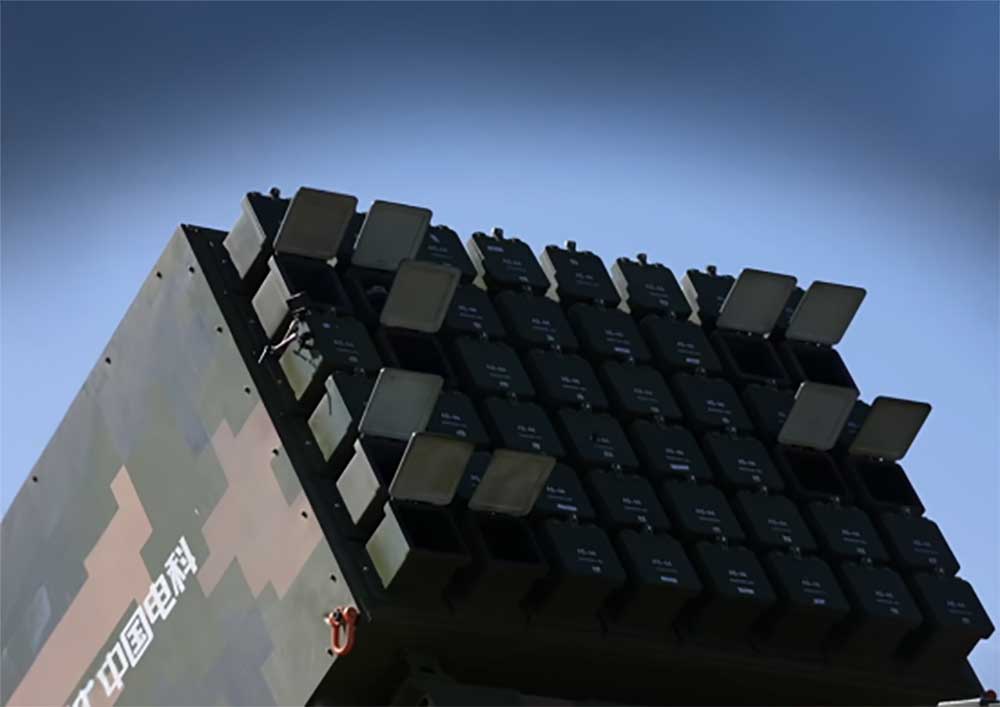
The visible heart of the Atlas system is the Swarm-2. This vehicle had already been unveiled at the 2024 Airshow China in Zhuhai. Its function is simple to understand: to transport a large number of small fixed-wing drones, then launch them rapidly in sequence.
The launch every three seconds is no small matter. At this rate, a single vehicle can deploy its 48 drones in just under two and a half minutes. Two coordinated vehicles can theoretically launch 96 drones in about five minutes. This rate of fire allows for the creation of sudden pressure on a local defense. It also reduces the launcher’s exposure time, as it can move after the salvo.
The drones are not described as identical. Chinese sources mention several payloads: electro-optical reconnaissance, communication relays, electronic warfare, and attack munitions. It is this mix that makes the system valuable. An effective swarm is not just a large group. It is a system where each drone can play a different role.
In a realistic scenario, reconnaissance drones go first. They locate radars, command posts, or mobile vehicles. Electronic warfare drones may follow to jam communications or disrupt sensors. Attack drones then intervene, either alone or in waves. This sequence transforms a salvo into a structured operation.
China is therefore seeking to replicate, on a smaller scale and at lower cost, a strategy once reserved for fighter jets, cruise missiles, and electronic warfare systems.
The drone swarm wins not through power, but through saturation
The strength of a drone swarm does not lie in the individual power of each aircraft. A small fixed-wing drone remains vulnerable. It flies slower than a missile. It carries a limited payload. It can be destroyed by a cannon, a short-range missile, a laser system, a jammer, or an interceptor drone.
But the swarm poses a different problem. It forces the defense to process too many targets at once. A radar must detect, classify, and track the objects. A command center must decide which ones are priorities. Defense systems must engage the targets. Each interception consumes time, ammunition, and attention.
This is where saturation becomes dangerous. If 96 drones arrive from multiple directions, at low altitude, with different flight profiles, the defense must do more than just fire. It must understand. It must distinguish between a reconnaissance drone, a decoy, a communication relay, a jammer, and an armed drone. If it makes a mistake, it may waste its interceptors on secondary targets.
Cost is also a key factor. A modern surface-to-air missile can cost several hundred thousand euros, sometimes much more depending on range and type. Intercepting a small drone with such a missile becomes economically unfeasible. The wars in Ukraine, the Red Sea, and the Middle East have highlighted this asymmetry. Relatively simple drones can force the adversary to deploy much more expensive defensive assets.
Atlas fits into this logic. It does not necessarily promise to destroy an entire air defense system. It seeks to wear it down, disrupt it, and open windows for other strikes.
The Sino-Indian border becomes a credible theater of operations
The Indian dimension of the issue is essential. China and India share a disputed border of approximately 3,800 kilometers along the Line of Actual Control. Tensions in the Himalayas, particularly since the Galwan clashes in 2020, have led to sustained military buildup on both sides.
In this context, a system like Atlas offers several advantages for Beijing. First, it can support tactical reconnaissance in hard-to-reach areas. High altitudes, valleys, ridges, and weather conditions complicate ground observation. Drones launched in large numbers can quickly cover multiple axes.
Second, Atlas could be used to test India’s defenses without immediately deploying manned aircraft. Sending drones toward sensitive locations forces the activation of radars, identifies positions, maps reactions, and measures response times. Even without striking targets, the swarm serves as an intelligence tool.
Finally, in an open conflict, the swarm can target specific objectives: surveillance radars, communication relays, forward posts, logistics depots, surface-to-air batteries, or command vehicles. The risk is particularly serious in high-altitude mountain terrain, where logistics are difficult and where the loss of a communication node can disrupt an entire section of the front.
It would, however, be an exaggeration to present Atlas as a miracle weapon against India. The Indian Army has invested in surveillance, drones, anti-drone systems, and multi-layered defenses. But pressure from China is forcing New Delhi to accelerate its efforts. Conventional defense, designed for aircraft and missiles, is no longer sufficient against cheap and numerous swarms.
The Indian challenge is as much about software as it is military
India’s response cannot be limited to purchasing more surface-to-air missiles. Against swarms, a layered defense is required. Radars must detect small signatures. Electro-optical systems must confirm targets. Jammers must disrupt communications. Cannons, lasers, microwaves, and interceptor drones must neutralize threats at the lowest possible cost.
The real challenge lies in the command system. A swarm attack demands rapid decisions. If every lead must be validated manually, the defense is too slow. Therefore, part of the detection, classification, and allocation of targets must be automated. This is the same trend observed on the offensive side. Anti-drone defense is also becoming algorithmic.
India is already working on indigenous capabilities. The Indian Air Force is notably seeking swarm-based detection and surveillance solutions. The DRDO is developing drone detection and interdiction systems. Indian companies are working on tactical drones, loitering munitions, and countermeasures. But the challenge is speed.
China benefits from a powerful industrial base, a massive electronics supply chain, and the ability to rapidly test concepts. India has a robust technological ecosystem, but its acquisition system often remains slower. In drone warfare, this slowness comes at a high cost.
The Atlas system is part of a broader Chinese strategy
Atlas should not be analyzed in isolation. For several years, China has been investing in reconnaissance drones, loitering munitions, MALE drones, stealth combat drones, ship-based systems, and autonomous ground platforms. It is also developing anti-drone capabilities, including laser systems, microwave systems, and specialized missiles.
This dual approach is consistent. Beijing knows that drones will be used against it. It is therefore developing both swarm attack capabilities and swarm defense capabilities. This logic is evident at Chinese defense exhibitions, where offensive systems and anti-drone systems are often displayed together.
The key term is intelligentized warfare. In Chinese military thinking, it refers to the shift from simply digitized warfare to warfare where artificial intelligence, algorithms, sensors, and networks accelerate decision-making. Atlas fits this logic perfectly. The individual drone is not the focus. The focus is on coordination.
This development aligns with a global trend. The United States is developing Collaborative Combat Aircraft. Australia is working on the MQ-28 Ghost Bat. Turkey is investing in armed drones and unmanned aerial vehicles. Russia and Ukraine have industrialized the massive use of tactical drones. China aims to occupy the high end of the spectrum: the coordinated, mobile, integrated, and potentially exportable swarm.
The system’s limitations remain significant
We must avoid sensationalist interpretations. Atlas is concerning, but it is not invincible.
The first limitation concerns communications. A coordinated swarm depends on links between drones, the command post, and possibly relays. If these links are jammed, degraded, or spoofed, the swarm must continue to operate using its autonomy. Chinese media claim that the algorithms allow for real-time adaptation. But the actual level of robustness remains unknown.
The second limitation concerns target identification. Recognizing a command vehicle in a prepared exercise is not the same as identifying it in a real-world environment, with camouflage, decoys, smoke, jamming, adverse weather, and rapid movements. The promise of artificial intelligence must be tested against military deception.
The third limitation is logistical. Launching 96 drones requires transporting, maintaining, programming, recharging, or replacing them. A mobile system may be powerful, but it needs a support ecosystem. In high mountains, this support becomes more complicated.
The fourth limitation concerns the vulnerability of the launcher. The Swarm-2 vehicle can create an aerial swarm. But before or after launch, it remains a ground target. If detected by satellite, drone, electronic intelligence, or aerial reconnaissance, it can be struck.
Atlas does not, therefore, render conventional defenses obsolete. It forces them to evolve.
The Chinese demonstration heralds a crisis for conventional defenses
The true breakthrough of Atlas lies in its tactical message: conventional air defense can no longer think solely in terms of aircraft, helicopters, and missiles. It must account for dozens of flying objects—sometimes inexpensive, sometimes autonomous, sometimes expendable.
This changes budget structures. Purchasing more advanced missiles is not enough. We also need cheaper sensors, low-cost effectors, mobile jammers, radars adapted to small targets, directed-energy weapons, and a distributed defense doctrine. Cost-effectiveness becomes as important as pure performance.
For India, Atlas is a direct warning. For Taiwan, Japan, the Philippines, and U.S. forces in the Pacific, it is as well. A China capable of launching swarms from trucks, ships, or forward platforms can multiply tactical dilemmas. It can force the adversary to defend too many sites, for too long, and with too little ammunition.
The best response will not be purely technological. It will be organizational. The militaries that can quickly integrate drones, counter-drones, artificial intelligence, and networks will have the advantage. The others will continue to fire costly missiles at mass-produced threats.
Atlas may be just a first version. That is precisely what makes it significant.
The danger is not just the system unveiled in 2026. The danger is the industrial trajectory it reveals. China learns quickly, produces in volume, and turns its demonstrations into doctrine. Faced with this, neighboring militaries no longer have the luxury of watching from the sidelines. They must adapt their defenses before saturation becomes the norm.
War Wings Daily is an independant magazine.