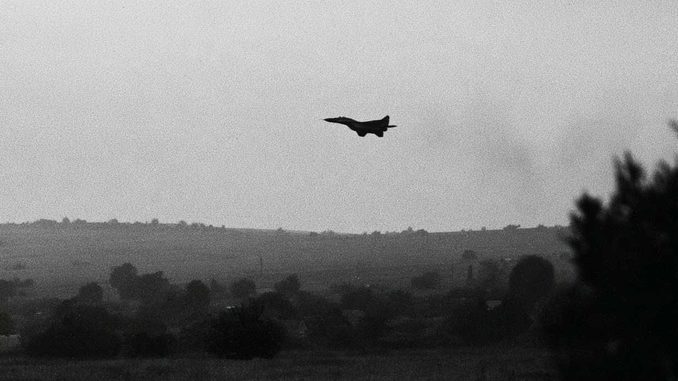
Poland promises two MiG-29s to Ukraine in a 50 million euro package. Performance, financing, and summary of fighters delivered by the West.
Summary
On October 29, 2026, Poland confirmed its intention to transfer two MiG-29 Fulcrum fighters to Ukraine as part of a new military assistance package valued at 50 million euros. Only one aircraft is still airworthy. The second, having reached the end of its technical lifespan, is expected primarily to provide spare parts. Warsaw also plans to provide 155 mm and 152 mm artillery ammunition, 20 mm shells for the cannons of Ukrainian F-16s, and Piorun anti-aircraft missiles. This decision comes after several months of diplomatic tensions between the two countries. Above all, it highlights Kyiv’s difficulties in keeping its fighter fleet operational. Despite Western F-16s and French Mirage 2000s, MiG-29s remain useful for air defense and attack missions. However, their availability depends on aging airframes, spare parts, and limited maintenance capabilities.
Transfer of two MiG-29s confirmed by Warsaw
On October 29, 2026, Dariusz Łukowski, Director of the Strategy and Planning Department of the Polish Ministry of Defense, confirmed to the daily Rzeczpospolita the upcoming transfer of two MiG-29s to Ukraine.
Deputy Defense Minister Paweł Zalewski also confirmed this agreement. No precise delivery date has been communicated. On October 30, the Ukrainian Ministry of Foreign Affairs indicated that operational discussions were ongoing.
The two aircraft are in very different technical conditions. One is still capable of flying, while the other has exhausted its authorized service life.
The latter could be used to salvage engines, electronic equipment, and mechanical components. This does not, therefore, represent two immediately operational fighters.
This announcement extends the aerial assistance already provided by Warsaw. According to information published by Rzeczpospolita, Poland had transferred 14 MiG-29s to Ukraine in 2022 and 2023 in varying technical states.
The 50 million euro funding relies on a Polish donation
The new military package is estimated at 50 million euros. This sum corresponds to the total valuation of the equipment intended for Kyiv, and not to the price of the two aircraft.
Poland is providing equipment from its military stocks. It is not a purchase of new fighters financed by Ukraine. No direct payment from Kyiv for these two MiG-29s has been announced.
However, Warsaw has not published a financial breakdown between the aircraft, ammunition, and other equipment. Any potential refurbishment costs for the fighters are not further detailed either.
This distinction is important. In September, Ukrainian Ambassador to Poland Vasyl Bodnar explained that funding for the modernization of the MiG-29s still constituted an obstacle.
Furthermore, the European Union has mechanisms for partial reimbursement of military donations, notably the European Peace Facility. The Council of the European Union unlocked 4.7 billion euros in additional reimbursements on October 26, 2026. However, no specific European funding for this new Polish package has been confirmed.
In July, Polish Defense Minister Władysław Kosiniak-Kamysz evaluated the total military donations already made since 2022 at 16.45 billion zlotys, or approximately 3.8 billion euros.
Ammunition accompanying the MiG-29s meets several emergencies
The package includes 155 mm artillery shells, used by many Western systems, and 152 mm shells, suited for Soviet-origin pieces.
It is also expected to supply 20 × 102 mm ammunition for the M61 Vulcan cannon on Ukrainian F-16s. This six-barrel rotary weapon can reach a firing rate of approximately 6,000 rounds per minute.
This ammunition is notably used against Russian drones. On October 22, the Ukrainian Ministry of Defense had already announced the receipt of over 50,000 rounds of 20 mm ammunition provided by Denmark.
The cannon saves air-to-air missiles, but requires approaching closer to the target, with significant safety constraints.
Warsaw will also supply Piorun missiles, developed by Polish manufacturer Mesko. These portable infrared-guided missiles allow the interception of aircraft, particularly at low altitude.
The MiG-29 remains a capable fighter despite its age
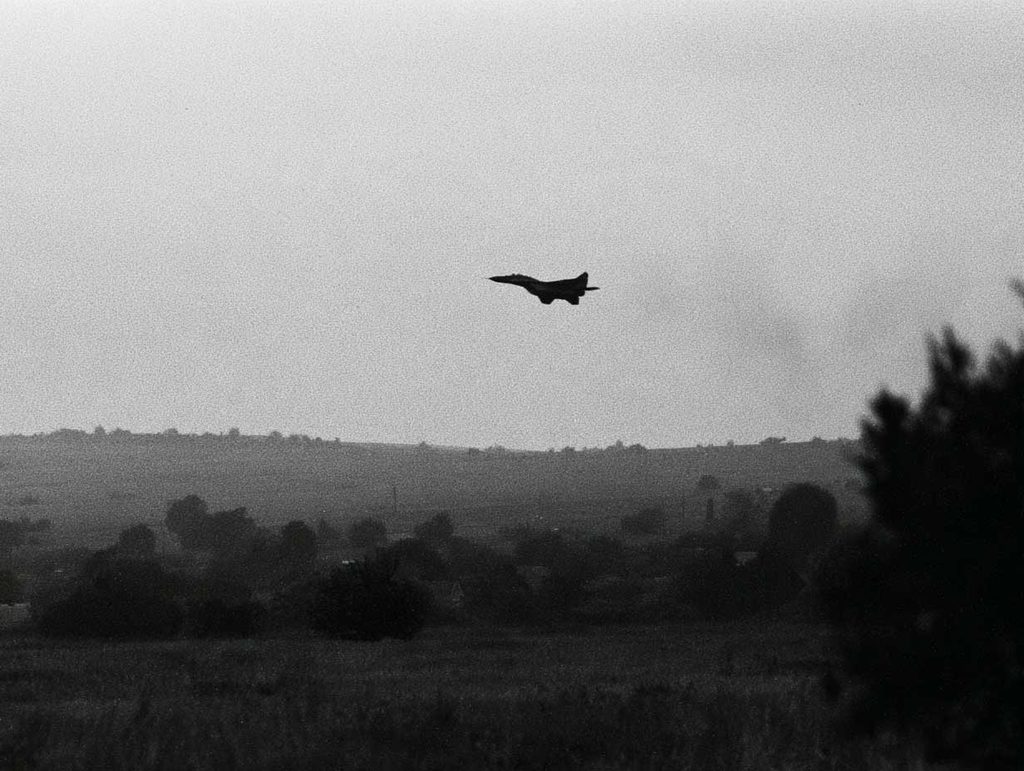
Developed by Mikoyan during the Cold War, the MiG-29 Fulcrum is a twin-engine fighter aircraft initially designed for short- and medium-range air superiority.
Its two Klimov RD-33 turbofans each produce approximately 81.4 kN of thrust with afterburner (18,300 lbf).
The aircraft can reach Mach 2.3, or approximately 2,445 km/h (1,520 mph), at high altitude. Its operational ceiling is around 17,000 to 18,000 meters (55,800 to 59,100 ft), depending on the version.
The MiG-29A features six external hardpoints, capable of carrying approximately 3,000 kg (6,614 lb) of military payload.
Radar and missiles limit its performance against recent fighters
In their legacy configurations, MiG-29s notably use the N019 radar, radar-guided R-27 missiles, and infrared-guided R-73 missiles.
The R-27R requires the launch aircraft to continue illuminating its target until interception. This constraint increases its exposure to adversary detection assets and missiles.
Faced with Russian Su-35Ss equipped with longer-range radars and missiles, the MiG-29 suffers a significant technological disadvantage. Its speed and maneuverability do not systematically offset this inferiority.
The role of Ukrainian MiG-29s now extends beyond air combat
Ukraine still employs its MiG-29s in air defense and ground-attack missions.
Ukrainian engineers have adapted certain aircraft to use Western armaments, notably AGM-88 HARM anti-radiation missiles and guided glide bombs.
The HARM missile targets emitting military radars. Glide bombs can strike ground targets without requiring the aircraft to fly directly over them.
These adaptations have extended the utility of the MiG-29. However, they do not transform an old Soviet aircraft into a modern Western fighter.
Ukrainian fighters remain exposed to dense Russian air defense. They cannot operate freely above the front line.
Their effectiveness therefore depends as much on their weaponry and available intelligence as on their aeronautical performance.
The fighter fleet provided by the West relies on three models
Since 2023, European countries have delivered or promised several dozen fighters to Ukraine. However, a distinction must be made between transferred aircraft, usable planes, and those remaining in maintenance.
F-16s now constitute the core Western capability
The F-16 Fighting Falcon represents the main modernization program for Ukrainian aviation.
Public commitments include 24 Dutch, 19 Danish, six Norwegian, and 30 Belgian aircraft, totaling 79 announced F-16s. Not all are yet delivered or operational.
The Netherlands completed the phase-out of their fleet destined for Ukraine in May 2025. Norway acknowledged in April 2026 that four of the six airframes transferred still required extensive work.
Belgium plans to supply ten aircraft by the end of 2026, out of a total commitment of 30 planes.
According to an estimate published by The War Zone in September, Ukraine has received approximately 40 to 50 F-16s, some of which are intended for training. The number of aircraft immediately available for combat remains classified.
French Mirage 2000s also ensure air defense
France began its deliveries of Mirage 2000-5 in February 2025.
Three aircraft were reported as delivered in 2025, and two others were announced for early 2026. One loss was recorded in July 2025. The current operational total is not officially published.
These fighters can notably employ the MICA air-to-air missile and participate in the interception of Russian aerial threats.
Polish and Slovak MiG-29s preserved existing capabilities
Slovakia transferred 13 MiG-29s in 2023, including several non-operational aircraft. Poland had supplied 14 prior to its new announcement.
The two planned transfers would thus bring to 29 the number of MiG-29 airframes handed over by these two countries since 2022.
This figure does not correspond to the number of aircraft available today, given initial technical conditions, parts cannibalization, and combat losses.
Rapprochement between Warsaw and Kyiv revives aerial cooperation
The transfer comes after several months of tensions linked to historical disputes between Poland and Ukraine and a proposed exchange of MiG-29s for Ukrainian drone technologies.
In July, Władysław Kosiniak-Kamysz denounced the lack of Ukrainian technology transfer. According to Rzeczpospolita, this technological exchange had still not been realized by late October.
The resumption of dialogue does not, therefore, guarantee major new deliveries. Warsaw must also preserve its own defense capabilities during the gradual replacement of its MiG-29s with Western and South Korean aircraft.
Fighter availability becomes the main Ukrainian challenge
The eventual arrival of an additional MiG-29 will not significantly alter the balance of air power with Russia. However, it may extend the operations of an existing unit.
An analysis published in July 2026 by the Royal United Services Institute stresses that F-16s now form the core of Ukraine’s Western fighter force. MiG-29s maintain complementary missions.
Kyiv’s real challenge remains the availability of its aircraft. In September, reports by The Wall Street Journal indicated that more than half of Ukraine’s F-16s were grounded or stuck in maintenance pipelines.
The issue thus goes beyond the number of promised aircraft. The capacity to maintain the fighters, supply their ammunition, and train their crews will determine their real contribution to operations.
From this perspective, a MiG-29 dismantled to maintain several existing aircraft can sometimes hold greater military value than an additional fighter unable to take off.