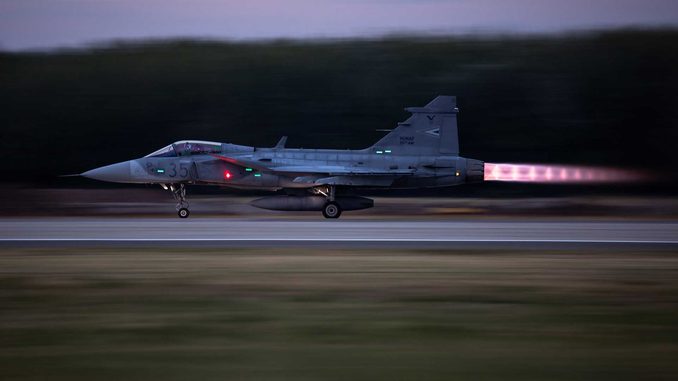
From South Africa to Colombia, a look back at suspicious commissions, judicial investigations, and their impact on Gripen sales.
Summary
Allegations of corruption surrounding certain exports of the Saab Gripen continue to weigh on the Swedish defense industry. In South Africa, the 1999 deal with BAE Systems revealed opaque payments to intermediaries. In the Czech Republic and Hungary, BAE admitted to concealing £19 million in commissions within export files before being fined $400 million by the United States in 2010 for false statements and export compliance failures. In Brazil, the 2014 sale of 36 aircraft was subjected to investigations, followed by a new request for documents by U.S. judicial authorities in 2024. In Colombia, the order for 17 Gripen jets signed in 2025 is being re-examined in 2026 amid preliminary investigations and financial disputes. These episodes do not establish Saab’s guilt. Above all, they highlight the role of intermediaries, licenses, and industrial offsets in major defense contracts.
South Africa: First Commercial Success and First Shadowed Areas
In December 1999, Pretoria signed its major military modernization program. The partnership between British Aerospace (later BAE Systems) and Saab secured an order for 28 Gripen fighters and 24 Hawk trainer aircraft. The reported cost for both aircraft types reached 15.8 billion rand. The Gripen fleet was ultimately reduced to 26 units.
The contract marked a historic breakthrough for the Saab JAS 39 Gripen. It came with industrial offsets—investments, local purchases, and technology transfers promised by the supplier in exchange for the order. Saab and its partner announced 43 billion rand in economic projects over eleven years. These commitments made the bid politically attractive, but they also multiplied the number of intermediaries and transactions that were difficult to monitor.
Investigations by the UK’s Serious Fraud Office uncovered substantial payments made to “commercial advisors.” According to an investigation published in 2011 by Mail & Guardian, more than one billion rand routed to these intermediaries. Saab acknowledged that a joint venture managed by BAE Systems was used to transfer roughly 24 million rand to Fana Hlongwane, a former advisor to the Minister of Defense, while maintaining it had no knowledge of the transaction.
The Seriti Commission concluded in 2016 that there was no evidence of corruption. However, the South African judiciary set aside its findings in 2019, ruling that key evidence had not been properly examined. This annulment did not constitute a conviction of Saab; rather, it signaled that institutional oversight had failed to resolve the debate.
Czech Republic and Hungary: Commissions Concealed from U.S. Authorities
The matter entered the judicial arena with Gripen’s European contracts. Both the Czech Republic and Hungary chose to lease 14 Swedish fighters in the early 2000s. BAE Systems was involved in marketing the aircraft.
In March 2010, the U.S. Department of Justice established that BAE Systems had paid £19 million to an intermediary without declaring these payments in export license applications. According to court documents, the company knew there was a high probability that these funds would be used to influence decisions in favor of its bid.
U.S. jurisdiction applied because the Gripen contains military components subject to United States regulations. Their export requires authorizations governed notably by ITAR rules. Commissions paid to secure a contract must be declared, even when lawful.
BAE Systems pleaded guilty to making false statements and violating U.S. export regulations. The company was fined $400 million and agreed to three years of independent compliance monitoring. This was not a conviction of Saab for corruption. The Swedish investigation into Gripen export practices had been closed in June 2009 without charges.
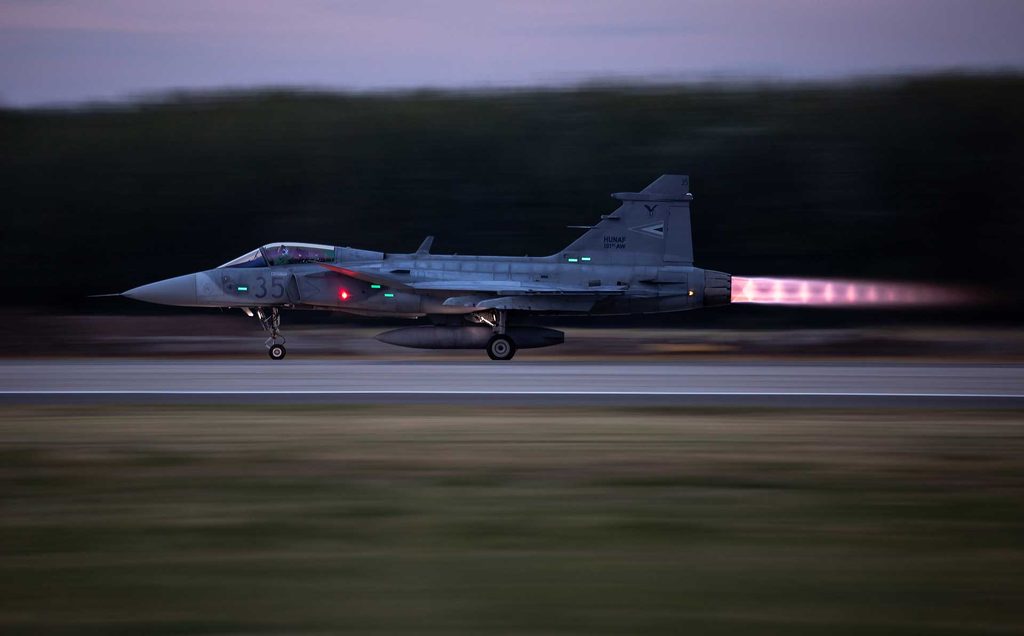
Brazil: An Investigation Reopened Ten Years After the Contract
In 2014, Brazil ordered 36 Gripen E/F aircraft for approximately $5.4 billion, choosing the Swedish proposal over the Boeing F/A-18 Super Hornet and the Dassault Rafale. The FX-2 program included local manufacturing, engineer training, and technology transfers.
The process quickly raised questions. In 2016, Brazilian prosecutors accused former President Luiz Inácio Lula da Silva of favoring the Swedish supplier. Representatives for Lula contested the allegations. These suspicions did not lead to the conclusion that Saab paid bribes.
On October 10, 2024, Saab announced that its U.S. subsidiary had received a formal request for documents from the Department of Justice regarding the 2014 procurement. The group specified that previous investigations in Brazil and Sweden were closed without establishing any wrongdoing on its part. The U.S. investigation remains listed as open in the specialized Stanford database. No conviction of Saab regarding this contract has been established.
Colombia: A New Contract Already Subject to Controversy
Bogotá signed an order in November 2025 for 17 Gripen E/F aircraft, including two twin-seaters, for €3.1 billion. Deliveries are scheduled from 2026 to 2032. The deal includes armament, training, support, and industrial offsets aimed at replacing aging IAI Kfir fighters.
In June 2026, a parliamentary committee opened a preliminary inquiry into the terms of the purchase made under the presidency of Gustavo Petro. It requested documents and the verification of allegations involving Verónica Alcocer. These remain preliminary investigations rather than established acts of corruption.
In October, the government of Abelardo de la Espriella re-examined the payments, pricing, and offset terms. The contract remains in effect. On October 18, the Contraloría warned of a potential loss of 2.13 billion Colombian pesos linked to the exchange rate applied during a payment. Former Defense Minister Pedro Sánchez disputed this calculation, stating that the operation actually resulted in savings. This financial controversy does not prove any illicit commissions.
Fighter Jet Sales: A Risk That Extends Beyond the Courts
These issues weaken negotiations even when legal proceedings do not lead to convictions. A buyer may demand to know the identity of commission recipients, require independent audits, and seek guarantees regarding industrial offsets. Every check potentially extends the acquisition timeline.
Furthermore, the cost of an aircraft is never limited to its flyaway price. Armaments, training, spare parts, ground support equipment, and long-term maintenance explain significant differences between two contracts. Comparing raw contract amounts between Colombia and Thailand, for instance, without analyzing their technical scope would be misleading. This distinction applies across the entire spectrum of aircraft featured in any comprehensive fighter jet database.
For Saab, the challenge is two-fold. The manufacturer must defend the competitiveness of its Gripen while proving the traceability of its commercial partners. For customer nations, the stakes are even higher: a procurement decision made today commits national air defense and public finances for thirty years. The ultimate test is therefore not merely the absence of a conviction, but the ability to make every single euro of the contract fully verifiable.